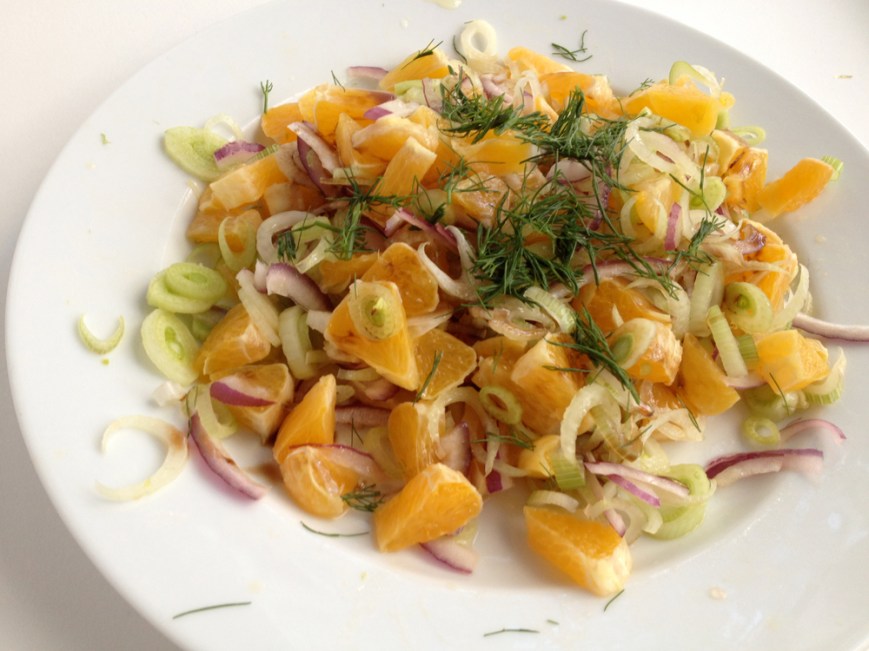
Fennel and Orange Salad

Ease into spring – bright flavors with late winter ingredients.  The idea for this salad came from a dinner of delicious tapas made for us by a friend of friends in Phoenix – thanks Charlene!

Fennel and Citrus Salad

Combine on a plate:

6 baby fennel bulbs or 2-3 large ones, thinly sliced

Small sections of mandarin, or chopped sections of orange, from about 2 oranges or 3 mandarins 

A little thinly sliced red onion

Pour over the top:

Juice of 1/2 orange or mandarin

A drizzle of extra virgin olive oil

A drizzle of balsamic vinegar (high quality balsamic is really good here)

Top with a few fennel fronds for garnish

That’s it!  Simple and oh so good.

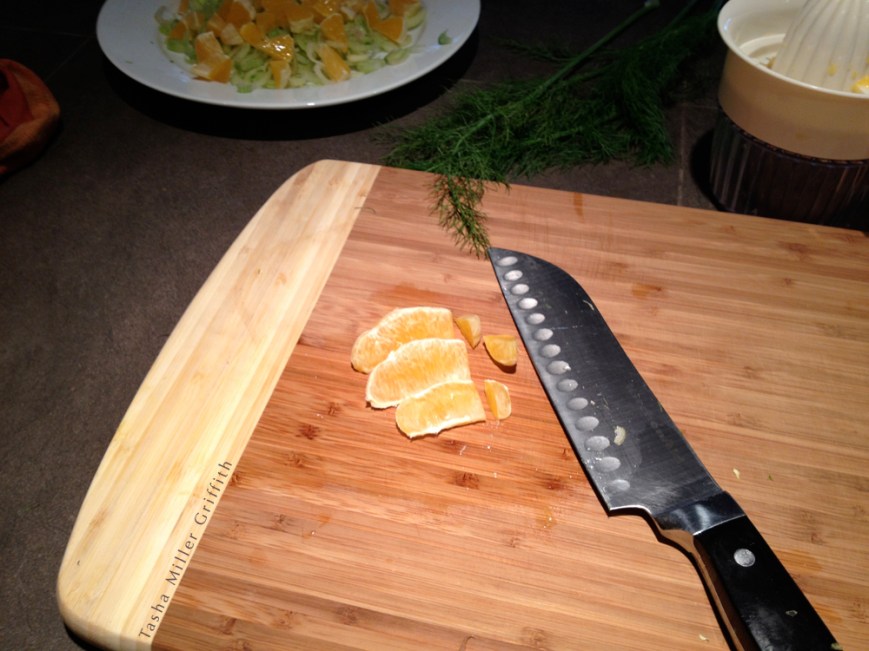
And a tip on chopping orange sections: I have been doing this a lot the past month or so, and my best method so far is to separate the sections first, then line up three or four and chop them into pieces.  You’ll see most of the seeds and you can pull them out.  I only pull the membranes off the sections if I need the dish to be really impressive for some reason.

PS: one of my cousins was asking me the other day about quinoa recipes, and I found this one on The Year in Food – such a lovely blog.  Apparently we’re not the only ones to figure out that fennel and citrus is a good combo for late winter/early spring!

Still a little time for: Winter Squash, Mexican Style

Spring is coming.  In fact, I am down in the valley this weekend where spring is already here!  Still somehow, I am not quite ready to let go of winter foods yet.  Although I would not touch a butternut squash in July, I think I could eat it happily almost every day for the months of winter!

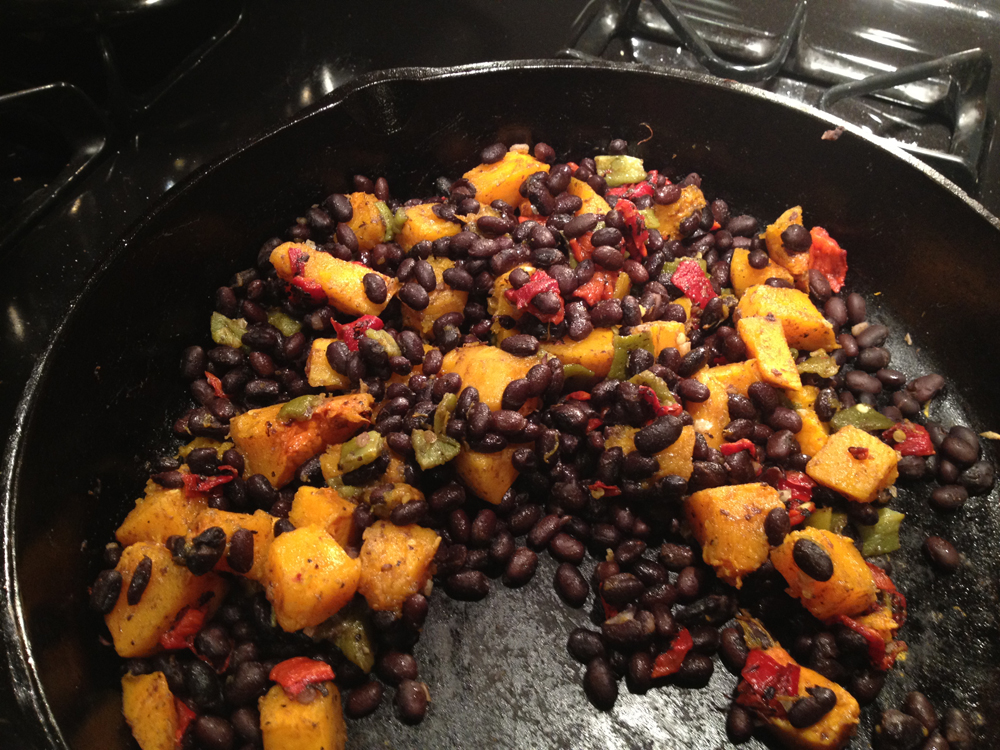
If you are getting tired of winter veggies but the asparagus is not yet streaming into your area, here is a another flavor combo for you.  I use this in all kinds of tacos and enchiladas.  The day of this photo we had it in tacos with fresh corn tortillas, a mild slightly tangy cheese, and orange chipotle salsa.

Winter Squash Filling for Tacos or Enchiladas

2 to 4 cups cooked winter squash  – butternut is my favorite.  Whichever you choose, cut in half (or into more pieces if very large) and scoop out the seeds.  Rub the cut surfaces with a little olive oil.  Place the pieces cut side down on a rimmed baking sheet and roast in a 375° oven until you can easily bury a the tines of a fork in it – this may take 30 minutes to an hour depending on the size and thickness of the squash pieces.  Let rest until cool enough to handle.  It is now ready to peel and slice quite easily!  For this recipe, cut the squash into fairly large chunks.

½ to 1 cup dried black beans, cooked.  I do mine in the pressure cooker – fast even at 7000 ft!

1 to 2 cloves garlic, minced.

2 to 3 thawed frozen roasted green chiles, chopped.  In the West (as you already know if you live here) around September/October time the most amazing smell fills the farmers’ market – roasting green chiles.  I could go on about this for quite some time, but will limit myself to saying that I stock up big time and live on the ones in my freezer for the rest of the year.  If you didn’t save enough, your grocery store may have fresh Anaheim or Poblano peppers which you can roast under the broiler, or speared on a fork above the flame of a gas range (or even with a crème brulee torch – in any case watch carefully and watch your fingers!)  Once the peppers are roasted, cut out the stem and pull out the seeds, then chop.

Put a little olive oil in a large heavy skillet over medium heat.  When it is hot add the garlic, let it sizzle for a minute or two, then add all the other ingredients.  They are mostly cooked already, they just need to warm up and get the flavors to blend, so stir until everything is hot, then turn off the heat and let sit together until you are ready to serve (or fill enchiladas).

I have included a fair amount of variation in the ingredient amounts, feel free to change them based on the amount you want to end up with and whether you like the emphasis more on the squash or the beans, etc.

If you eat this with corn tortillas, you will have all “three sisters” of ancient Southwest cuisine (corn, beans and squash).  Don’t you think chile should be the fourth sister?

Enjoy the last of your winter and those hearty comforting winter foods!

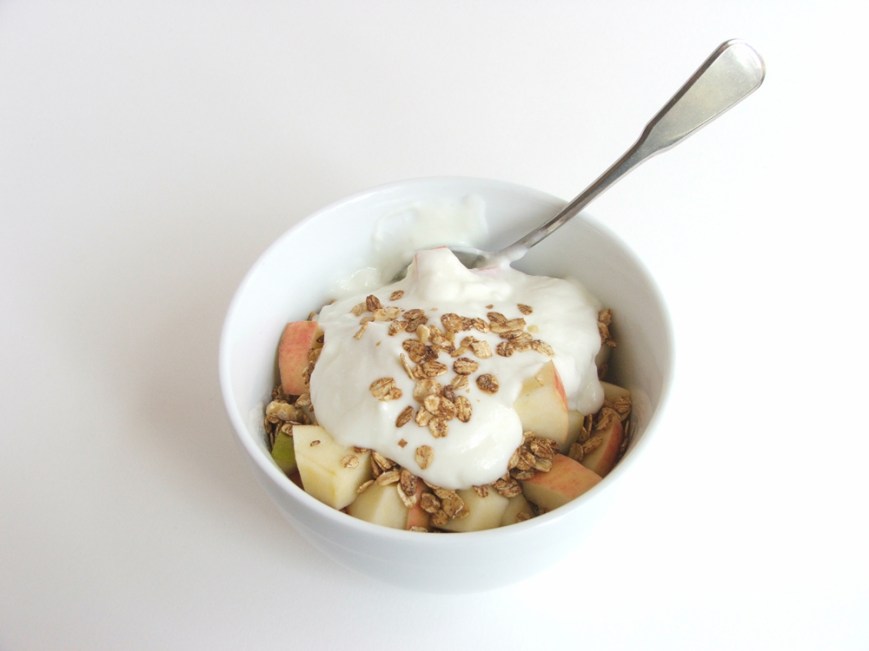
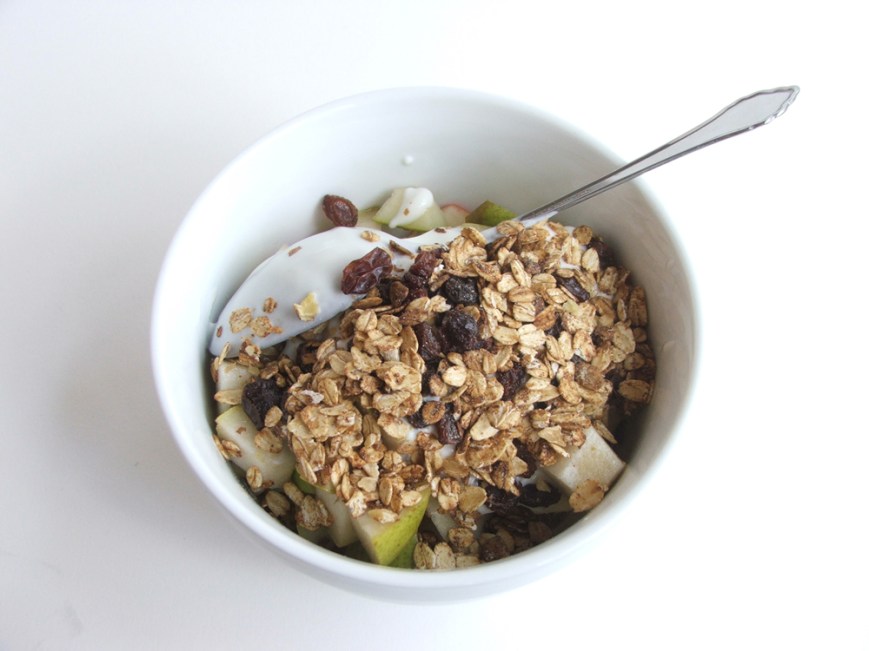
Simplest Granola


I often have this urge to distill things down to their essential elements, it helps me figure out just what is going on, and then I can change whatever I would like.

This granola recipe started that way.  It’s a perfect platform for whatever spices, extra nuts, dried fruit, coconut (add these last two after baking) etc. you would like to add to make it your own.  You could also substitute honey or another sweetener, and/or the oil of your choice, and/or different grains. Personally, I like the simple toasted-oats-and-molasses flavor of this one so much that I keep making it, just as it is.


Simplest Granola

Melt over low heat in a large skillet:

2 Tablespoons butter

1 heaping Tablespoon molasses

When warm and melted add:

6 cups oats (I like thick cut)

Stir immediately and keep stirring until the oats are uniformly barely coated.  It seems like there is not enough molasses and butter, but, just keep stirring.

Add:

1 cup chopped nuts (walnuts, pecans, hazelnuts etc.)

Mix.

Scoop onto a rimmed baking sheet and bake at 350°, stirring every five minutes to keep the edges from getting too brown.  Do this three or four times until lightly toasted all over.  Let cool.


What’s in your favorite granola?


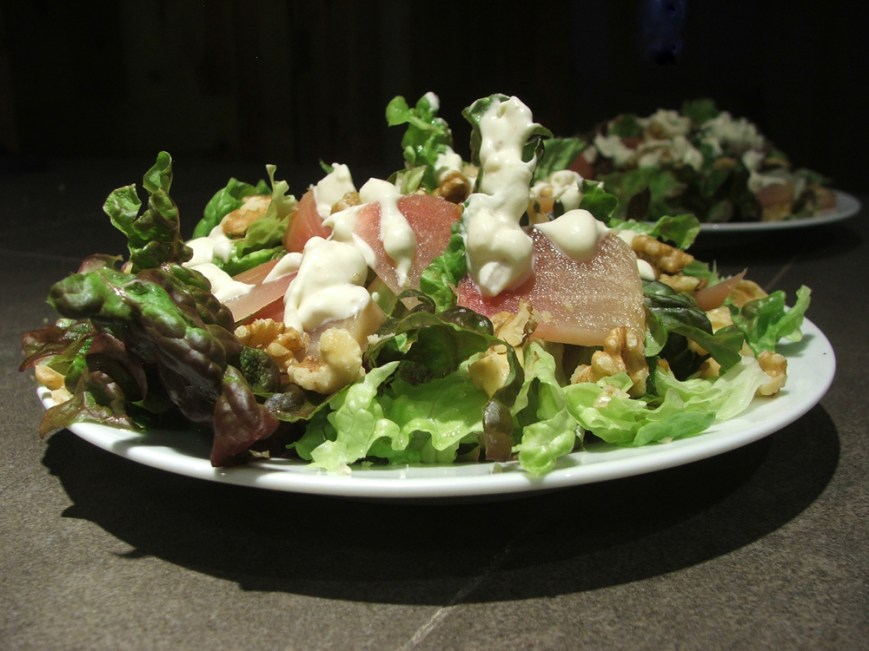
Beet Salad with Blue Cheese Dressing


Recipe time!  This winter I have been making a lot of little side salads, it’s a nice way to get some green stuff without feeling overwhelmed by it, and you can change the dressing and flavors every day.  This one is a favorite at my house and also uses a winter staple, beets.  Beets are one thing we actually learned to love after getting a lot of them through our CSA – I also enjoy all the lovely colors they come in, including the salmon-y ones here!

The inspiration for this recipe came from an old issue of Bon Appétit, this is my simplified version.

For 2 salads:

Crumble about 2 tablespoons of your favorite blue cheese.  I like to use Fromage Blue, a kind of creamy cross between blue and brie.  You don’t have to put much else in this at all, so feel free to use really nice Roquefort or Stilton and the flavor will come through clearly.

Add a few tablespoons of heavy cream to make about the amount of dressing you want.  The longer you let it sit, the more cheese will absorb into the cream and the thicker it will get.  I like to leave it until the flavors are blended but it’s still liquid enough to spread over the salad.  You can add more cream later if it gets too thick.

Add:   About 1 tsp finely chopped shallot

A dab of stone ground mustard

A small splash of rice vinegar (or another type you like)

As you can tell, you can vary this a lot by taste.  If you have really nice cheese, feel free to use only a tiny amount of the other flavors.

Stir together, let sit and then enjoy!

We like to eat this on a salad of roasted beets, romaine, and whatever other fresh veggies we have in the fridge (pea pods are especially nice in the fall) with walnuts on top.

Extra: My favorite method for roasting beets:  Cut off tops and roots and place beets in a deep dish with about ½” of water in the bottom.  Cover with foil and bake at 375 until beets are very tender when pierced with a fork, then let cool and peel  – they’re so much easier to peel after cooking!

What’s your favorite way to use beets?  Your favorite blue cheese?

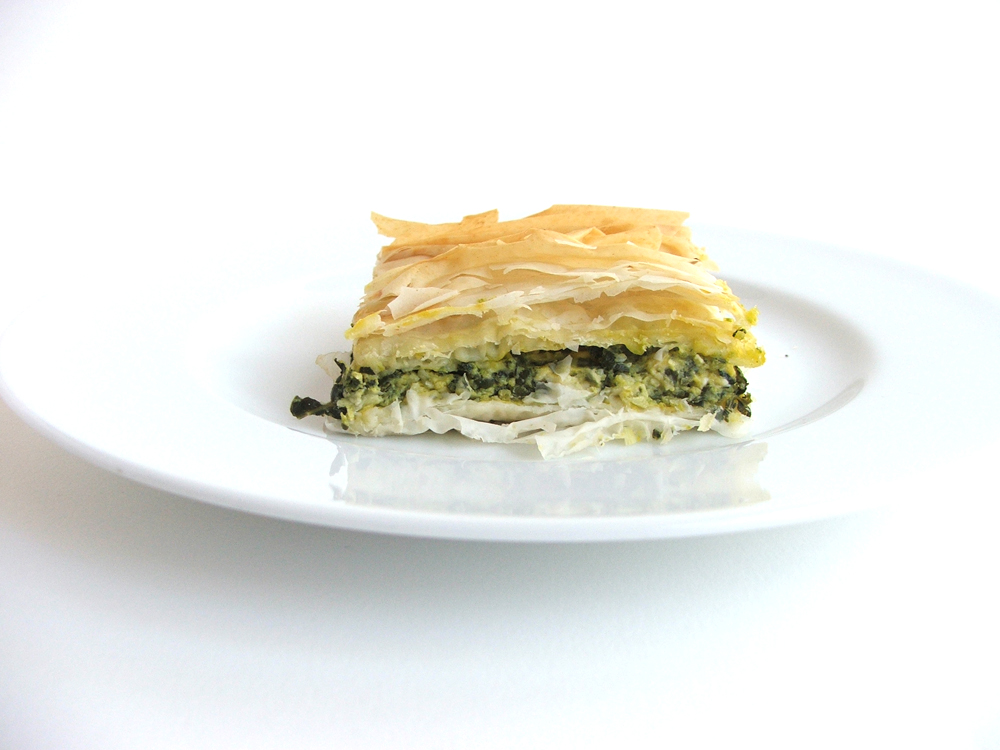
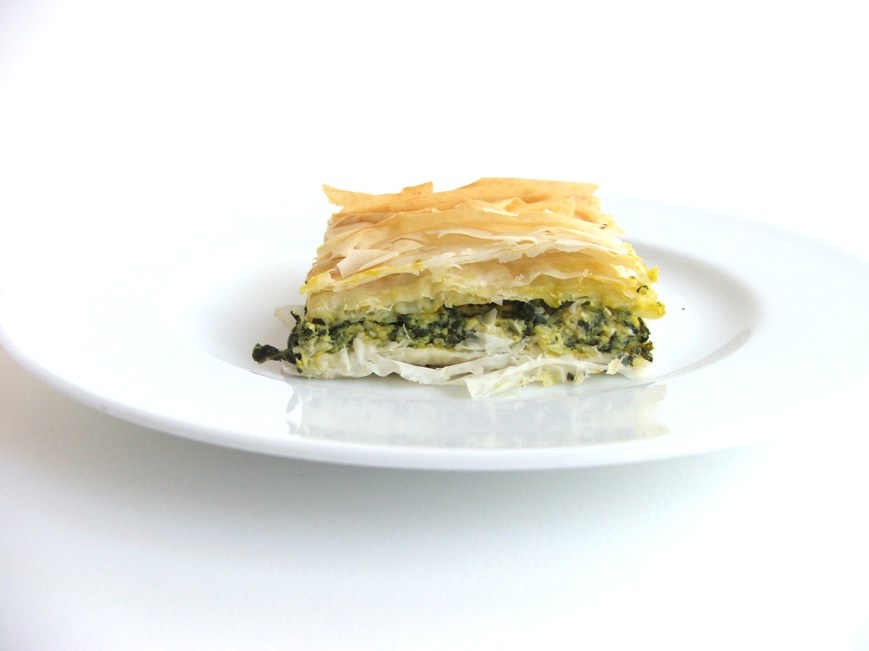
Spanakopita

Ok, confession time.  Even though I eat almost exclusively vegetarian (a little fish) and try to buy local food (even in winter), I am not one of those people who can just dig into a big pile of slimy cooked greens.  Nope, not happening.  When we joined our CSA a couple of seasons ago and got flooded with chard, kale, mizuna, and other crazy crinkly green stuff, I had to find some creative solutions, and this remains one of my favorites.

This recipe had its genesis in The Joy of Cooking, my all-time pick for only cookbook I’d take to a desert island.  It is totally its own creature now.

Spanakopita/Kaleakopita/Chardakopita

Makes one 9 x 12 pan, or similar size

Preheat oven to 375

Get 1 bunch spinach, kale, chard, or un-identified green from CSA (as long as it’s the kind you cook)

Wash and stem this, my favorite method is to grab the stem with one hand and pull the leafy stuff off with the other hand.  Put the stemmed greens in a pot with a steamer basket and some water in the bottom.  Bring the water to a boil and then turn it down to medium – low heat, let the water simmer until the greens are bright green and relaxed.

Meanwhile, finely chop ½ large onion and 1 large garlic clove

Saute the onion in olive oil over medium heat in a small skillet or pan until it just starts to have a golden color.  Add the garlic and stir and cook for about another minute.

Put the onion and garlic in a bowl.

When the greens are done, use tongs to transfer them to a food processor and pulse until very finely chopped (or how you like them).  Add them to the onion bowl.

Also add to the bowl:

–       About 8 oz feta cheese – the real sheep feta is awesome if you can find it!

–       A little more cheese – parmesan or Greek hard cheese is traditional, but I like to use a hard goat cheese.  I put in a couple tablespoons, but you can vary to taste.  If you use the really nice feta, don’t put in so much other cheese that it overwhelms the flavor.

–       4 eggs

–        A few grinds of black pepper – the cheese is salty enough for me so I don’t add any more salt

Mix this all together.

Melt (I like to just drop it in the onion pan) 2 Tablespoons butter

Get out your thawed frozen phyllo dough

You may need to cut the phyllo sheets in half. If so, tightly wrap what’s left and put it back in the fridge.  Working quickly, brush a little butter in the pan, lay down a sheet, lightly brush it with butter, lay down the next sheet, etc. until you have used 8 – 10 sheets or half your stack.  Spread on the filling, then repeat with the rest of the phyllo sheets.  If you have some butter left, spread more on the top sheet or two.  Cut the spanakopita into pieces through the top layer of dough, then put in the oven and bake until the top is golden and the filling looks solid where you cut it, about 40 minutes.  Let cool for a few minutes, cut through the bottom, and enjoy!