Homemade Granola Bars


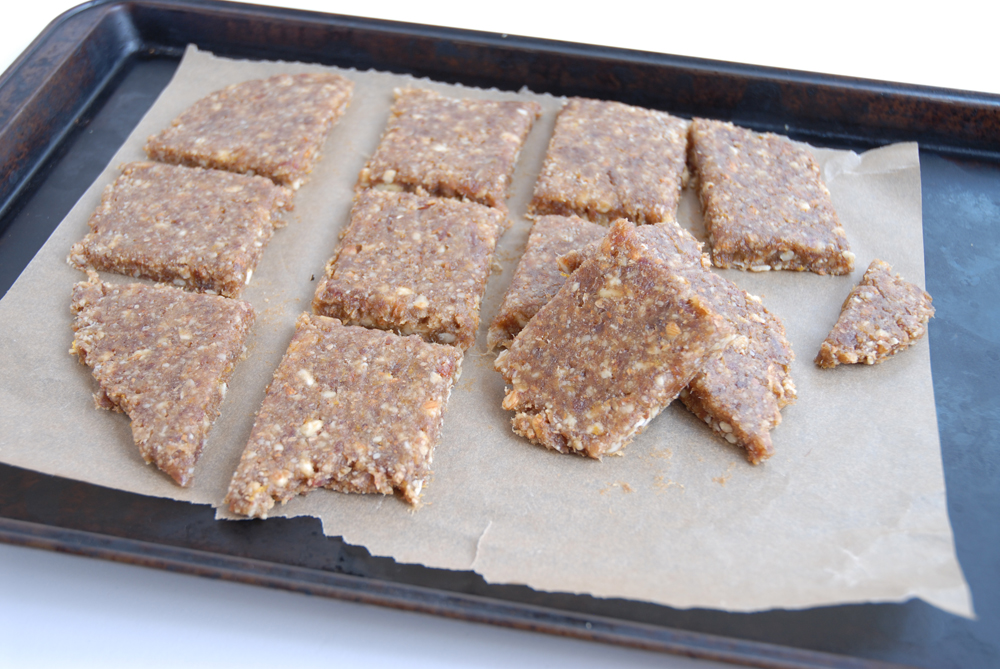
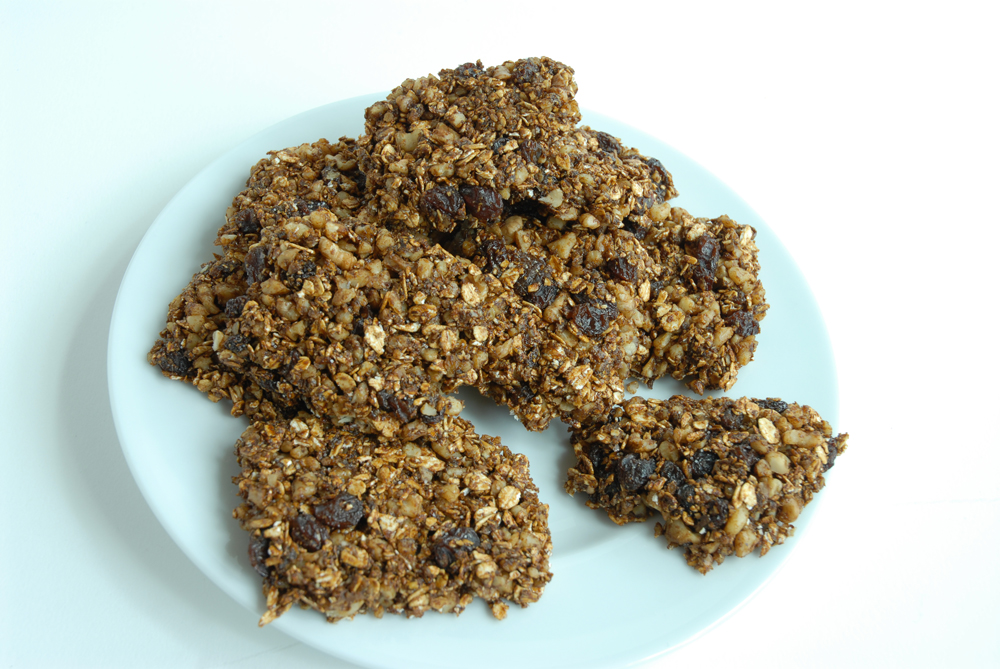
In part two of my homemade travel breakfast project, I made some more traditional granola bars – oats, nuts and dried fruit stuck together with molasses and honey.

I learned several things in the two versions of these I’ve made so far.  One is that honey is a much better glue than molasses.  The second is that smaller pieces of nuts, oats, etc. stick together better and are less likely to fall apart later.  Both of these are pretty much logically obvious now that I think about them, but as usual I opted for a more trial and error approach at the beginning.  I like to mix things together and see what happens.

Anyway, here is version 2:

DIY Granola Bars

Mix together in a bowl: 1 cup oats, coarsely ground; one cup walnuts, coarsely ground; 1/2 cup raisins, a pinch of salt.

Heat in a large skillet until warm and liquid: 2 Tablespoons molasses & 2 teaspoons honey.  Turn off the heat.

Pour the oat mixture into the skillet and stir until everything is coated.  Pour out onto a piece of parchment paper and shape into a round or square about 1/2 inch thick with your hands, spatula, rolling pin, etc.  Cut into bars, sticking any bits that fall off back to the outsides, and leave to cool and firm up.  Once they are holding together, you can transfer them to a rack and leave for a while to release any moisture trapped between them and the parchment, before packing them away in a tin or baggies.
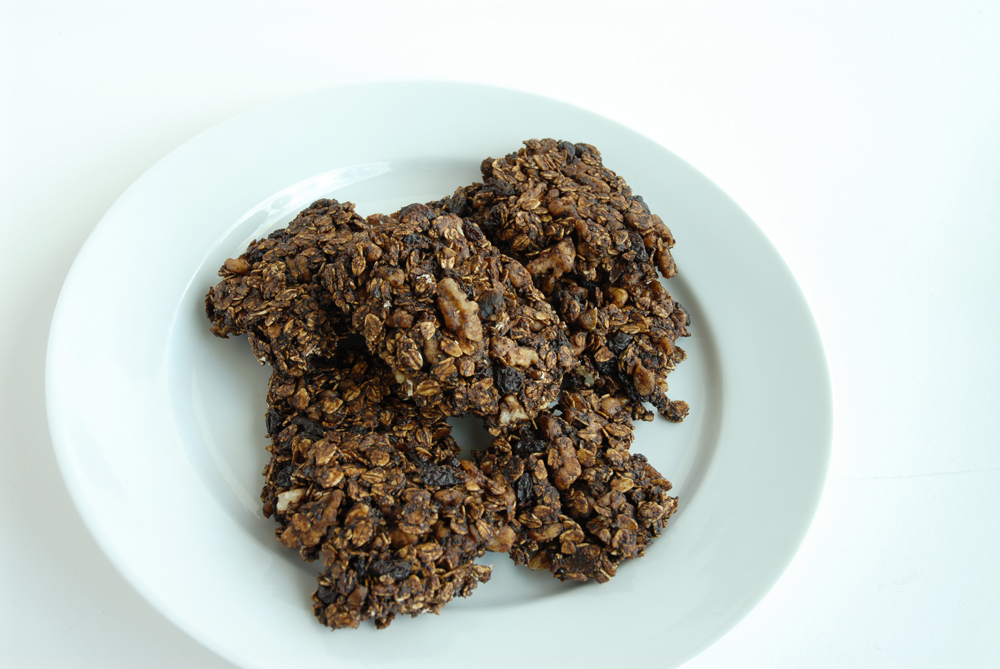


These are holding up pretty well so far, they crumble a bit but you can stick them back together.

Adding more honey and less molasses would make a firmer bar, also good if molasses is not your favorite thing.  Bryan claims my current version is for molasses lovers only.  They taste good to me, but then I could eat it with a spoon!

You could also get a more robust bar by using more oats in proportion to nuts, as they seem to stick together better.  Again, this could become a platform for whatever nuts, fruits and spices you like and want to add!  I think these could be fun to make with kids as well, I may try it out the next time I see the nieces.

If you missed part 1, DIY Fruit and Nut Bars, click here or just scroll down to the previous post.

Enjoy!
 

DIY Fruit and Nut Bars


We’re headed to our next art show today (Brookside in Kansas City, MO) and along with my usual motley assortment of library books (shhh) and projects in progress, I’m packing two versions of these bars!

We eat a lot of Clif bars, Odwalla bars, Larabars, regular old granola bars, etc. for breakfast when we’re in the truck.  By the end of the summer if I never saw another one it wouldn’t bother me, with the possible exception of the Larabar type.  There’s nothing in those besides dates, nuts and spices, and of course they are also the most expensive kind, I usually don’t buy them unless they’re on sale.

This winter on our trip to Oregon I was sitting with our friend Becca when she came up with a brilliant idea – why not make them?  She was eating a bar made at the lodge where we were, which was mostly chunks of dried fruit and nuts held together with honey.  This seemed like such a good idea, and of course so obvious once she said it, it lodged in my brain and fortunately stayed there until I tried it out.

The first version had more dates, and fewer almonds, with none reserved for coating the outside.  It was good, but sticky, and even a little too sweet, despite the fact that there’s not any added sugar.  Here’s version 2:

Date and Almond Bars

Add 8 oz dried, pitted dates to a saucepan in which they barely fit in a single layer.  Grate on top: zest of one orange.  Pour in enough water to make about 1/8″ in the bottom of the pan, just enough so that all the dates have some to soak up.  Bring the water to simmer, then turn off the heat, cover the pan, and leave it for about half an hour, until the dates have soaked up the water and become soft and plump.

Grind 1 cup raw or toasted almonds to a coarse flour with some chunks remaining.  Grind a further 1/4 cup to flour without chunks.

Put the soaked dates in the food processor, and chop/grind until you have a thick puree.  I added a splash of Amaretto to the processor, totally optional, but adds a nice extra flavor.

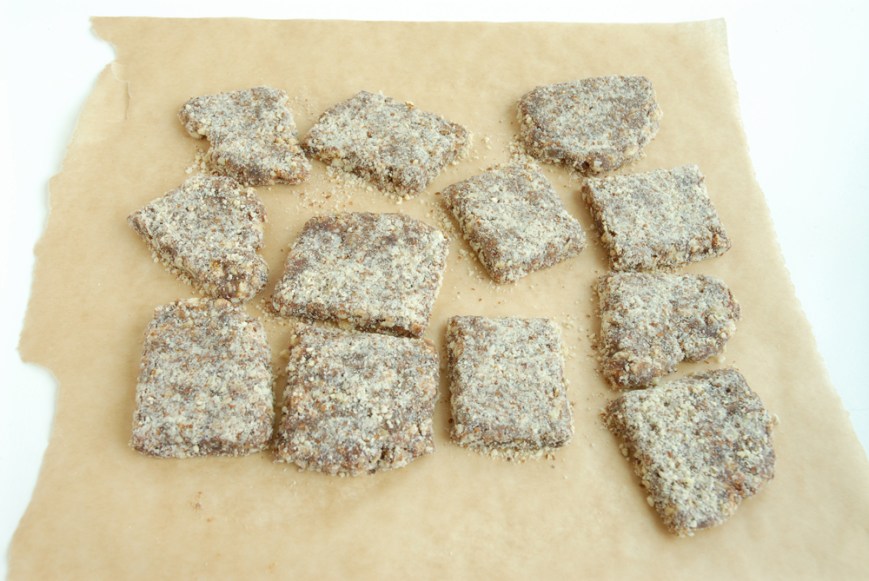
Scoop out the date puree into a bowl or back into the pan, add the coarsely ground almonds, and mix together into a thick paste.  On a cutting board or parchment paper, sprinkle out about half of the almond four.  Scoop the date/almond paste on top of the flour, sprinkle more almond flour on top of it, and roll out like you would cookie dough to your desired thickness, using the almond flour to keep the bars from sticking to the surface or the rolling pin.

Cut into bars, use the extra almond flour that falls off to coat the edges, let dry for a few hours, and you’re done!


Seeing as how I was making my own fruit and nut bars, I also bought some figs, and made:

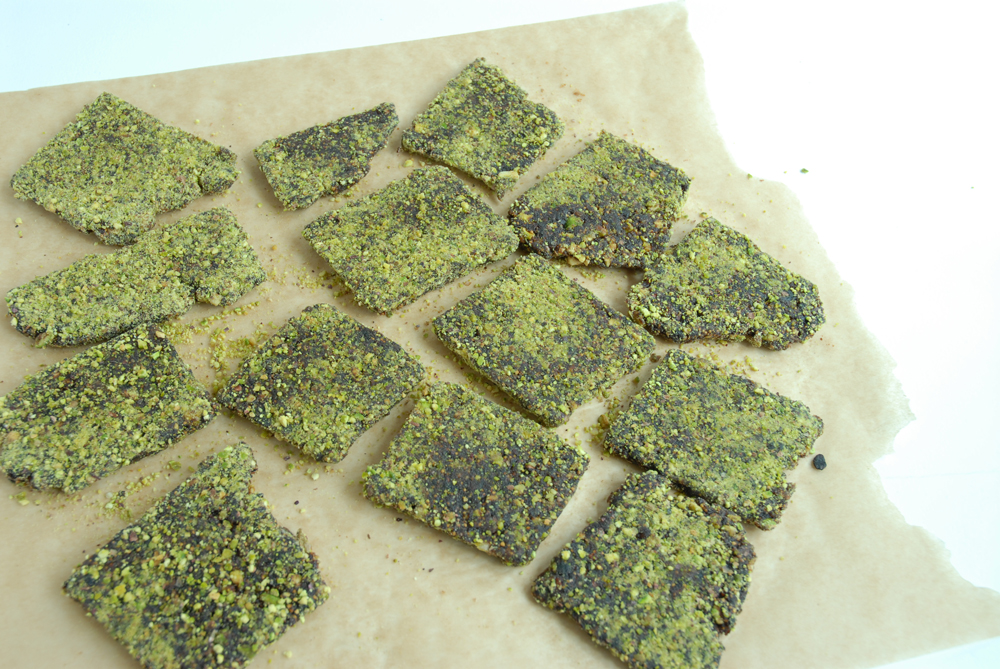
Fig and Pistachio Bars

Using basically the same procedure as the date and almond ones.  I needed to cut the stems off the figs, and they weren’t quite as juicy or sweet as the dates.

Add 12 oz dried figs (I used black mission), a little orange zest, about 1/3 of the orange (lemon would also be nice here), 1 Tablespoon of honey, and just a little water as before to the saucepan.

After soaking, there was still a little liquid left, so I brought the pan to a simmer again and boiled it off just for a minute or two, stirring, until it was more like a thin syrup that stuck to the figs.

When I was writing this up yesterday I forgot that I had used slightly fewer pistachios than I did almonds in the date bars, about 3/4 cup in the fig bars, but still 1/4 cup ground to dust the outsides.  This seemed to make sense because the figs were a little drier, and also because I ran out of pistachios!  Of course you can vary the amounts to your own taste and see what you like.

From this point process the figs and grind the pistachios just like the above recipe.


Maybe my favorite thing about this idea is that if I get tired of one kind, I can just add another variation, some spice or a different nut for a new flavor!  I’d love to know your thoughts, what flavor combos would be good?  If you try your own, how did they come out?

Me-Made-May 2012!

What is that, you ask?  It’s a fabulous idea from Zoe of the blog ‘So, Zo…’ wherein participants make a pledge to wear one or more self-made garments every day for the month of May, and/or to interpret the challenge in their own way.


What I really love about it is the idea of spending a month thinking about what we make and wear and why.  Does what you wear suit your personality and what you want to say about yourself to the world?  Why do you choose to make things?  Do you wear/use the things you make?

My pledge for May is to wear at least one thing I made everyday, and document my experience here in a way that’s also relevant to those of you who don’t sew, and addresses some of the interesting questions above.

If you do sew, I encourage you to head on over to Zoe’s blog and check it out!

If not, what about coming up with your own Me-Made-May challenge?  Maybe pledge to cook one new recipe or make one up yourself each week, or finish your woodworking project, or even the mending!  I think anything we make has the tendency to push us towards, as Zoe puts it “a more self-sufficient, sustainable and authentic life.”  I love that phrase – I couldn’t have described my own goals better!

The last part of my personal pledge for MMM’12 is to make more friends in the blog world and reach out to the other creative types out here, so I’d love it if you let me know your ideas, and pass on the spirit of Me-Made-May!

Wire Turns Fabric Tubes!

The other day I was making fabric straps, and the time came to turn them right side out.  I never bought one of those proprietary tube-turning things, and I don’t do this very often, so usually I just tie the seam ends to a blunt needle and slide it through the tube bit by bit.  It’s kind of a pain but it usually works.  However, on this day my studio was somehow completely devoid of blunt needles.  I don’t know where they went, but I suspect karma is involved, since I always tell even my knitting students to buy sharp ones for burying ends.  I tried it with a sharp one, but that was clearly the wrong idea, of course the needle point kept piercing the inside of the tube.

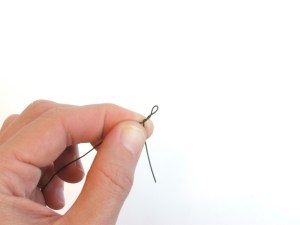
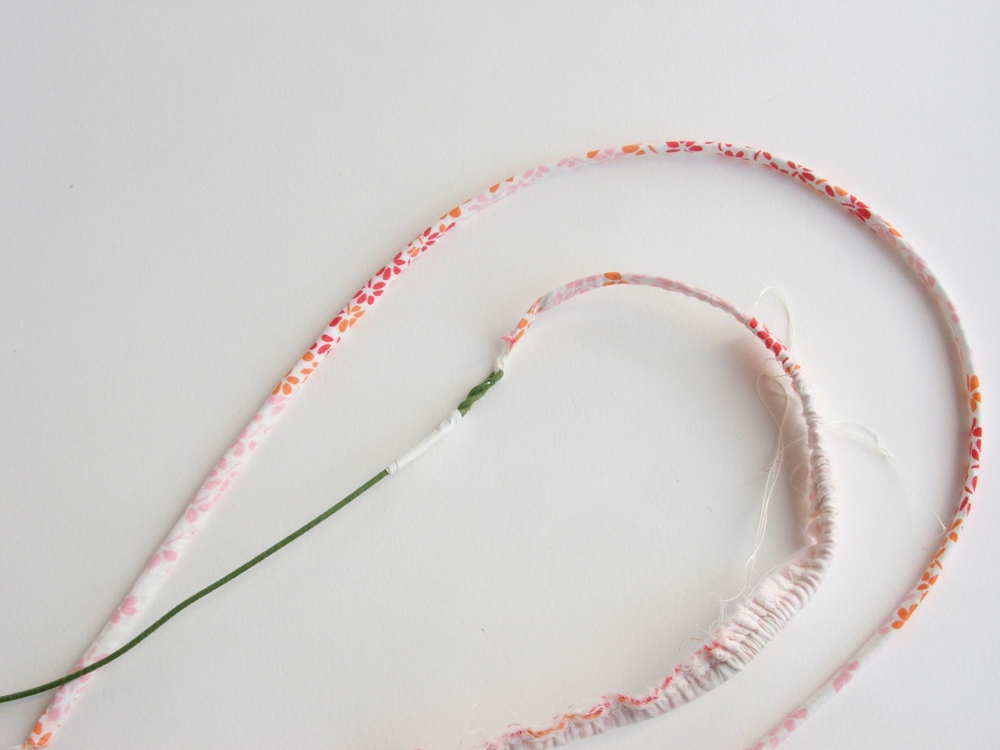
After stewing it around in my brain for a while, I remembered that I had some millinery wire left over from another project.  I twisted one end into a loop, tied the thread ends to it, and pulled it through – viola!  Then I tried it with beading wire, which is much thinner and more flexible, but also worked just fine.

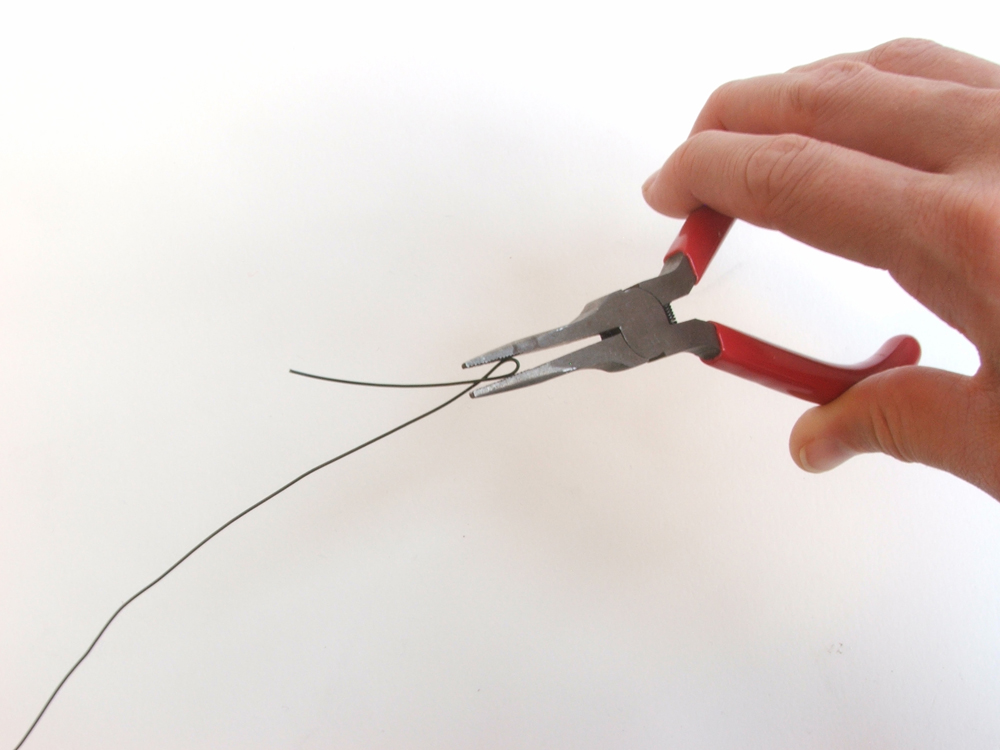
This is why we invented pliers, so you can make a loop smaller than your finger.  You may need to squash the loop flatter with the pliers to get it to be narrow enough to go through your tube.

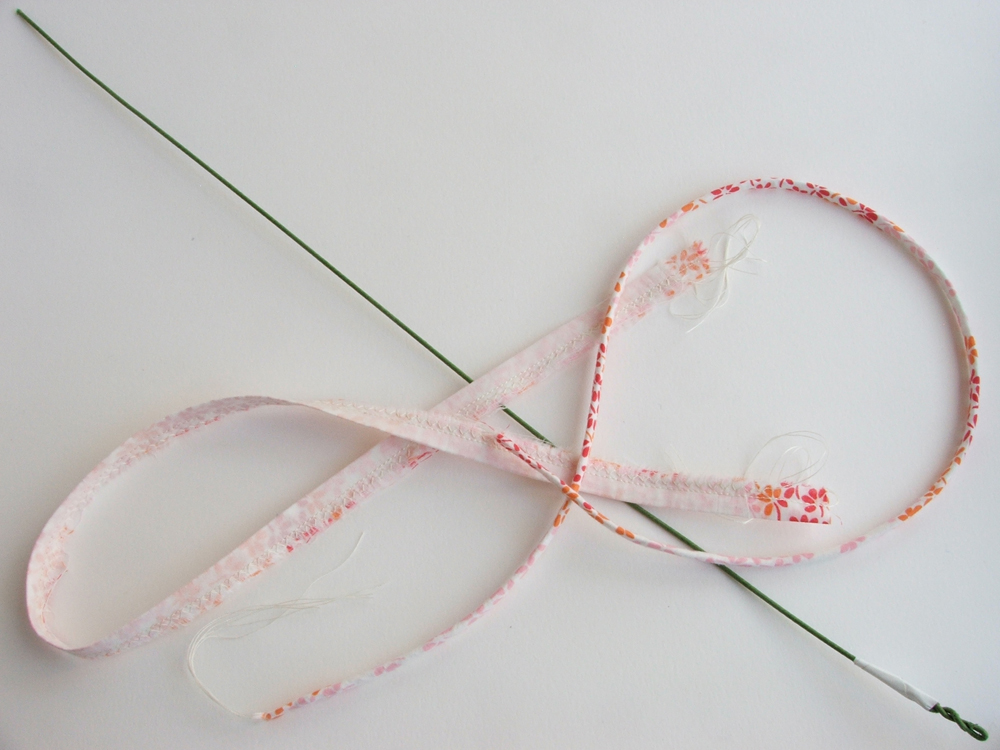
Twist the wire around itself – it’s more secure if you twist both the end and the main wire around each other, not just one around the other.

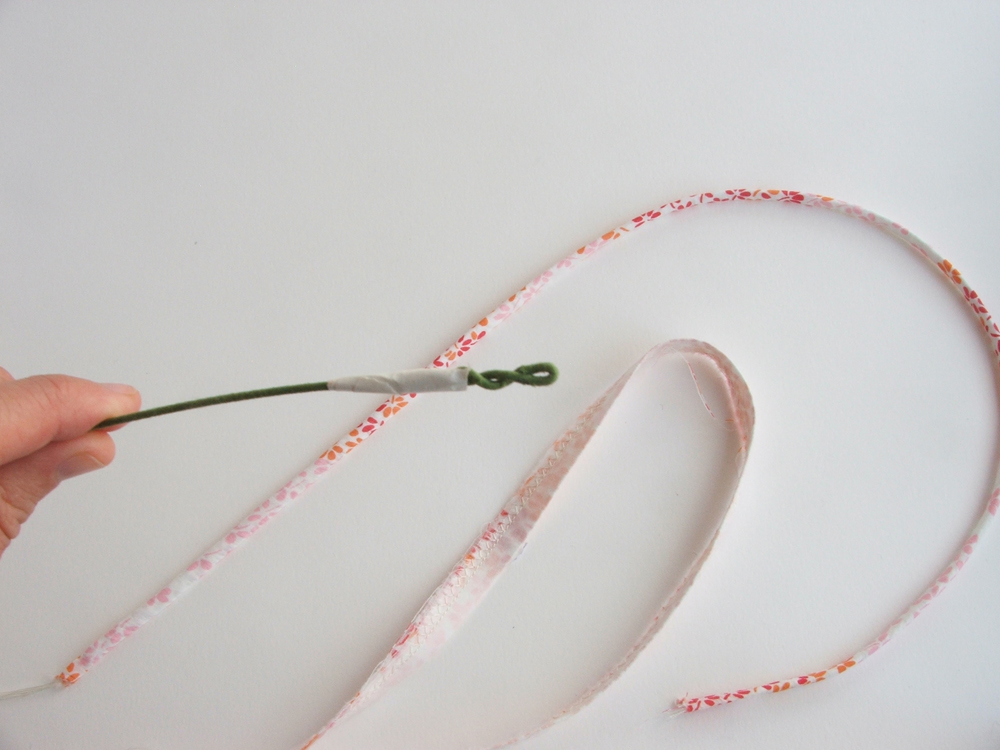
Cover the pokey wire end with some tape to keep it from catching on the fabric  – I used artist’s tape, electrical tape or painter’s tape should also work, duct tape is too gooey.

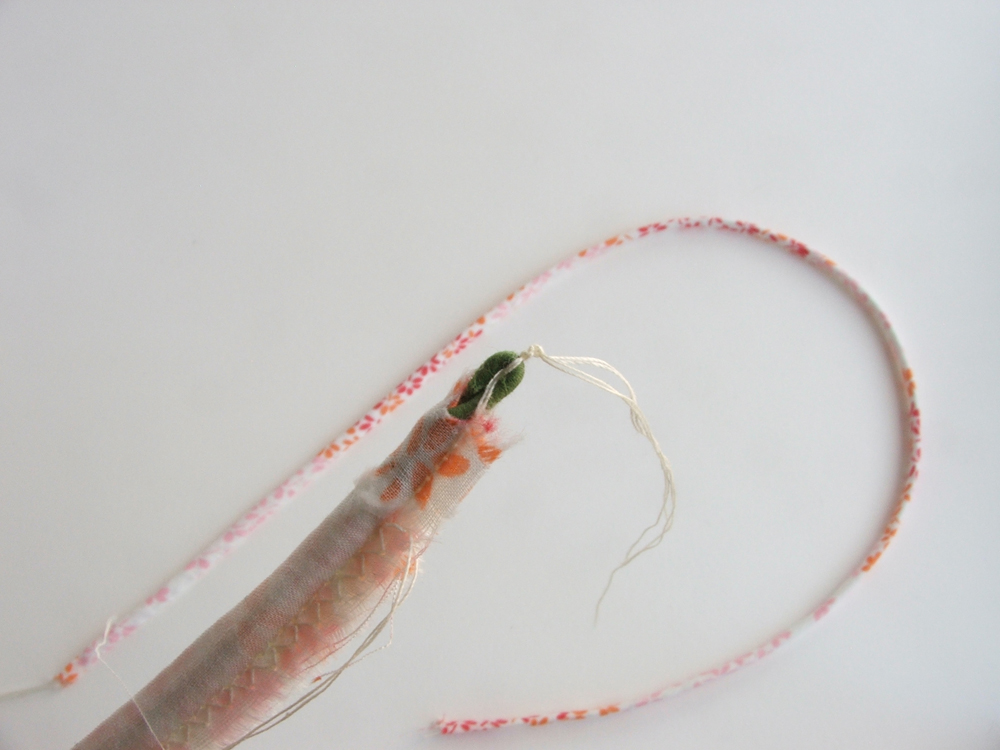
Ok!  Slide your new wire tube turner inside your tube.  Take the ends left from sewing the seam and tie them securely around the wire loop.  If your knot is not secure it may pull out part way through the turning process – terrible!  I pushed two thread ends through the loop one way, and two through the other way, and tied them in several square knots on top of the loop.

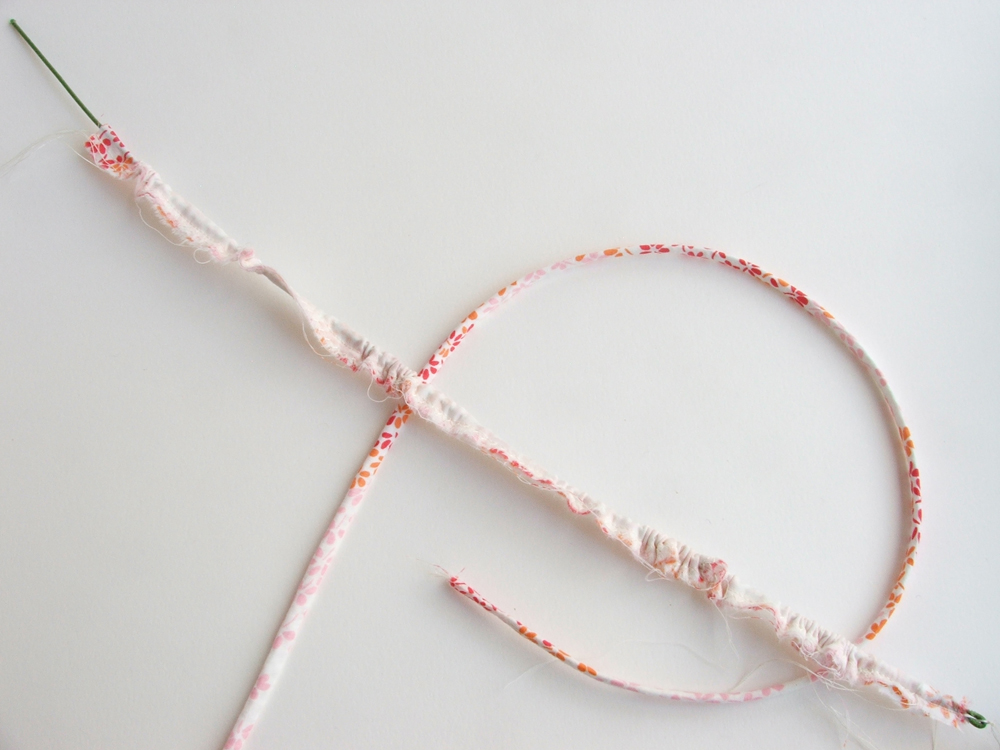
Pull the wire into the fabric tube, and the tube should start to turn inside itself.  Sometimes it’s a bit hard to get it started, you can try using your finger nails to pull the scrunched up fabric over the end.

General tube turning tips:  Don’t get so much fabric bunched up right where the tube is turning that it gets packed in and won’t turn.  If you get stuck, back the bunched up fabric away from the end and try moving a smaller amount through the turn.  Pull on the wire threader and the turning point, stretching a bit can help.  Once you get going, pull on the fabric end inside the tube instead of the wire, so there’s no danger of the thread breaking.

It’s much easier if you have a slippery fabric!  Mine at the moment is two layers of cotton, not slippery at ALL, but it still worked without too much fuss.  I wanted my straps to be as thin as possible, the limit with this fabric was a 1/4″ seam.  With a slipperier fabric smaller could work, keep in mind though that you have to have enough seam allowance so that your finished tube won’t unravel, and that seam allowance has to fit inside the finished tube!  I zigzaged over my SA since I absolutely do not want to take my dress apart later due to straps coming apart.

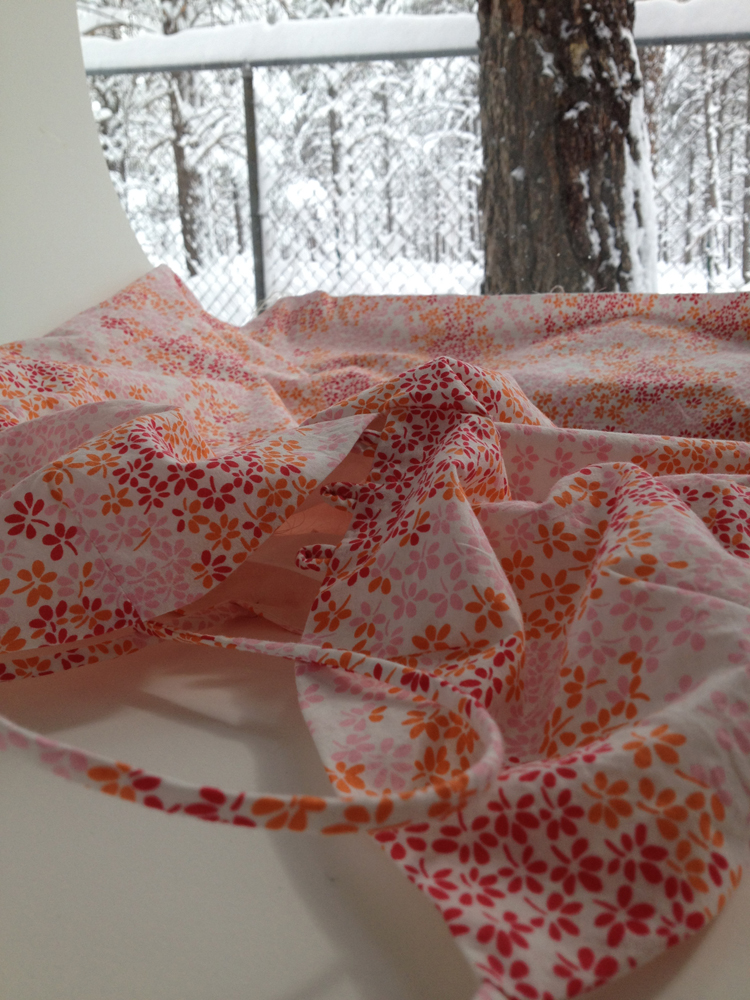
What am I making with these tubes anyway? A sundress!  I took this picture on Sunday during our giant spring snowstorm, which is now melting like crazy.  Whatever the weather says, it’s time for spring/summer sewing!  I used the fabric tubes for the straps, and also button loops at the top.  I’m glad to have my new wire turner, I can make some more straps for tops and dresses for the upcoming season.

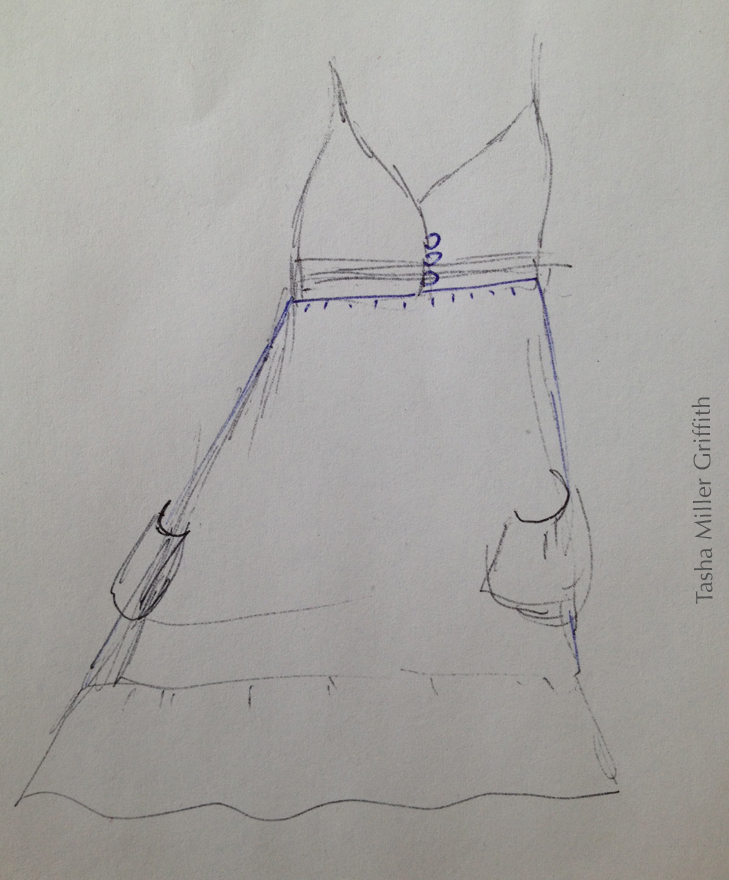
Here is my sketch of the finished sundress.  I haven’t decided whether to do the big patch pockets or not.

What do you think?  What are you making now?

10 Tips for Drying Laundry Outdoors


The last post was all about how I felt about hanging the laundry out to dry, and not so much about how to do it if you never have before.  This blog is supposed to have lots of information, so here are some tips:

  1. You can string up a rope just about anywhere and use it to hang up clothes.  Two trees, a tree and a porch rail, a hook on the side of the house . . . I had a small clothesline on an upper story balcony once.  In Italy, everyone still hangs their laundry on a line just below the window (and, their downstairs neighbors return the socks they accidentally drop)!
  2. My trees are about 20 feet apart, a rope looped around them so I can hang clothes on both sides holds a large load of laundry.
  3. You don’t need special “clothesline”, any rope or cord thin enough to get a clothespin over will work.
  4. A really handy knot to use to tie your clothesline is the taut line hitch, you can cinch it up after it (inevitably) sags after you tie it the first time.  There are clear and concise directions at netknots.com.  If those don’t work for you there are a lot more to be found by searching for “taut line hitch” – if you are a sailor or otherwise knot-preoccupied, look out – good thing I have this post to write so I won’t get too distracted by learning new knots.  Hopefully.
  5. If your clothesline has been out of use for a while (maybe it was abandoned by a previous resident?), run a damp rag along it before you hang anything up, to keep from getting any dirt on it onto your clothes.
  6. You can take your clothesline down during the time of year you’re not using it, it will last longer, and won’t rub bark off your trees in the same place all the time.
  7. I highly recommend keeping your clothespins inside and bringing them out with the laundry each time.  You can store them in a bag, or a jar or whatever.  It keeps them from rotting and/or being new homes for tiny spiders who build their webs in the “tunnels” made by the spring.
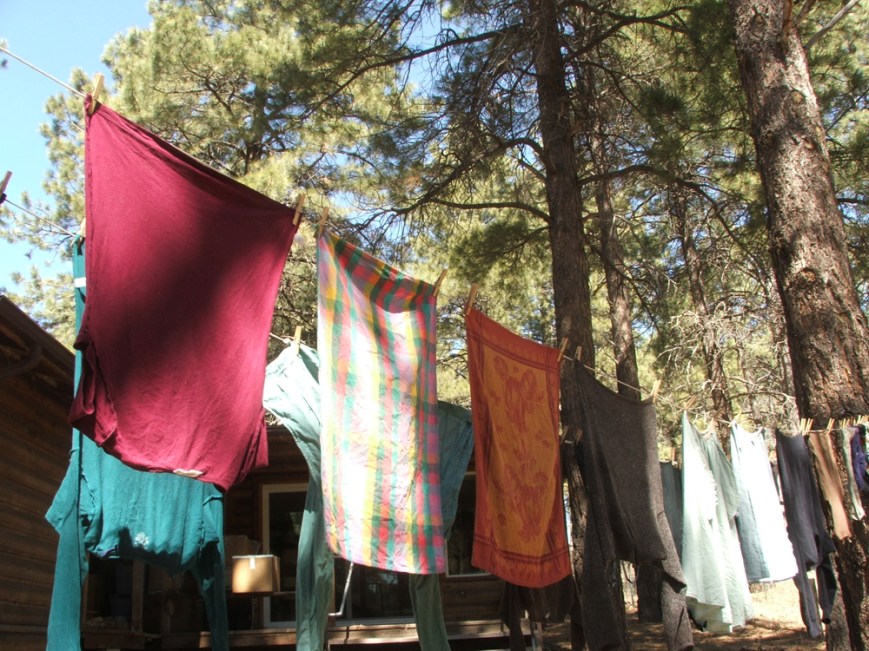
  8. Hang shirts and tanks from the bottom (see pic), that way the clothespins won’t leave a visible mark or make a crease in the top.
  9. If your laundry is in the sun, hang things you don’t want to fade inside-out, and/or with the back facing the sun.  Hang things you want to bleach in as much sun as possible (more about that in another post soon).
  10. If you, or possibly other members of your household, prefer laundry as soft as it comes from the dryer, you can always throw clothes in for just a couple of minutes when they come off the line.  You still get your mid-day laundry hanging meditation, and save money and gas for the dryer!

Do you have more tips?  Please share them!


Of Course You Can


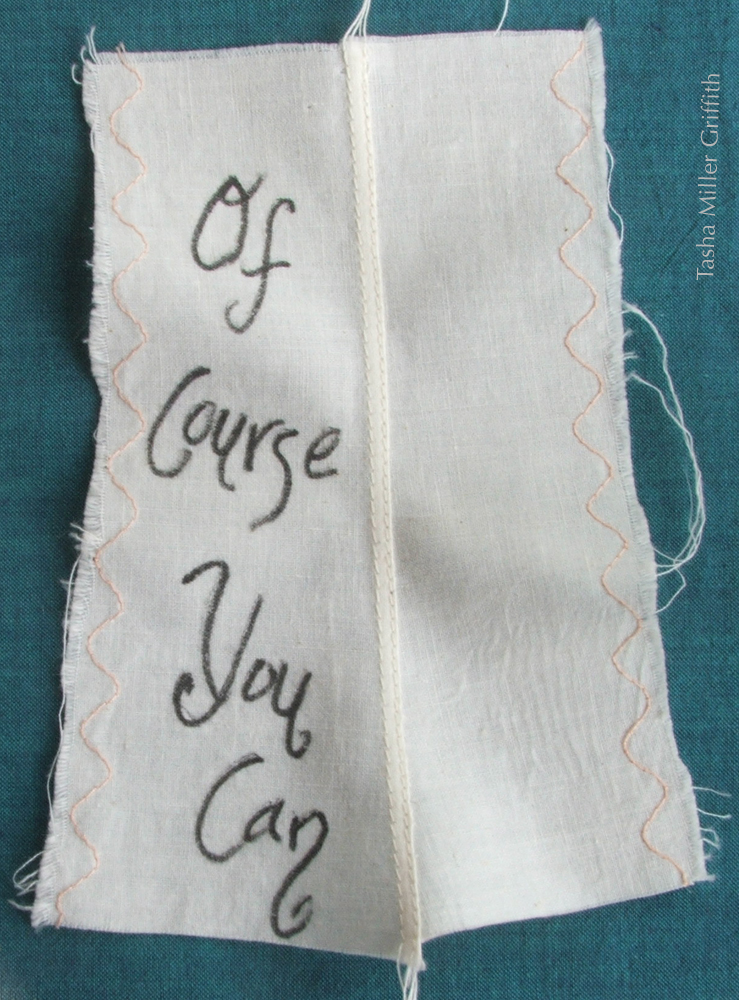
I have had this slightly homely little reminder hanging in my studio for years now.

At the time, I was reading a sewing book, I won’t say by whom since I actually respect and like this person’s work.  But in this case, the author had me all riled up by suggesting that in order to make a small, curved, flat-felled seam, you really must get this special foot for your sewing machine.

While I believe in tools, I also believe in skill.  I get insulted when people tell me I can’t, that there’s only one way to do something, especially if that way means you must buy this exact thing, etc.

The middle of this piece of fabric is my tiny, curved, special-foot-free, lovely seam.  Forgive the wonky handwriting.  I keep it around to remind me that what we are capable of is not defined by the gadgets we buy, or by anyone else’s ideas of what is possible or likely.

What words or things do you keep around to remind you of something important?