Another Way to Rip Seams


pocket seam ripping 1


If you’re going to make anything, it’s fairly certain that you’ll have to un-make and re-make part of it at some point.  It’s not bad, it’s just part of the process.  In sewing, this involves seam ripping.  It’s an essential skill for makers, and especially those who are interested in refashioning, repairing, upcycling, etc.

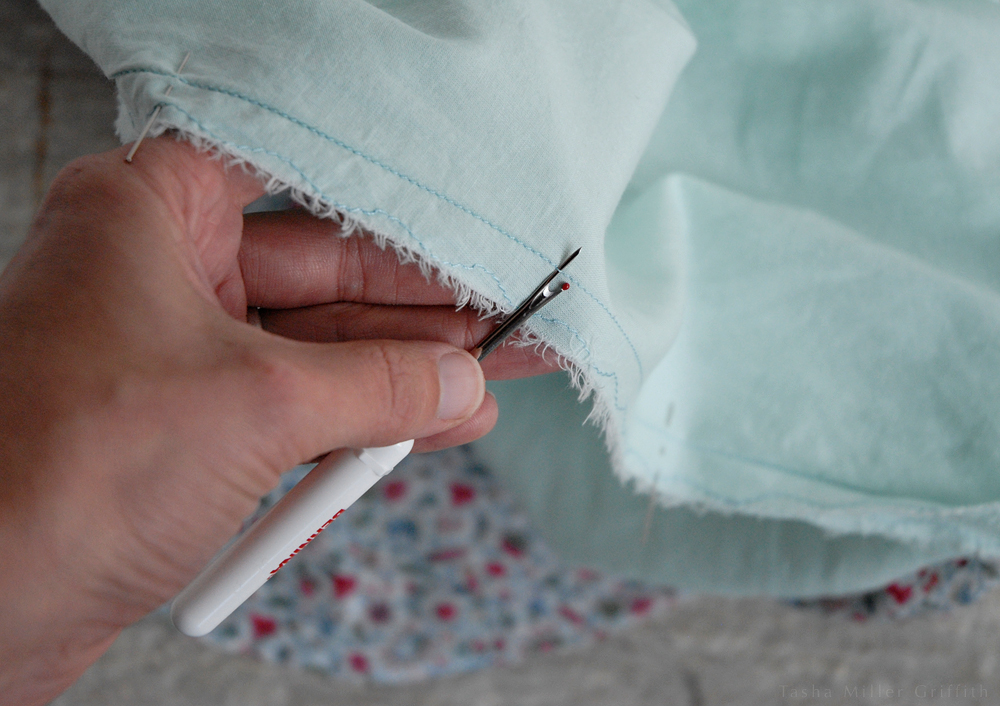
Although some folks rip stitches fast and furious with razor blades, I have always stuck to my trusty seam ripper.  Recently I’ve been using it in a slightly different way on straight and zig-zag seams, with really good results.
seam ripping 2014 0


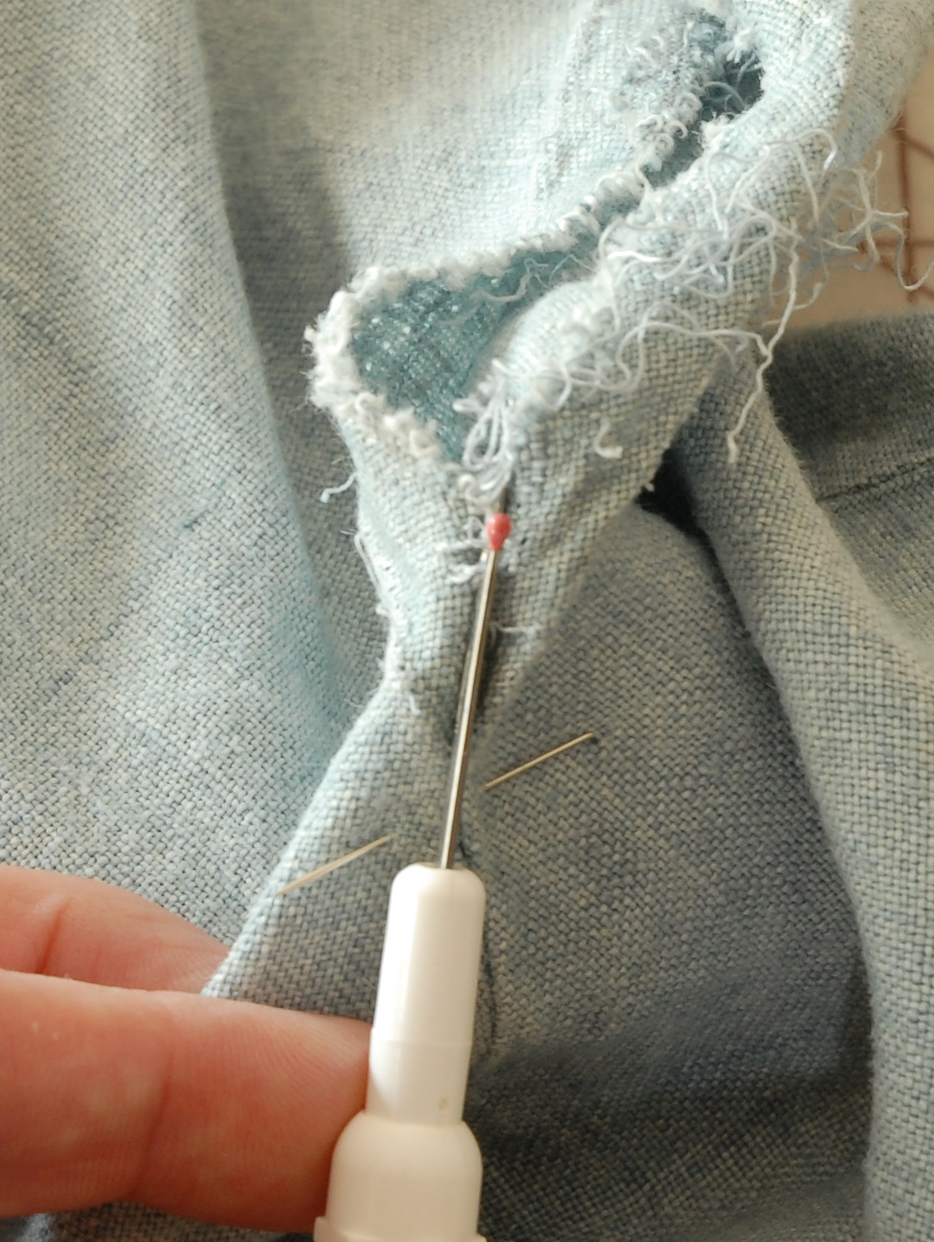
The photo at left shows classic seam-ripper technique.  Slide the seam ripper into the seam, use the pointed part to pick up a stitch or two, and slide them into the blade in the middle of the ripper to cut.  Once you have a couple of stitches cut, pull the seam open and you will be able to see and cut more without harming the fabric.
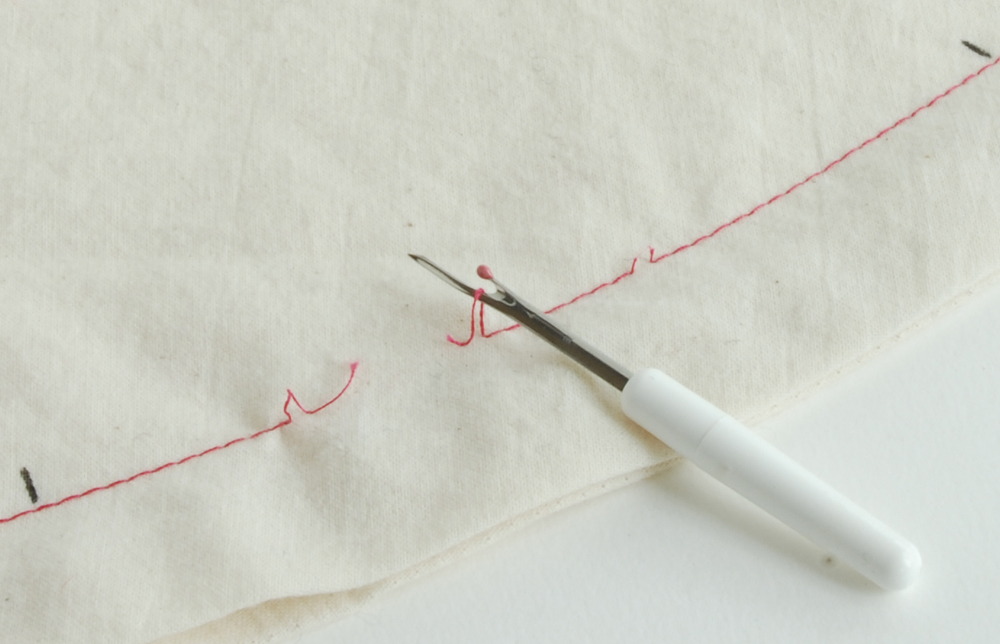


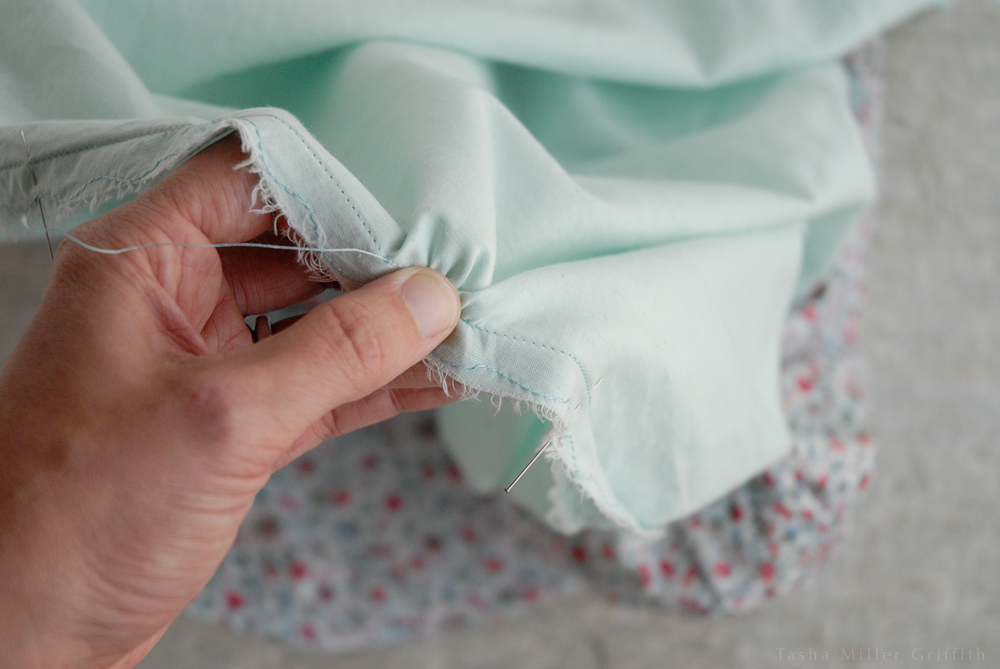
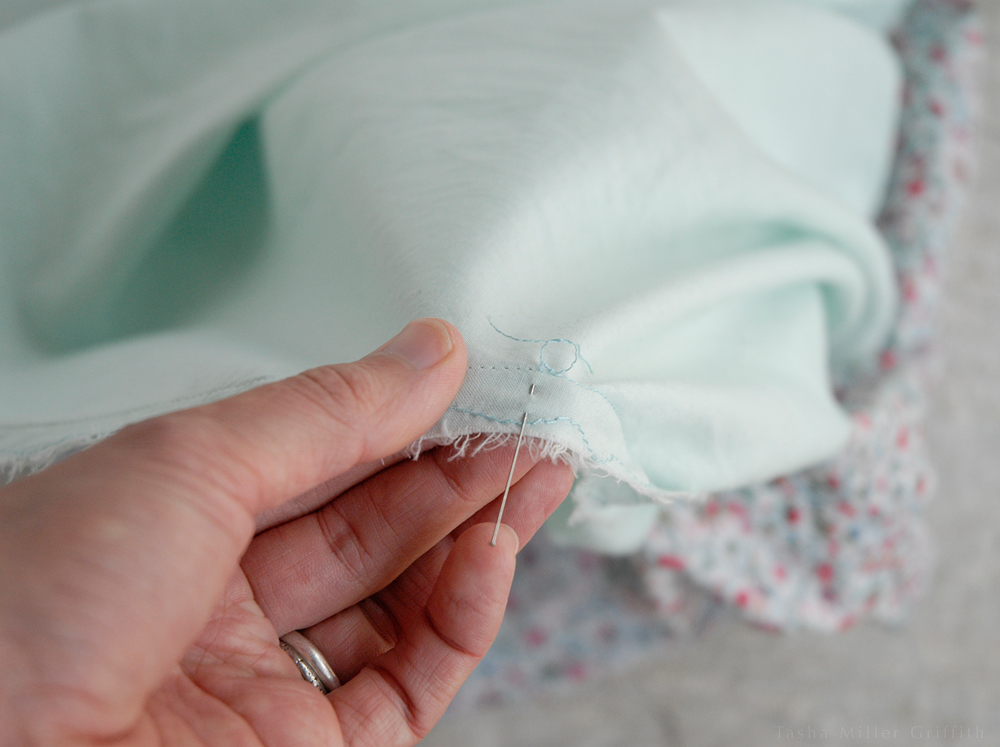
seam ripping 2014 1For this technique though, everything stays flat, which is especially nice if you have a delicate fabric or it’s hard to see the stitches in the seam.  Use the ripper to cut a stitch, and then another one 1 -2 inches away, creating a small thread section with cut ends.  Then use the long prong of the ripper to pull a few stitches up and out of the back thread without cutting them.  You may need to do this one by one if the stitches are small.  The object is to get a little tail that’s long enough to hang onto with your fingers.


Once you get a tail, grab it with one hand, hold the fabric with the other, and pull the the thread section out in one go!  Pulling close to the plane of the fabric, instead of straight up, will make it easier.
 

pocket seam ripping 3


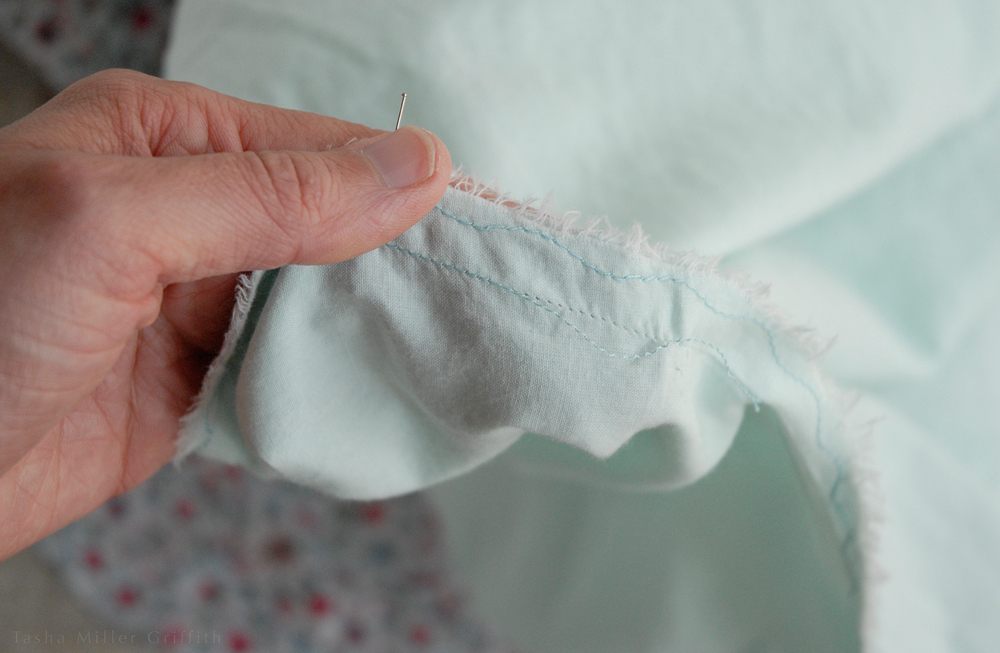
If you flip the fabric to the back you’ll see that the stitches on the other side, which were held in place by the ones you just pulled out, are now free.  All you have to do is cut a stitch a little way down the seam and you can use the free thread to pull out another section.  Every time you pull out a section, flip the fabric over and you’ll find a tail ready to pull out the next section.  I find this quite fast, and it also creates fewer tiny thread ends that you’ll have to clean up.
 

pocket seam ripping 4


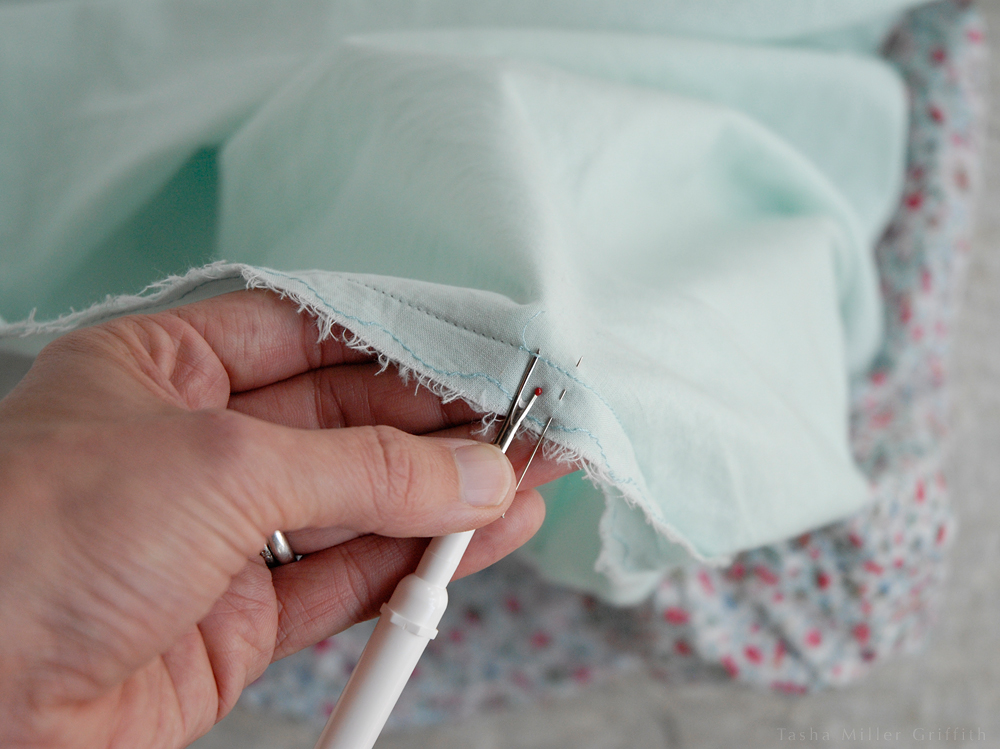
If you are ripping out a specific part of a seam, such as between the pins here, you may want to have a longer thread to work with when you get to your stopping point, so you can tie a knot to hold it in place.  In this case, pull up the last inch or two of stitches without cutting either side.  It may help to turn the seam ripper so the stitches don’t slide into the cutting part.  Once a stitch is loosened, you can also use your fingers, the whole handle of the seam ripper, or another tool to pull the stitches up without cutting them.
 

pocket seam ripping 5


When you get to the new end of the seam, pull on the thread to get the last stitch from the back side to pop through onto your side.  Slide the point of the seam ripper into this new stitch and pull it up so that both ends are on the same side.

Tie a knot or use backstitch, and bury the ends if they’ll show.
 

pocket seam ripping 6


Again, this last part is only necessary if the end of the old seam won’t be crossed by or stitched over with a new seam, and so you need to secure the end.

This way of seam ripping works great on zig-zag seams, too, although it won’t work with seams where the thread crosses back over itself.  Sometimes I’ll get lucky and pull the right thread on serged seams, but I don’t have a sure-fire formula for those yet.  Maybe you do?

I’m sure that others use this technique, I just discovered it recently and I’ve been using it all the time …
 

10 Tips for Drying Laundry Outdoors


The last post was all about how I felt about hanging the laundry out to dry, and not so much about how to do it if you never have before.  This blog is supposed to have lots of information, so here are some tips:

  1. You can string up a rope just about anywhere and use it to hang up clothes.  Two trees, a tree and a porch rail, a hook on the side of the house . . . I had a small clothesline on an upper story balcony once.  In Italy, everyone still hangs their laundry on a line just below the window (and, their downstairs neighbors return the socks they accidentally drop)!
  2. My trees are about 20 feet apart, a rope looped around them so I can hang clothes on both sides holds a large load of laundry.
  3. You don’t need special “clothesline”, any rope or cord thin enough to get a clothespin over will work.
  4. A really handy knot to use to tie your clothesline is the taut line hitch, you can cinch it up after it (inevitably) sags after you tie it the first time.  There are clear and concise directions at netknots.com.  If those don’t work for you there are a lot more to be found by searching for “taut line hitch” – if you are a sailor or otherwise knot-preoccupied, look out – good thing I have this post to write so I won’t get too distracted by learning new knots.  Hopefully.
  5. If your clothesline has been out of use for a while (maybe it was abandoned by a previous resident?), run a damp rag along it before you hang anything up, to keep from getting any dirt on it onto your clothes.
  6. You can take your clothesline down during the time of year you’re not using it, it will last longer, and won’t rub bark off your trees in the same place all the time.
  7. I highly recommend keeping your clothespins inside and bringing them out with the laundry each time.  You can store them in a bag, or a jar or whatever.  It keeps them from rotting and/or being new homes for tiny spiders who build their webs in the “tunnels” made by the spring.
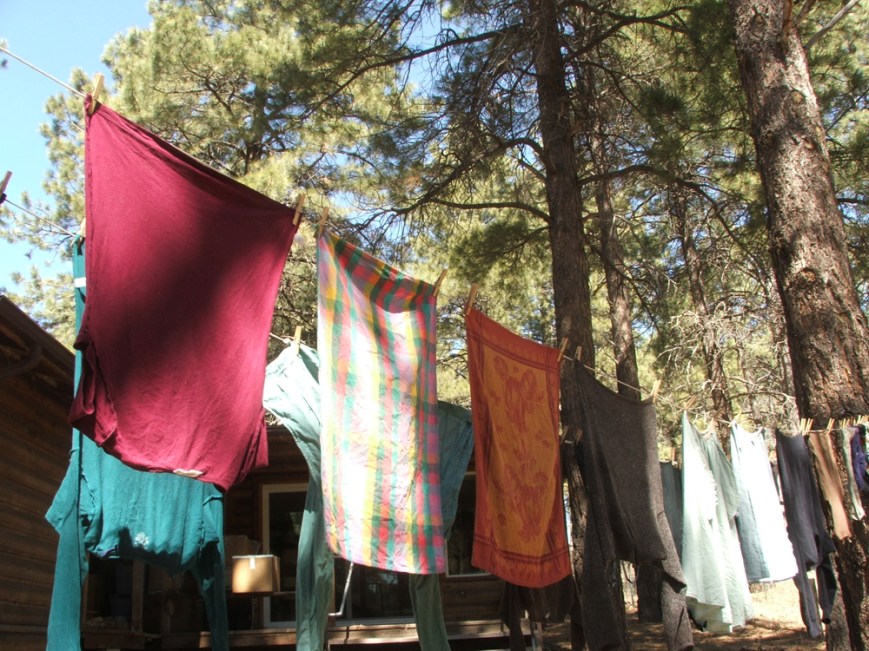
  8. Hang shirts and tanks from the bottom (see pic), that way the clothespins won’t leave a visible mark or make a crease in the top.
  9. If your laundry is in the sun, hang things you don’t want to fade inside-out, and/or with the back facing the sun.  Hang things you want to bleach in as much sun as possible (more about that in another post soon).
  10. If you, or possibly other members of your household, prefer laundry as soft as it comes from the dryer, you can always throw clothes in for just a couple of minutes when they come off the line.  You still get your mid-day laundry hanging meditation, and save money and gas for the dryer!

Do you have more tips?  Please share them!


I love hanging the laundry outside. . .

I do realize that this may mean I’m a nerd.  But it’s so true.

I love everything about it – it’s a quiet moment outside in a day in which I might not have time for a hike or just watching the clouds.  There I am, I can look up at the sky, I hear the birds, neighborhood noises, feel the breezes . . . I even love the way the clothes look hanging there.

In past summers when we have rented a place in Madison WI, I always found a way to string up some sort of clothes line in the back yard.  Although the smells and plants are different there, I enjoyed them just as much.

In Flagstaff, the good outside laundry days are increasing now (when it’s not snowing – typical mountain springtime).

Who cares if I’m saving money and gas for the dryer (well, Ok, I do care about those things too) – drying the laundry outside gives me a mini outdoor meditation in the middle of my day.  I have to do the laundry anyway, why not do it in a way that I love?

Fix a Ripped Out Button (or Other Small Hole)


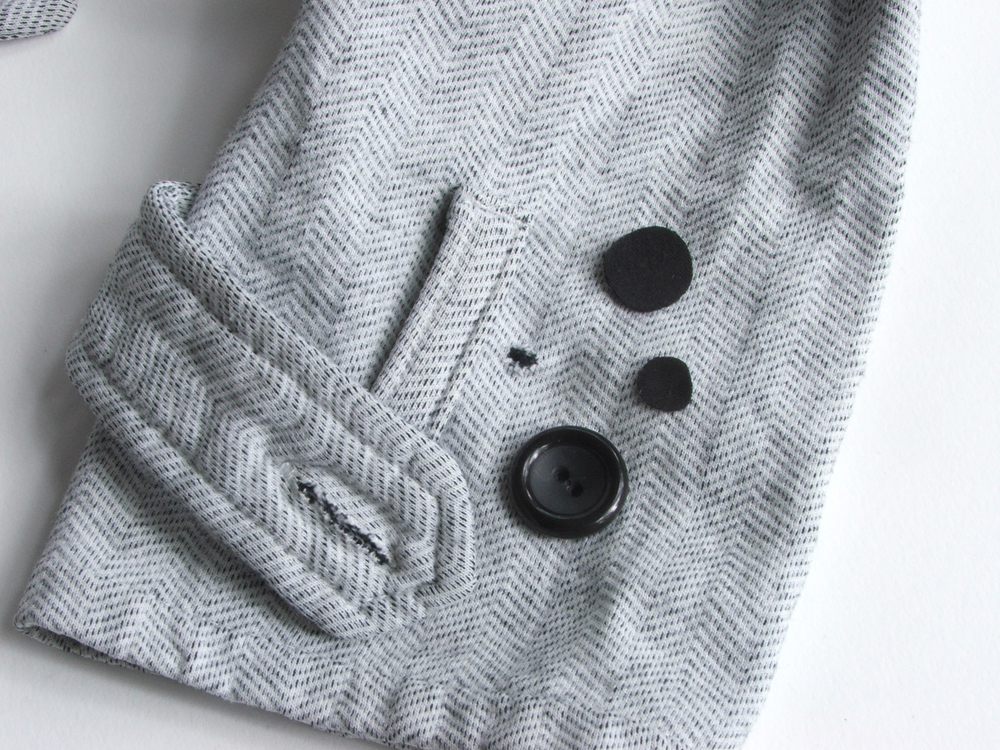
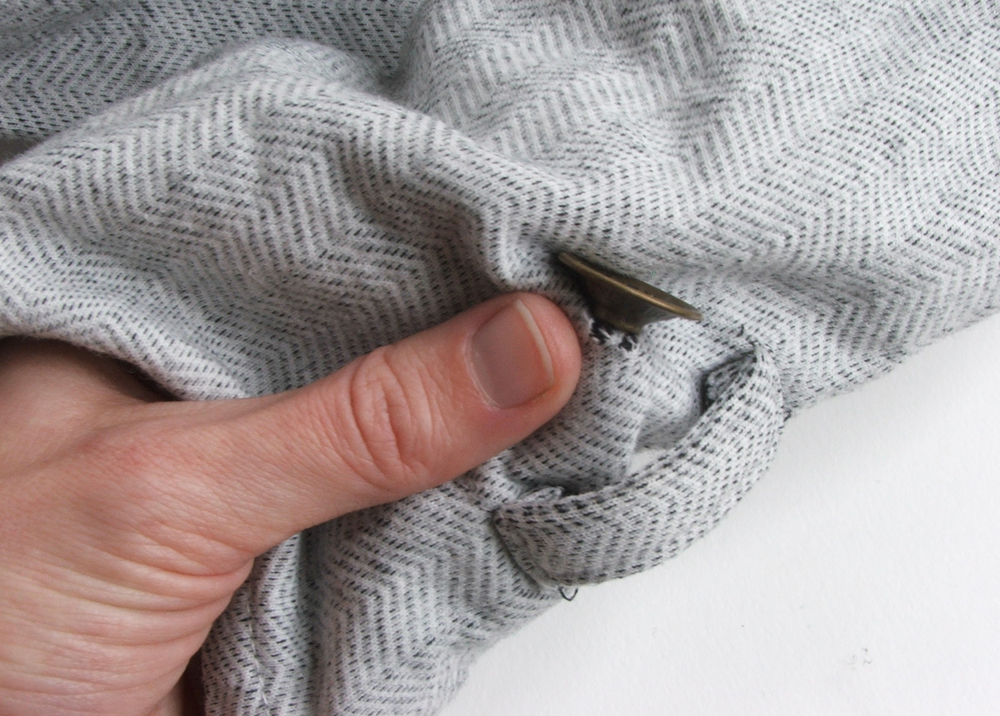
This is a sweater/jacket I picked up at the thrift store the other day, I thought it would be good for our upcoming ski trip to Bend (and also because I’m cold basically all winter long).  Only one or two small problems, the original buttons are some crazy unique things, more like a snap with one large flared button side and a flat back, and two of them are missing, leaving holes where they ripped out.

But small holes like that are pretty easy to fix, especially since the result will be covered by a new button.

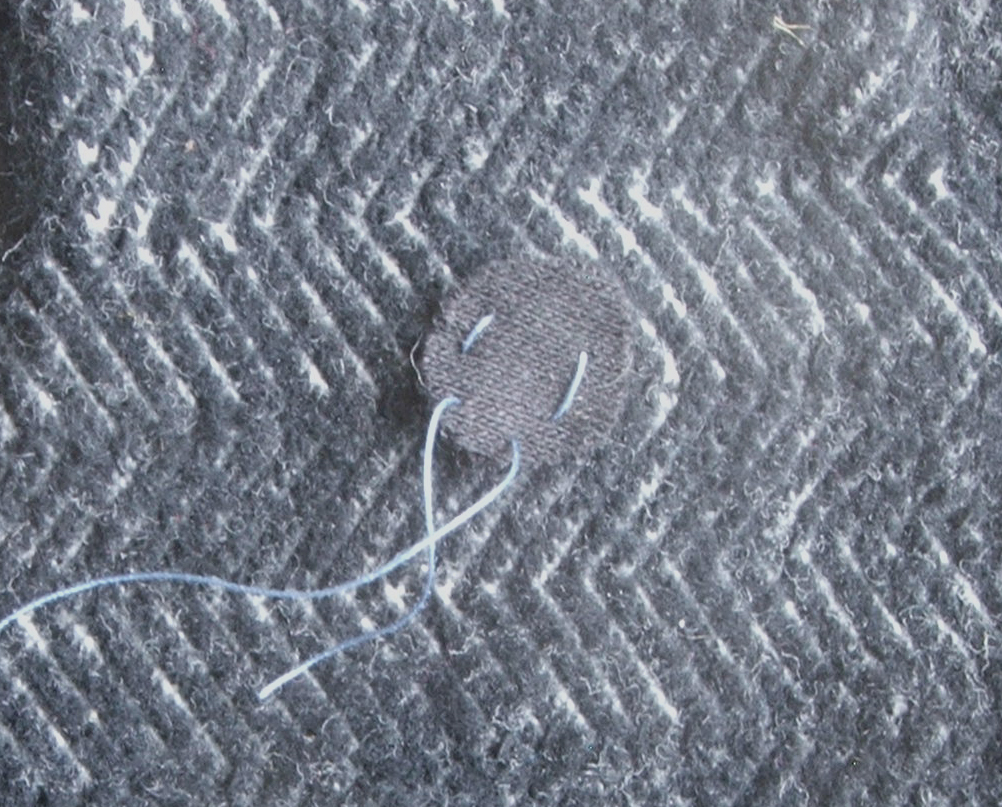
The fabric here is a sturdy (not very stretchy) knit.  I happen to have some sturdy black knit fabric to cut little circles from, but if I didn’t I would use a woven rather than something too thin or stretchy.  The fixed place is going to have lots of stitches in it and not be very stretchy anyway.

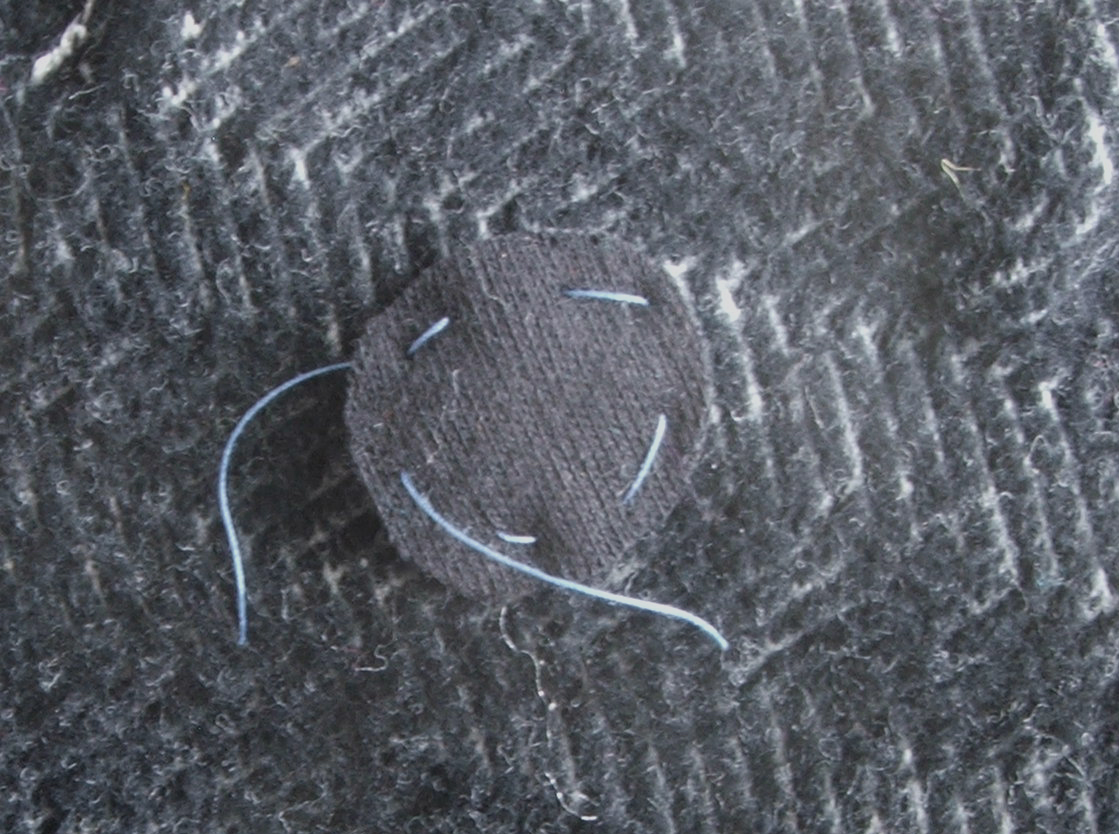
The easiest way to get the patches to stay where you want them is to baste them in.  (Basting just means stitching that’s not permanent, but meant to hold something in place while you sew.)


Because I want this spot to be super sturdy, I put one small patch directly behind the hole and another one on top to back a larger area (both on the wrong side of the jacket).  I used contrasting thread for basting, but you may want to try matching, it will make pulling out the smaller stitches later not as necessary.

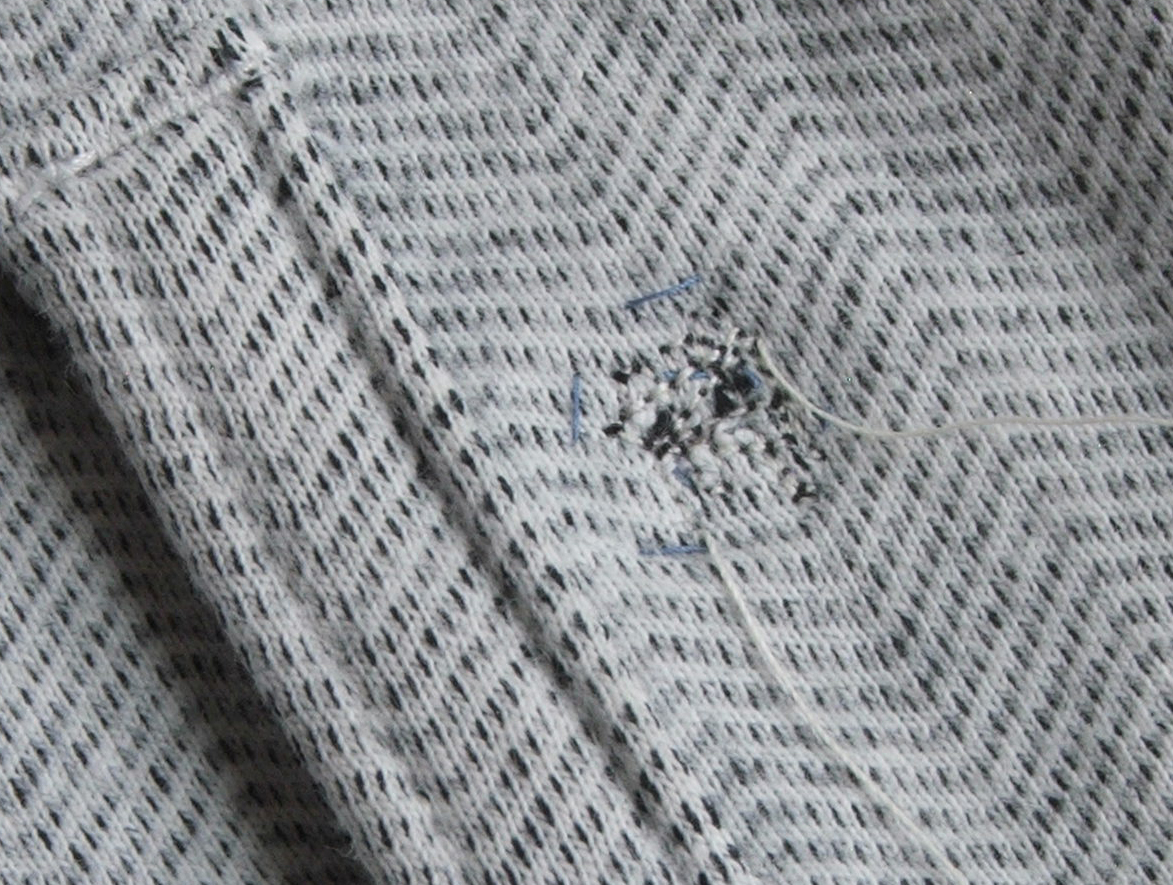
Next, smooth the sides of the hole down and as much back where they came from as possible, and sew using your machine.  If the fabric has a distinct color on each side, you can use different color top and bobbin thread – I used cream on top and black in the bobbin.  (A picture of me sewing this would show nothing, since it’s all under the foot!)  I used a short stitch length and went back and forth over the hole, mainly in the same direction as the knit ribs of the fabric, and then a bit side to side.  Make sure to catch all the raveling edges.  When you’re done it should look something like this:


Pull out the basting threads, bury the sewing thread ends, and you’re done!  Next week: how to sew on the button.

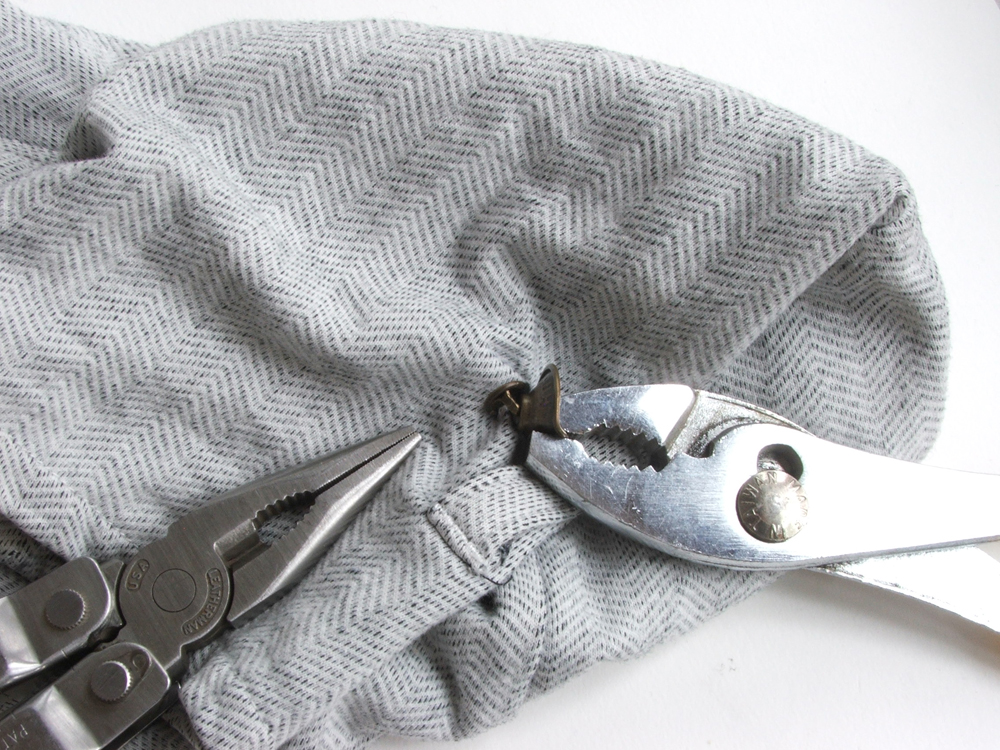
One final note, only one of these cuffs had the button come off.  But as you can see, the other one is about to go.  And besides, it will look more natural if they’re symmetrical.  Sometimes it just feels good to pull something off with pliers – rawr!


Got something you would like to fix?  Not sure how?  Leave a comment!