Aimee León: Art, Sheep Shearing, and Connections

aimee león at arcosanti


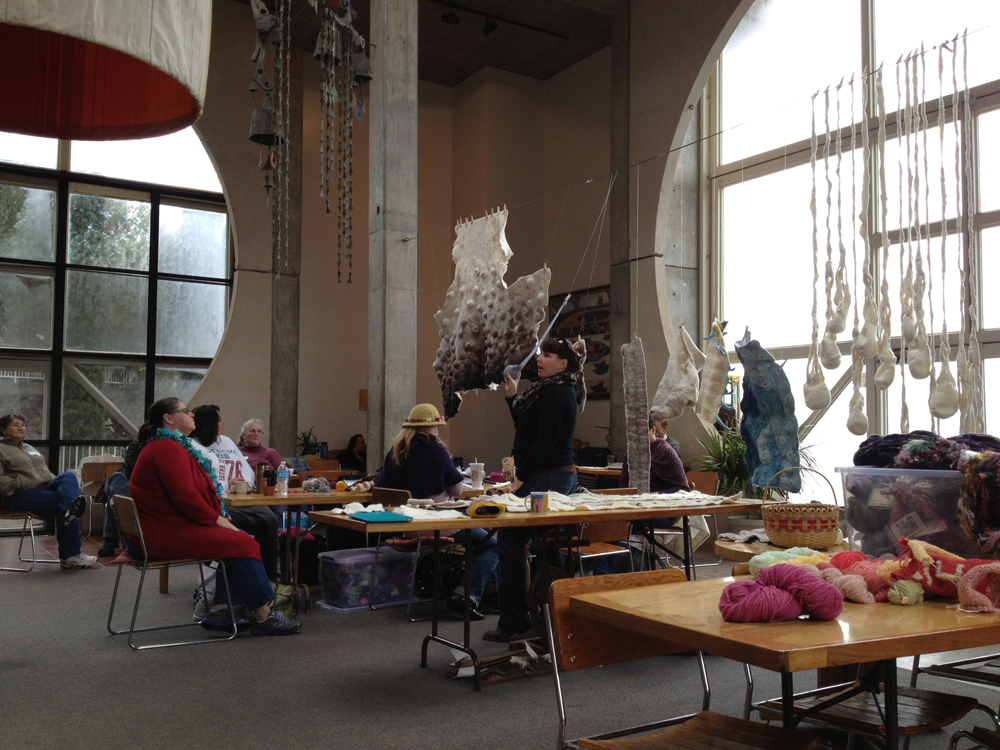
A few weeks ago, I got invited at the last minute to go with a couple of friends to a fiber “meet and greet” event, held at Arcosanti (about an hour and a half south of Flagstaff).  I wasn’t sure what to expect, but I am so glad I went.  Not only was it fun to hang out with other fiber crafters and get a glimpse of the architecture on a rainy, blustery day in the desert, but the speaker was fantastic.

Aimee León, who is working towards her MFA at ASU in Phoenix, had agreed to come up and speak to us about her felt artwork – for free.  Her talk epitomized one thing I just love about the maker movement and modern crafters; people who are not just looking to make something, but thinking deeply about the connections between materials, handcrafts, and society.

Aimee shears sheep (did you know they can weigh more than 200 lbs each?) and uses discarded wool in her artwork, which reflects her ideas about society and gender norms.  She talked about how much wool is wasted because small farmers don’t have the resources to ship whole container loads to China (!) for processing, and about her goal to bring more of that local wool to fiber artists.  And about the historical connections of wool and fiber with labor, women’s role in society, commodities, and how we think about the clothes we wear today.  One great thing about a small venue is that I had a chance to talk with Aimee quite a bit, before and after her presentation.  There are so many ideas to pursue in these topics that I could have talked much longer . . .

I love thinking about how what I make is connected to the materials I use and where they come from, the historical use and place in society of the materials and the maker, and all the choice that gives me in the modern world.  It just reinforces the fact that the choice to be a maker in modern times is a powerful one for us as individuals, with implications for our broader society as well.


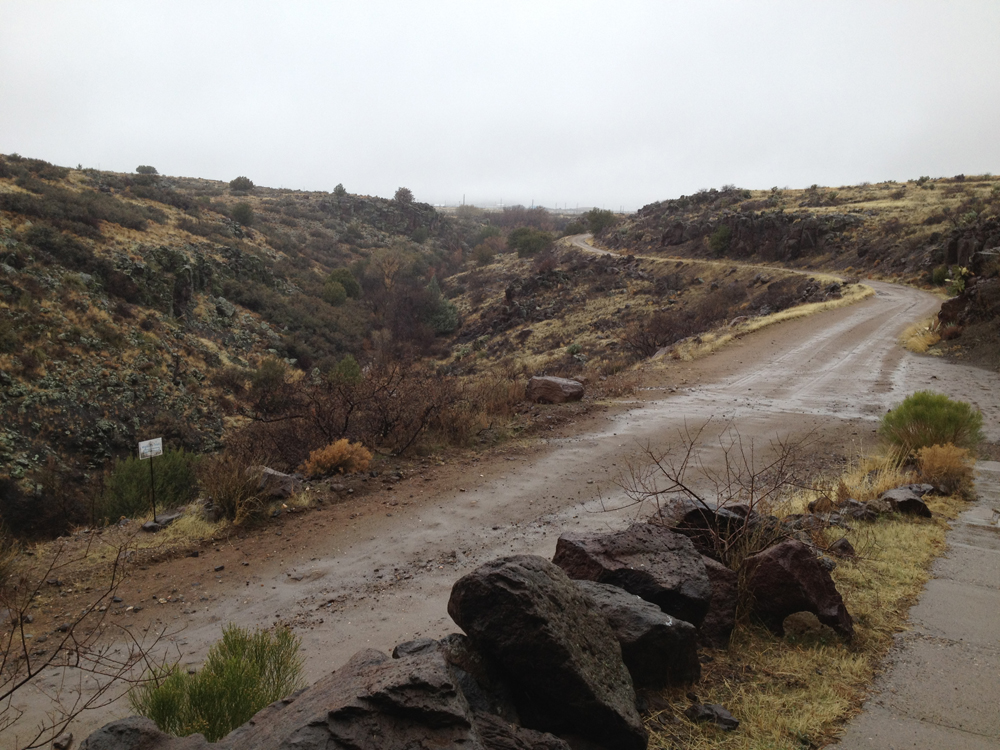
arcosanti desert in rain

A desert road near Arcosanti on that foggy wet day

Do check out Aimee’s website, there are lots of pictures of her work and links to other interesting projects she’s working on.  If you live around here and would like to be on the mailing list for this event next year, let me know and I’ll pass your info on to the lovely woman who organizes it, Kimberly Hatch (thanks Kimberly!).

What do you think about art and craft and its potential to change us?  I’d love to know!


Me-Made Purple Corduroys—How Life is Like Fitting Pants

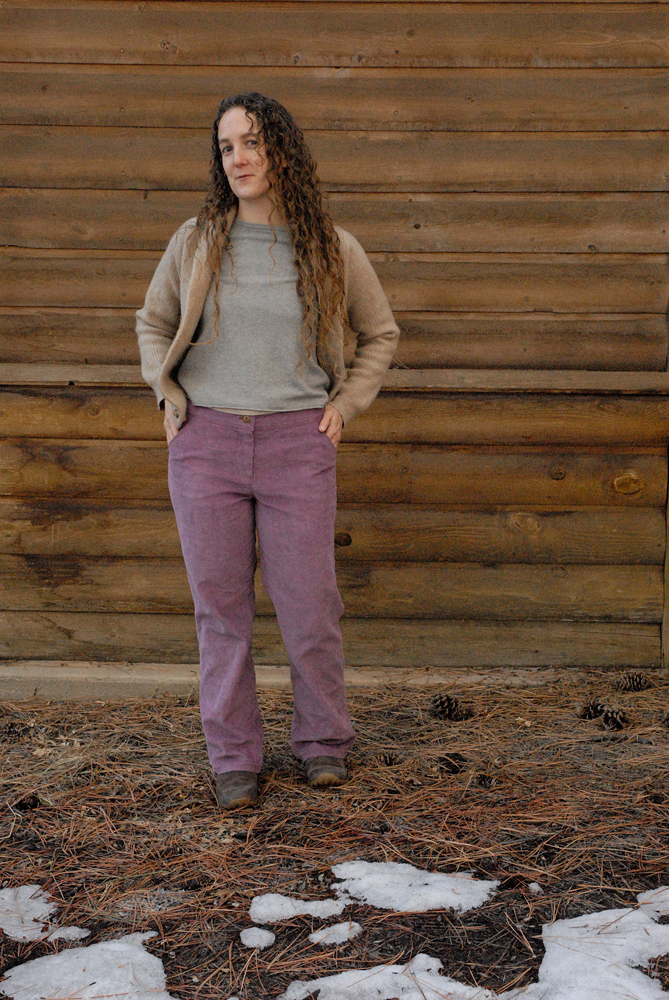
purple cords 1


Where to begin?  I think I could talk about these pants and all their glories and implications well past what you would read.  Well – I think I’ll begin with why they are purple, which will lead right into why they are fitted, which will lead right into why they are the best pants I’ve ever had.

So, a few years ago now, my aunt got this pair of purple corduroy pants, and for some strange reason I fell in love with them at first sight.  I’m not usually into purple, or brightly colored trousers, nevertheless I’ve wanted my own pair ever since.  I found 1 1/2 yards of, get this, lavender hemp and organic cotton corduroy on the NearSea Naturals clearance page!  (It had a “stain” on it, which washed right out.)  Update: although I love love love the idea of this fabric, the color of this fabric, and the resulting pants, the fabric is just not sturdy enough.  I got about a year of good-looking wear out of these before the corduroy pile started coming out, even with washing them inside out and not once putting them through the dryer, and that is just not enough for something I made.  If anyone knows of a source for sustainable, long-lasting fabric, please let me know!  The good news: all the work I did on fitting (keep reading) is already transferred to the pattern and waiting for me to find the next fabric! 

I thought this was the perfect amount of fabric.  I planned to make another pair just like my grey pants, even though I wasn’t sure that wide leg would be the best look for purple corduroys, I would figure out that fit first, and save more close-fitting pants for another day/next fall maybe.  Well – it turned out that all the wide leg pattern pieces would not fit on this much fabric.  To fit them in I had to narrow the legs quite a bit.  Well.  I just tapered the tops of the pattern pieces from the grey pants into the narrower legs, cut them out, and this is what I got.


purple cords fitting


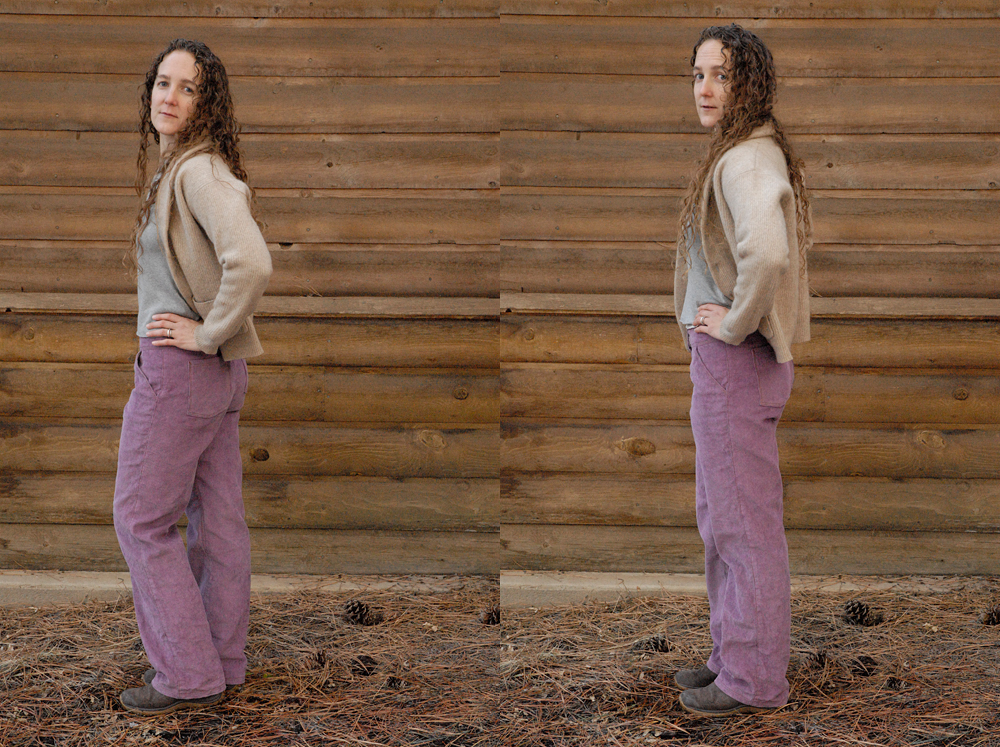
Clearly those fabric saddle bag areas on the sides had to go straight away, that was the easy part.  Getting a better fit through the seat/inner thigh area took a lot more work.  Every day for weeks, my sewing time consisted of: ripping out and re-basting in a slightly different position some part of the crotch seam and/or inseam and/or side seam, trying the pants on, deciding what to rip out next (often the same part).  Although I worked on these only a little bit each day (partly to keep myself from getting frustrated and doing something hasty/stupid), I thought a lot about how life is like fitting pants.  The baking equivalent might be yeast bread, or even macarons.  There are a lot of variables, and each one seems to affect all the others, so that a small tweak in one area can change all kinds of things I would not expect.  But, if I just keep plugging away, trying things, seeing what happens, I will eventually reach a place where I am very happy with the results.


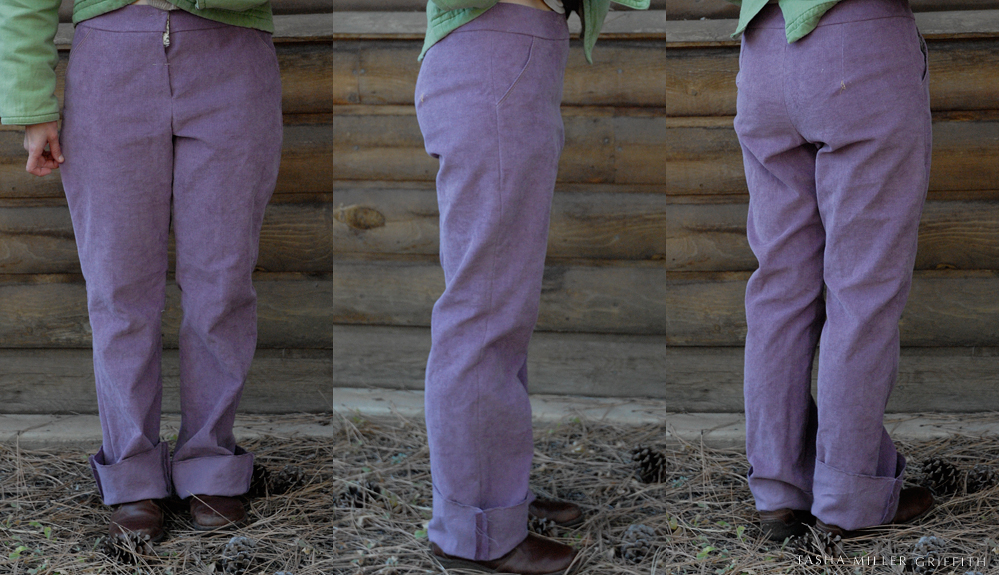
purple cords side


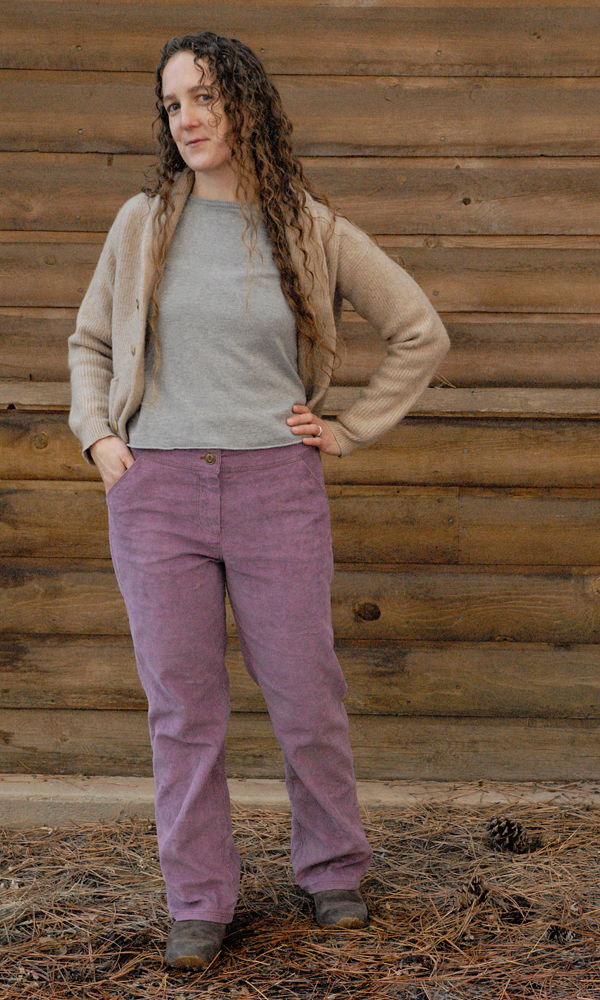
Well – I really could not be happier with this result!  Although I have tweaks to make in the next version (pants are clearly a journey, not a destination) they are the first pair I’ve ever had that really fit and flattered my figure, they’re incredibly comfortable, and I’m ridiculously satisfied with myself when I wear them.

If it wasn’t for the fact that things need washing, (Ok, and I do love skirts, and some days are for grubby clothes, etc.) I might conceivably wear these straight through until they wore out.


purple cords sewing table


Some sewing and fitting things I figured out while making them:

I took out all that extra I added to the back inseam of the grey ones, and then some.  Clearly a different fit requires a different shape.

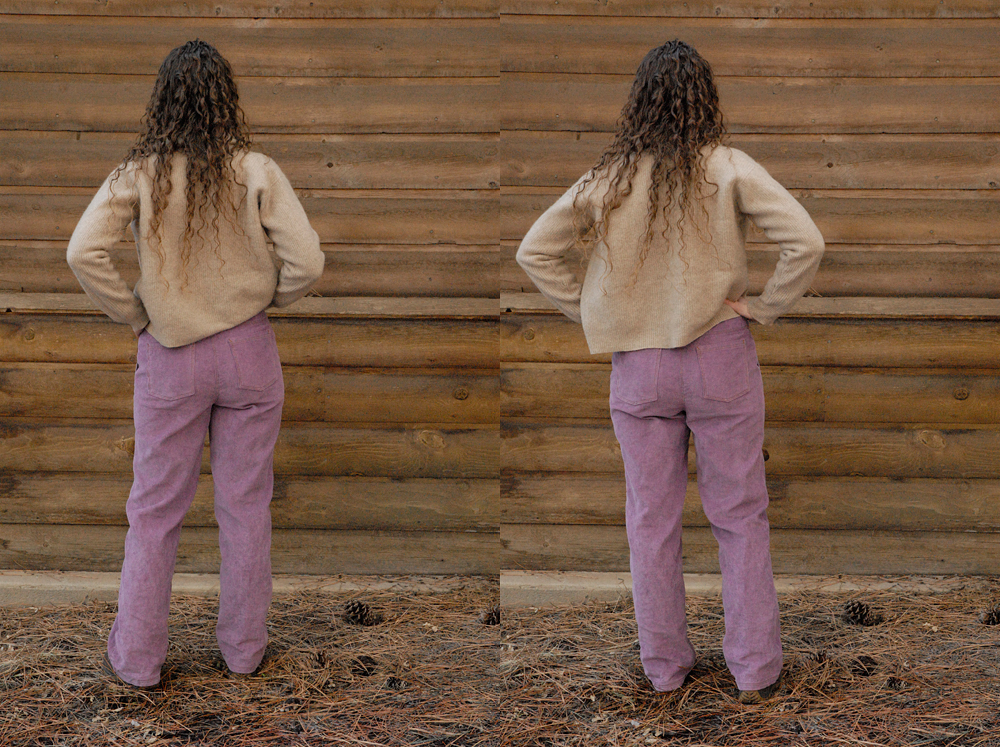
See that diagonal wrinkle across the back hip in the first fitting?  I tried all kinds of things to get rid of that; letting out the side seam, unpicking the waistband and pulling the pants up, but nothing worked, until I saw something in Patternmaking for Fashion Design by Helen Joseph-Armstrong (which is one of my all-time favorite sewing books, expensive but worth it, I asked for it for Christmas one year).  It was one of my cousin’s textbooks at FIT in San Fransisco, and it shows you how to draft a pattern for just about anything you could ever want to make, plus all kinds of construction techniques.  It’s designed more for the fashion industry that for home sewers, and there’s not a lot about fitting, so I guess it says something that there is a section on pants fitting, where I found an illustration of a similar wrinkle with this note, “insufficient dart intake for dominant buttocks.”  That’s not how I’d like to think about my derriere, but the part about the dart totally worked!  I had been leaving that dart alone since I fit it in the last pants, but clearly it’s not a good idea to start think of any part of the fit as “finished” when I am changing the rest.


purple cords back


purple cords edgestitching


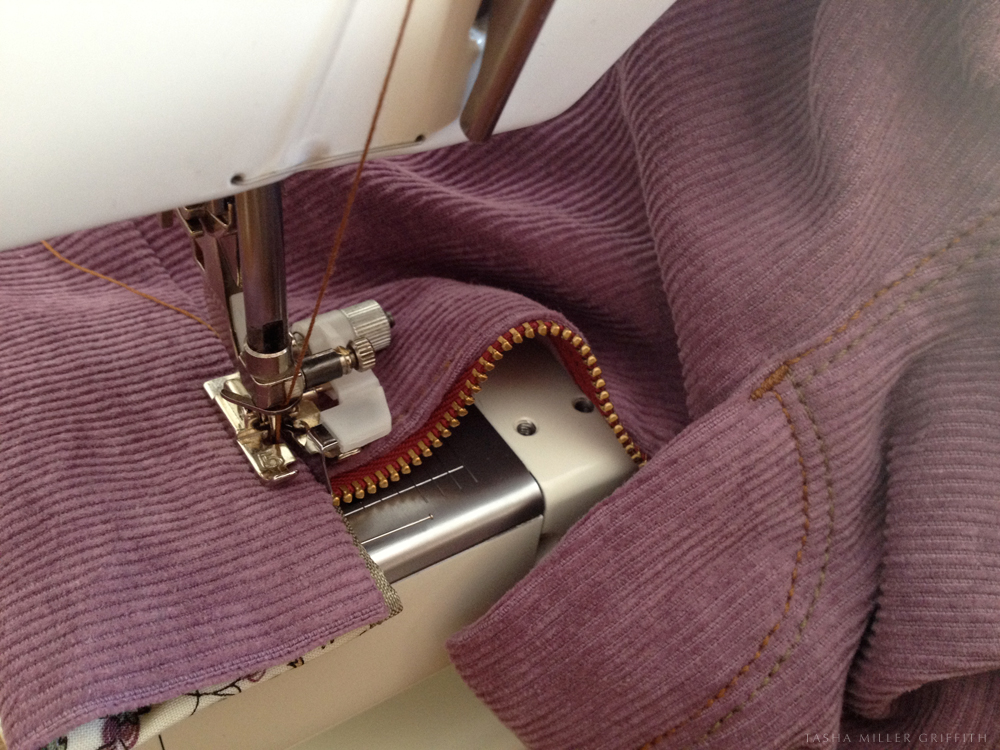
I used my edge stitching foot for the first line of top stitching (with a size 100 topstitching needle, moving the needle slightly to the left), and it worked great!  It was much easier to get an even stitching line with that little guide riding right on the edge.  I am now trying to figure out how I can use a similar guide for for the second line of topstitching, further to the inside..  Anyone know of a foot like that?  I used two colors topstitching and I really like it, one pair of Bryan’s jeans has that look and I decided to try it out.


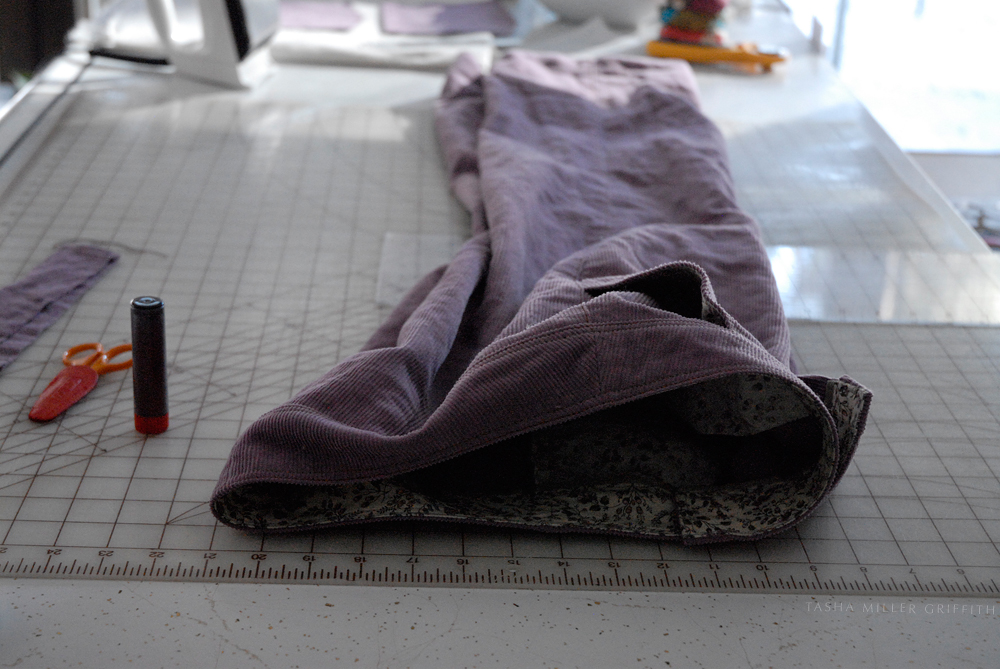
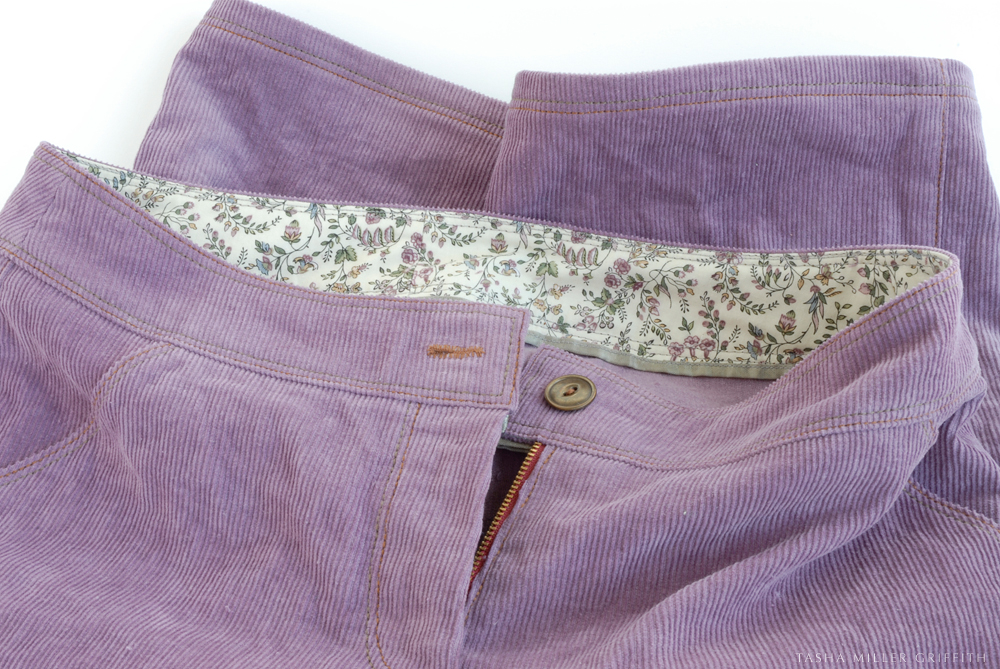
purple cords inside


I trimmed a bit of the waistband lining before applying the rayon ribbon to the bottom edge, next time I’ll trim a bit more, but I like this finish.

If the legs look a bit long, I left them that way on purpose.  I keep noticing that the hems of cotton pants tend to creep up just a bit over time with washing, usually after I fix them just how I want them.  I’m not sure what the shrinkage of hemp is, but if these don’t get any shorter after a while I can always hem them up a bit more.

By the way, the above shot of the inside waist is probably the closest I got to the actual color, for some reason this purple seems to be hard to capture.

That’s about it, I guess, unless of course you want to talk some more about sewing, body image, and the power of DIY, etc. . . . if you see me around, I’ll be wearing these pants, and feeling happy!


tasha in purple cord pants


Michigan Winter in Pictures


michigan winter 5


Out here in Flagstaff, winter is (assuming it snows enough) bright days with the sun bouncing light from the snow everywhere, white too bright to look at and deep dark shadows.  Ponderosa pines collecting snow in huge clumps in their needles, and then when the sun comes out, dropping them with a window-shaking thud on the roof over my head, or on my actual head while I’m shoveling.  It’s getting your skiing in before the snow melts down, and watching the flakes float past my studio windows when it snows again, which is one of my very favorite things about this room.

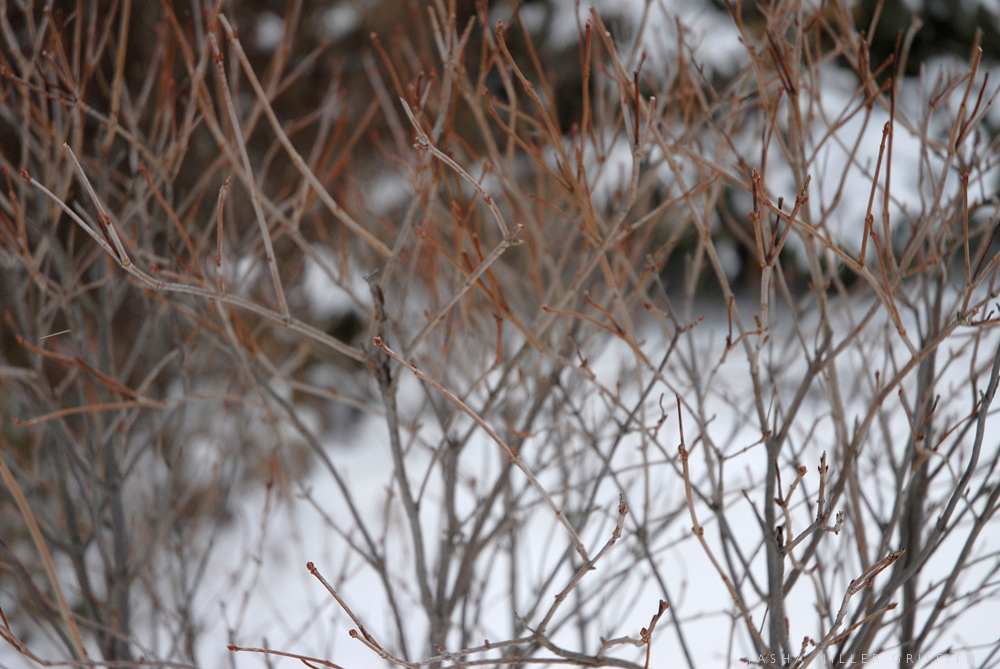
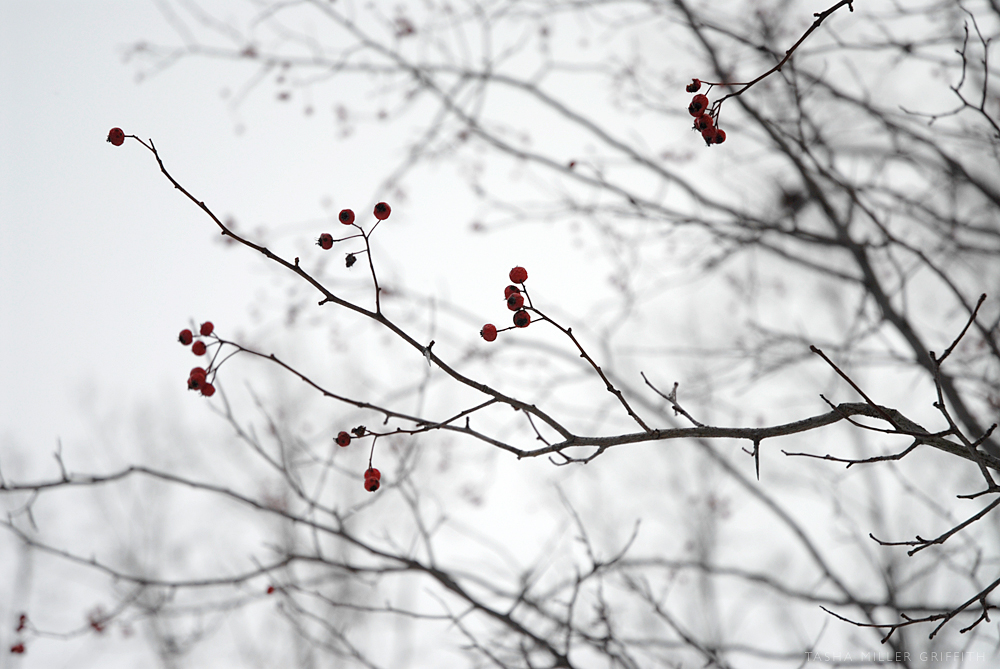
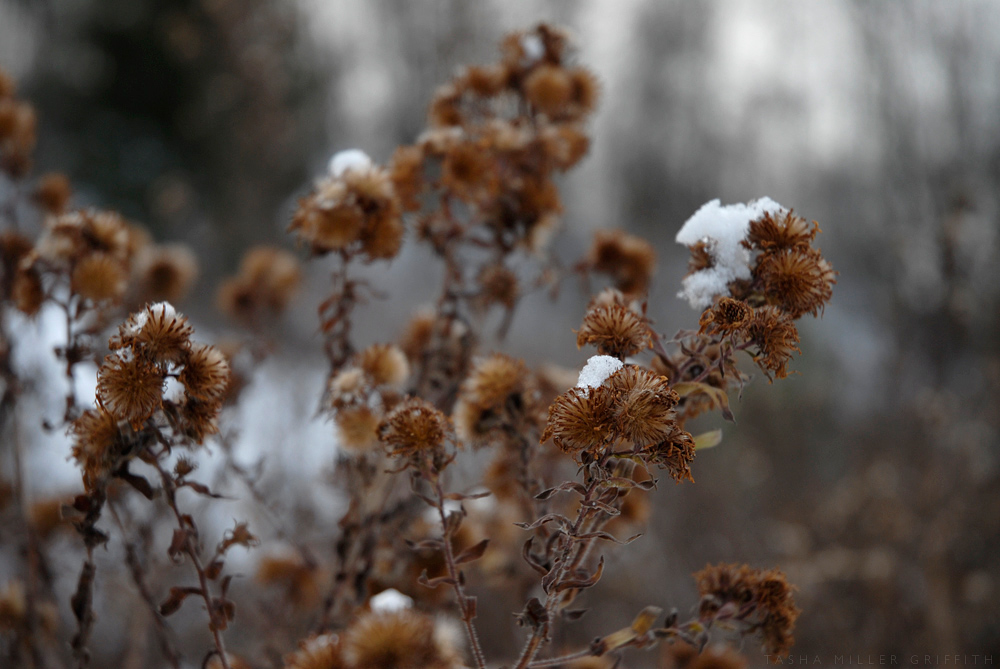
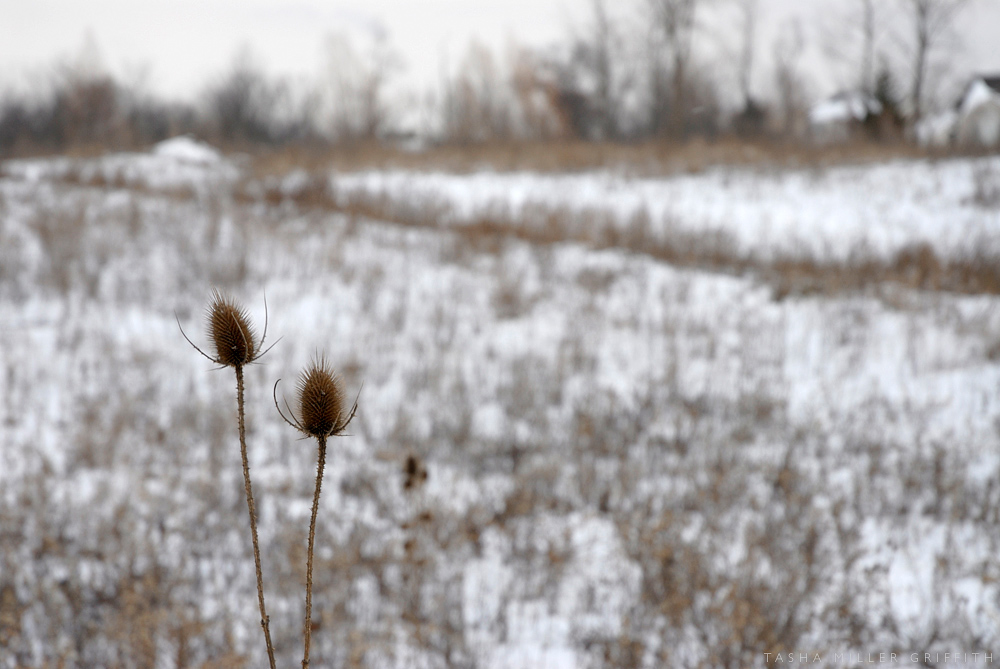
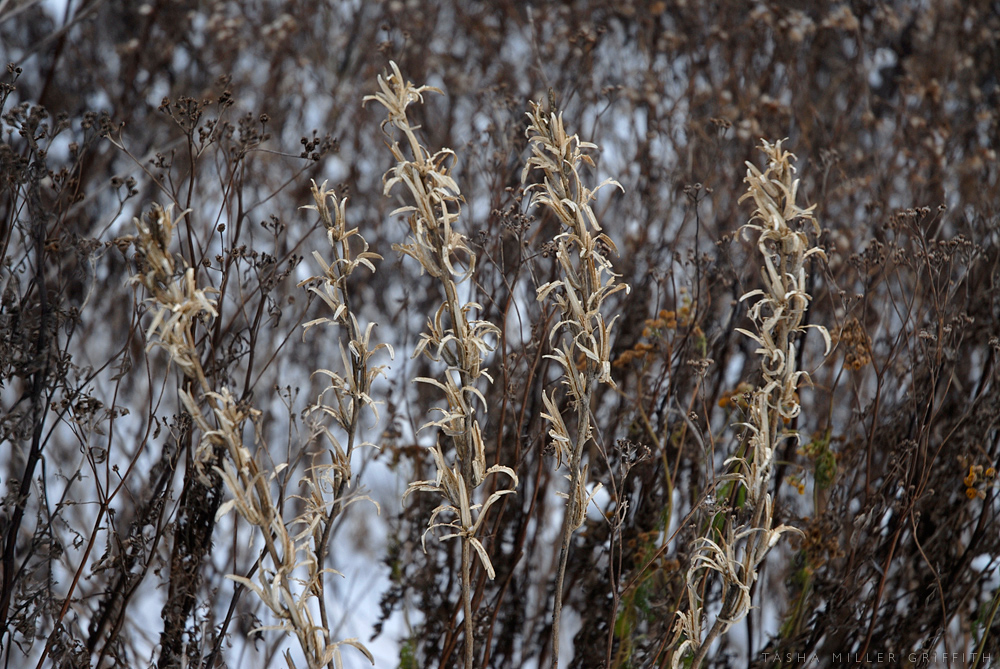
In Michigan, from whence we just returned, winter is different.  And to me, totally beautiful.  The bare branches against a grey sky are a delicate tracery of subtle colors and shades, more muted but lovely scenes are in the dried branches, the white fields.  After spending the morning playing with my little nieces, I escaped outside with only my camera.  I got that “what are you finding out here to make the picture worth your freezing fingers?” look from at least one Midwesterner I ran across, but that’s the beauty of something unfamiliar, seeing the hibernating landscape with my fresh eyes, I saw worthwhile photos everywhere.

The landscape also meshed well with these thoughts from Kimberly at The Year In Food:

And I love darkness, in the sense that this is a season of long, dark nights, quiet, rest, hibernation. There’s merit to embracing it rather than fighting it and I try my best to do so each year. Perhaps easier said and done from the mild coast of California than in the thick of a midwest winter. But that season of rest is here, nonetheless: the fallow land, the bare trees, the grey skies, the long nights, the snowy mountains off to the east and north. Let’s embrace it, friends.

I often find myself this time of year longing for warmth, summer, light and long days of it.  But seeing a new winter landscape reminds me of the beauty that is here right now, a quiet one perhaps, but one worth enjoying just as it is.  Here’s to embracing your season, wherever you are!


michigan winter 1


michigan winter 2


michigan winter 3


michigan winter 4


Wishing You a Happy 2013

happy new year postcard


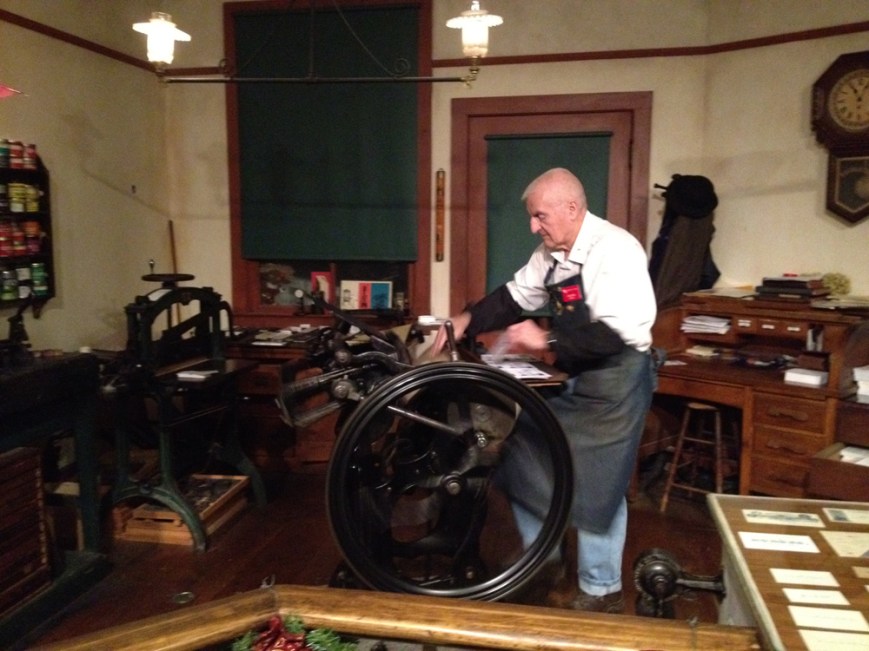
This postcard was printed on this mechanical press, at the Public Museum of Grand Rapids, MI.  I could have watched this press all day.  The volunteer printer flung the big wheel to get it started, then kept it going with the foot pedal while he moved the cards in and out.  All the parts moved fluidly, rolling the ink across a plate and printing a card in the time it took him to place a blank one.  It reminded me of two things I love; treadle sewing machines from a similar era (the late 1800s), and the below quote from Anaïs Nin which appeared, with more excerpts, on Brain Pickings:


You pit your faculties against concrete problems. The victories are concrete, definable, touchable. A page of perfect printing. You can touch the page you wrote. We exult in what we master and discover. Instead of using one’s energy in a void, against frustrations, in anger against publishers, I use it on the press, type, paper, a source of energy. Solving problems, technical, mechanical problems. Which can be solved.


grand rapids museum printing press


Here’s wishing you all a new year full of joy, handcraft, and solvable problems!


Saving Pumpkin Seeds


I’m kind of jealous of my friend Tom, who grew about 2 dozen pie pumpkins in his yard this year, here in Flagstaff!  He has been sharing them, which has been great, but I still found myself wishing that I had dozens of pumpkins too – wait a minute!  I have a yard, I have some grey water, and we were home enough this summer that it might have worked, plus it wouldn’t be too much work for our house-sitters.  So, I saved some seeds.


After reading directions here and here, I picked out and rinsed the seeds in cool water, then spread them out on this cookie rack.  At first they were plump and glossy, but after a week or so they have flattened out somewhat and the skins are crinkley & papery.  I think I’ll leave them out a little longer.  Further bulletins as events warrant!

It’s the Colors . . .


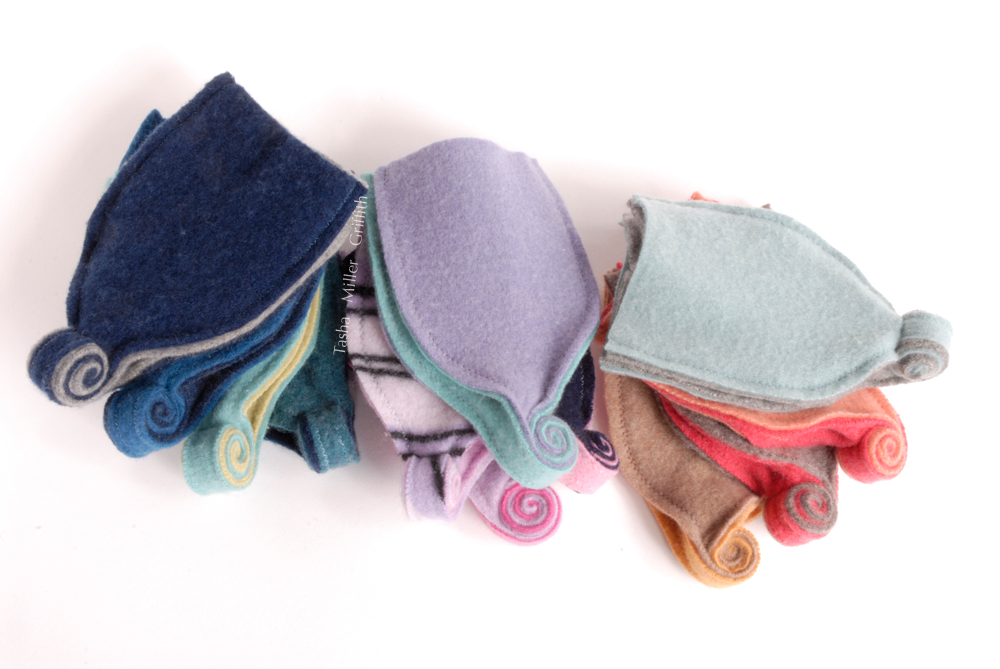
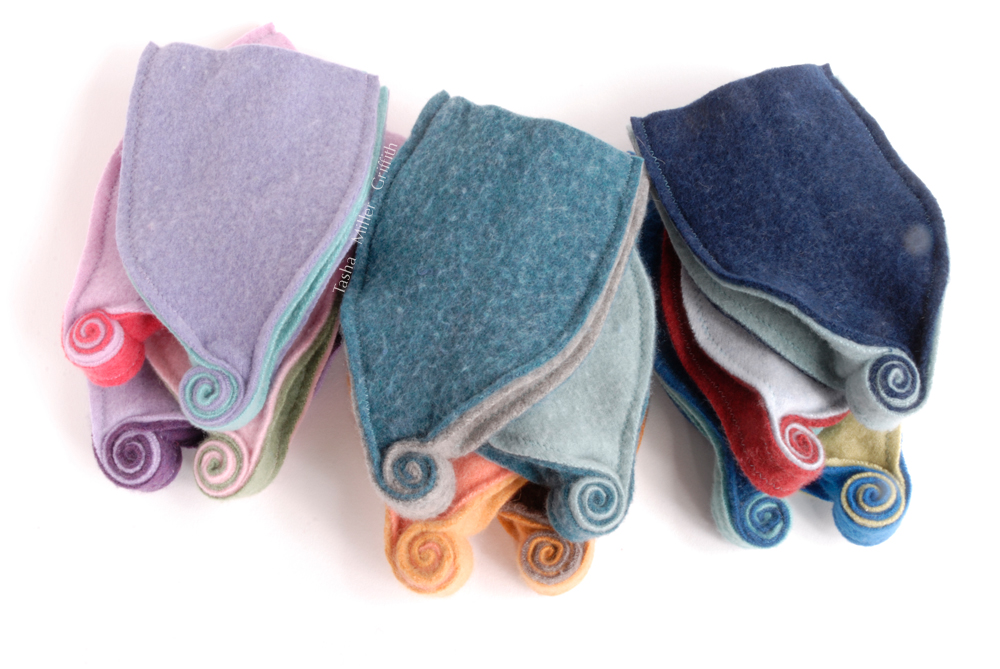
Right now it’s the time of year for big orders from the shops that sell my little fuzzy hats.  After 400 or so of these suckers all told so far, you’d think I would be sick of them.  I still like this design (if I only I could come up with a few more that were as cute and efficient!) but mostly, what keeps me coming back is:


I love picking colors that don’t just go together, they make each other sing.  These remind me of a dusky southwest sunset.  This is what I do when I’m making the hats, I stare at the colors.  Luckily, using recycled materials means there are new colors every time, new ones to find and play with.


As a kid, I would spend hours looking through my mom’s embroidery floss, not really wanting to make anything, just enjoying the colors, they each seemed so vivid and lovely, they lived grouped together in their families in neatly numbered plastic bags.  I remember wishing there was fabric, or something I wanted to use, in all those colors, but not knowing what I would do with it if there was.  I’m still figuring that out . . .


Body and Earth, Home Territory


I’m pleased to report we’re home at last!  At last – without a crazy amount to do, with all my beautiful supplies and tools right in front of me, in my studio, in the kitchen!  Bliss.  We got back late Wednesday night (the same day I took these pictures), and the last thing I did before falling asleep was read the last chapter of a really interesting book I’ve been working my way through, Body and Earth by Andrea Olsen.  It was the textbook to a class one of my cousins took at Middlebury College.  My aunt read it too, she kept talking about how much she liked it, and finally they let me borrow a copy.

To be honest, it starts off a little bit, umm, out in left field for me – talking about our evolutionary history and how that relates to the way our bodies move.  But, it moves on pretty quickly into more concrete territory, talking about body processes, earth systems, and ways we can affect both, in a really integrative way that I loved.  I have been working on posture and healthy ways to work with my body a lot lately, and there are a lot of exercises and ideas in this book that I found really interesting and helpful.  But as far as just things to think about, the end of the book may be the best part.  There are a few chapters about connections between earth, body and society, again talking about how everything is related rather than each part on its own.  There are a couple of quotes in this part that speak to what I’m trying to say here.


Our culture breeds dissatisfaction in order to sell products . . .  As we realize that we are sensual beings, living as part of a world that delights the senses, we can distance ourselves from the cultural baggage of dissatisfaction.  We need less, not more, to experience a full life.


As we commodify art and creativity, we see art as other and creativity as foreign, rather than familiar.  In the process, we risk losing access to our deepest visions and our intuitive resources.   Conversely, as we reclaim creativity, we engage the unknown on a daily basis and listen for truth.


We have grown accustomed to high-end art: perfect recordings, museum paintings, and multimillion-dollar films.  But creativity is personal.  As we participate in the process, we recognize that it is not just about observing, not just about buying and consuming, alienating ourselves from our own creativity.  It is about participating in the creative universe we live in.


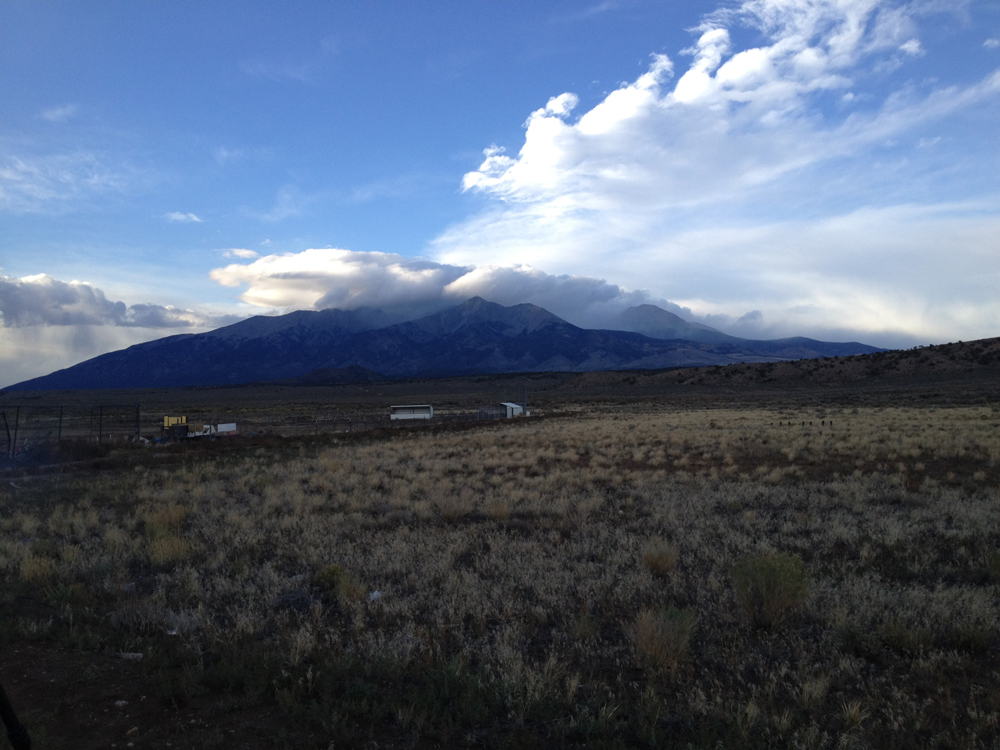
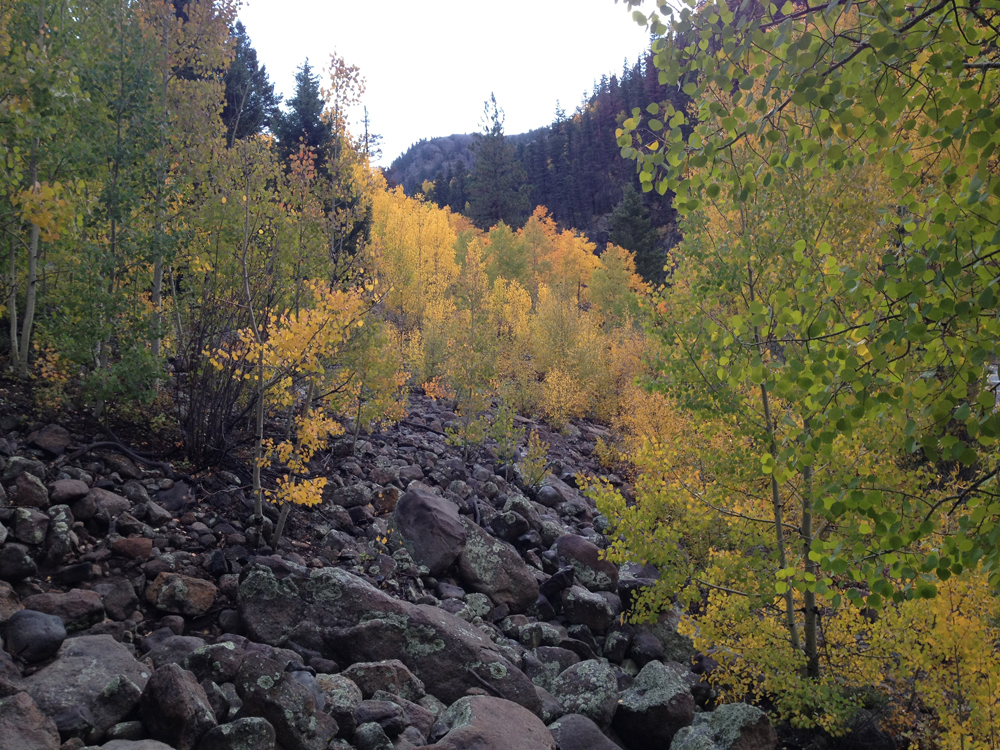
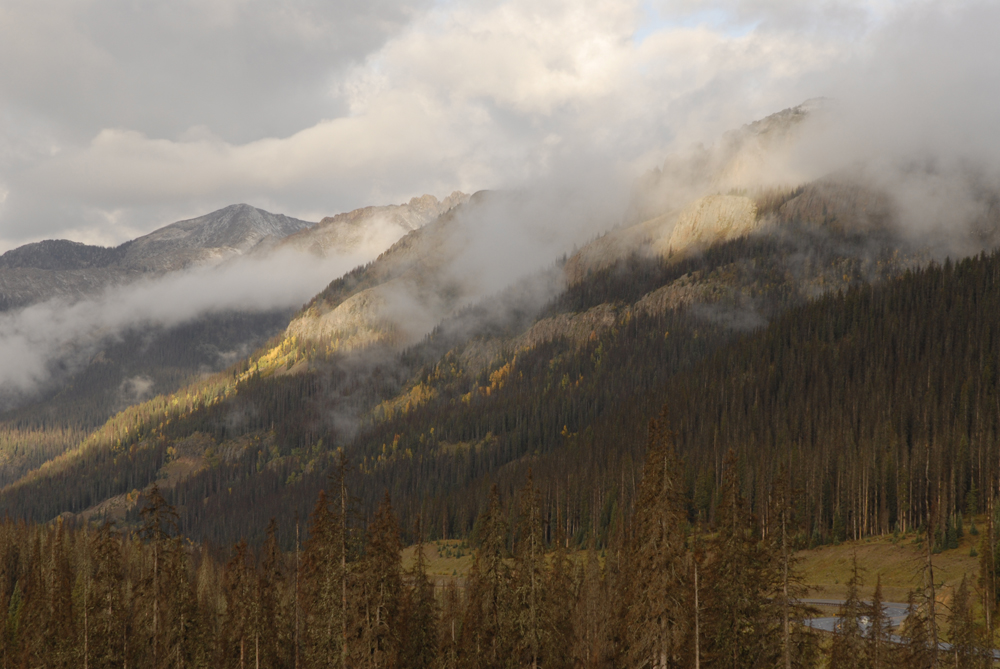
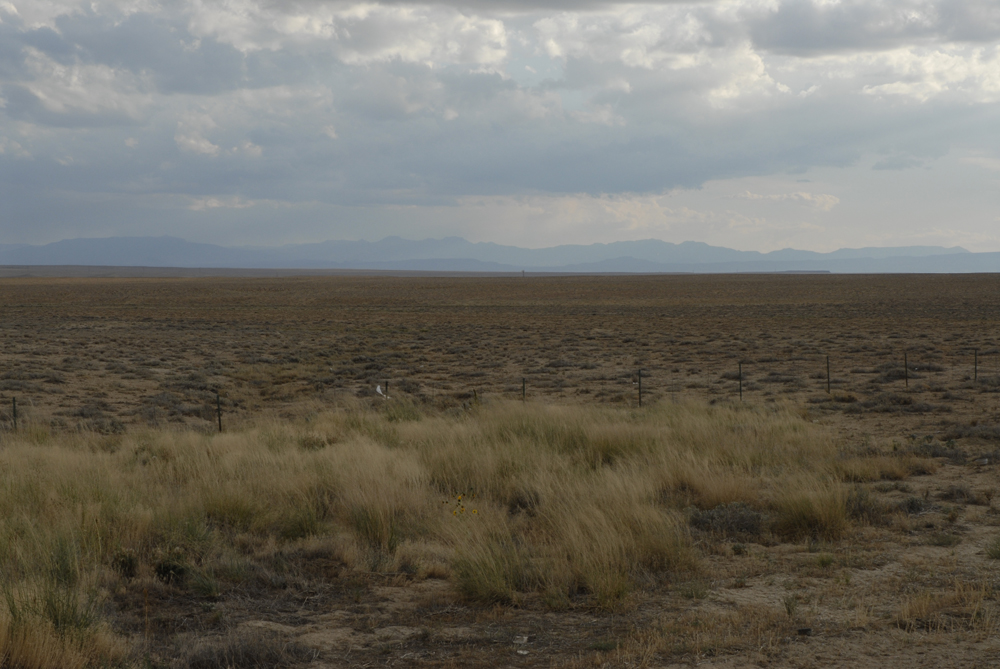
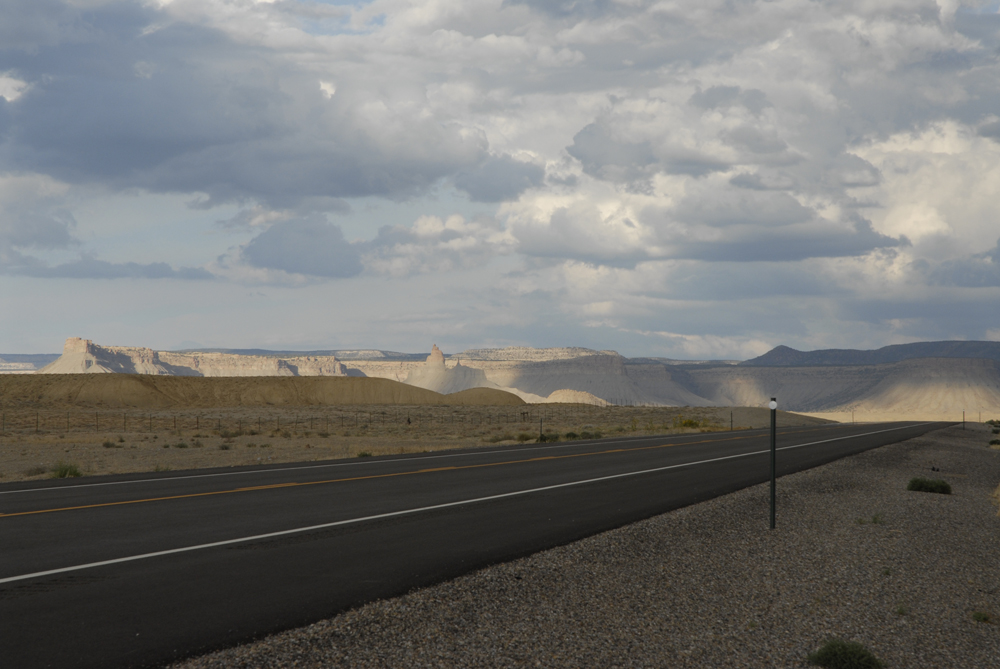
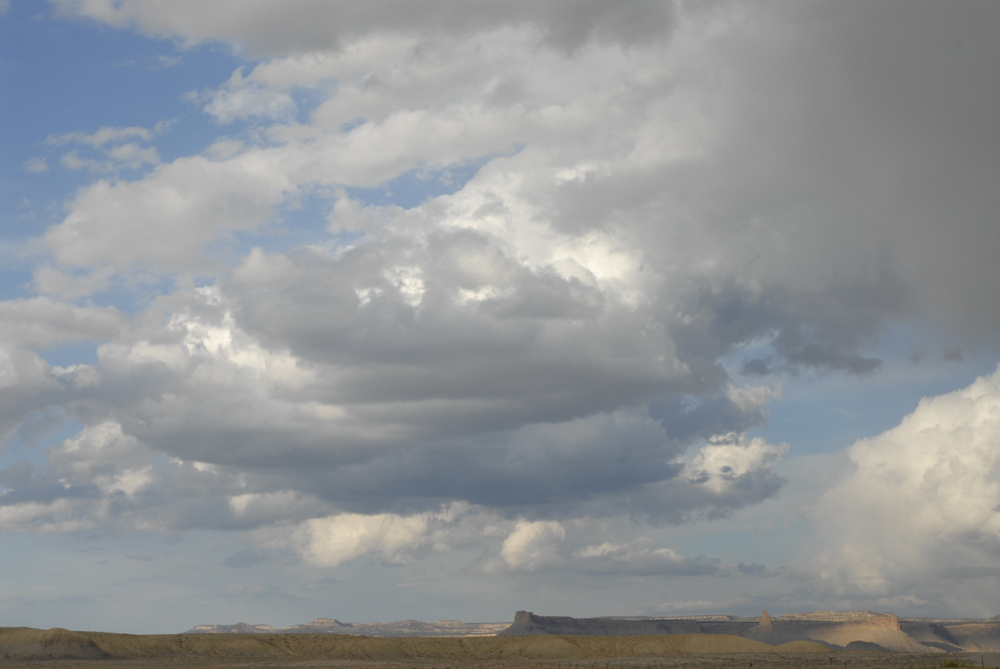
It seemed fitting somehow that as I finished this book, we came back into the landscape of my childhood, the places I feel the most connected to.  When we started into the plains and mountains of southwest Colorado, I felt such a tug on my heart, it’s not just that this place is beautiful (spectacular this time of year as the leaves change), it’s that I love it and I feel rooted here.  The desert, so close and yet so different, I love it too, even though I hated it driving across it as a kid, it seemed so empty.  It still seems stark, but so open, so subtle, so much a part of my home.


Just the clouds are amazing.  I’ll be back soon with more on participating in our creative universe!


What Are We Doing Here Again Exactly?

Suddenly, after our Lancaster, PA art show, we had time off. That was weird in itself, since we spent all of August at home running around like mad chickens trying to get things done in time, then flew to Detroit, picked up the truck, drove to Pennsylvania, set up the show, etc.

So now, we are in part of the country I’ve only been to once before & know almost nothing about. After doing the laundry, filling up on water, etc., we set off to find something to do with ourselves, get some food & explore the surrounding towns.

20120906-091455.jpg

They still had peaches at Brook Lawn Farm Market – and apples, tiny pattypan squash and fresh lima beans! Oh for a stove! This time last year we were in the Pacific NW, doing 3 shows, hanging out with some of our dearest friends, and cooking up fresh delicious food together. Hard to beat that!

Despite the lack of close friends and cooking equipment, we pressed on, doing some more exploring.

20120906-091755.jpg

Are you sure we’re still in America?

We bought Bryan a guitar-lele for playing & composing songs on the road. He’s afraid I’ll be annoyed, but so far, staying up singing adds a fun & homey touch, especially when we’re camping out in the Wal Mart parking lot.

20120906-092610.jpg

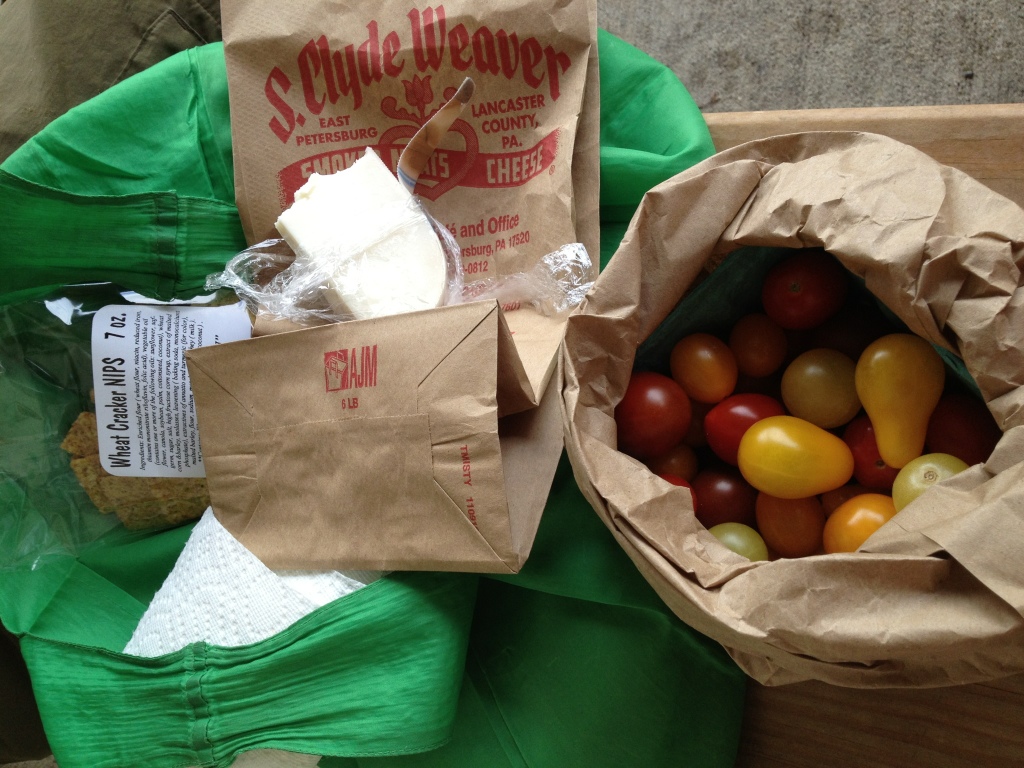
We visited the Railroad Museum of Pennsylvania – really interesting with helpful volunteers. Breaking slightly with our usual pattern of not leaving a museum until they kick us out, we left just before closing so we could make it to the Bird in Hand Farmer’s Market, where we settled on crackers and cheese to go with our tomatoes from the day before. Crusty bread was not available, but goofy T shirts were . . .

20120906-093438.jpg

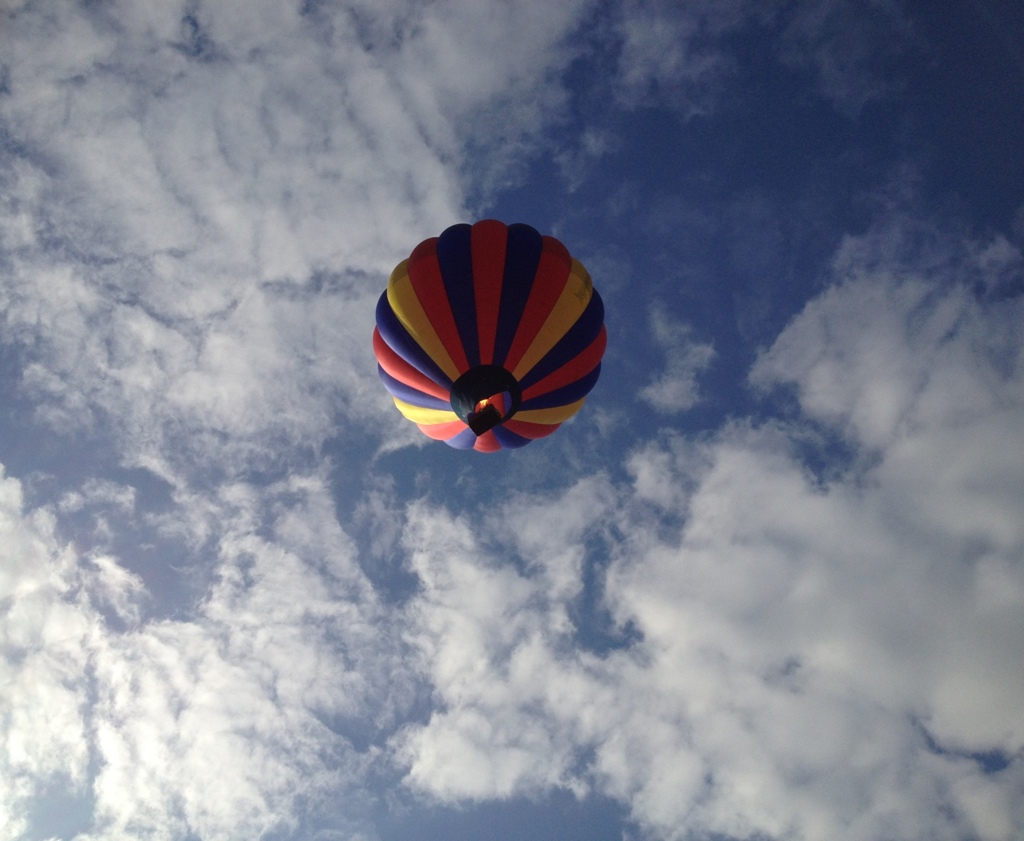
We sat outside and ate and watched the buggies and tourists go by. As we were getting ready to leave, this hot air balloon took off from the next field and went right over our heads.

20120906-093714.jpg

At this point in the year, I’m ready to get off the ride, go home where I can see people I know and play in my studio when I have free time!

But our travel time is not quite up for this fall, there are still a few adventures for us before we head home. We set up for another show this afternoon, so that ought to keep us busy for a few days.

In the meantime, if you hear some tinny guitar music coming from a little white box truck, come over and say hi!

20120906-095920.jpg

Should We Call It Farmwashing?

So, here we are on the road for our last group of summer art shows. I went straight from gathering my weeks’ groceries at the farmers’ market, eating tiny strawberries from our yard (approximately 4 per week!) and canning buckets of jam from blackberries we picked in the creek, 20 minutes away, to this:

20120830-105930.jpg

It was late night in Toledo and there weren’t a lot of options.
This restaurant was overflowing with fake photoshopped signs of “their farm” while serving the same processed food as ever. Grrr. Why can’t they either actually change something, or embrace the kitschy fake food the way it is?

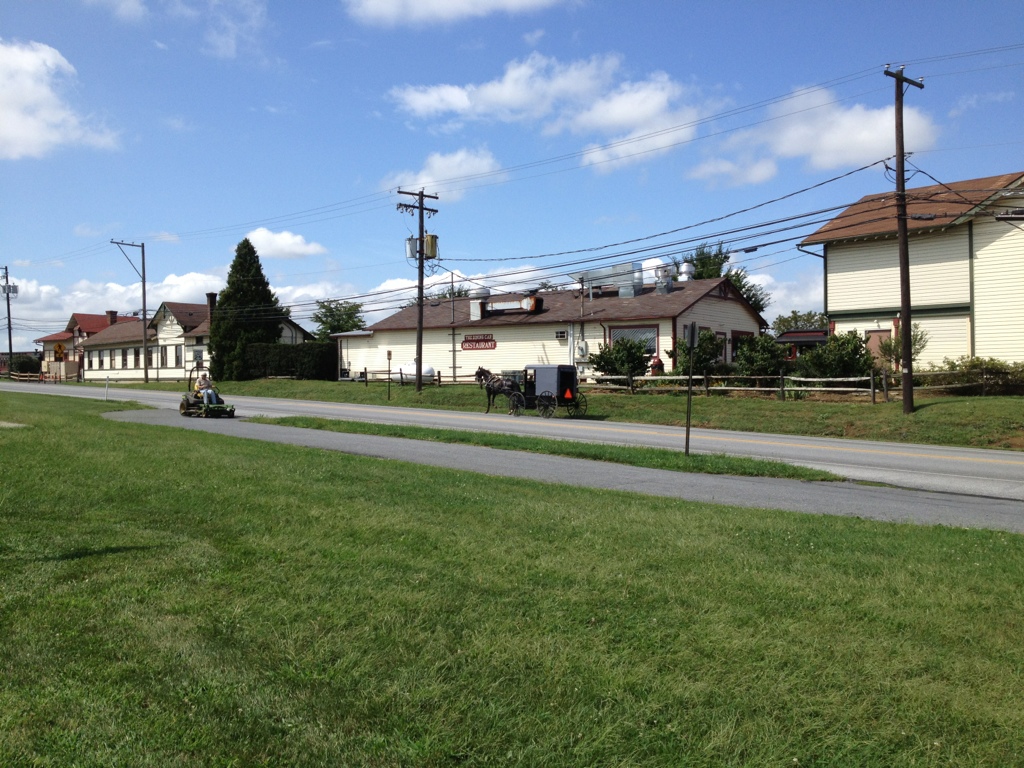
Oh well. As I type this, I’m sitting in the truck outside a fleabag hotel in Lancaster PA. And right across the street is a big corn field. As I watched, a man in a traditional outfit appeared, hacking off the corn at the fringes of the field with a machete. I could see the stalks nearby moving, and then a big chestnut horse popped out at the edge of the field, followed by another man and pulling some kind of harvester.

20120830-114331.jpg

You can’t really see it, but in the middle of the field two horses are pulling a cart loaded with corn. I’m using my phone and the WordPress app today, so apologies if anything looks really strange.

One of my least favorite things about this country of ours is how as a whole, we have embraced and promoted mass produced everything. But one of my favorite things is how there is room here for a whole spectrum of choices, from Bob Evans right through my blogging and canning to the PA Dutch farmers.

Chopping Vegetables, or “Get a Big Knife”


Ok, blog people, let’s talk about something important: chopping vegetables.  Nope, I’m not kidding, in fact I think that being able to do this efficiently can make a real difference in how much work it is to cut up veggies, and therefore how many we cut up and eat.  I have not been to cooking school, so I learned most of my “knife skills” just by experience, and reading cookbooks.  But there are a few simple principles I use now that really make quite a bit of difference.

First of all, get a big sharp knife.  This does not have to break the bank.  When we were renting in Madison, we went to the thrift store, got the most solid-looking/feeling knife (from a rather large and alarming bin of them) went home and sharpened it, and it worked great.  If you use a tiny knife, you will have to cut each piece of each vegetable separately, and that will take forever, and you will be grumpy and think that vegetables are too much work.

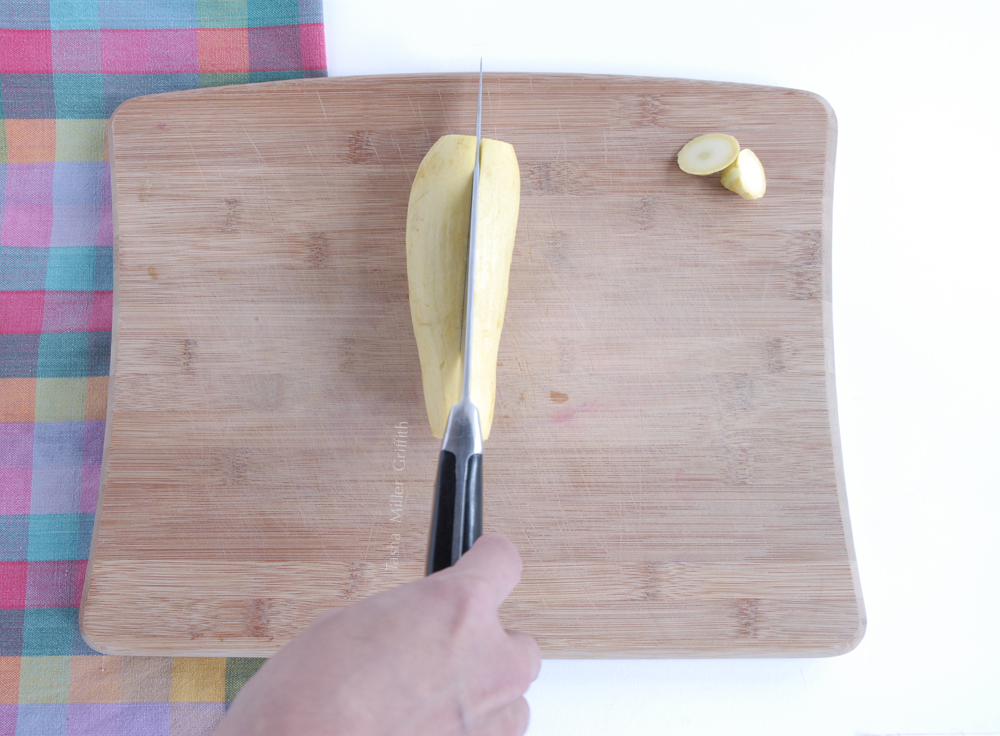
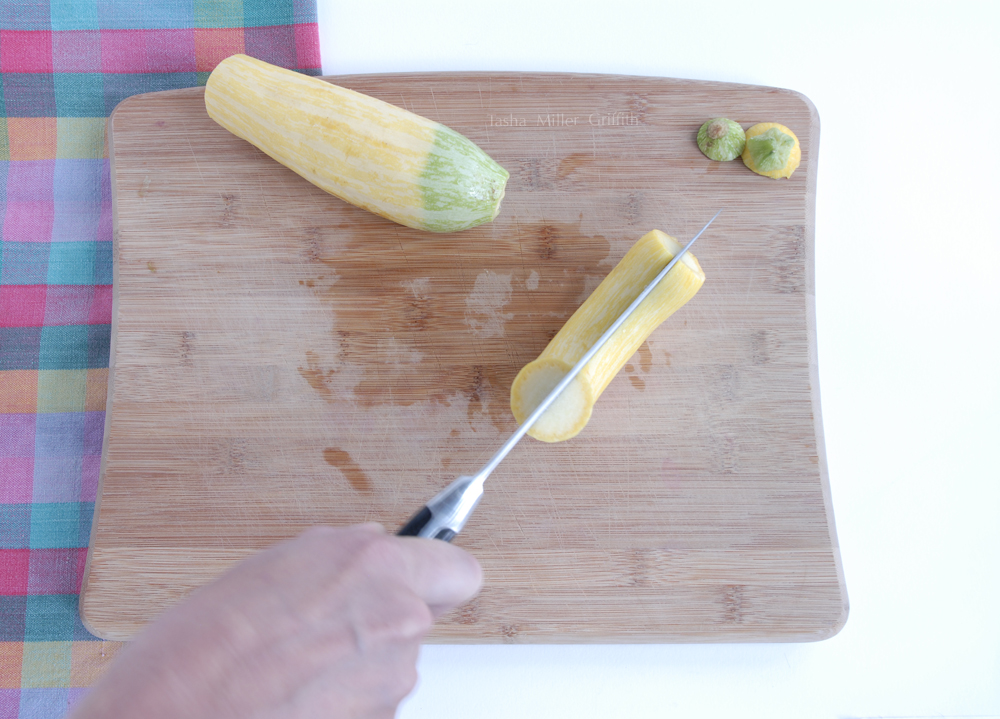
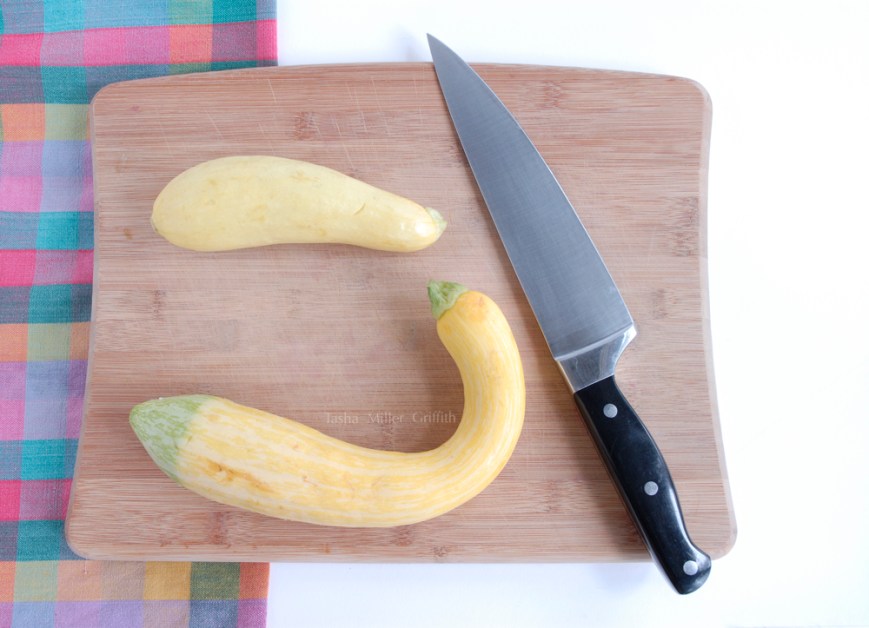
Ok, second thing, and this really the key as far as I’m concerned, chop the vegetable into sections, which you can chop together into pieces the size that you want to end up with.  I’ll demonstrate on this squash: cut the ends off (any part you don’t want), and then cut it in half.
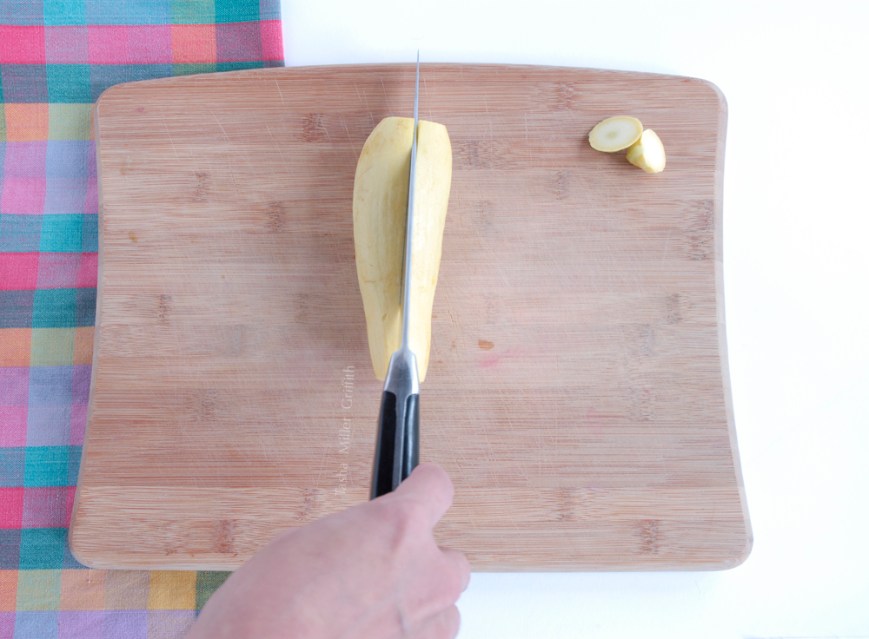


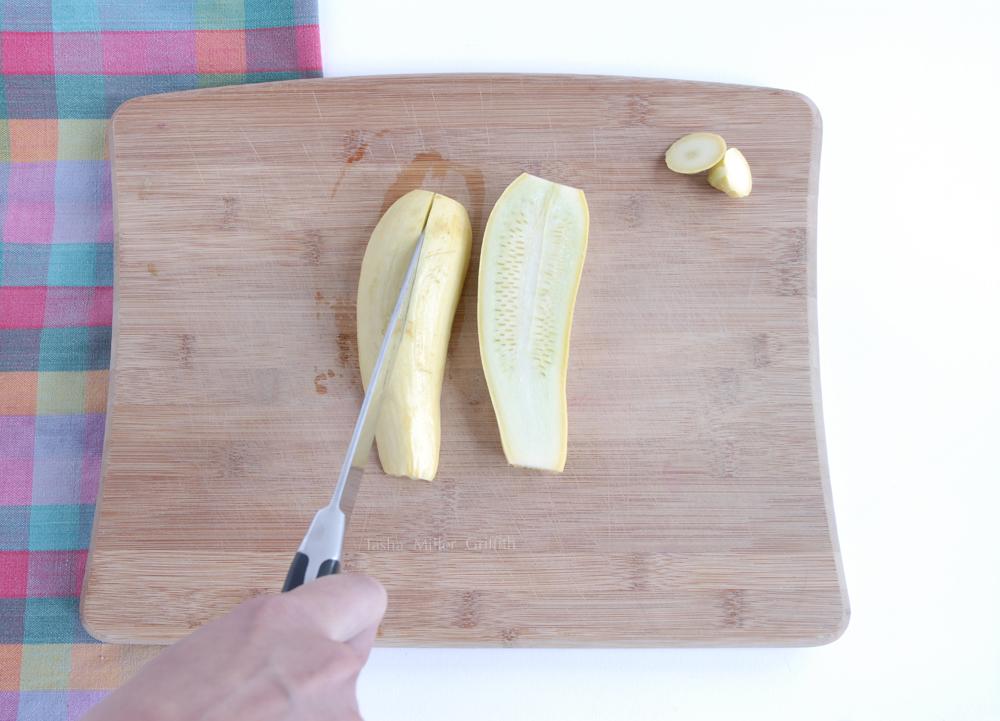
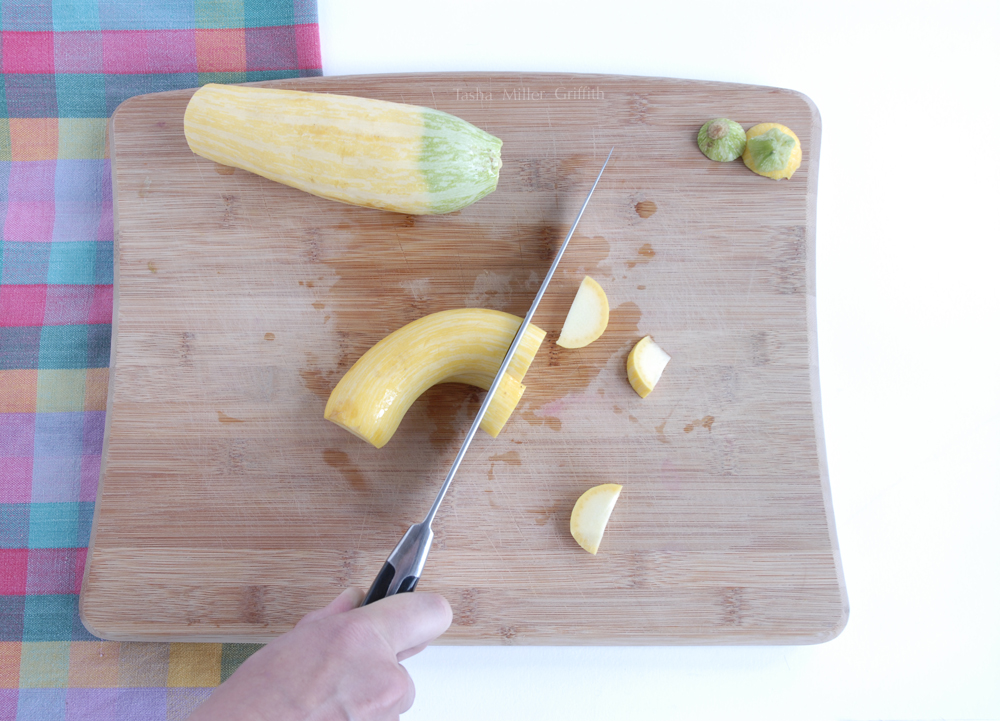
Then, cut the halves in half again, so that you have four sections of squash.  You can pull the knife in a curve as you cut if your veggie is curved.  If you want very small pieces at the end, cut into eight sections now, dividing each one one more time.
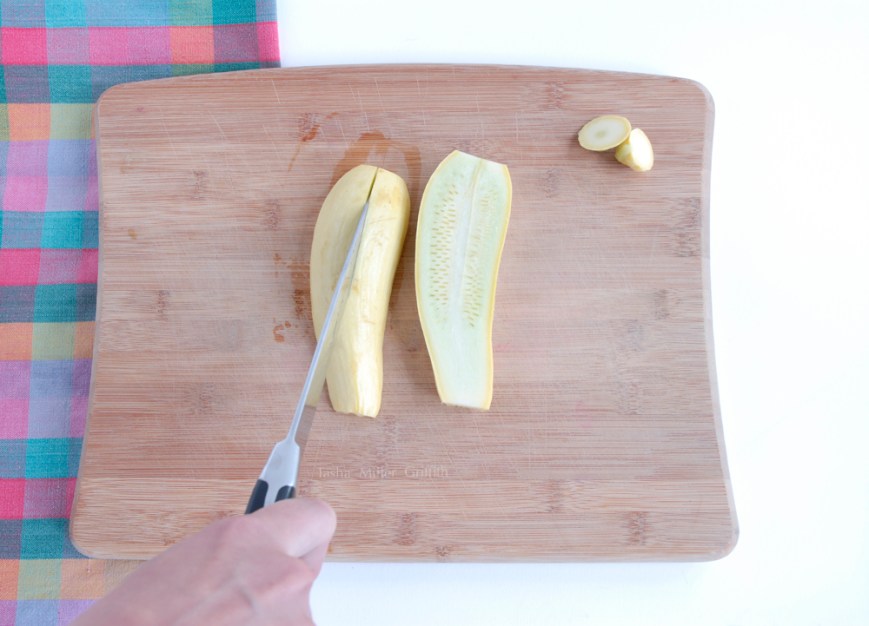


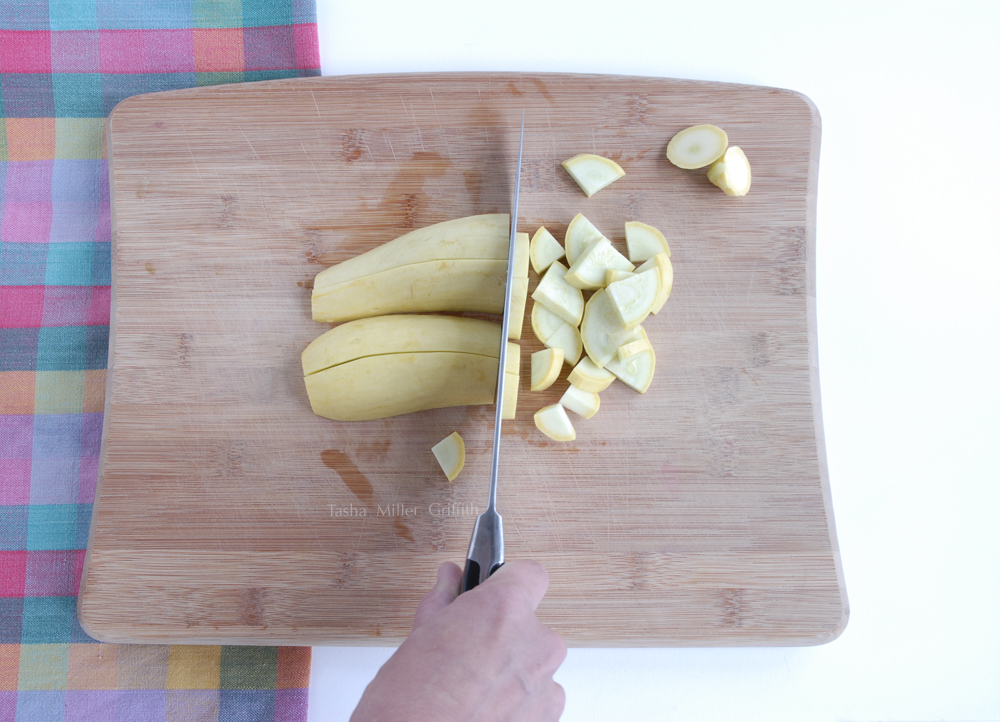
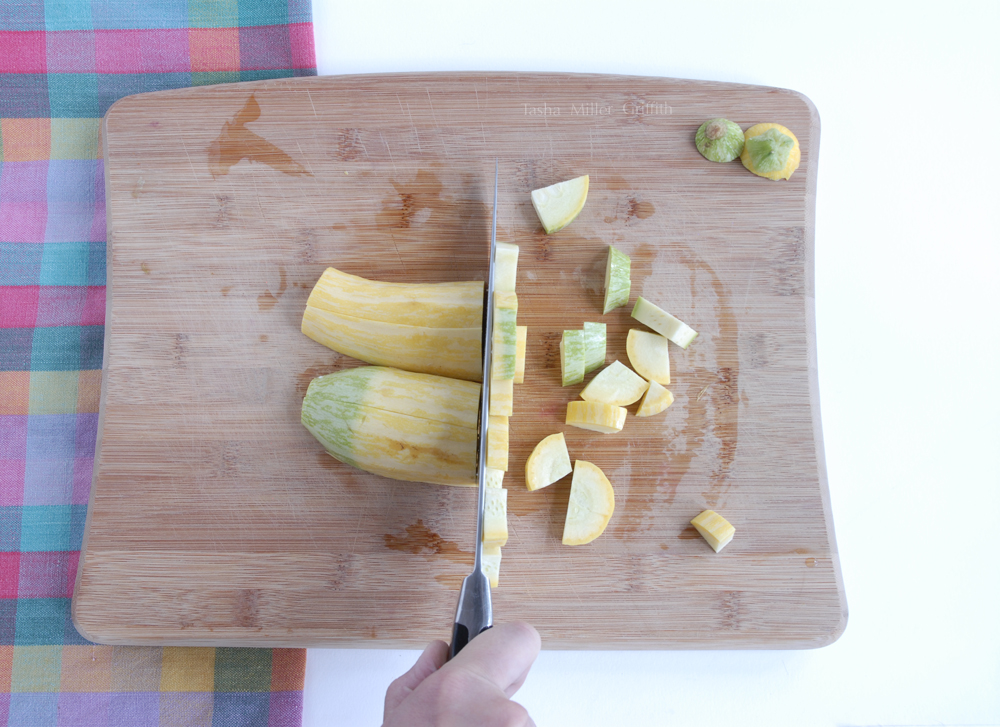
Now, line up the sections and chop all at once!  You can chop thin or thick pieces, whatever you’d like for your dish.  Notice that the tip of your big knife can stay touching the cutting board as you lift the thicker part near the handle and chop chop chop.
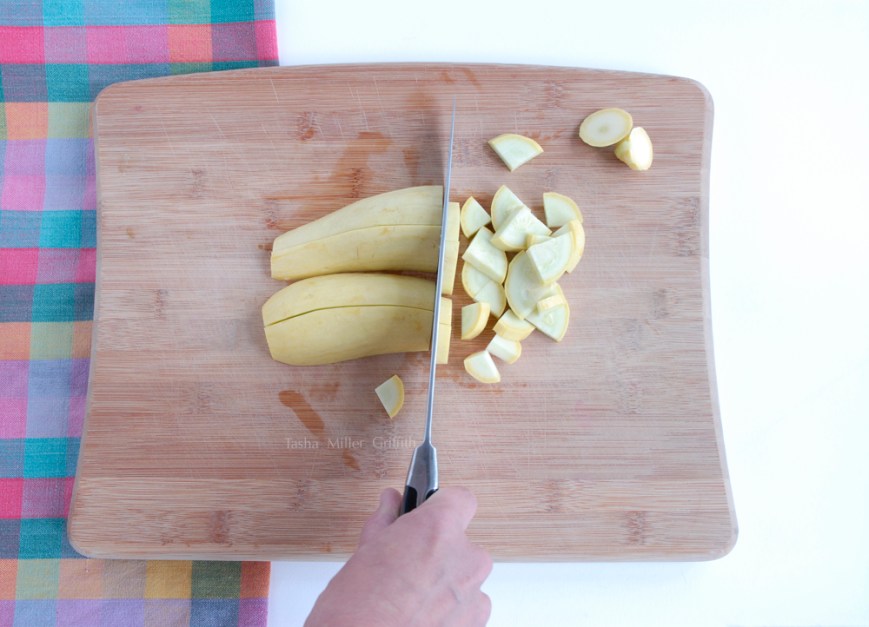


At this point I should perhaps point out that I am usually holding whatever I’m chopping (not the camera) with my non-dominant hand.  And that if you are left-handed, you’ll do exactly the same things, but your chopped squash pieces would appear on the left side of the frame above.  When you’re holding something that you’re chopping, lots of cookbooks advise you to keep your fingertips tucked under, I think on the theory that if your knuckles are sticking out the furthest, they are higher above the thing being chopped, and more likely to bump into the side of the knife than being accidentally shaved by the blade.  Most of the time, I forget to do this.  Use whatever works for you without chopping your fingers.

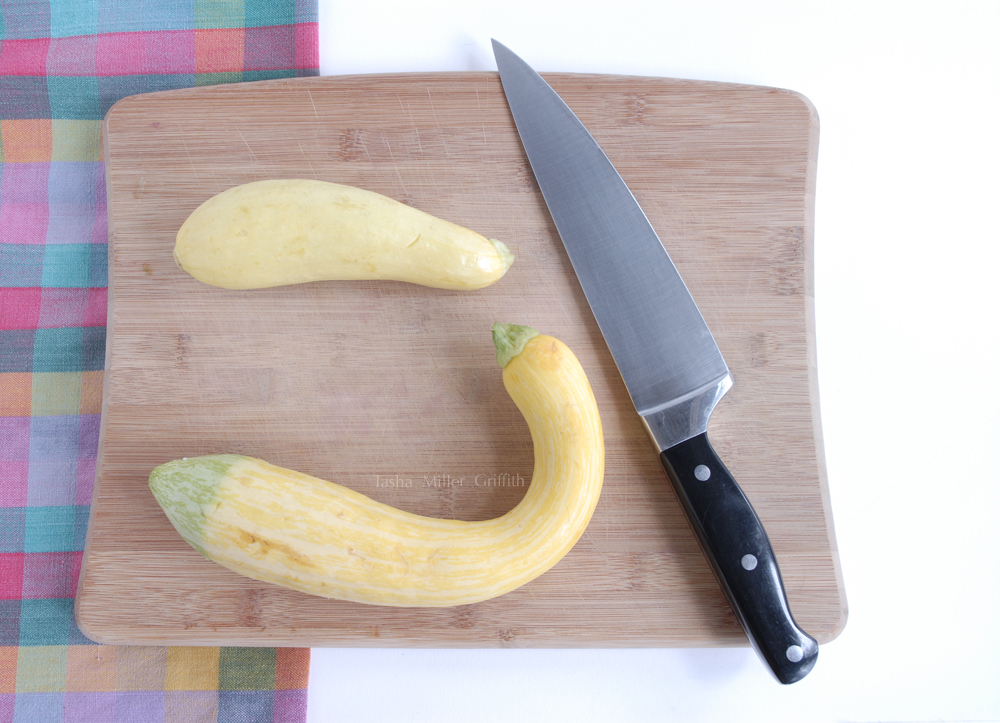
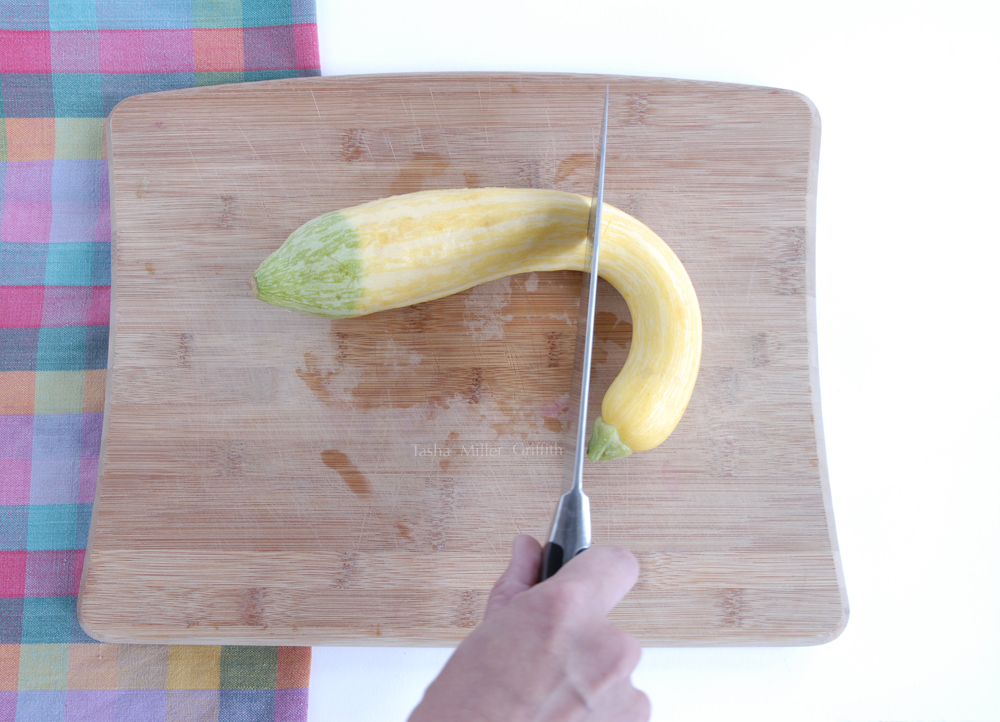
Also at this point, you may be thinking, “Ok, fine, but not all vegetables come in such a straight and manageable shape.”  Ah ha!  True, but use the same principles to break them up.  For example, I cut this crookneck squash into a (more or less) straight part, and a very curvy part.
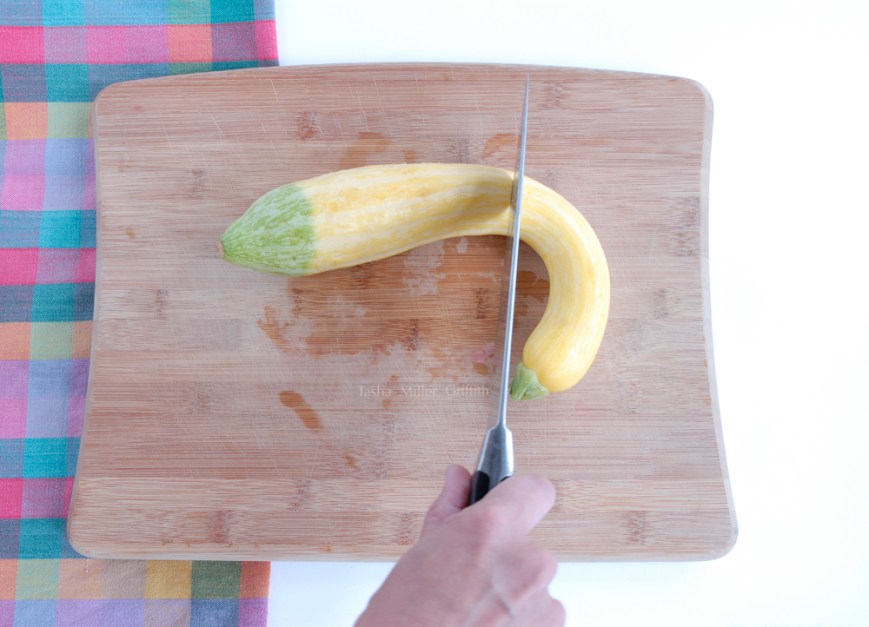


Cut off the ends and divide into sections as before.  If one part is noticeably thicker, I’ll cut it into quarters, and leave the thinner section in halves, to get pieces of about the same size.  That way they will all cook in about the same amount of time.
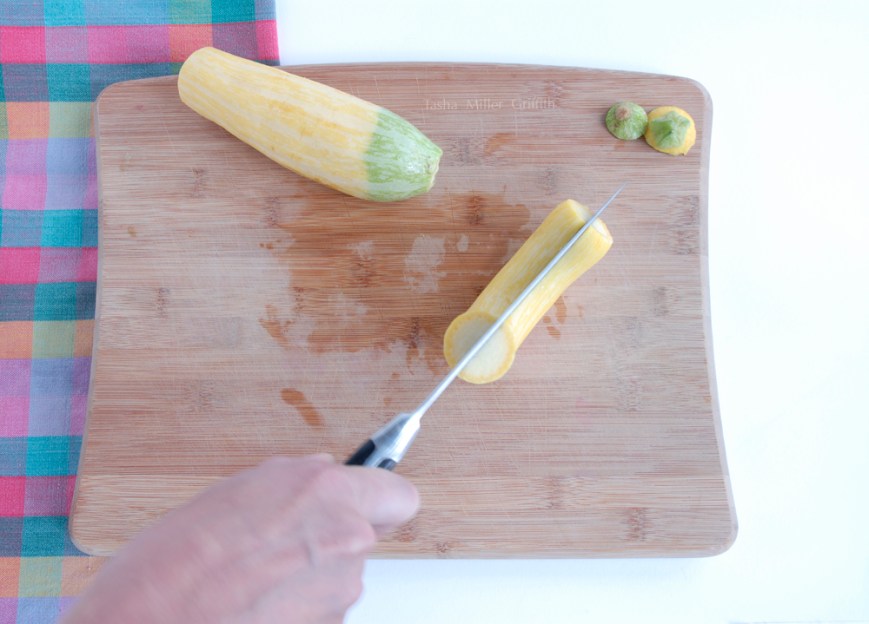


There wasn’t an easy way to line up the curvy sections flat, so I stacked them on top of each other.  It’s all about chopping more pieces with one cut.
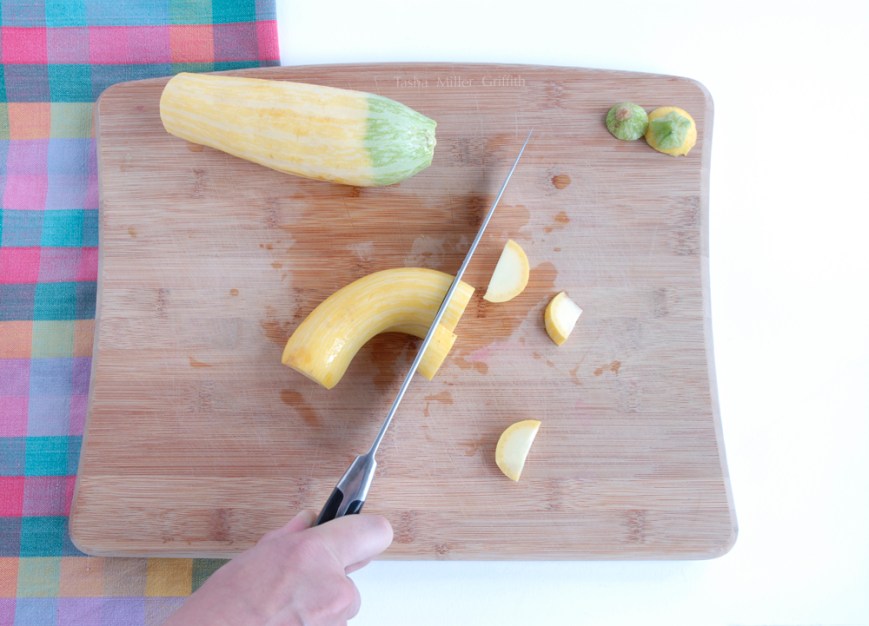


Another thing that’s not illustrated, but helps a lot, is having a big bowl (or two if they are not all going to the same dish) to collect your chopped veggies in.  Having a cutting board cluttered with things you’ve already chopped will force you to make smaller, less efficient movements.
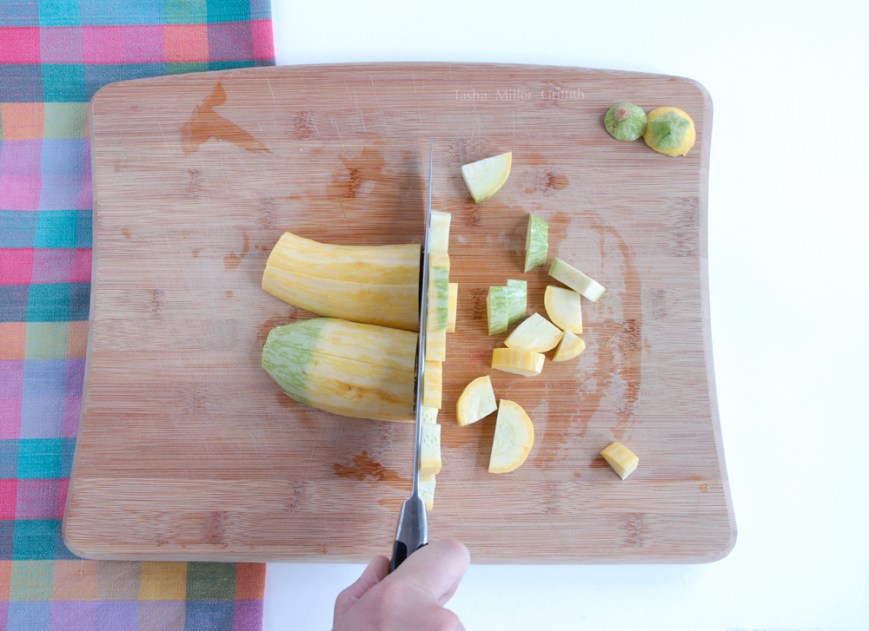


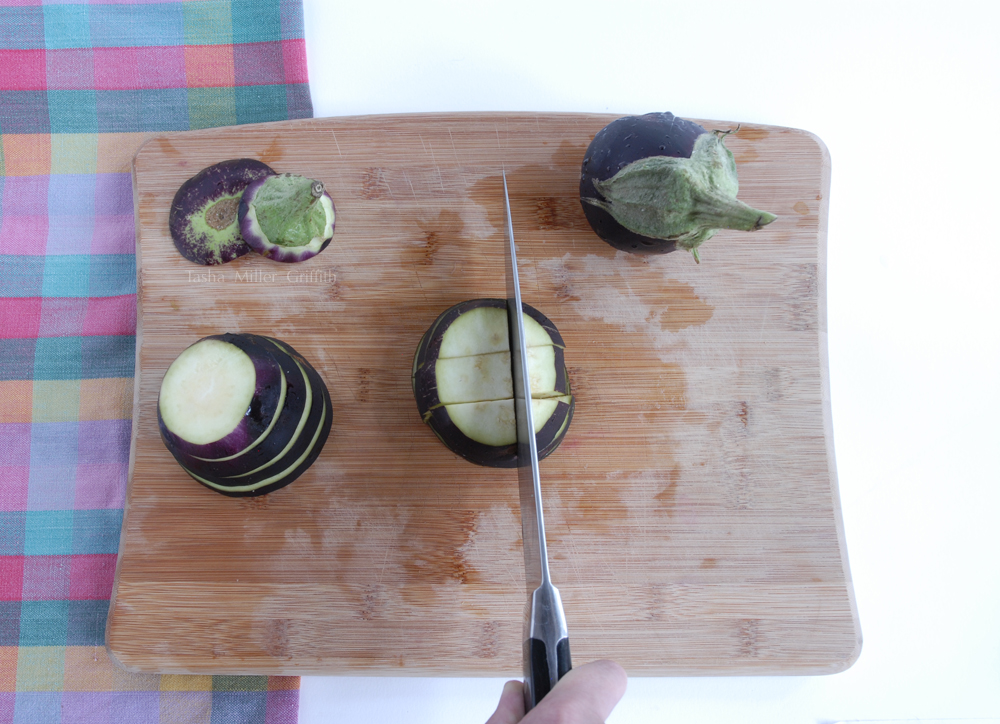
Apply the same principles to a round eggplant: slice first, crosswise this time, then stack and cut into pieces the same size as the squash.
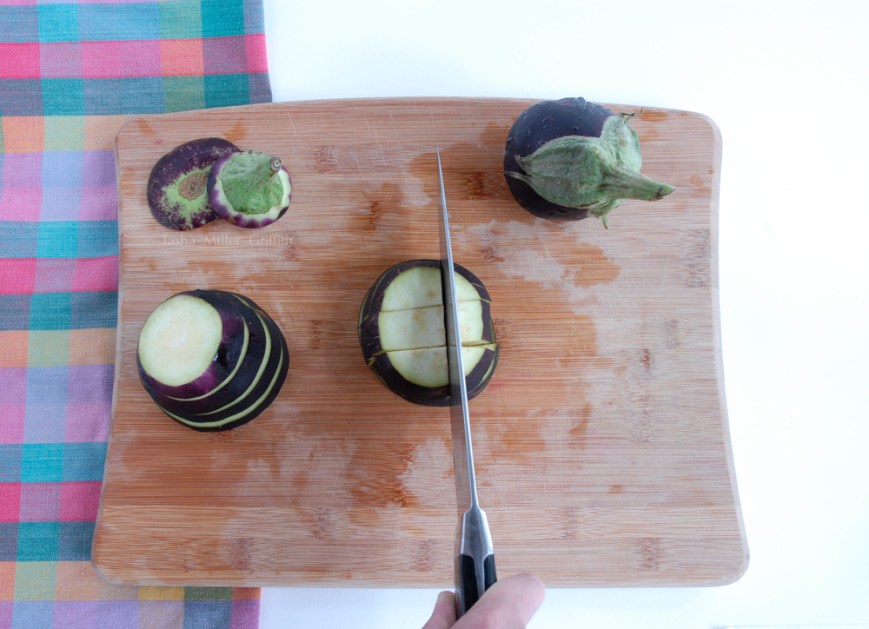


A few vegetables have their own variations on these ideas, like onions.  Any other ones you’d like to see covered?

What to do with all these lovely freshly chopped veggies?  All of the ones illustrated here went into ratatouille.
 

Try it, trust me, it’s faster, it’s so worth it.

When I say “faster,” I don’t mean “hurry” or “rush” (which in my case always leads to mistakes and/or injuries, usually and), I mean more efficient, less time spent doing the same task, even though you are doing it well.  Whenever I think about efficiency as applied to hobbies (like cooking is for me), I think of this quote, it’s from a weaving and sewing book that my grandmother gave me off her shelf when I liked it.  I love the way the authors write about craft:


In all human pursuits there seem to be fast, efficient ways of doing things and slower ways of doing things.  Some weavers hesitate to look for and adopt efficient methods in their craft because they think of themselves as amateurs.  In their heart-of-hearts they feel that it is not appropriate for them to become more proficient.  . . . Loving the craft of weaving and wanting to pursue it more efficiently are certainly not mutually exclusive.  There is every reason, in fact, for all weavers to try to become efficient.  The first benefit of increased proficiency is the production of a better fabric.  There are very few satisfactions that compare with that of a job well done!”

– Handwoven, Tailormade by Sharon D Alderman & Kathy Wertenberger


There’s a lesson here for all of us who make ourselves anything as a hobby.  I’d love to spread this attitude, and the resulting more and better sewing/cooking/weaving/whatever you make.  What do you think?  How to you view efficiency in your hobbies?