How to Sew on a Button

And make a thread shank, for a better-working button.


sewing on a button 10


As promised, complete directions!  Anyone can do this.  All you need is some thread and a sharp needle.  Start with a piece of thread about as long your arm, and put it through the needle so you have a double length.

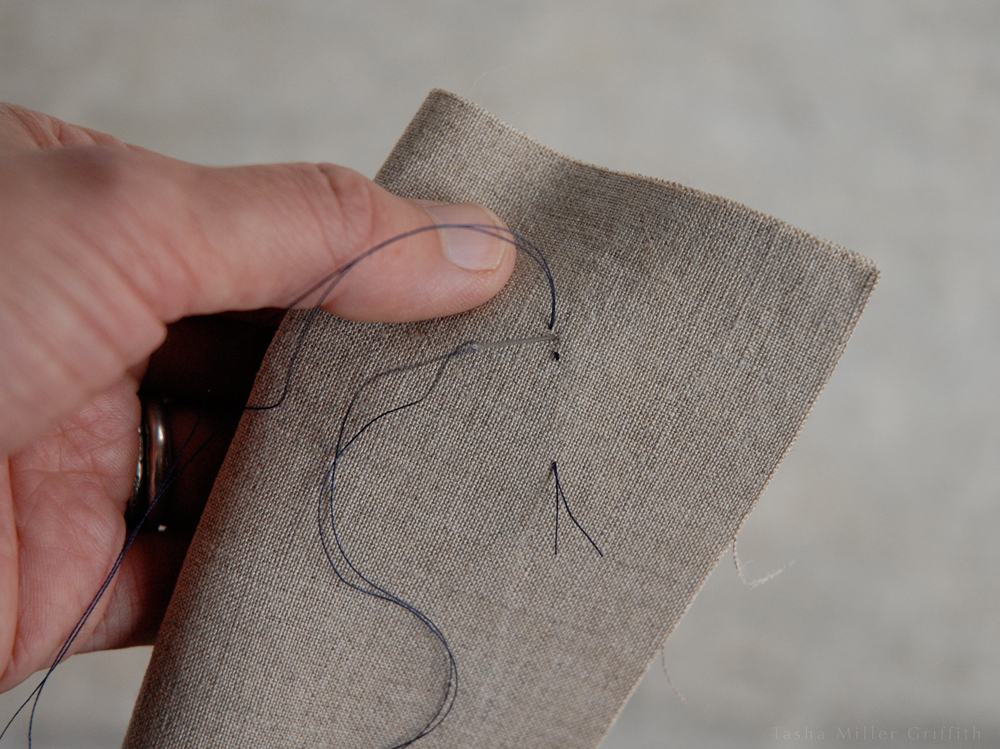
Start by anchoring your thread.  The conventional way to do this is by tying a knot in the end.  But sometimes a big knot on one side is too conspicuous or would catch on things.  Instead try backstitching.  A backstitch is a stitch that makes the thread loop back on itself, it’s very secure.  On the wrong side, slide the thread between the fabric layers and come up near where you want the button to be.  Pull the needle though, leaving a thread tail at the start.  Take a small backstitch.  Put the needle out nearby, then take another backstitch in the opposite direction.  The thread is ready to go!  Pop the needle up to the right side where you want the button.
 

sewing on a button 1Click on any of the photos to enlarge if you’d like.


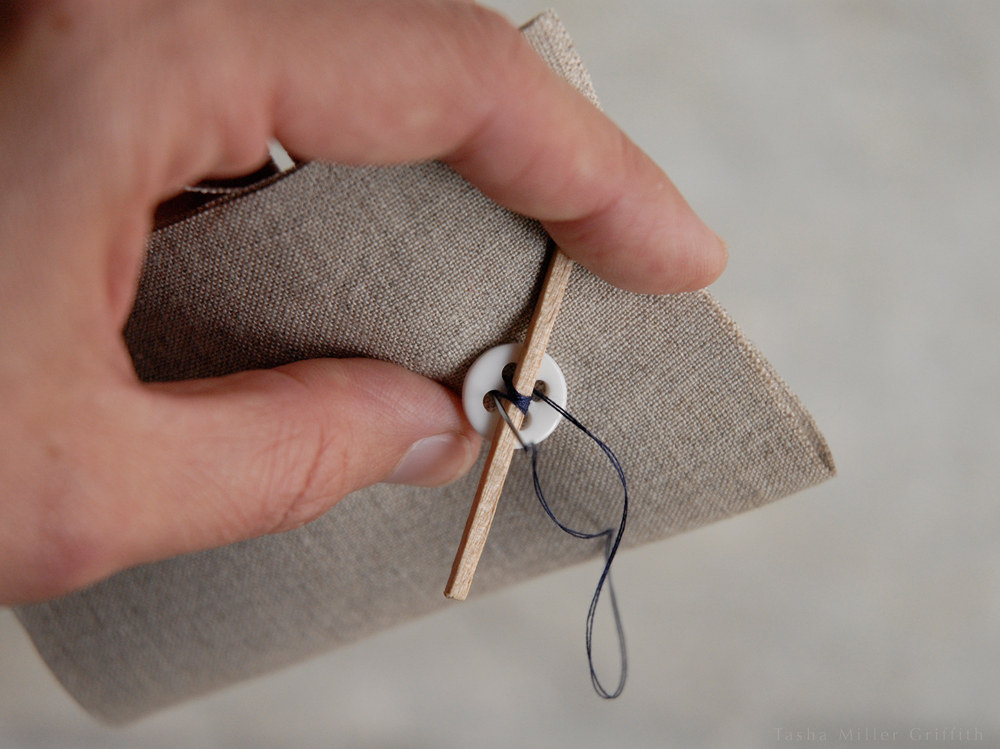
The next part is pretty much self-explanatory, except for one thing.  Use a spacer to make room for a thread shank underneath the button (ignore this part if your button already has a metal shank on the back—just stitch through that).  This makes room for the fabric (where the buttonhole is) to fit underneath the button.  I often use a toothpick which I keep in my sewing stuff.  You may want a bigger or smaller spacer depending on the thickness of the fabric and how curved the button is.  Just sew over the spacer as you go in and out through the holes of the button.
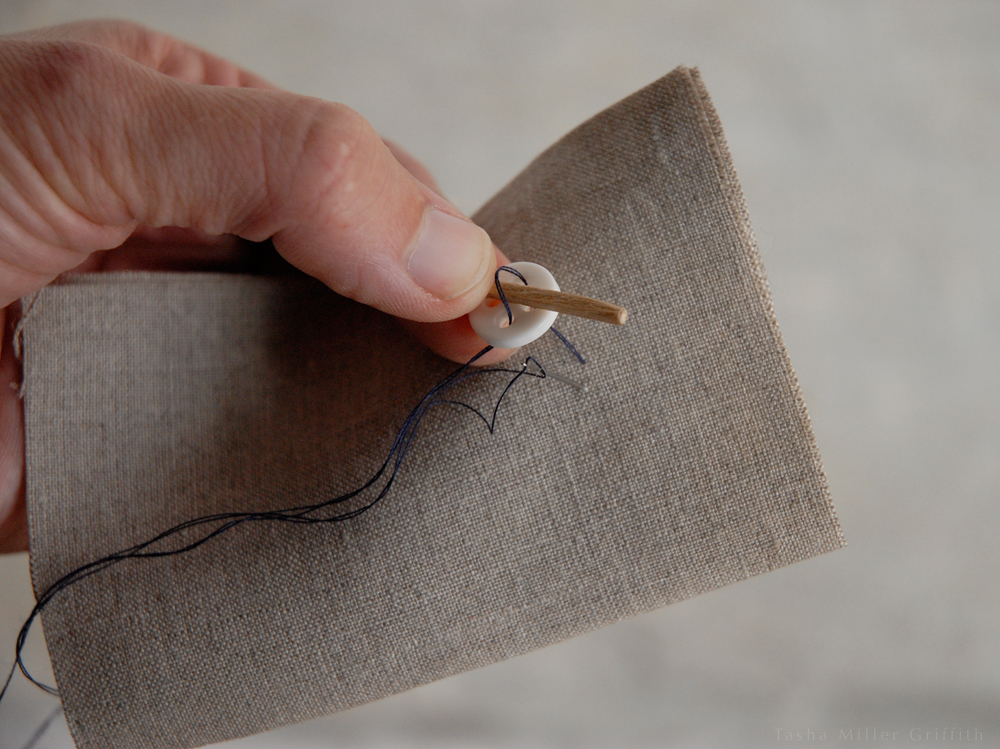
 

sewing on a button 2


sewing on a button 4


Go through each part of the button a couple of times.  Pull out the spacer and pull up on the button, see how there’s now extra thread underneath?  Bring the needle up from the bottom under the button.
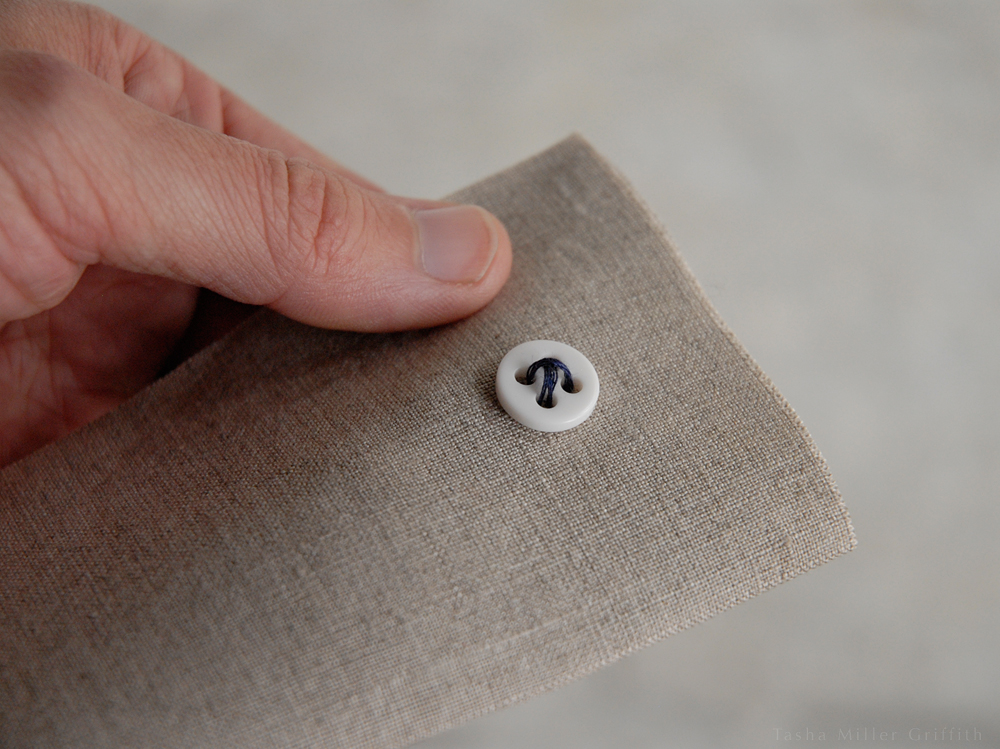
 

sewing on a button 5


sewing on a button 6


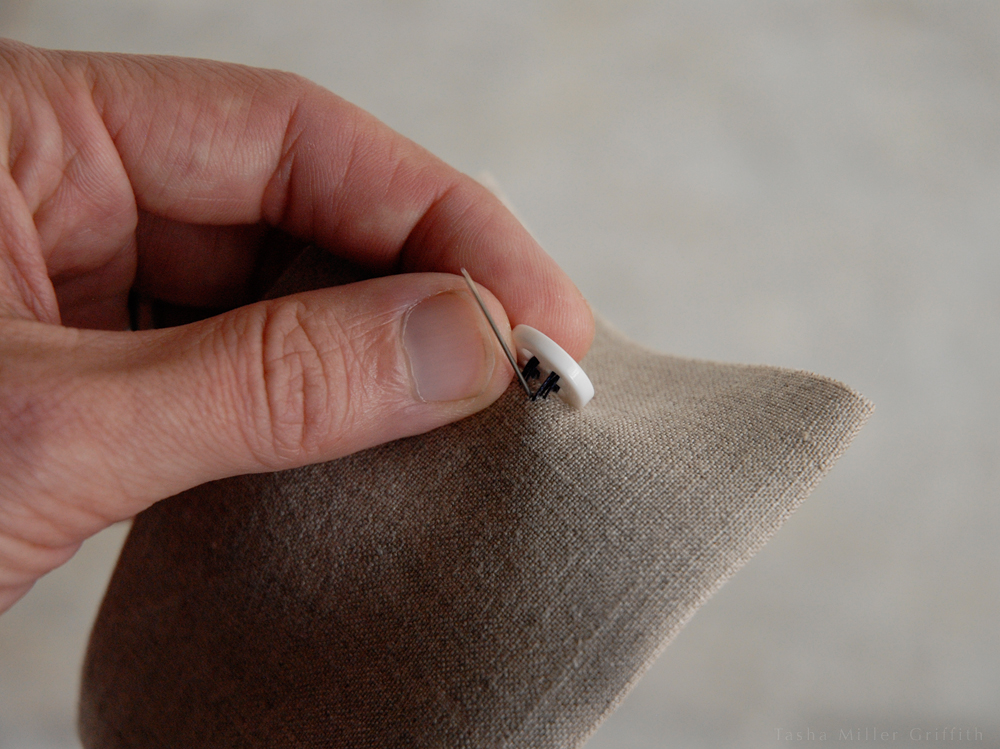
Wind the thread a few times around the thread bars under the needle—but not too tightly.  If you make this whole thing too tight, the sides of the holes in the button can rub and wear through the thread.  Stab the needle straight through the thread shank a couple of times from different directions.
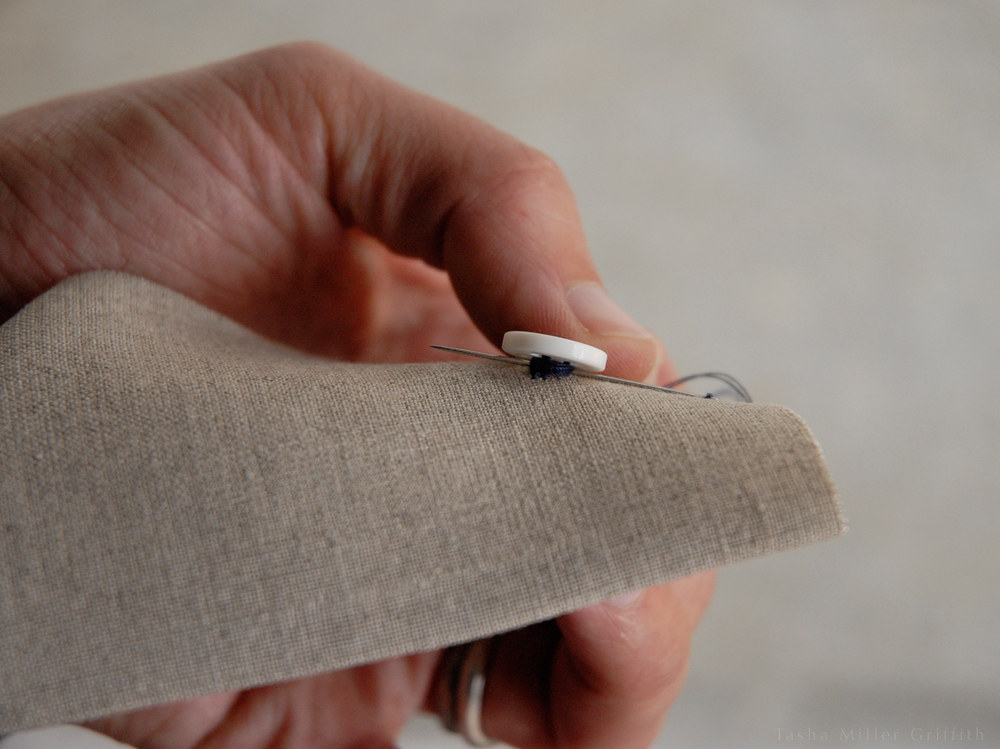
 

sewing on a button 7


Secure the thread either just under the button, or on the back side with a couple more backstitches, then trim the thread tails.
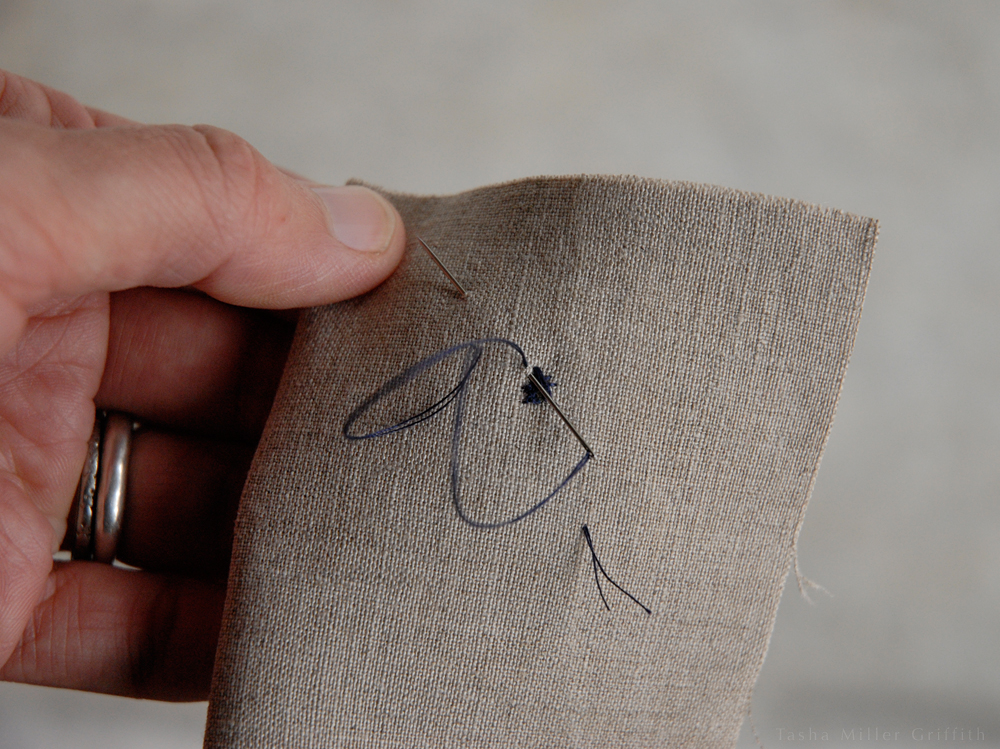
 

sewing on a button 8


So the next time a button pops off your shirt, you don’t need to send it off to Mom or stuff it in the back of your drawer, you can fix it yourself!  Feel free to post other button questions, too …
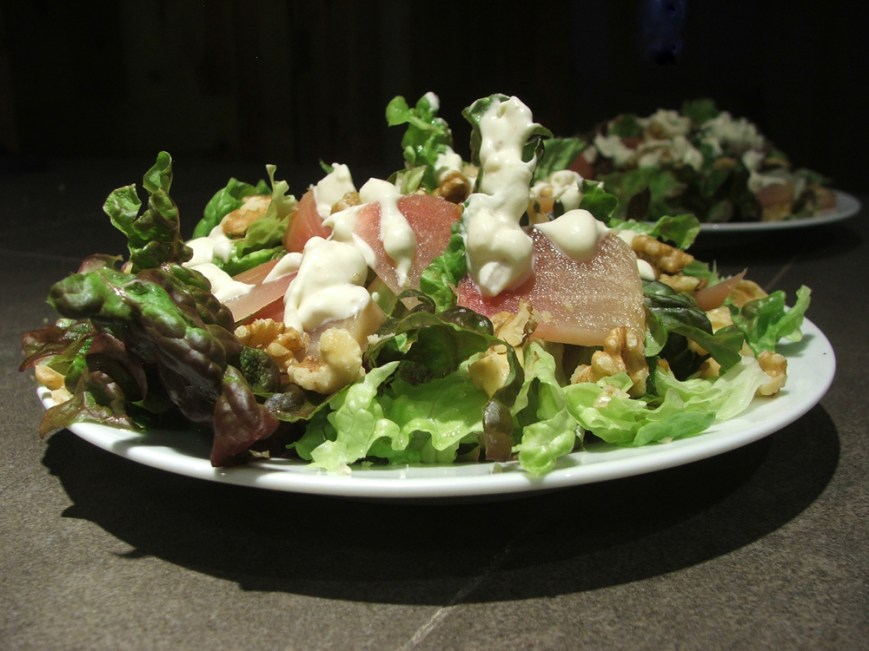
 

Beet Salad with Blue Cheese Dressing


Recipe time!  This winter I have been making a lot of little side salads, it’s a nice way to get some green stuff without feeling overwhelmed by it, and you can change the dressing and flavors every day.  This one is a favorite at my house and also uses a winter staple, beets.  Beets are one thing we actually learned to love after getting a lot of them through our CSA – I also enjoy all the lovely colors they come in, including the salmon-y ones here!

The inspiration for this recipe came from an old issue of Bon Appétit, this is my simplified version.

For 2 salads:

Crumble about 2 tablespoons of your favorite blue cheese.  I like to use Fromage Blue, a kind of creamy cross between blue and brie.  You don’t have to put much else in this at all, so feel free to use really nice Roquefort or Stilton and the flavor will come through clearly.

Add a few tablespoons of heavy cream to make about the amount of dressing you want.  The longer you let it sit, the more cheese will absorb into the cream and the thicker it will get.  I like to leave it until the flavors are blended but it’s still liquid enough to spread over the salad.  You can add more cream later if it gets too thick.

Add:   About 1 tsp finely chopped shallot

A dab of stone ground mustard

A small splash of rice vinegar (or another type you like)

As you can tell, you can vary this a lot by taste.  If you have really nice cheese, feel free to use only a tiny amount of the other flavors.

Stir together, let sit and then enjoy!

We like to eat this on a salad of roasted beets, romaine, and whatever other fresh veggies we have in the fridge (pea pods are especially nice in the fall) with walnuts on top.

Extra: My favorite method for roasting beets:  Cut off tops and roots and place beets in a deep dish with about ½” of water in the bottom.  Cover with foil and bake at 375 until beets are very tender when pierced with a fork, then let cool and peel  – they’re so much easier to peel after cooking!

What’s your favorite way to use beets?  Your favorite blue cheese?

Four Pairs of Hand Knit Socks Arrive in the Mail


Not the kind of thing that happens every day – a small miracle made possible by the connection between two people.

Two summers ago I took a chance, and let a customer leave my art show booth with two large felt bags in exchange for a small check and a promise to pay the rest a little bit at a time.  Over the coming months she restored a good piece of my faith in humanity.  We wrote back and forth a bit with the checks, I fixed her bag when the handles I had bought didn’t hold up to wear.  She and her family visited me again this past summer.

Then yesterday I got this package in the mail from her, she hadn’t written me beforehand, what could it be?

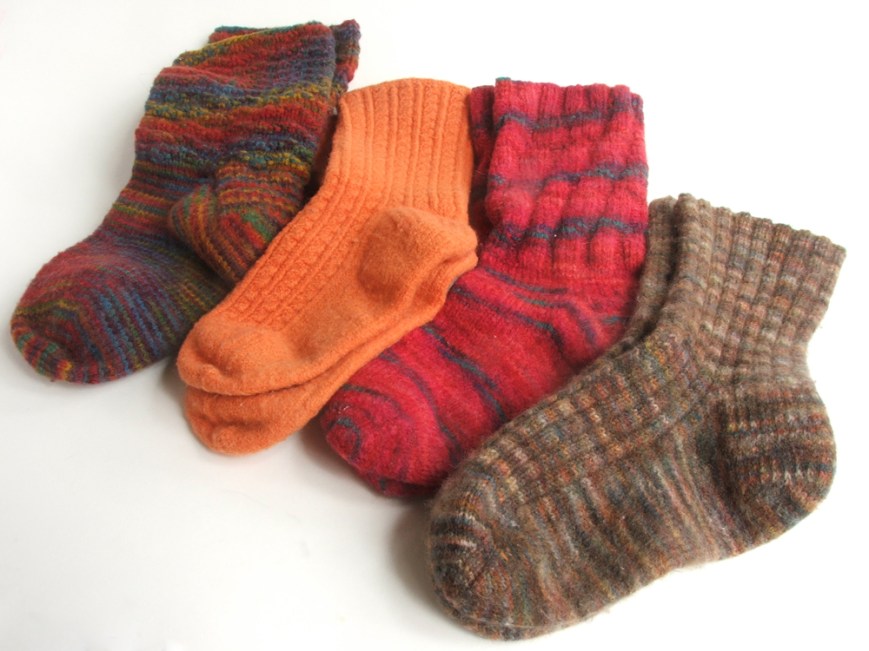
Four pairs of slightly felted hand knit socks.  Plus a lovely sweater that had shrunk too much, all intended for my recycled felt projects.  I have pretty small feet, those socks are going to get worn, and so happily, and then when they wear out they can be part of something else.

It’s the connections we make and the people we trust that give us beautiful unexpected moments.

Fix a Ripped Out Button (or Other Small Hole)


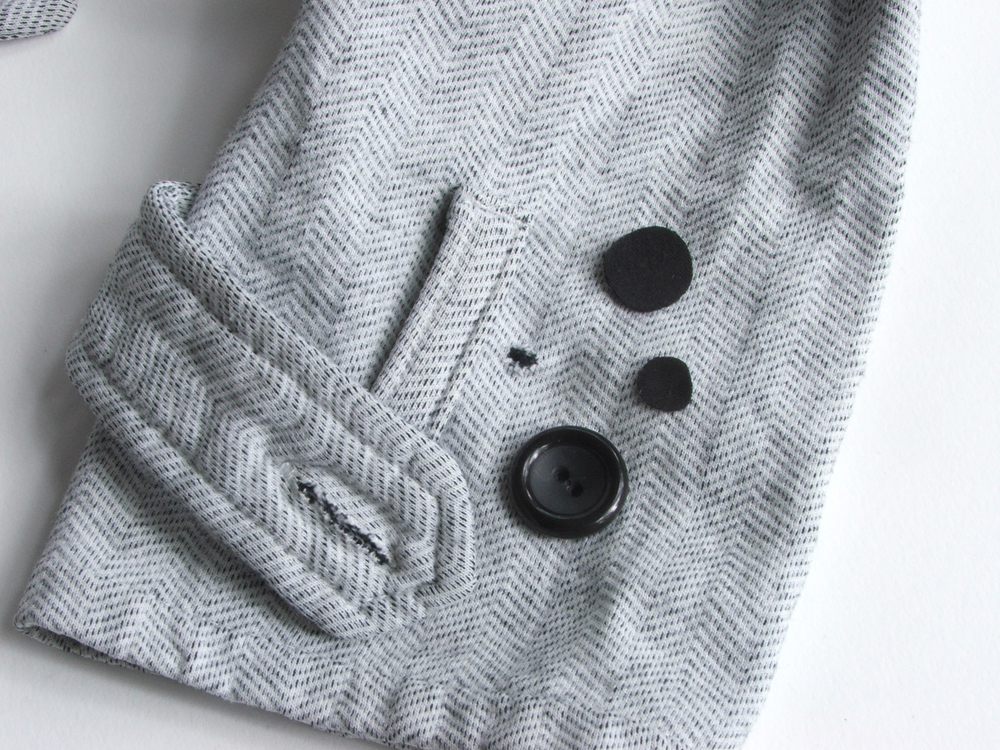
This is a sweater/jacket I picked up at the thrift store the other day, I thought it would be good for our upcoming ski trip to Bend (and also because I’m cold basically all winter long).  Only one or two small problems, the original buttons are some crazy unique things, more like a snap with one large flared button side and a flat back, and two of them are missing, leaving holes where they ripped out.

But small holes like that are pretty easy to fix, especially since the result will be covered by a new button.

The fabric here is a sturdy (not very stretchy) knit.  I happen to have some sturdy black knit fabric to cut little circles from, but if I didn’t I would use a woven rather than something too thin or stretchy.  The fixed place is going to have lots of stitches in it and not be very stretchy anyway.

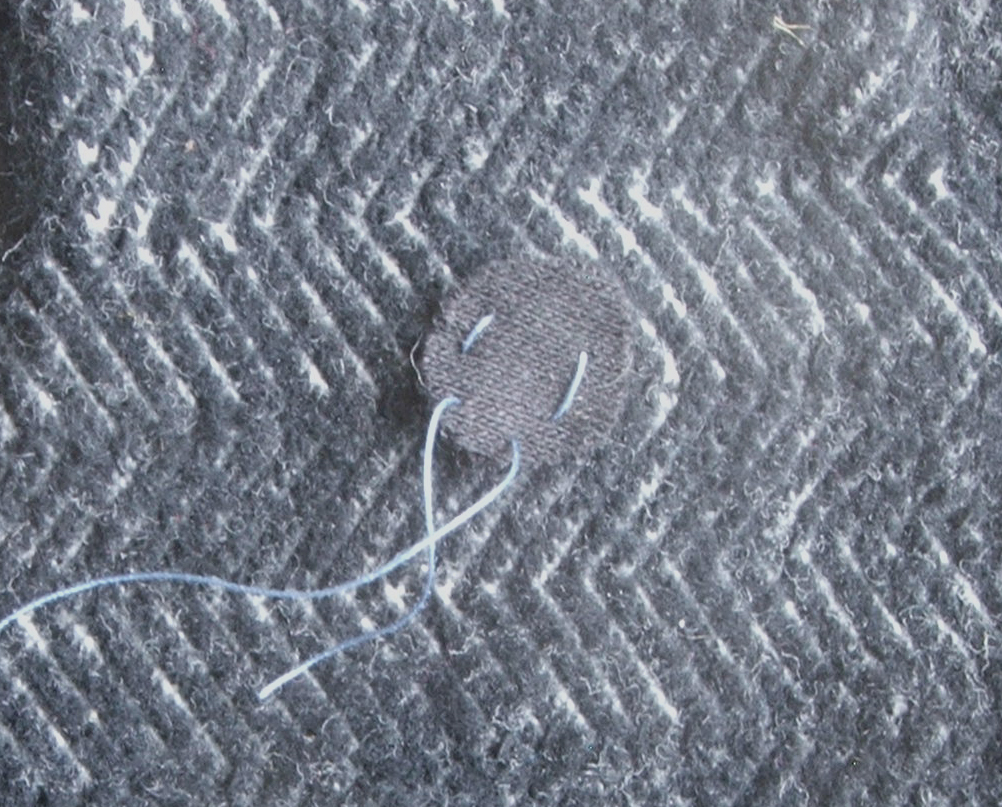
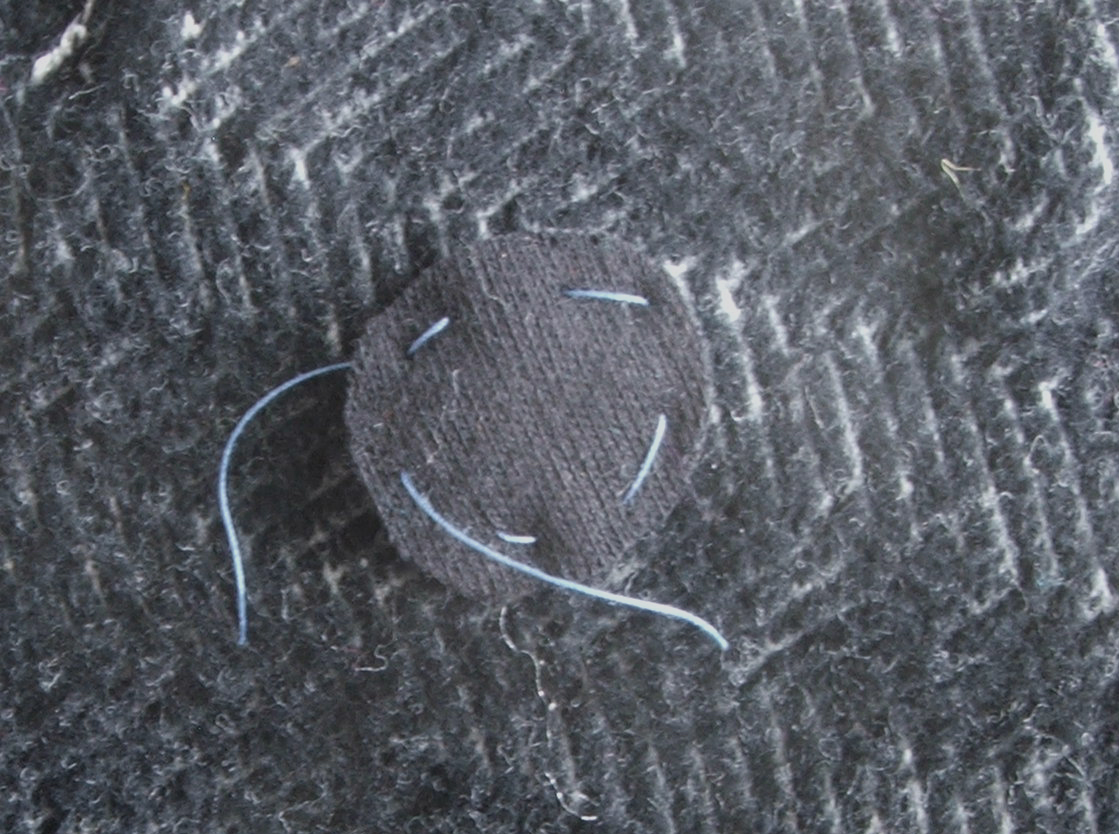
The easiest way to get the patches to stay where you want them is to baste them in.  (Basting just means stitching that’s not permanent, but meant to hold something in place while you sew.)


Because I want this spot to be super sturdy, I put one small patch directly behind the hole and another one on top to back a larger area (both on the wrong side of the jacket).  I used contrasting thread for basting, but you may want to try matching, it will make pulling out the smaller stitches later not as necessary.

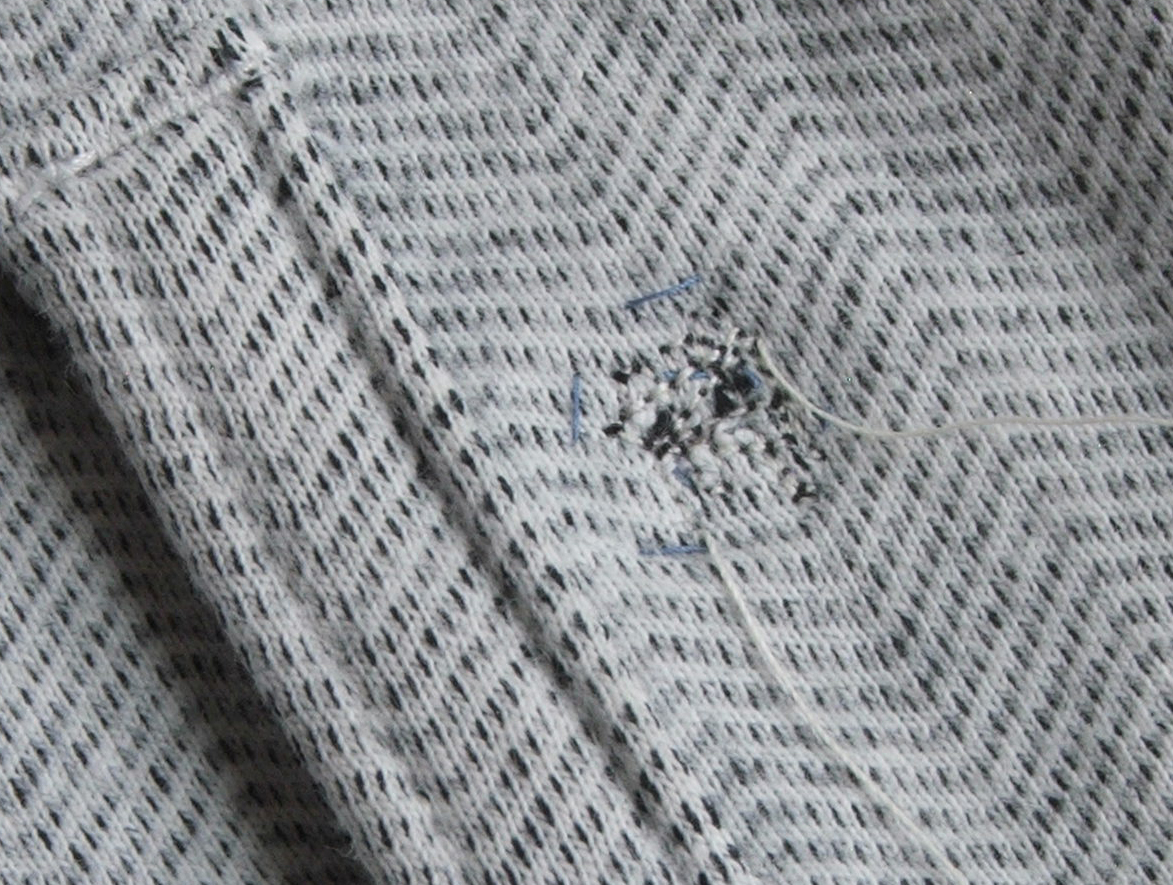
Next, smooth the sides of the hole down and as much back where they came from as possible, and sew using your machine.  If the fabric has a distinct color on each side, you can use different color top and bobbin thread – I used cream on top and black in the bobbin.  (A picture of me sewing this would show nothing, since it’s all under the foot!)  I used a short stitch length and went back and forth over the hole, mainly in the same direction as the knit ribs of the fabric, and then a bit side to side.  Make sure to catch all the raveling edges.  When you’re done it should look something like this:


Pull out the basting threads, bury the sewing thread ends, and you’re done!  Next week: how to sew on the button.

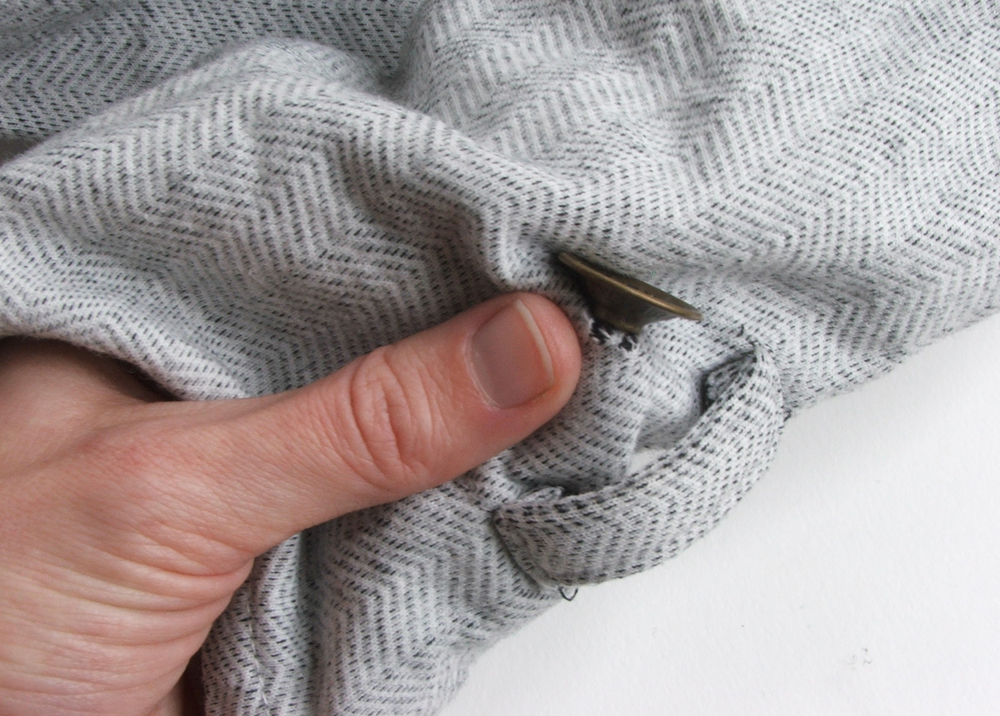
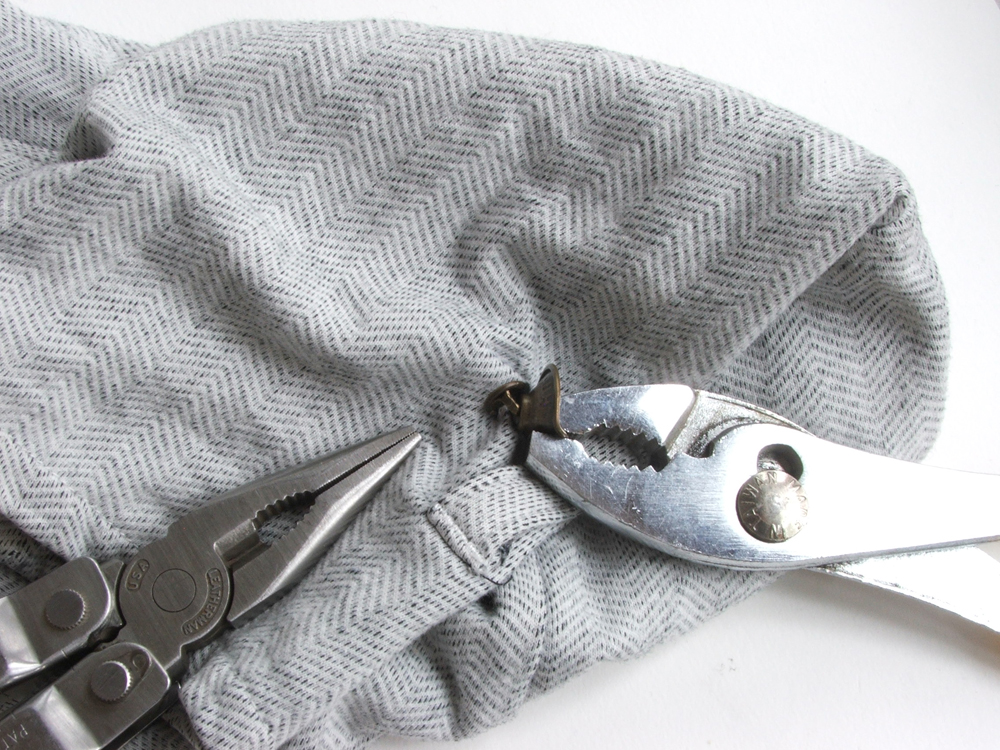
One final note, only one of these cuffs had the button come off.  But as you can see, the other one is about to go.  And besides, it will look more natural if they’re symmetrical.  Sometimes it just feels good to pull something off with pliers – rawr!


Got something you would like to fix?  Not sure how?  Leave a comment!


Hands and Machines


I’m reading a fairly amazing book called “Living the Good Life” by Helen and Scott Nearing.  One of several standout quotes from the first section of the book is this one:

“Mankind has worked for ages with hand implements.  Machine tools are a novelty, recently introduced into the realm of human experience.  There can be no question but that machine have more power than humans.  Also there can be no question but that they have watered down or annihilated many of the most ancient, most fascinating and creative human skills, broken up established institutions, pushed masses of ‘hands’ into factories and herded droves of anonymous footloose wanders from urban slum to urban slum.  Only the historian of the future will be able to assess the net effect of the machine age on man’s joy in being and his will to live.

I think about this all the time, as I’m making things by hand in ways that have declined or almost disappeared since the industrial revolution.  And I have watched a similar thing happening lately to my husband Bryan with the explosion in digital photography.

I personally think that while some machines are truly labor-saving, we as humans still need to make things ourselves.  For self-fulfillment – I can’t go more than about a week without physically making something or I start to get unhappy.  And because when we make things, we learn and think about where they come from and what goes into them.  It helps us understand the materials that are available and the amazing creative power we each possess to craft our own ideas and dreams using these materials.

What do you think?

PS: I highly recommend this book to anyone interested in living even a little bit outside the box.  Even if you don’t agree with everything the Nearings believe, it’s inspiring to read the story of two people who chose their own path and followed their own hearts and minds.

Spanakopita

Ok, confession time.  Even though I eat almost exclusively vegetarian (a little fish) and try to buy local food (even in winter), I am not one of those people who can just dig into a big pile of slimy cooked greens.  Nope, not happening.  When we joined our CSA a couple of seasons ago and got flooded with chard, kale, mizuna, and other crazy crinkly green stuff, I had to find some creative solutions, and this remains one of my favorites.

This recipe had its genesis in The Joy of Cooking, my all-time pick for only cookbook I’d take to a desert island.  It is totally its own creature now.

Spanakopita/Kaleakopita/Chardakopita

Makes one 9 x 12 pan, or similar size

Preheat oven to 375

Get 1 bunch spinach, kale, chard, or un-identified green from CSA (as long as it’s the kind you cook)

Wash and stem this, my favorite method is to grab the stem with one hand and pull the leafy stuff off with the other hand.  Put the stemmed greens in a pot with a steamer basket and some water in the bottom.  Bring the water to a boil and then turn it down to medium – low heat, let the water simmer until the greens are bright green and relaxed.

Meanwhile, finely chop ½ large onion and 1 large garlic clove

Saute the onion in olive oil over medium heat in a small skillet or pan until it just starts to have a golden color.  Add the garlic and stir and cook for about another minute.

Put the onion and garlic in a bowl.

When the greens are done, use tongs to transfer them to a food processor and pulse until very finely chopped (or how you like them).  Add them to the onion bowl.

Also add to the bowl:

–       About 8 oz feta cheese – the real sheep feta is awesome if you can find it!

–       A little more cheese – parmesan or Greek hard cheese is traditional, but I like to use a hard goat cheese.  I put in a couple tablespoons, but you can vary to taste.  If you use the really nice feta, don’t put in so much other cheese that it overwhelms the flavor.

–       4 eggs

–        A few grinds of black pepper – the cheese is salty enough for me so I don’t add any more salt

Mix this all together.

Melt (I like to just drop it in the onion pan) 2 Tablespoons butter

Get out your thawed frozen phyllo dough

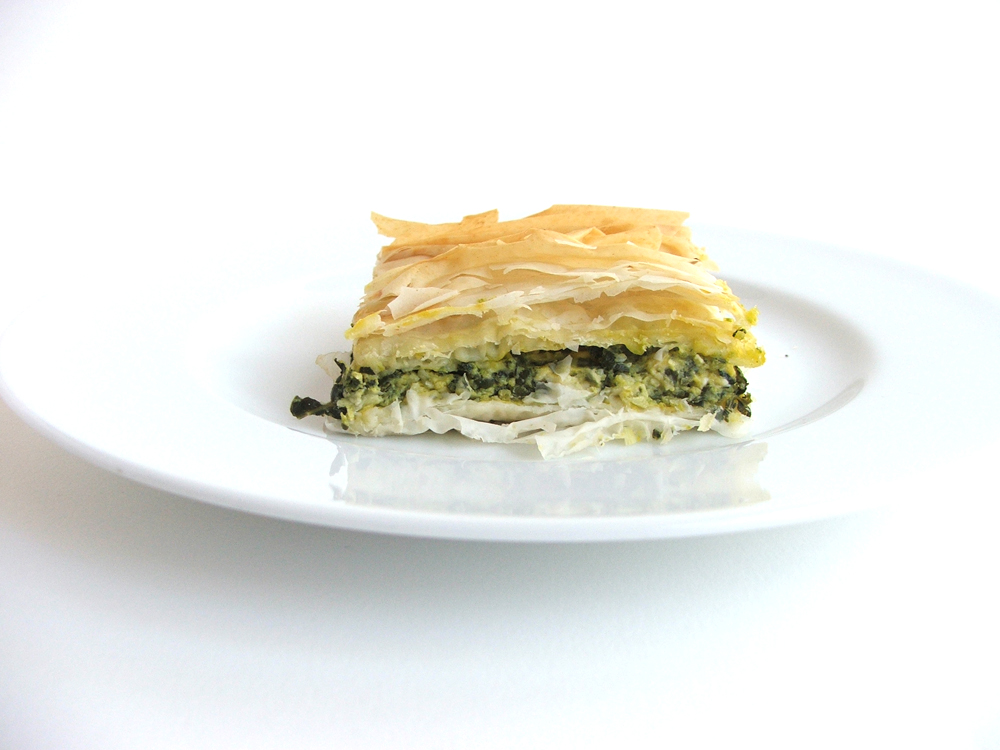
You may need to cut the phyllo sheets in half. If so, tightly wrap what’s left and put it back in the fridge.  Working quickly, brush a little butter in the pan, lay down a sheet, lightly brush it with butter, lay down the next sheet, etc. until you have used 8 – 10 sheets or half your stack.  Spread on the filling, then repeat with the rest of the phyllo sheets.  If you have some butter left, spread more on the top sheet or two.  Cut the spanakopita into pieces through the top layer of dough, then put in the oven and bake until the top is golden and the filling looks solid where you cut it, about 40 minutes.  Let cool for a few minutes, cut through the bottom, and enjoy!

Cat Bordhi – her Enthusiasm is Inspiring!

Ok, so I admit this is not the greatest picture, but this is me with the amazing Cat Bordhi!  I was lucky enough to take a workshop with her just yesterday.

She’s so open and generous in person!  To her, knitting is an ever-expanding horizon of both fascinating possibility and endless beauty.  And the enthusiasm this creates shines through in everything she does.  I am inspired not only by the myriad super-clever tips and tricks she has, but by her attitude, it reminds me to find the passion in what I do and let it show.   Thank you so much Cat!

If you knit and you have not checked out Cat’s ideas, you are cheating yourself!

Also special thanks to Michele, the owner of my lovely local yarn shop for hosting!

Testing – Our Beautiful Path

So here is my first “real” post, I want it to include pictures and some thoughts about what this blog will be about.

This is a lovely old Ford pickup bed, just before its transformation into a chicken coop for our friends in Oregon this past summer.

I thought the colors in the many layers of paint and rust were just lovely, and the shapes.  But how does that relate to the blog?  I have been thinking (helped along by yoga class) about the paths we take and how, if we are to truly succeed, we have to consider the whole path as our goal and not just the finishing point as our goal.

That certainly applies to this blog!  I have lots of goals for it; I hope that it will help me reach out to more people than I can physically teach, and help inspire them to create whatever it is they dream of (especially if it involves fiber)!  I hope that it will be a platform for me to communicate with all kinds of other creative people, to answer questions and get and give new ideas.  I hope that it will help me make a name for myself as a teacher and fiber artist.

But none of this will happen if I don’t put a real effort into each thing I make and each post, as if each one was my whole goal.

So, I invite you to come with me on a new path!  I hope we can build up layers of experiences and ideas as lovely as the paint from the long path of a very old truck bed.