Chopping Vegetables, or “Get a Big Knife”


Ok, blog people, let’s talk about something important: chopping vegetables.  Nope, I’m not kidding, in fact I think that being able to do this efficiently can make a real difference in how much work it is to cut up veggies, and therefore how many we cut up and eat.  I have not been to cooking school, so I learned most of my “knife skills” just by experience, and reading cookbooks.  But there are a few simple principles I use now that really make quite a bit of difference.

First of all, get a big sharp knife.  This does not have to break the bank.  When we were renting in Madison, we went to the thrift store, got the most solid-looking/feeling knife (from a rather large and alarming bin of them) went home and sharpened it, and it worked great.  If you use a tiny knife, you will have to cut each piece of each vegetable separately, and that will take forever, and you will be grumpy and think that vegetables are too much work.

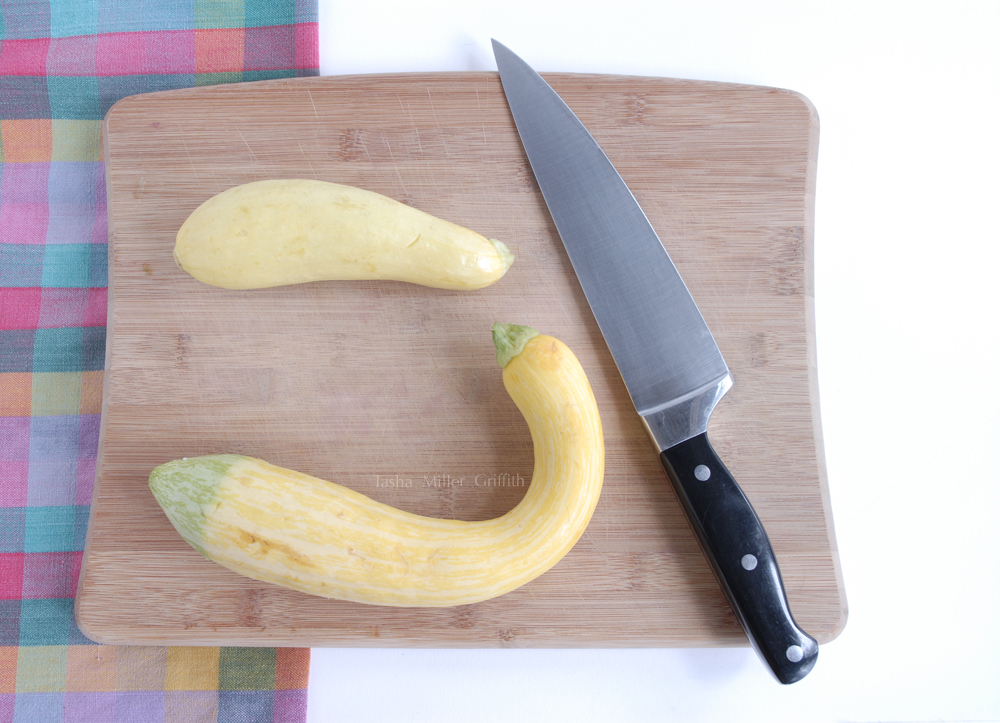
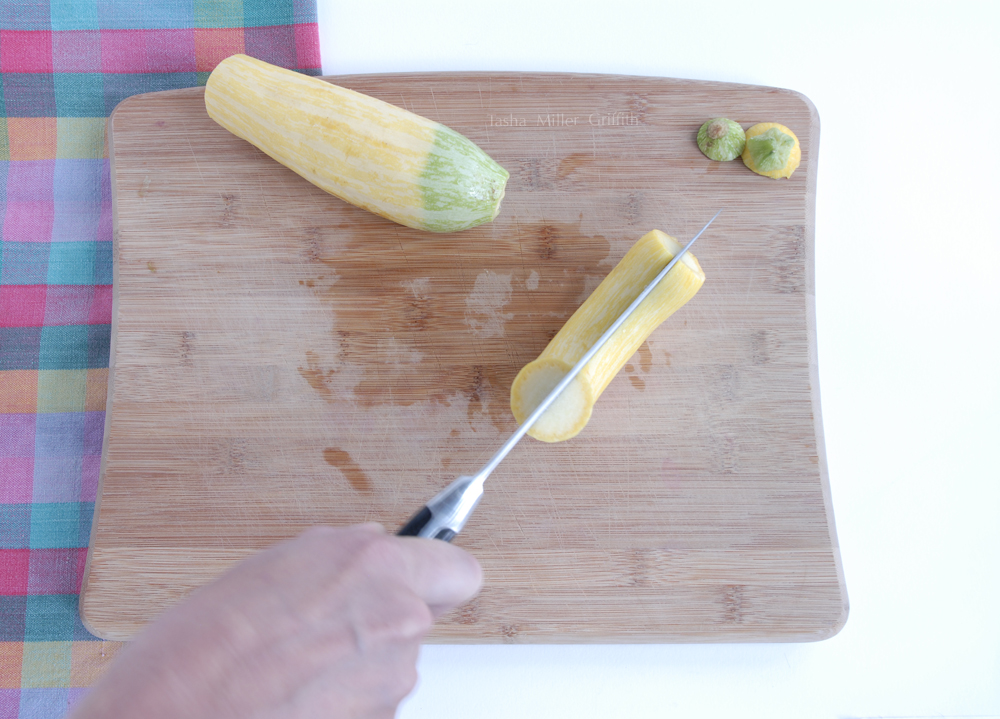
Ok, second thing, and this really the key as far as I’m concerned, chop the vegetable into sections, which you can chop together into pieces the size that you want to end up with.  I’ll demonstrate on this squash: cut the ends off (any part you don’t want), and then cut it in half.
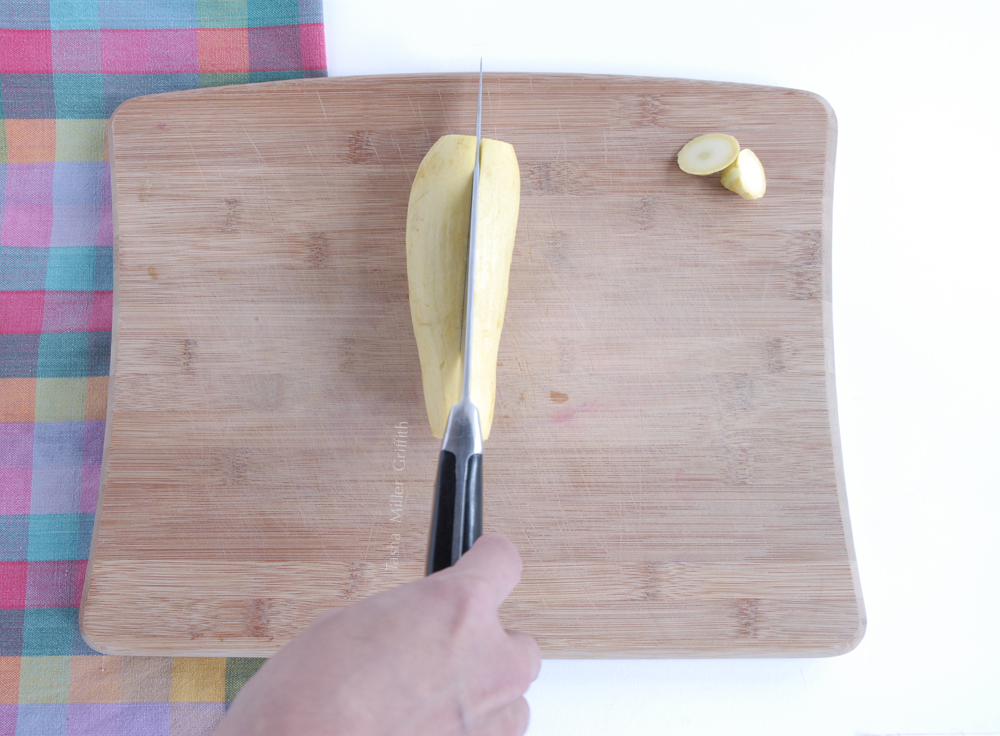


Then, cut the halves in half again, so that you have four sections of squash.  You can pull the knife in a curve as you cut if your veggie is curved.  If you want very small pieces at the end, cut into eight sections now, dividing each one one more time.
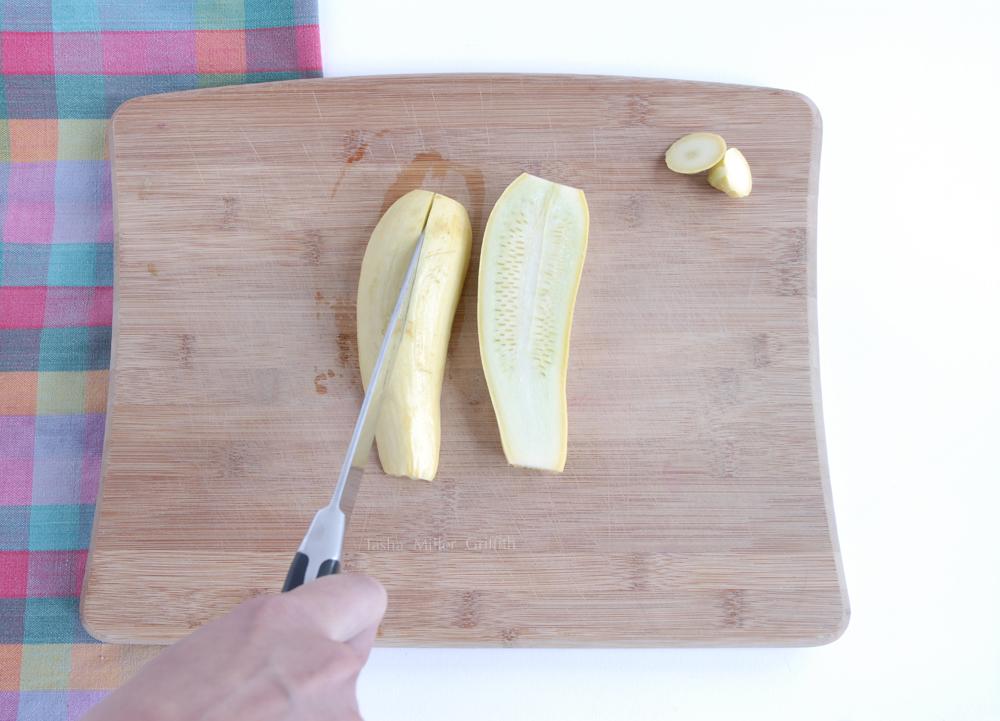


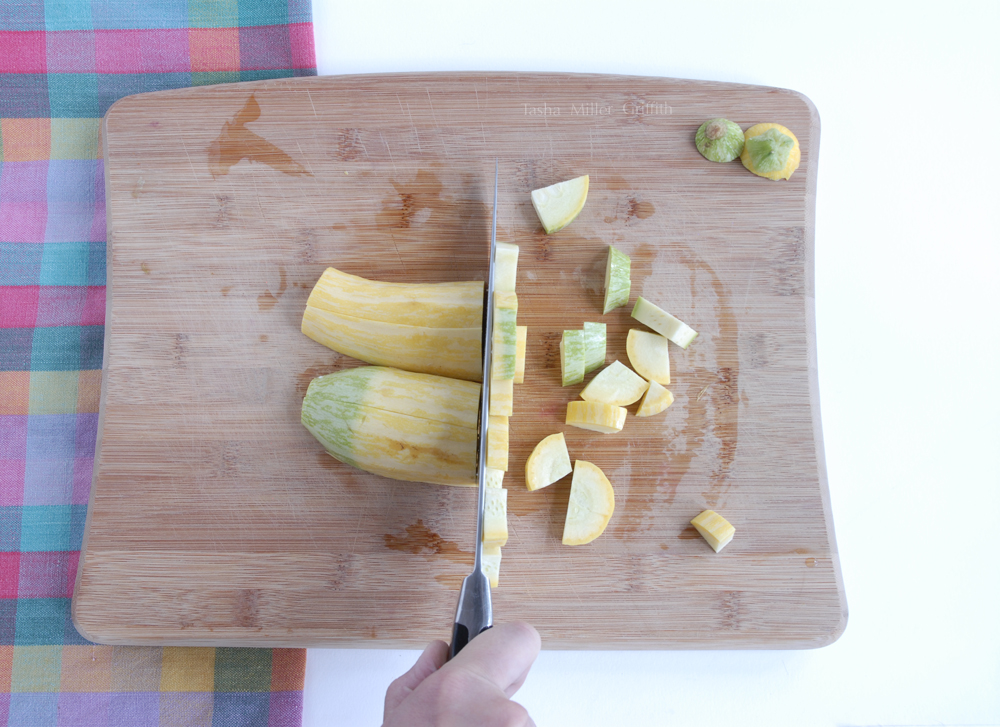
Now, line up the sections and chop all at once!  You can chop thin or thick pieces, whatever you’d like for your dish.  Notice that the tip of your big knife can stay touching the cutting board as you lift the thicker part near the handle and chop chop chop.
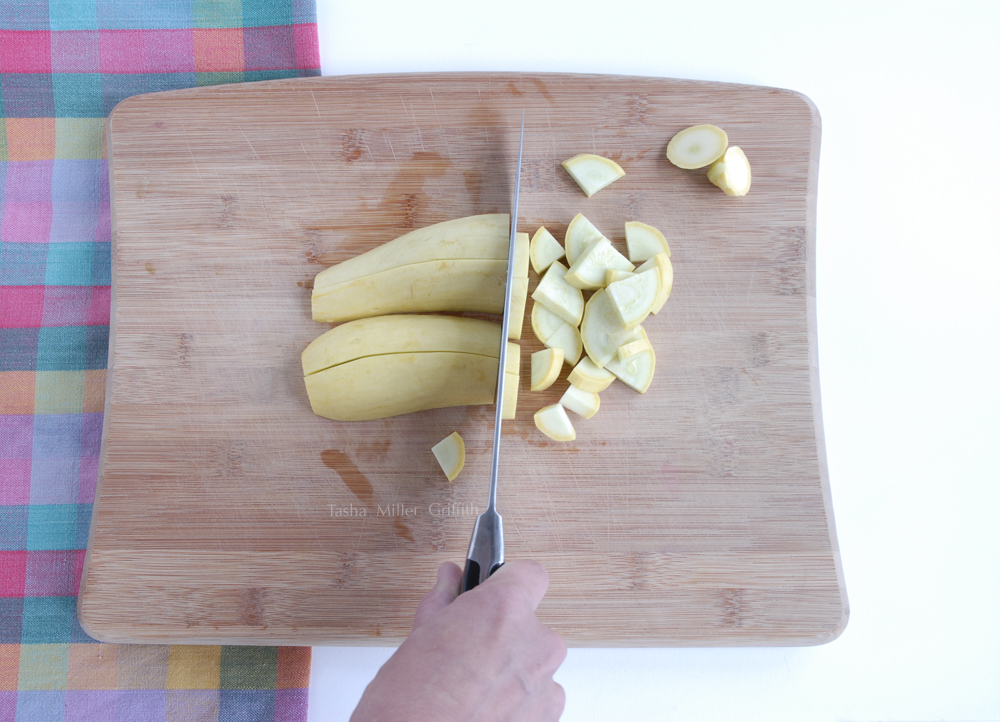


At this point I should perhaps point out that I am usually holding whatever I’m chopping (not the camera) with my non-dominant hand.  And that if you are left-handed, you’ll do exactly the same things, but your chopped squash pieces would appear on the left side of the frame above.  When you’re holding something that you’re chopping, lots of cookbooks advise you to keep your fingertips tucked under, I think on the theory that if your knuckles are sticking out the furthest, they are higher above the thing being chopped, and more likely to bump into the side of the knife than being accidentally shaved by the blade.  Most of the time, I forget to do this.  Use whatever works for you without chopping your fingers.

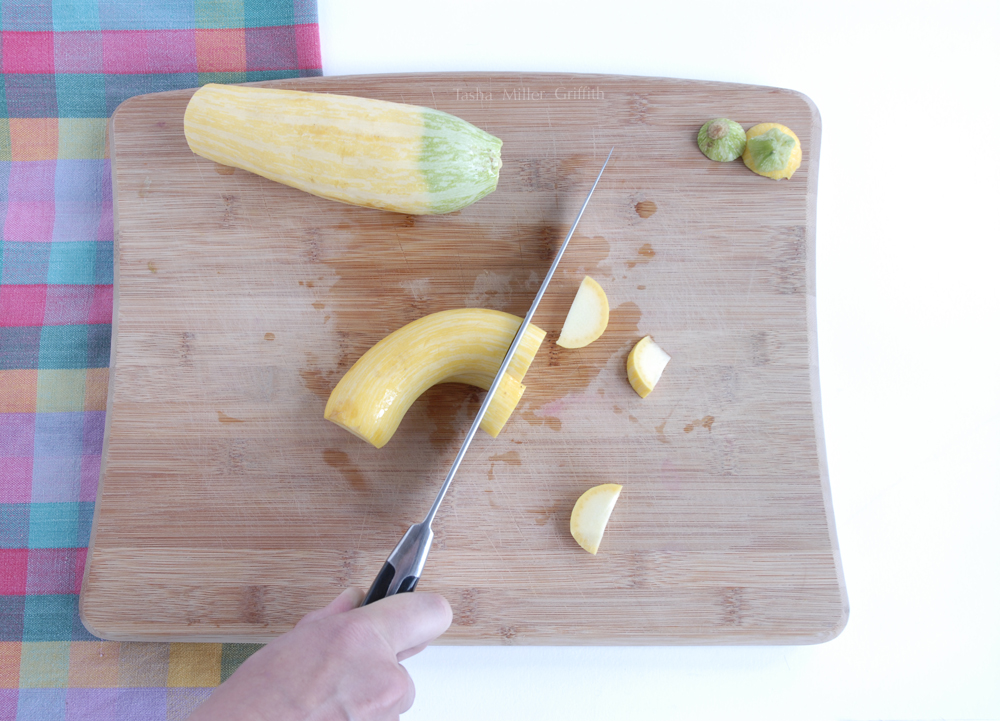
Also at this point, you may be thinking, “Ok, fine, but not all vegetables come in such a straight and manageable shape.”  Ah ha!  True, but use the same principles to break them up.  For example, I cut this crookneck squash into a (more or less) straight part, and a very curvy part.
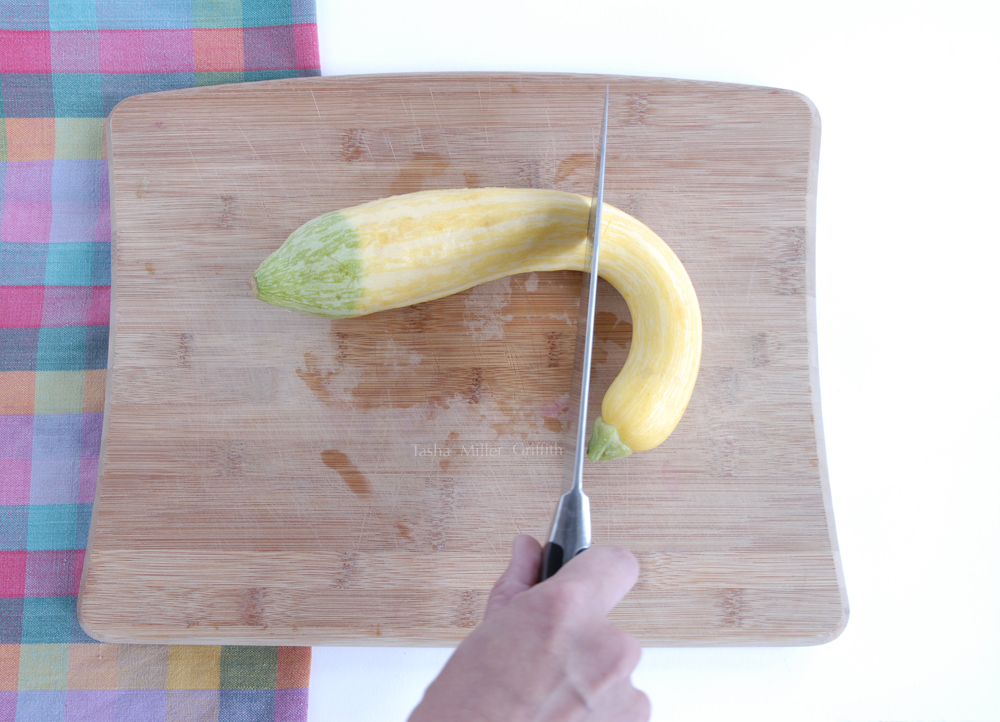


Cut off the ends and divide into sections as before.  If one part is noticeably thicker, I’ll cut it into quarters, and leave the thinner section in halves, to get pieces of about the same size.  That way they will all cook in about the same amount of time.


There wasn’t an easy way to line up the curvy sections flat, so I stacked them on top of each other.  It’s all about chopping more pieces with one cut.


Another thing that’s not illustrated, but helps a lot, is having a big bowl (or two if they are not all going to the same dish) to collect your chopped veggies in.  Having a cutting board cluttered with things you’ve already chopped will force you to make smaller, less efficient movements.


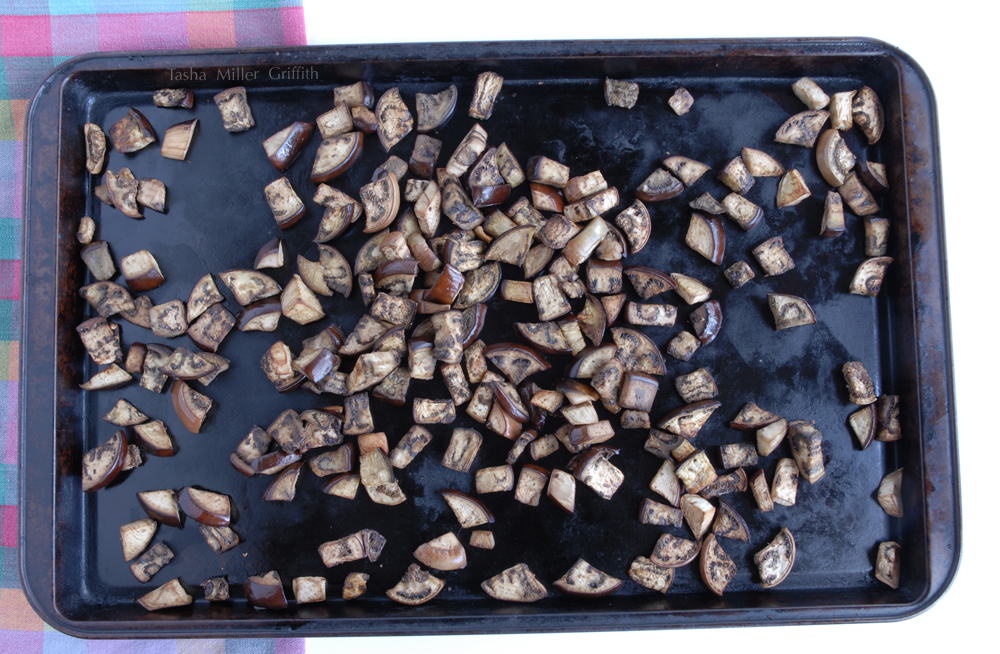
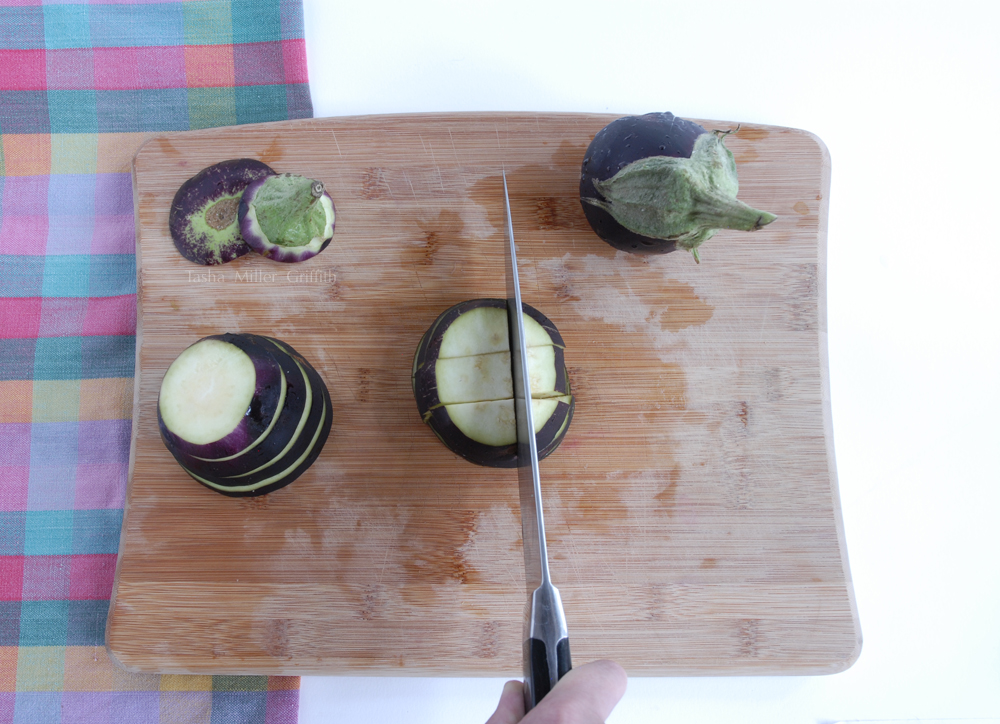
Apply the same principles to a round eggplant: slice first, crosswise this time, then stack and cut into pieces the same size as the squash.


A few vegetables have their own variations on these ideas, like onions.  Any other ones you’d like to see covered?

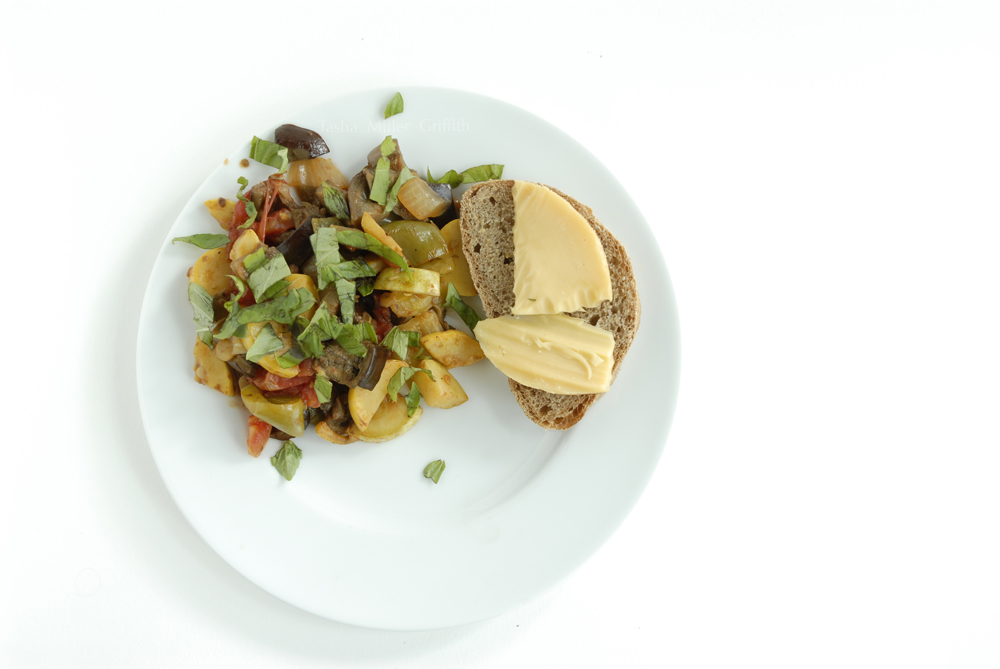
What to do with all these lovely freshly chopped veggies?  All of the ones illustrated here went into ratatouille.


Try it, trust me, it’s faster, it’s so worth it.

When I say “faster,” I don’t mean “hurry” or “rush” (which in my case always leads to mistakes and/or injuries, usually and), I mean more efficient, less time spent doing the same task, even though you are doing it well.  Whenever I think about efficiency as applied to hobbies (like cooking is for me), I think of this quote, it’s from a weaving and sewing book that my grandmother gave me off her shelf when I liked it.  I love the way the authors write about craft:


In all human pursuits there seem to be fast, efficient ways of doing things and slower ways of doing things.  Some weavers hesitate to look for and adopt efficient methods in their craft because they think of themselves as amateurs.  In their heart-of-hearts they feel that it is not appropriate for them to become more proficient.  . . . Loving the craft of weaving and wanting to pursue it more efficiently are certainly not mutually exclusive.  There is every reason, in fact, for all weavers to try to become efficient.  The first benefit of increased proficiency is the production of a better fabric.  There are very few satisfactions that compare with that of a job well done!”

– Handwoven, Tailormade by Sharon D Alderman & Kathy Wertenberger


There’s a lesson here for all of us who make ourselves anything as a hobby.  I’d love to spread this attitude, and the resulting more and better sewing/cooking/weaving/whatever you make.  What do you think?  How to you view efficiency in your hobbies?
 

Ratatouille


This time of year, at least where I live, the market is simply overflowing with fresh veggies.  While the fruits seem to come in a relatively orderly sequence, one replacing another, the vegetables apparently just multiply, more kinds, more flavors, more colors, every week until the frost.

So, a perfect time to make something delicious out of them!  Something full & rich with the flavors of all the late summer bounty.

Ratatouille

Makes enough to feed 4 as a main course

Chop into large chunks (see the next post):

2 medium summer squash; zucchini, crookneck, etc.

2 smallish bell peppers; red, orange, yellow or purple

1 medium yellow onion

4 small or two larger eggplants

1 mildly spicy chile (optional but really good) If your chile happens to be already roasted, add it with the tomatoes.  Otherwise, keep it with the peppers, squash and onion.

This many veggies will not fit in my largest skillet in anywhere close to a single layer, meaning I know they won’t all brown on the edges.  So, I put the chopped eggplant on a baking sheet and toss with a little olive oil, and roast it in the oven at 375° F until soft and slightly browned, about 30 minutes.

Meanwhile, chop the other veggies and put them in a large heavy skillet on high, with more olive oil, enough to keep them from sticking.  Stir occasionally, letting the surfaces of the vegetables get a nice medium brown.

While the veggies are cooking in the skillet, also chop:

4 -5 large tomatoes chopped roughly, or a little more than a pint of small ones cut in half

3-4 cloves of minced garlic

When the veggies in the skillet are just about browned, add the eggplant to them.  Make a clear space in the center of the skillet, add a drizzle of olive oil, and put the garlic in it.  When the garlic just starts to color, mix it in with the rest of the veggies, and add the tomatoes.  Turn the heat down and cook until the tomatoes start to collapse.

That’s it!  Serve with a generous portion of fresh basil (fresh oregano is also nice, although I like basil best), and a few grinds of black pepper on top.  You can salt to taste as well.


This recipe is delicious with risotto, or any cooked grain with a little cheese mixed in, or just with bread and cheese for lunch.


Asian Coleslaw Recipe Sketch


This is a family recipe in a few ways.  I first got obsessed with this salad a couple of years ago when one of my aunts was making it a lot.  Hers was inspired by two different recipes (neither for Asian coleslaw), which I bothered her until she sent me, I thought it was so good I couldn’t stop thinking about it.  I have been making my version of her salad (below) for long enough that it’s established its own pattern in my head of what “Asian Coleslaw” is like.

So, during our craft retreat, another aunt decided to make “Asian Coleslaw” with some veggies left in her fridge.  Great!  I offered to help, and had to laugh as soon as she started putting things in.  Parsley?  Olive oil instead of peanut or sesame?  If you’re putting that, why not add this cauliflower?  No?  As it became more and more clear that our visions differed (and of course her version was also delicious) I realized that here was one of my own lessons coming back to me, of course you can make it with whatever you have and whatever you like!  Please feel free to experiment.


Asian Coleslaw

This much will feed four as a side.

Combine in a bowl:

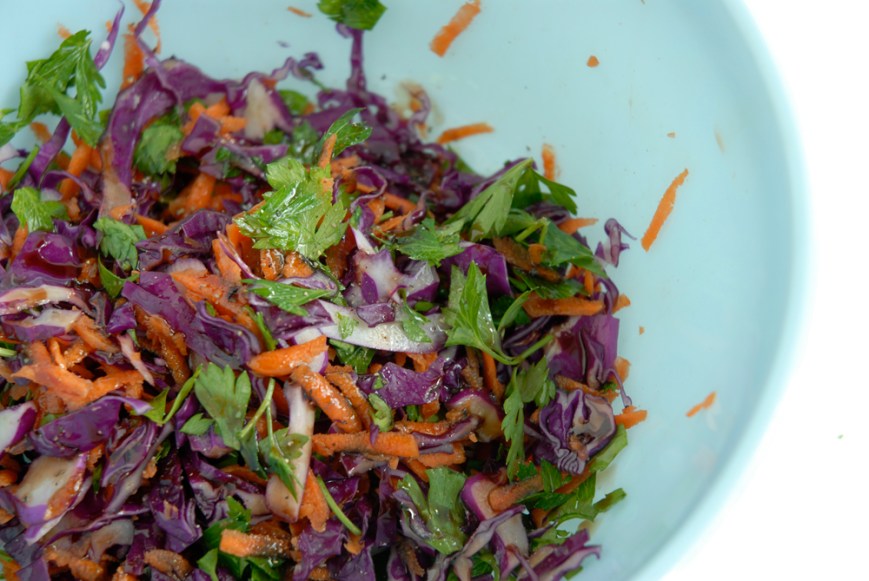
1/2 small cabbage (your favorite kind) shredded

3 medium carrots, grated

1/4 cup chopped cashews (peanuts and or/sesame seeds would also be good)

3 green onions/scallions, chopped fine (optional)

1/2 cup chopped cilantro (and/or parsley or other herbs)

Dressing (I make this in my little food processor):

1 Tablespoon shallot, or 2 cloves of garlic

1 Tablespoon fresh ginger

2 Tablespoons toasted sesame oil (you can also use peanut)

Juice of one small lime (or splash of rice vinegar, although I like lime better)

2 – 3 Tablespoons soy sauce or tamari

2 teaspoons sugar or maple syrup

Squirt of hot sauce (or add serrano or another hot chile)

Process the dressing until everything is combined and chopped fine (you could also mince the solid ingredients by hand and combine everything in the bowl).  Pour the dressing over the salad, toss, and you are done!  This also keeps quite well in the fridge for several days.


I realized as I was thinking about posting this recipe that’s a really a year-round salad.  I tend to think of it almost more for winter, since the ingredients are still readily available, and it provides a little something fresh when almost everything seems warm and stewed.  But, it also makes me think of my cousin (sweating out the Brooklyn summer without AC) and everyone stuck in the Midwest heatwave – a tasty way to get your veggies without ever turning on the oven.  I’m still making it here, even though our monsoon-season weather has been exquisite, so close to perfect that I keep sitting on the (brick) front steps with my laptop to feel the breezes.   I’m telling you, the world’s best weather is in the mountain southwest, once it starts to rain.

One last note, my DIY envelope tutorial was featured on KP’s blog today!  We became friends in person (when we lived in the same country) now I love keeping up with her fun projects and lovely photos (plus she has a recycle project challenge)!


Chard Phyllo Pie, and Experimenting in the Kitchen


Years ago I took an Indian cooking class with my mom at our local community college.  Although none of the recipes from the class became my favorites, the instructor said something which I found wonderfully liberating – use what you have.  If a recipe calls for one vegetable or spice you are out of, just try it with something similar or something you think will taste good.  Sometimes, especially when you are cooking something from a culinary tradition other than your own, it can be easy to think you have to have exactly everything the recipe calls for, in exact quantities.  However, that’s, um, never actually true!

I have been thinking about this lately and wondering how to talk about it here, especially since reading this truly stellar piece about everyday cooking on The Yellow House.  One of the true keys to this kind of culinary freedom and weekday luxury is being able to make something with what you have on hand.

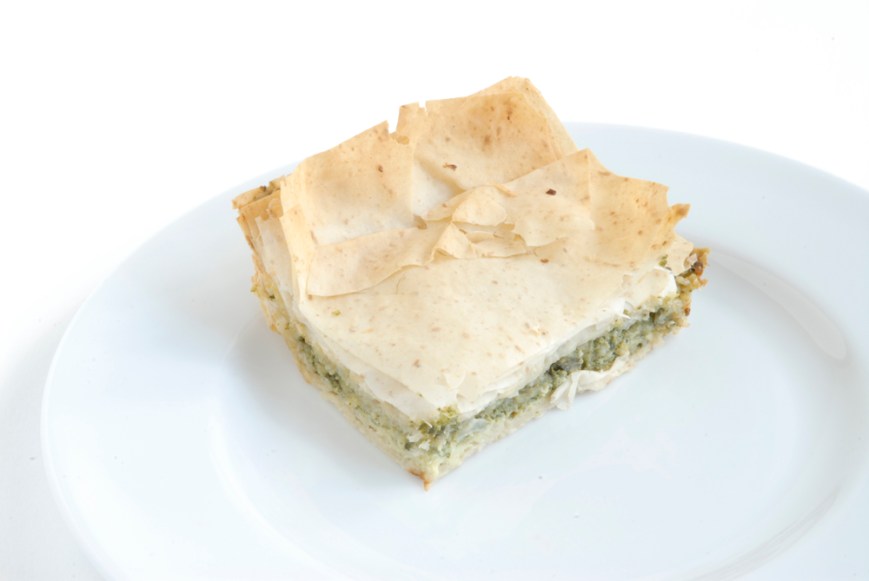
For example, the other day I had chard (thanks to my aunt Barbara, who brought some from her garden all the way to Flagstaff in her cooler!), and phyllo dough, but no kind of cheese I would normally use to make spanakopita.  But I did have a large chunk of Beemster Graskaas (creamy Dutch cheese), and a bit of leftover sharp cheddar.  Hmm, I thought, this may not come out so great, but I think it’s worth a shot (embracing the possibility of failure is essential here).

Well, after a couple of bites, I looked at Bryan and asked, “What do you think?”

“I think I like it better than regular spanakopita.” he said.  So did I!  Keep in mind that our normal spanakopita recipe has been a staple in our house for years now.  This one definitely has more of an American comfort-food feeling, deliciously so.


Chard Phyllo Pie


Makes one 9 x 12 pan, or similar size

Preheat oven to 375° F

1 bunch spinach, kale, chard, or un-identified green from CSA (as long as it’s the kind you cook)

Wash and stem this, my favorite method is to grab the stem with one hand and pull the leafy stuff off with the other hand.  Put the stemmed greens in a pot with a steamer basket and some water in the bottom.  Bring the water to a boil and then turn it down to medium – low heat, let the water simmer until the greens are bright green and relaxed.

Meanwhile, finely chop ½ of one yellow onion and 2 medium garlic cloves

Saute the onion in a litle olive oil over medium heat in a small skillet or pan until it just starts to have a golden color.  Add the garlic and stir and cook for about another minute.

Scrape onion and garlic out of the pan into a bowl.

When the greens are ready, turn off the heat and let them cool for a couple of minutes.  Use tongs to transfer them to a food processor and pulse until pureed (or how you like them).  Add them to the onion bowl.

Also add to the bowl:

–       About 8 oz creamy Dutch cheese (the whole point of this post is to try whatever cheese you like/have!)

–       A little sharp cheddar cheese, or another kind that will add a little more punch to the cheese flavor

–       4 eggs

–        A few grinds of black pepper

–       A pinch of salt

Mix this all together.

Melt (I like to just drop it in the onion pan) 2 Tablespoons butter

Get out your thawed frozen phyllo dough

You may need to cut the phyllo sheets in half. If so, tightly wrap what’s left and put it back in the fridge.  Working quickly, brush a little butter in the pan, lay down a sheet, lightly brush it with butter, lay down the next sheet, etc. until you have used 8 – 10 sheets or half your stack.  Spread on the filling, then repeat with the rest of the phyllo sheets.  If you have some butter left, spread more on the top sheet or two.  Cut the spanakopita into pieces through the top layer of dough, then put in the oven and bake until the top is golden and the filling looks solid where you cut it, about 40 minutes.  With this version the filling will be a little more moist & creamy, definitely let it cook until the top is a rich golden brown.  Let cool for a few minutes, cut through the bottom, and enjoy!


Not every culinary experiment will produce results you want to note down and make again.  But, with just a little practice cooking with what you have & what you can find, every day can be fresh, wholesome, creative – in other words, a small miracle of food at your fingertips.


Preserving Watermelon, or what I took on our Trip to Michigan


This last month or so was the first time in a long time I got to really settle in at home in the summer.  To me, one thing that settling in means is buying a lot of fresh food, and cooking it up.  Plums just appeared at my farmer’s market a few weeks ago, and my husband loves watermelon.  Plus, I was testing out recipes for raspberry jam, in advance of picking black raspberries as they come into season at my friend’s secret raspberry picking spot.  So, I found myself about to leave town, in the phase known as “eat the fridge,” with a bowlful of plums, 3/4 of a fairly good orange watermelon, part of a jar of jam, etc.

At first this really bummed me out because I cannot stand to waste food, I pride myself on planning so that we’ll eat everything, and it seemed like a bit much to just chow down.

Then I got to thinking, isn’t this the original reason for preserved foods, because you can’t eat everything while it’s fresh?  The plums we’re pretty easy, canned into a delicious compote (more about that later).


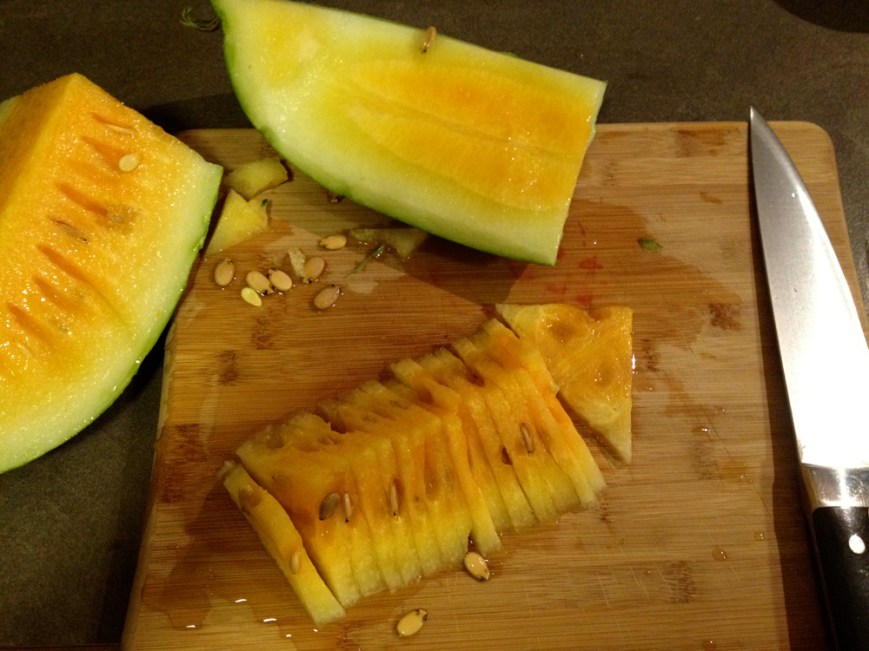
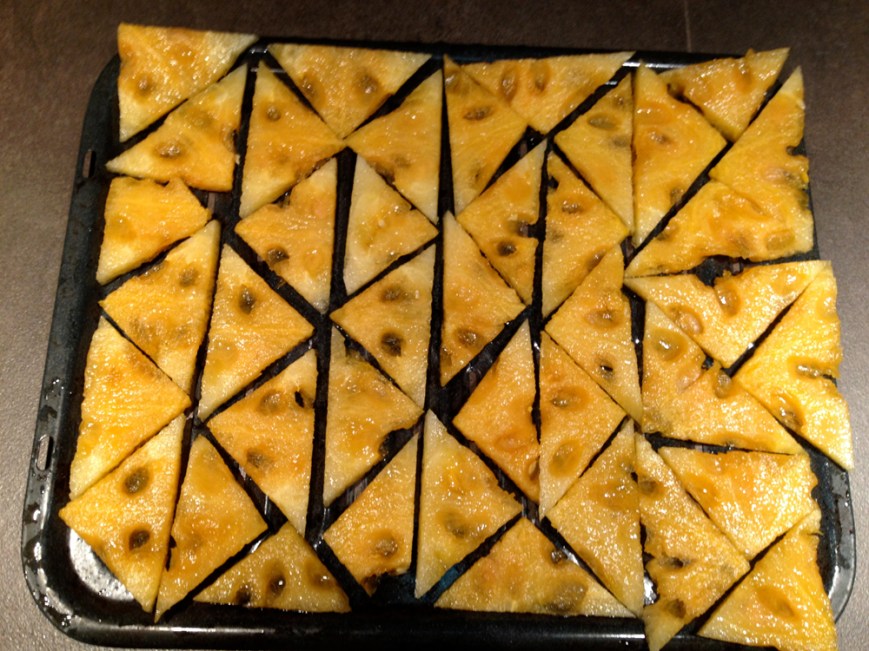
Watermelon, though?  A quick search produced this article on The Hip Girls Guide to Homemaking and this one on Mother Earth News.  I basically followed their advice.  Cutting the watermelon into quarters longways definitely made it easier to slice it thinly, and to take out lots of seeds, although more appeared as it dried.  The flavor of these was actually really good, Bryan likened it to watermelon mixed with butternut squash.  I’m still on the fence about whether it was good enough to do again, mainly because it took forever in my oven, where forever is about 5 hours at 170° F, the lowest setting.  After letting it dry overnight, I had to heat it up again because cooled, it was stuck irrevocably to the broiler pan I used as a drying rack.  By the time it reached the “not tacky” stage recommended in Mother Earth News, it was a struggle to get it off the pan, even warm, without leaving about half behind.  The top photo has the most picturesque shreds.  If you happen to have a dehydrator though, it’s a no-brainer, you should definitely try some watermelon.


The thing that I’m most happy about this whole escapade though, was instead of seeing all the food we had as something that had to go before we left, I started thinking of it more like an ongoing process, that tied the food to our trip and to our return.  After I started thinking this way, I bought a loaf of bread, used part of it to finish up the jam, took part of it with us, and froze part to eat when we come back.  I’m looking forward to some French toast with plum preserves!

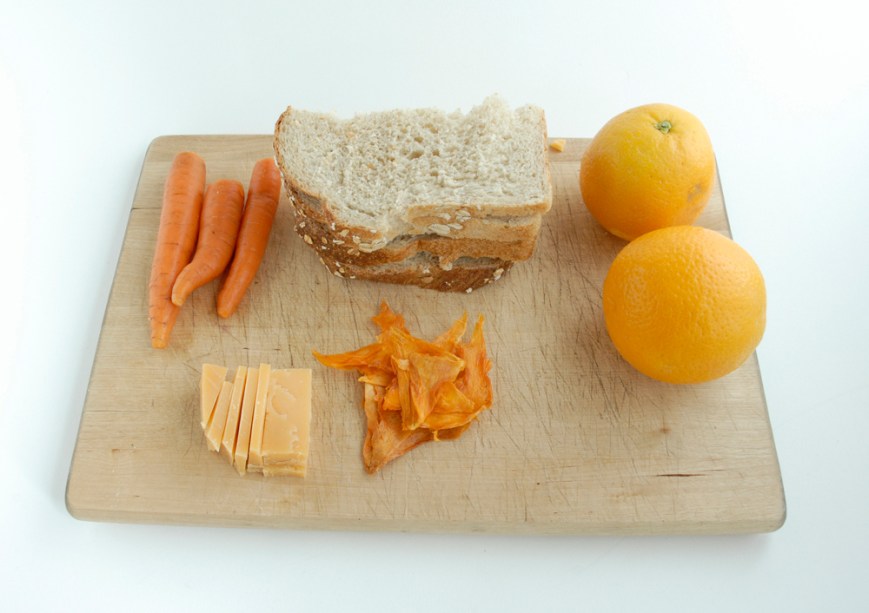
I’ve also been inspired to think about unconventional road food this summer by Kimberley’s series on The Year in Food.  As we sat on the plane, eating fresh bread, carrots & cheese (the last ones left in the fridge, washed and/or sliced and packed to go) and shreds of dried watermelon, I was a happy camper.  Having my own food, especially interesting food, definitely takes away some of the sardine can/cattle drive feeling of flying these days.

As I type this, we are getting ready to head over and set up for the Ann Arbor Art Fair, in 103° weather.  The dried watermelon is all gone, finished up at the last show.  But writing this post and thinking about our food adventures is putting me in a good mood, hopefully one that will last!

Recipe Sketch: Vietnamese Noodle Salad with Pan-Marinated Tofu


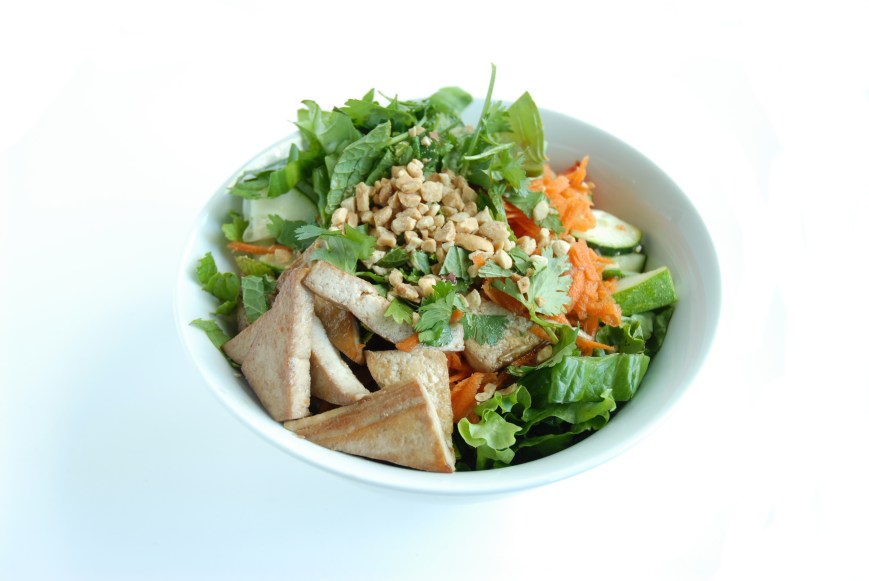
Last summer when we were at the Cherry Creek Arts Festival, I fell in love with this salad.  Instantly it was the only thing I wanted to eat on a hot day – it’s cool, it’s nutritious, the lovely clean flavors of the sauce and herbs on top make it so refreshing.  I’m pretty sure I got it (from a local restaurant’s stand at the festival) all three days we were there, and I’ve been seeking it in other cities ever since.  This week, I was sitting on the couch, thinking about all the other things I have to do and wondering what on earth to make for dinner, flipping through my recipe book, when I remembered this salad – being home in warm weather was the perfect time to try making it myself!


Vietnamese Noodle Salad

Noodles: I used very thin rice stick noodles. I’ve also seen this served with slightly thicker clear or white noodles.  Whatever kind you can find, check the package directions, boil just until tender (usually only a few minutes), then rinse under cold water.

Veggies; any or all of the following: shredded carrots, thin sliced bell pepper, cucumber, zucchini . . . almost all of the versions I’ve had include bean sprouts and shredded lettuce.  Tip: rinse bean sprouts in a generous spray of very cold water to get them at their tastiest and crispiest.  For my version, I sauteed the bell pepper and zucchini strips briefly over high heat, just to get little caramelized edges, then let them cool.  If it’s really hot out, you could just leave all the veggies raw and avoid turning on the stove!

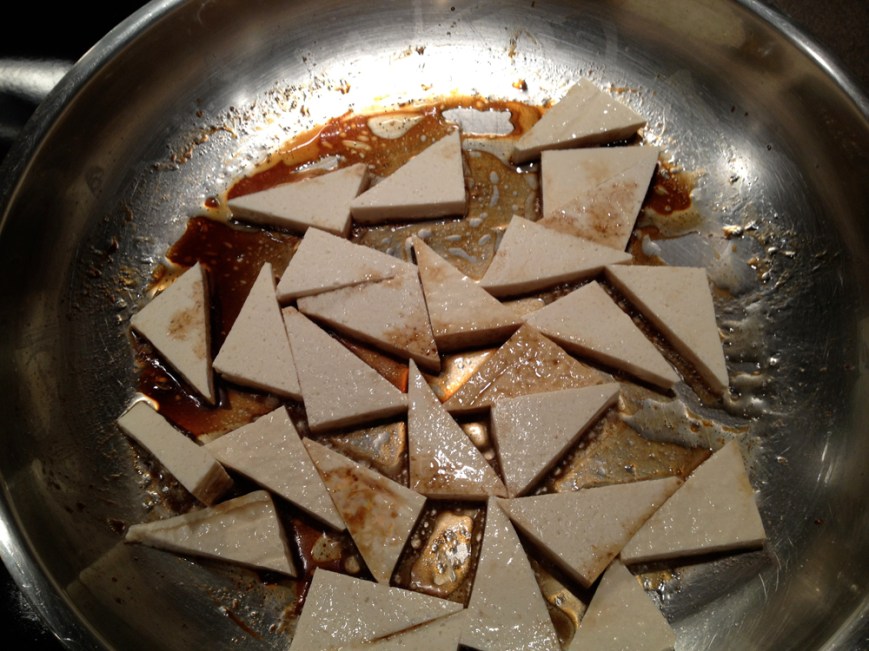
Pan-marinated tofu: this seems like a good time to include this technique, which I use pretty much every time I make tofu.  Start with extra-firm tofu.  Cut it into slices, rectangles, triangles, whatever you like.  In a large skillet, heat a generous splash of peanut oil (sorry about the no-measuring for this part, I just don’t!) over medium heat.  When it’s getting hot, add in a splash of soy sauce, a splash of rice vinegar or lime juice, and a small spoon of brown sugar.  Stir around until the sugar dissolves, then add the tofu.  Stir the tofu around, then shake the pan occasionally while the liquid evaporates.  Keeping the heat on med-low, and stirring when you first put the tofu in will help keep it from sticking to the pan.  Once the liquid is gone, a nice caramelized crust will form on the tofu – yummy!  I haven’t found a better way than to flip each piece over once the bottom is brown and crispy.  If there are patches of sauce left, steer the flipped pieces onto those.  You can also add a little more of the marinating ingredients if necessary.  When both sides have a lovely golden crust, you’re done!  Flip the tofu out onto a plate to cool.  I did this one day as an experiment, and I have done it every time since, when I make tofu for Pad Thai, curry, etc.  Side story: once I was hanging out with my brother while he was grilling brats.  He said it’s the juice dripping down from the meat and being shot back up by the fire that makes it taste good.  Sometimes I think of this technique as giving the tofu some tasty juice of its own.  Ok, back to the noodle salad.


Herbs and peanuts: whatever veggies and other ingredients you choose, this and the sauce are key to the flavor of this dish!  Coarsely chop a generous handful of fresh mint, basil, and cilantro.  Finely chop some raw or roasted unsalted peanuts.

Sauce:  start with equal parts maple syrup, soy sauce, lime (or lemon) juice, and water.  For one person’s lunch-size bowl, use about a tablespoon of each.   Taste and adjust.  You can also add a clove of minced garlic and/or a little hot sauce if you wish.  What I love about this is the clean clear flavors, but some friends liked it better with a LOT of hot sauce. Hat tip to theKitchn for what to put in this sauce!

Assembly:  put the bean spouts and cooled noodles in the bottom of a bowl.  A wide shallow bowl would be ideal, since the sauce tends to sink to the bottom (otherwise, stir it up).  Top with veggies, herbs, tofu and peanuts, and pour sauce over the whole thing.  Enjoy!

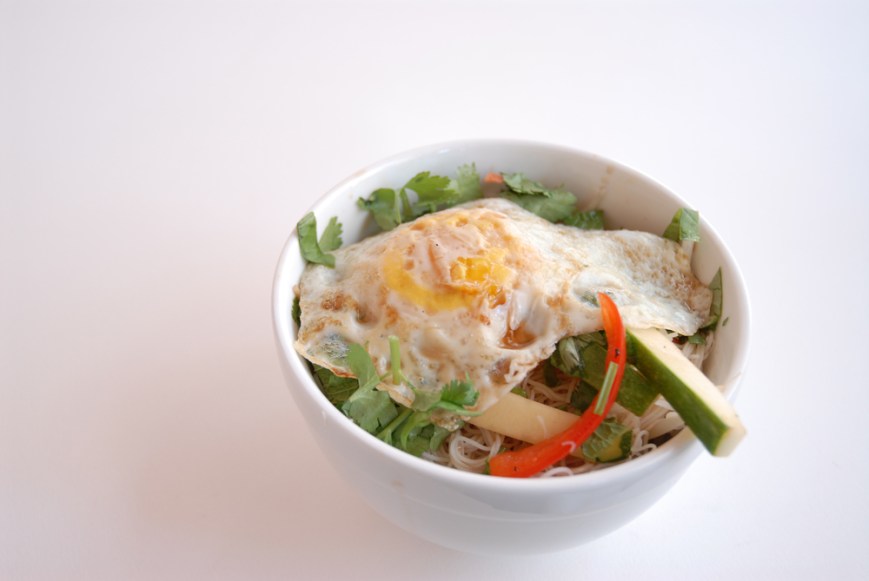
Variations:  I made it the next day with an fried egg on top, also super tasty but not quite as cooling.  Of course you could add stir-fried meat as well, or practically anything else you like.  Pickled vegetables? It can easily be vegan, gluten free, or not, really the sky’s the limit here!


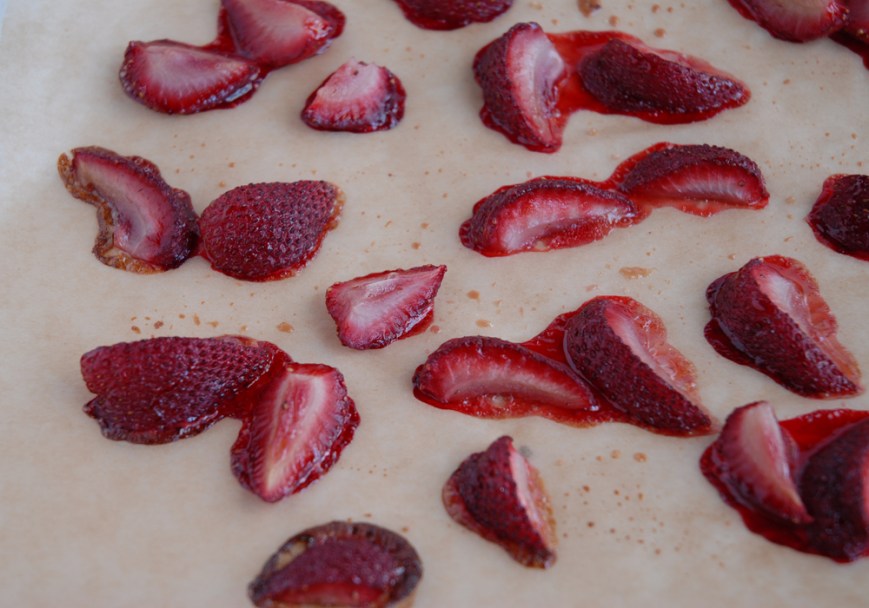
Enjoy!  I can’t go without mentioning the dessert I made for this meal, roasted strawberry coconut milk popsicles from The Year in Food.  Dude.  These were incredible!  I’ve been dying to make them and I was so happy I finally could.  My only note would be to lightly crush or grind the cardamom.  I love it when a recipe opens up whole new ideas, I never would have thought to roast a strawberry.  My whole house was filled with an explosion of strawberry jam smell so wonderful that I couldn’t stand to spoil it by cooking anything else at the same time.  They look cool too, I couldn’t resist taking my own picture!  Anyways.  Get out there and eat some summer!


Recipe Sketch – Summer Tomato Bruschetta

About time for a post about food, don’t you think?

Although I haven’t had very many opportunities to cook on the road, we’re coming up on the part of summer where there is so much fresh lovely produce, it hardly needs actual cooking.  We found some local heirloom tomatoes last week in Maryland, although they are from the hothouse, they put me in mind of late summer bounty.

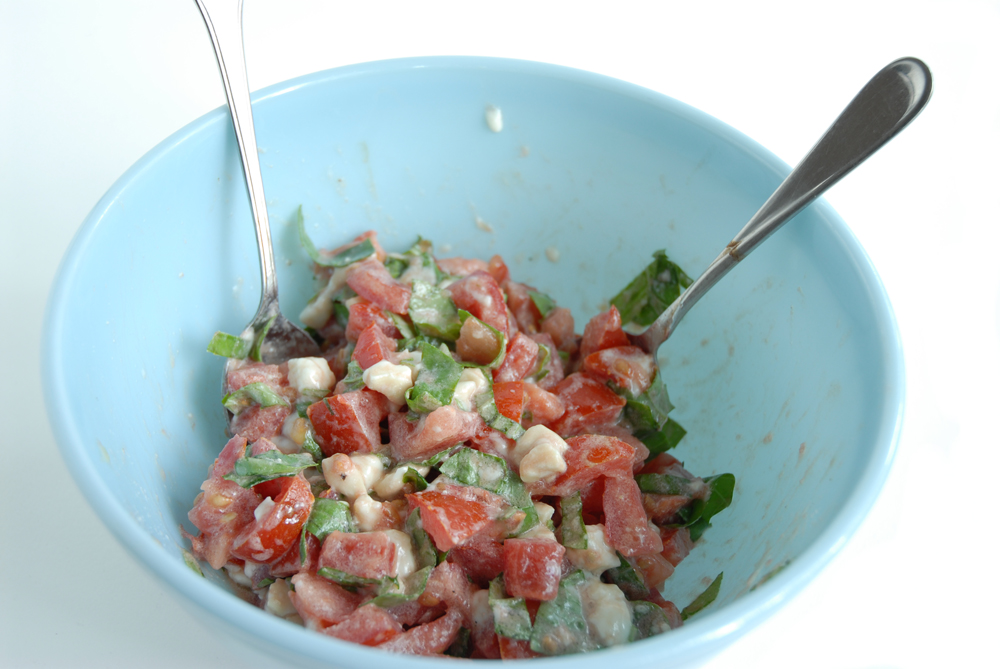
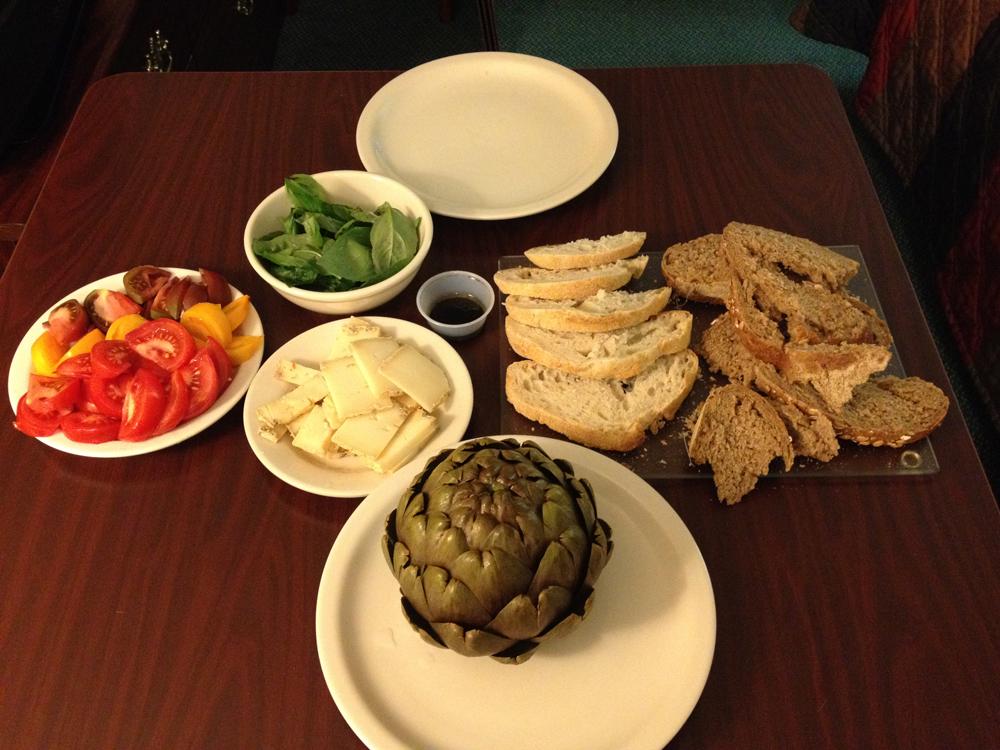
Bruschetta is one of those foods that doesn’t need much of a recipe, you can vary it infinitely to suit your taste and what’s available.  It’s also easy to present in a variety of ways; either everything mixed together to spoon on toast, or all the ingredients laid out for everyone to layer on their own.  If you are just learning to cook, it’s a wonderful way to experiment with mixing flavors and proportions.

Summer Tomato Bruschetta

I like the bulk of mine to be tomatoes, the fresher and more colorful the better.  Any size will work, bigger ones cut into smaller pieces will make the bruschetta more juicy than baby tomatoes cut in half.

I also like a lot, a lot of basil, it’s one of my all-time favorite favors.  When we rented in Madison I would get a few little basil plants at the farmers’ market in the spring and keep them going though the season.  If I’m mixing everything together, I stack the leaves, roll them up, and slice the roll into strips to sprinkle in.  If you are setting things out buffet-style, whole leaves are fine.

This is tasty with cheese, but don’t feel limited to mozzarella!  Try any kind you like, or what’s locally available where you are.  My favorite recent find was a goat cheese with the soft texture of brie.  I like not too much cheese, not to overwhelm the tomatoes, but of course you can vary it.  A soft cheese will blend more with the other ingredients, especially if you mix it all in a bowl.

A little olive oil, balsamic vinegar, salt and pepper will really bring the flavors together.  You can set them out if you are doing make-your-own, and drizzle them on top.


A feast so simple to make, you can enjoy it in your hotel room.

Here’s to the coming joys of summer!

Homemade Granola Bars


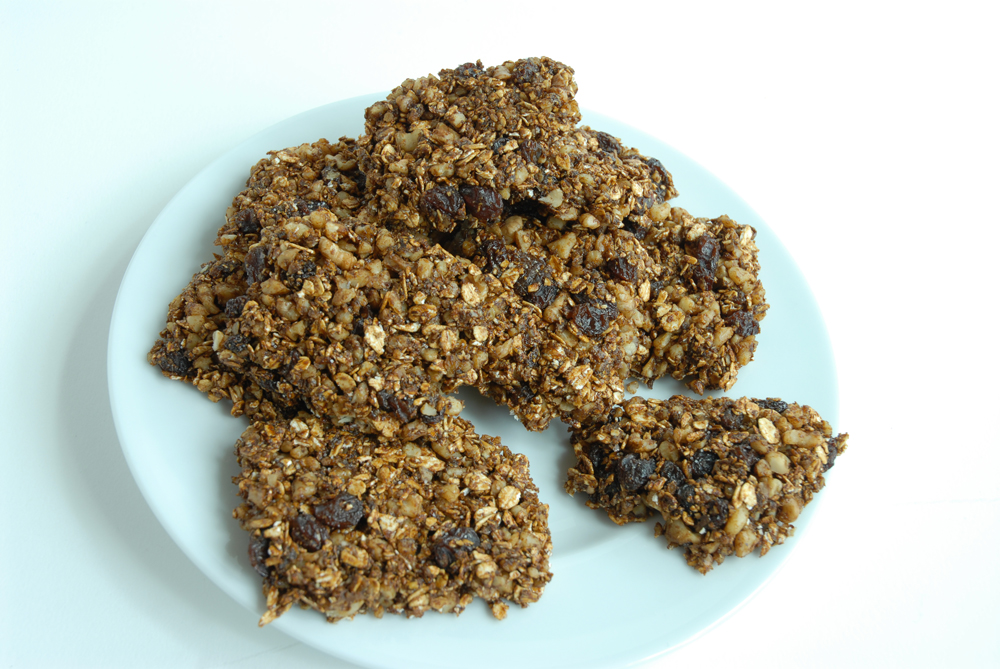
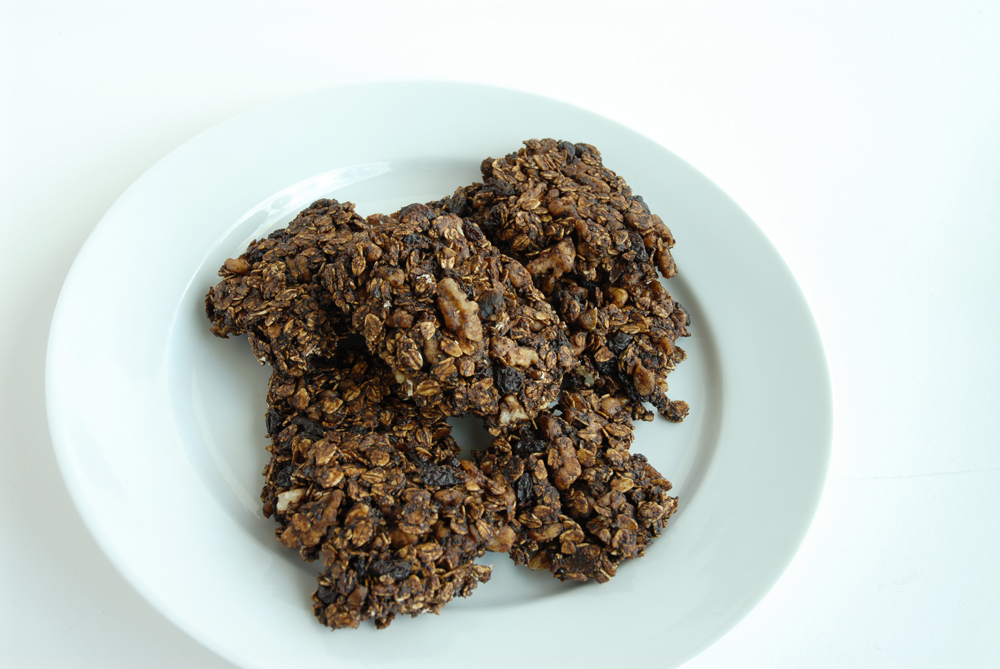
In part two of my homemade travel breakfast project, I made some more traditional granola bars – oats, nuts and dried fruit stuck together with molasses and honey.

I learned several things in the two versions of these I’ve made so far.  One is that honey is a much better glue than molasses.  The second is that smaller pieces of nuts, oats, etc. stick together better and are less likely to fall apart later.  Both of these are pretty much logically obvious now that I think about them, but as usual I opted for a more trial and error approach at the beginning.  I like to mix things together and see what happens.

Anyway, here is version 2:

DIY Granola Bars

Mix together in a bowl: 1 cup oats, coarsely ground; one cup walnuts, coarsely ground; 1/2 cup raisins, a pinch of salt.

Heat in a large skillet until warm and liquid: 2 Tablespoons molasses & 2 teaspoons honey.  Turn off the heat.

Pour the oat mixture into the skillet and stir until everything is coated.  Pour out onto a piece of parchment paper and shape into a round or square about 1/2 inch thick with your hands, spatula, rolling pin, etc.  Cut into bars, sticking any bits that fall off back to the outsides, and leave to cool and firm up.  Once they are holding together, you can transfer them to a rack and leave for a while to release any moisture trapped between them and the parchment, before packing them away in a tin or baggies.


These are holding up pretty well so far, they crumble a bit but you can stick them back together.

Adding more honey and less molasses would make a firmer bar, also good if molasses is not your favorite thing.  Bryan claims my current version is for molasses lovers only.  They taste good to me, but then I could eat it with a spoon!

You could also get a more robust bar by using more oats in proportion to nuts, as they seem to stick together better.  Again, this could become a platform for whatever nuts, fruits and spices you like and want to add!  I think these could be fun to make with kids as well, I may try it out the next time I see the nieces.

If you missed part 1, DIY Fruit and Nut Bars, click here or just scroll down to the previous post.

Enjoy!


DIY Fruit and Nut Bars


We’re headed to our next art show today (Brookside in Kansas City, MO) and along with my usual motley assortment of library books (shhh) and projects in progress, I’m packing two versions of these bars!

We eat a lot of Clif bars, Odwalla bars, Larabars, regular old granola bars, etc. for breakfast when we’re in the truck.  By the end of the summer if I never saw another one it wouldn’t bother me, with the possible exception of the Larabar type.  There’s nothing in those besides dates, nuts and spices, and of course they are also the most expensive kind, I usually don’t buy them unless they’re on sale.

This winter on our trip to Oregon I was sitting with our friend Becca when she came up with a brilliant idea – why not make them?  She was eating a bar made at the lodge where we were, which was mostly chunks of dried fruit and nuts held together with honey.  This seemed like such a good idea, and of course so obvious once she said it, it lodged in my brain and fortunately stayed there until I tried it out.

The first version had more dates, and fewer almonds, with none reserved for coating the outside.  It was good, but sticky, and even a little too sweet, despite the fact that there’s not any added sugar.  Here’s version 2:

Date and Almond Bars

Add 8 oz dried, pitted dates to a saucepan in which they barely fit in a single layer.  Grate on top: zest of one orange.  Pour in enough water to make about 1/8″ in the bottom of the pan, just enough so that all the dates have some to soak up.  Bring the water to simmer, then turn off the heat, cover the pan, and leave it for about half an hour, until the dates have soaked up the water and become soft and plump.

Grind 1 cup raw or toasted almonds to a coarse flour with some chunks remaining.  Grind a further 1/4 cup to flour without chunks.

Put the soaked dates in the food processor, and chop/grind until you have a thick puree.  I added a splash of Amaretto to the processor, totally optional, but adds a nice extra flavor.

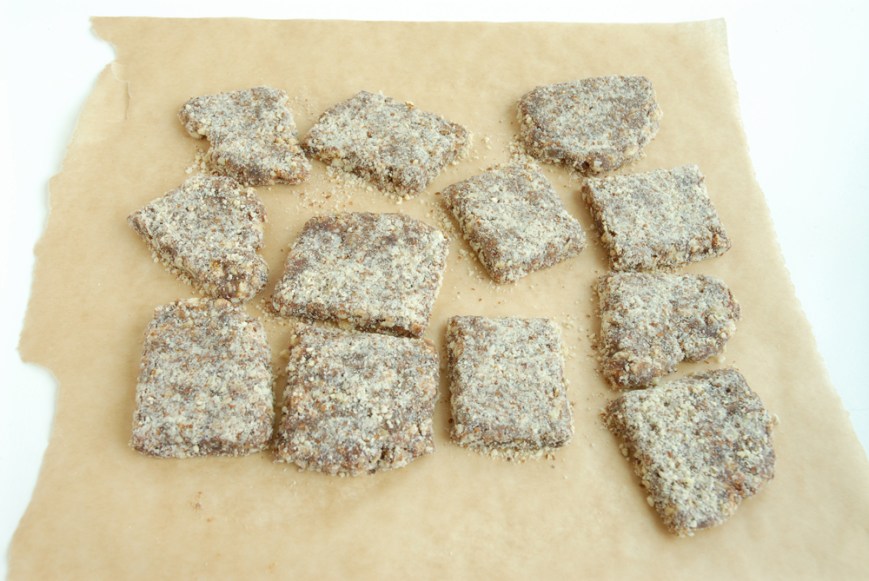
Scoop out the date puree into a bowl or back into the pan, add the coarsely ground almonds, and mix together into a thick paste.  On a cutting board or parchment paper, sprinkle out about half of the almond four.  Scoop the date/almond paste on top of the flour, sprinkle more almond flour on top of it, and roll out like you would cookie dough to your desired thickness, using the almond flour to keep the bars from sticking to the surface or the rolling pin.

Cut into bars, use the extra almond flour that falls off to coat the edges, let dry for a few hours, and you’re done!


Seeing as how I was making my own fruit and nut bars, I also bought some figs, and made:

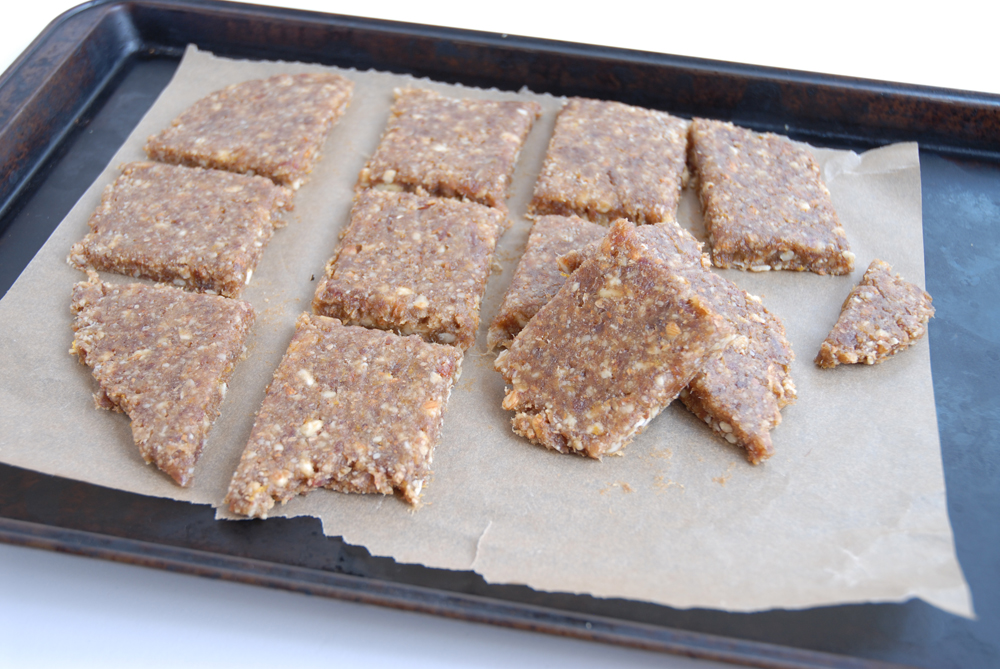
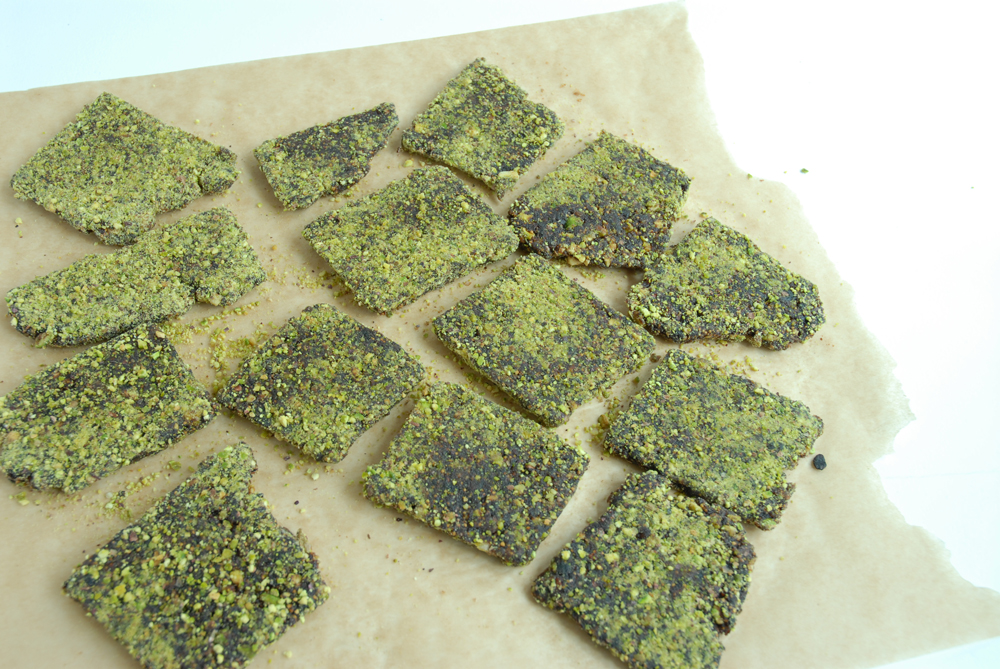
Fig and Pistachio Bars

Using basically the same procedure as the date and almond ones.  I needed to cut the stems off the figs, and they weren’t quite as juicy or sweet as the dates.

Add 12 oz dried figs (I used black mission), a little orange zest, about 1/3 of the orange (lemon would also be nice here), 1 Tablespoon of honey, and just a little water as before to the saucepan.

After soaking, there was still a little liquid left, so I brought the pan to a simmer again and boiled it off just for a minute or two, stirring, until it was more like a thin syrup that stuck to the figs.

When I was writing this up yesterday I forgot that I had used slightly fewer pistachios than I did almonds in the date bars, about 3/4 cup in the fig bars, but still 1/4 cup ground to dust the outsides.  This seemed to make sense because the figs were a little drier, and also because I ran out of pistachios!  Of course you can vary the amounts to your own taste and see what you like.

From this point process the figs and grind the pistachios just like the above recipe.


Maybe my favorite thing about this idea is that if I get tired of one kind, I can just add another variation, some spice or a different nut for a new flavor!  I’d love to know your thoughts, what flavor combos would be good?  If you try your own, how did they come out?

Recipe Sketch – Carrot and Raisin Salad


Carrot & raisin salad 2


For this recipe, I wanted to give a nod to the fact that we don’t really follow recipes.  At least I don’t.  At least not usually.  You know what I mean?  I read one and think, “That’s a good idea!” and I may even refer back to it while I’m cooking, but I’m not using any of the exact quantities specified, I am leaving things out, and I am putting in things that aren’t called for.

Of course, there are also the nights when I just want to settle down and cook something from exact notes, especially my own exact notes, about what to put in and how much.

But, I think being more experimental, at least some of the time, is a great way to learn about cooking, about flavors, and about what you like.  And some recipes, like this one, seem made for a non-measuring preparation every time, even after I have figured out just how I like them.

So, at least some of the time, I’m going to post in the form of a recipe “sketch” that acknowledges the fact that many of us are going to make our own version anyway, as well we should.


Carrot & raisin salad 1


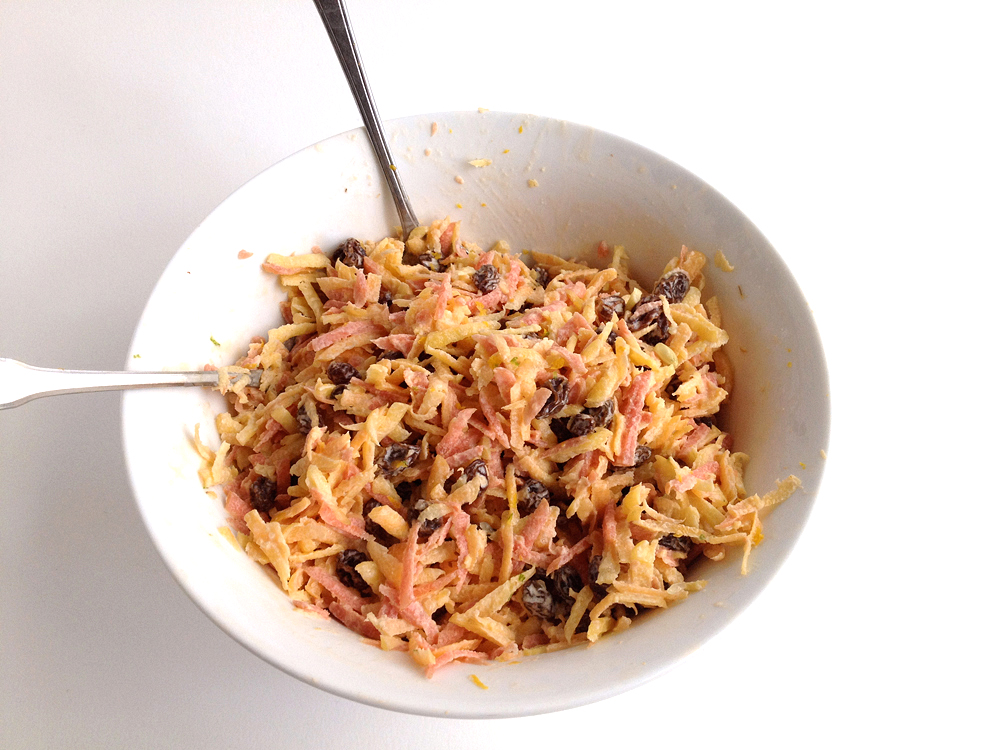
Recipe Sketch – Carrot and Raisin Salad

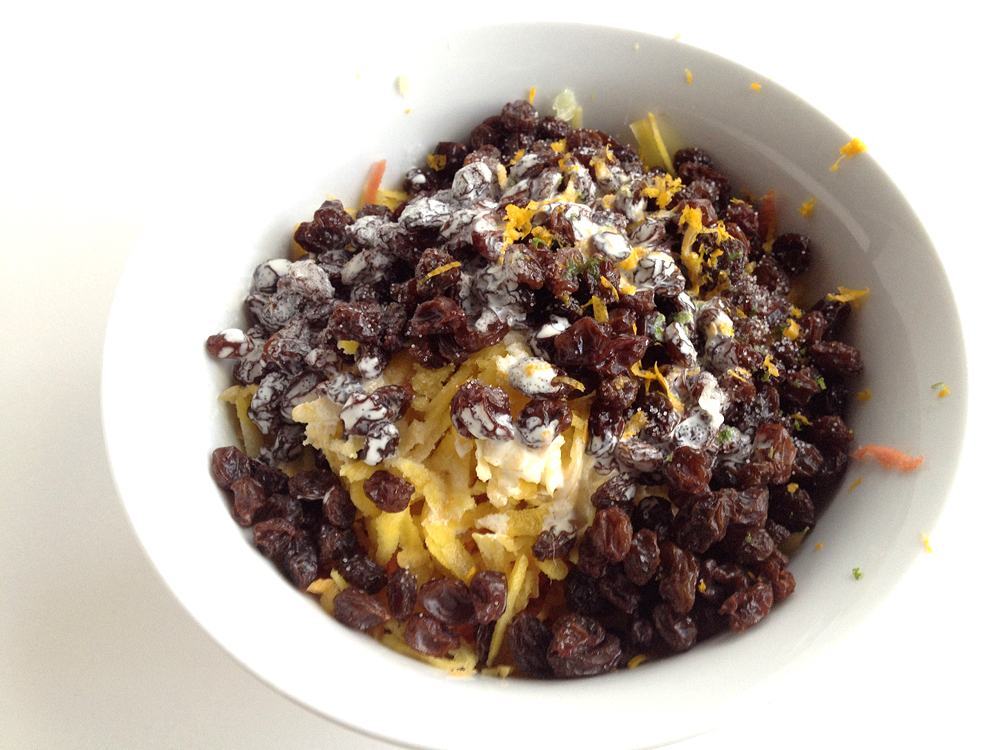
Grate some carrots, on the biggest holes in your grater.  These make up most of the volume of the salad, so grate as many as you need for about as much salad as you want.

Add some raisins.  Pour some in and mix to see if you think it’s enough.

Grate in citrus zest.  I like lime the best, but Meyer lemon is also lovely.  Squeeze on a little juice of the same citrus.

Salt.  It seems weird, but a small (not tiny) amount of salt is totally what makes this come together.

That and heavy whipping cream.  Actually, mixing the cream with crème fraîche is even better.  I like to add just enough to make a little liquidy dressing for the carrots and raisins.

Mix, taste and adjust.

I love these flavors!  A little salty, a little sweet, a lot of fresh.  Also, a fantastic way to use up carrots from your fridge right before you leave town.  And a good use of multicolored carrots.  Sometimes I think I buy heirloom vegetables just for the colors.

So what about you?  Do you “follow” recipes?