How to Felt Basics, and Felting FAQ Part 2:

Fulling, Felting Your Knitting, Felted Fabric, and More Questions Answered


If you read Part 1, you already know what felt is and how to get started making it by hand.  For Part 2, we’ll start with how to finish your handmade felt, or felt something you’ve knitted first.

wet felt bag exampleAn example of the bags I made.  These are made entirely by wet felting; they start out as fluffy wool like the example in Part 1.  As you can see, it’s possible to make complex sculptural shapes without any stitching or even yarn!  I formed the pockets by using resists to keep the two layers from felting together where I didn’t want them to.


What is fulling?  Or, how do I felt knitting or fabric or old sweaters?

Fulling is a term used for the second stage of felting, and for felting fabrics which are already knit or woven.  This makes sense because in either case, the fibers are stable enough to take some more vigorous agitation.  Although, when you’re felting something like your knitting by hand, it’s still a good idea to gently encourage the fibers to cling together at first, rather than rubbing them around as hard as possible.  Keep in mind that at any stage, gentle agitation can actually work better.  Try it and see.

There are lots of ways to full, or harden, your felt.  This is where the majority of the agitation takes place.  In Mongolia (where there’s an amazing heritage of felting, think yurts), the tradition is to roll a new rug up inside an old one, and drag the bundle behind a horse!

By Hand

When I’m felting knitting by hand, or fulling a felt piece like the one illustrated in Part 1, I have a bowl of water about as hot as my hands can stand.  I dip the piece into the water, squeeze some of the water out, and rub it.  Two effective motions are rolling, and scrunching the felt between your two hands.  You can also scrub it around on the bubble wrap, or even throw it against a hard surface to get the shrinking going.  Whatever you try, remember to keep your hands in alignment with your arms and wrists in good alignment.
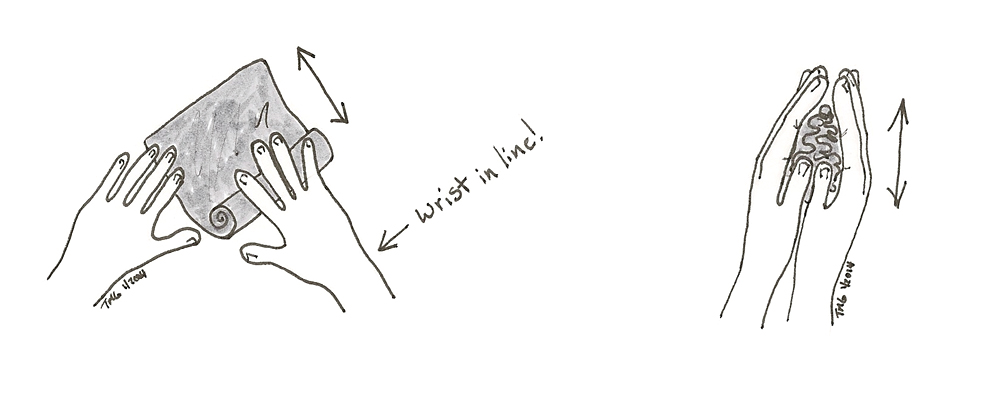
 

felting motions drawing

The advantage of felting and fulling by hand is how much control you have.  The exact parts of your felt you rub are the ones that shrink, and they shrink dramatically more in the specific direction you are agitating them!  Try it by rubbing a corner in towards the middle of the felt, and you’ll see what I mean.  For even fulling, make sure to rotate the direction in which you’re rolling and rubbing.

Stop and stretch your felt (and your hands & arms!) from time to time, stretching out your work will actually help it shrink down further.

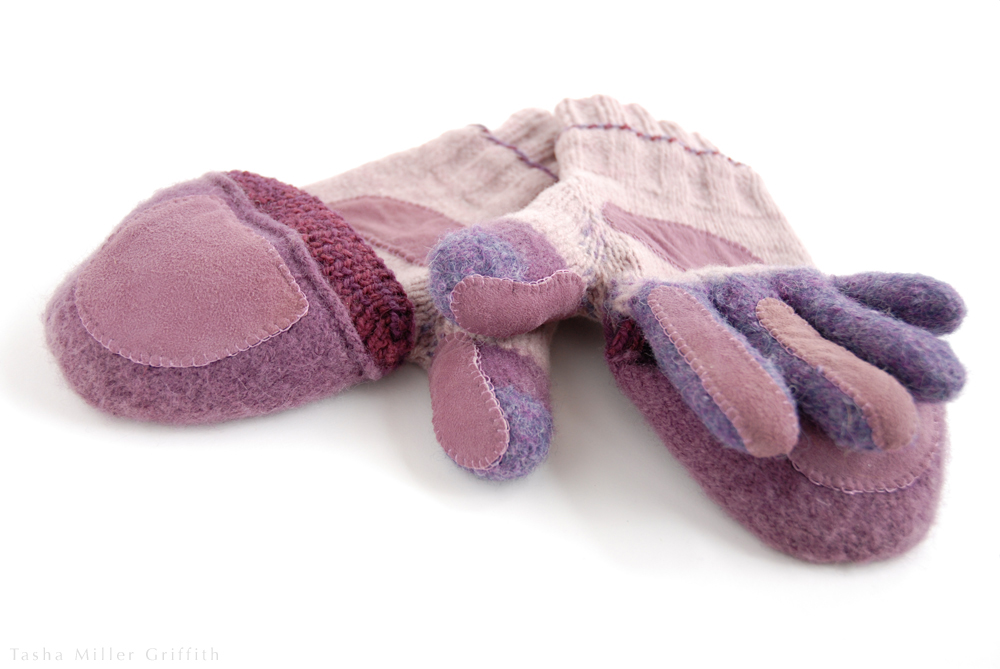
For felting my gloves/mittens, I put them on, dunked them in the water, and rubbed them all over and around each other, concentrating on areas that I wanted to shrink more, and alternating taking them off for stretching and rolling with more rubbing while on my hands.
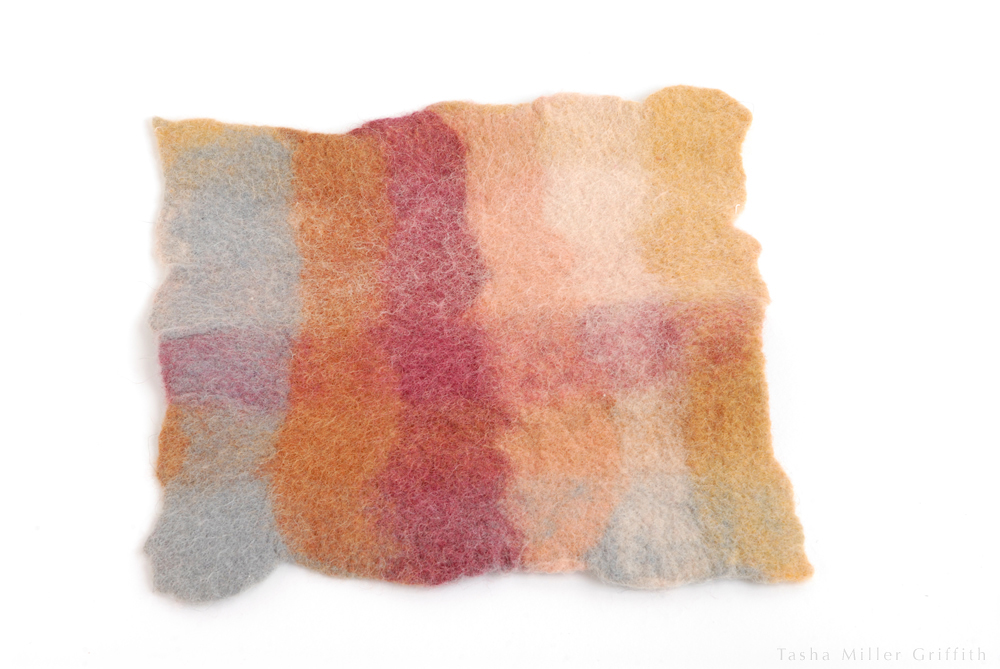
natural dye felt color sampleIn this wet-felted color sample, you can see how fibers from each side of the piece worked their way to the other side with thorough felting.


In the washing machine

You can also shrink knitting, fabric, and even hand made felt that’s getting good and sturdy, in the washing machine.  Proving that agitation trumps any and all other factors, even though the fibers are swimming in water and the water may not be that hot, you can quickly get dramatic results.  The downside is that you don’t have much control over what happens.  I usually use the washer to help with fulling when I’m felting something big, but I check on it every few minutes, getting the felt out of the water and stretching or rubbing certain parts to help it take on the shape I want.  Top-loading washers produce the most agitation, and are the easiest to use for checking the felt frequently. Front-loading washers also work, especially if you are trying to felt something as much as possible, so you’re planning to leave it in for the whole cycle.

Set the water level for lowest amount that will cover whatever you’re trying to felt, and the most soil/most agitation setting, with hot water.  Put your piece in a zippered pillowcase, to prevent the wooly lint which some pieces shed a lot of from clogging the washer pump (ask me how I know about that!).  If your washer has a removable lint filter, you don’t need the pillowcase, just be sure to clean the filter when you’re done.

I don’t recommend felting large pieces of fabric in the washing machine, the agitation is just too uneven over such a large piece, and it will probably come out with some areas much more felted than others.  If you want to felt fabric for a sewing project, try cutting it into smaller pieces first (be sure to account for shrinkage when planning the size of the pieces, see below).  Even then, you’ll get the most even results if you can alternate being in the washer with stretching and rolling the pieces.

Some people use the dryer to felt as well.  If you’re trying to shrink your felt as much as possible, throwing it the dryer certainly won’t hurt.  Also feel free to experiment with putting damp felt in the dryer, and checking on it frequently the same way you would for felting in the washer.
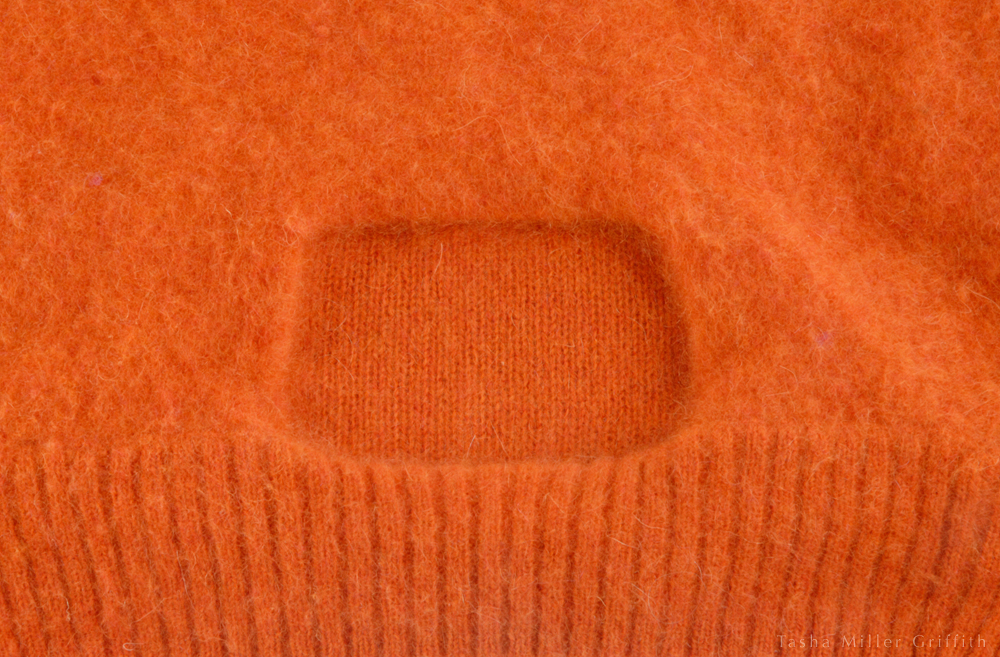


orange felt with unfelted labelThe body of this sweater felted well, except where the stitches were held in place by the sewn-in tag.  Since those fibers weren’t free to rub against each other and felt, they still look the same as they did before going through a few hot washes!


Will felt keep shrinking forever?

No.  At some point, the fibers have locked down as much as they are ever going to, and you really can’t get your piece any smaller, even if you want to.


Can I decide that my felt is done even if it hasn’t shrunk/hardened as much as it could?

Absolutely.  As long as it’s sturdy enough for its intended use, you can stop whenever it’s the size and thickness you want.  Sometimes the maximum that your felt could shrink would be much too thick and stiff for what you intend, or just too small, especially for felting knitting and fabric.  On the other hand, if you are making hand-felted boots or handbags, you’ll probably want to plan on the maximum amount of felting you can get, so that as many fibers as possible will be locked in, and the finished item will be as long-wearing as possible.


How much will my felt shrink?

It depends on a dizzying number of factors, but there is one sure way to find out: test it, by making a sample and measuring it before and after, as I illustrated in my post about the magic purple mittens.  This method works for wet felting too, just measure the dimensions of the wool you lay out before you felt it. If you’re trying to get a sense of how much fiber you used, any dry felt weighs the same as the fiber used to make it.

Wool from different breeds of sheep felts dramatically differently, some from sheep raised for meat may not felt at all!  Even different individual sheep can produce wool which felts differently from the next sheep over.  The hat at the beginning of Part 1 is Churro wool, which shrinks a lot, as you can see from the pattern!

If you’re buying yarn or fabric to felt, unless it’s from a local herd, you may not know what type of sheep it comes from, but most quality wool will felt to some degree.  The yarn or fabric should be at least 50% wool, alpaca, cashmere, or other feltable critter, and not be treated (“superwash” etc.) to prevent felting.  Bleaching can be hard on the fiber scales that make felt work, so lighter colors often take longer to felt.  Like I said, there are a lot of factors, so if it matters what size the final felt is, test first!
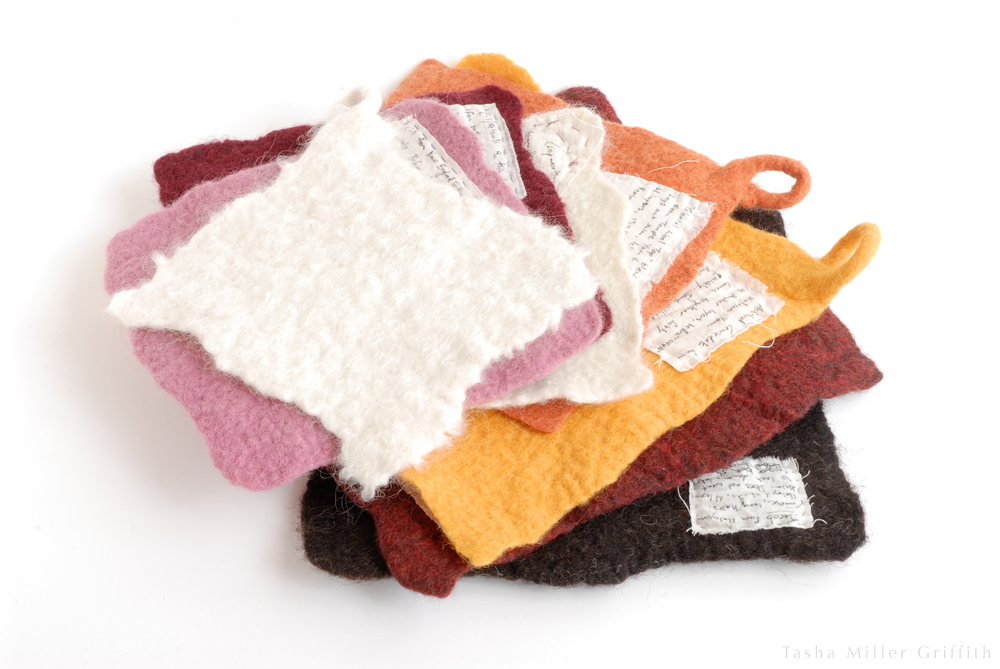
 

felt breed samplesWhen I was looking for a wool to make my wet felted bags from, I made a lot of samples!


Can felt happen by accident, or with wear?

Definitely.  As you’ve seen by now, the conditions for felt are readily available in your washing machine, which can be disastrous if your nice sweater accidentally gets in there.  And, as I found out the hard way, even if it seems like a garment made from wool fabric is not felting, over many many washes, it eventually will (illustrations and happy ending here).

I also know from experience that a garment can felt as you wear it.  I have a pair of alpaca and wool blend fingerless mitts that, as they are exposed to warmth and moisture from my skin, and agitation as I wear them while I grab my keys, the steering wheel, etc., are slowly becoming more solid.  We shall see what the end result is.  This is something I’m really interested in at the moment, so stay tuned for more findings.  For now, my best advice is: don’t make an article that will be exposed to felting conditions out of a material that felts easily, or plan for shrinkage and felt it first.


What should I do with my felt when it’s done?

Let it go through the spin cycle, or roll it up in an old towel and squash it, to get out as much extra water as you can.  In this damp state, the felt is super malleable, so plan on doing some final shaping.  You can rub, tug, scrunch, stretch, and otherwise push the felt around into exactly the shape you’d like.  If you’re felting something like a hat, it helps to have an object to “block” (shape) it on, try a bowl a little bigger around than your head.  When you get you new felt shaped just as you would like, leave it alone to dry.  If the felt is thick, this can take  a couple of days.

Once the felt is dry, you still have another chance to shape and smooth it, with steam from your iron.  All wool responds especially well to steam (think about tailoring), but on felted wool steam is a minor miracle.  It can straighten out lumpy areas and smooth the whole texture of your felt.  Placing the iron right on the felt will also smooth and flatten the surface fibers, so if you don’t want that, hold the iron above the surface to fill the felt with steam, then put the iron down, and shape with your hands.


Don’t I need soap to felt?

My current experience says not necessarily, except under special circumstances.  Historically, all kinds of harsh chemicals were used in felting, to roughen up the fibers’ scales and speed up the process.  These were also highly toxic.  Most felters now just use a mild soap.  Olive oil soap and liquid soap are popular choices.  This soap doesn’t do much beyond decreasing the surface tension of the water.  Lately I have been felting mostly without soap, and I haven’t noticed a difference between using it and not using it in my studio.  You may find soap more helpful than I do, depending on your wool and your water.  Don’t add too much though, if the fibers are too slippery they won’t want to grab on to each other.

When you are hand felting, if your hands are sticking to the fibers rather than sliding over them, a little soap on your hands should help.  A mixture of solid soap and water can be a very effective “glue” if you are hand felting two things that don’t want to stick together.

If you are felting in the washing machine, you definitely do not need to add soap.  There will be enough left from the last load to make plenty of foam.

If you do use a soap that’s alkaline (most are), make sure to rinse it out thoroughly when you are done felting.  Animal fibers, like your own hair and skin, are slightly acidic, and being left in an alkaline environment for long periods can damage them.  Include a splash of vinegar or lemon juice in the last rinse, and let the felt soak in it for a few minutes to neutralize any remaining alkalinity.
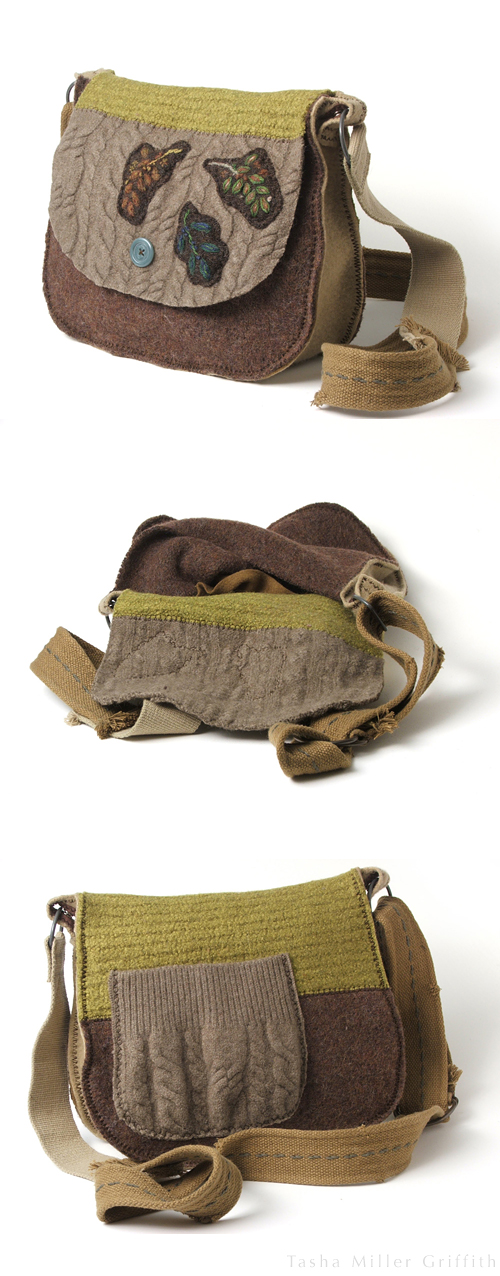
 

sewn felt bag exampleI made this bag from felted wool sweaters.


Why would I want some felt anyway?

Felt is fabulous!  It’s a dream to work with.  As you sew it, you can ease in what seems like an impossibly large piece onto a small one, just using your fingers.   It doesn’t ravel when you cut it.  It wears like iron (assuming it’s tightly fulled).  It’s so insulating that I can iron the outside of one of the wet-felted bags, with lots of steam, with my hand inside, and feel nothing for minutes.  It’s breathable and odor-resistant and has all the other lovely properties of natural fibers.  Plus it’s beautiful, natural, and fascinating.  It can be sculpture with fiber.  It’s the perfect next stage for a sweater that’s been attacked by moths or pets, or just has cuffs too worn out to repair—felt it and make it into something else.


Finally, how not to felt

To care for precious article you’d rather not felt, basically do the opposite of what you would to felt it.  Hand wash it very gently: place it in water with a little bit of pH neutral soap.  Let it soak clean, press down gently to move the water through it, and drain the water off without agitating.  Keep the rinse water the same temperature as the wash (lukewarm is fine) and avoid letting the water run directly on the article.  Spin it out (spin only) in the washer, or roll in a towel and mash on the roll.  Reshape, and leave to dry flat.


Further reading

My favorite felting book is Uniquely Felt by Christine White.  It covers, in detail, methods for just about every type of wet felting you could think of.  Pat Spark, who I mentioned in Part 1, has been at the forefront of bring felting to the internet since the very beginning, and she has a ton of useful info on her site.


I packed as much as I could in here without going into exhaustive detail, so I hope it’s helpful and not too overwhelming.  If you have more felt questions, send them my way!
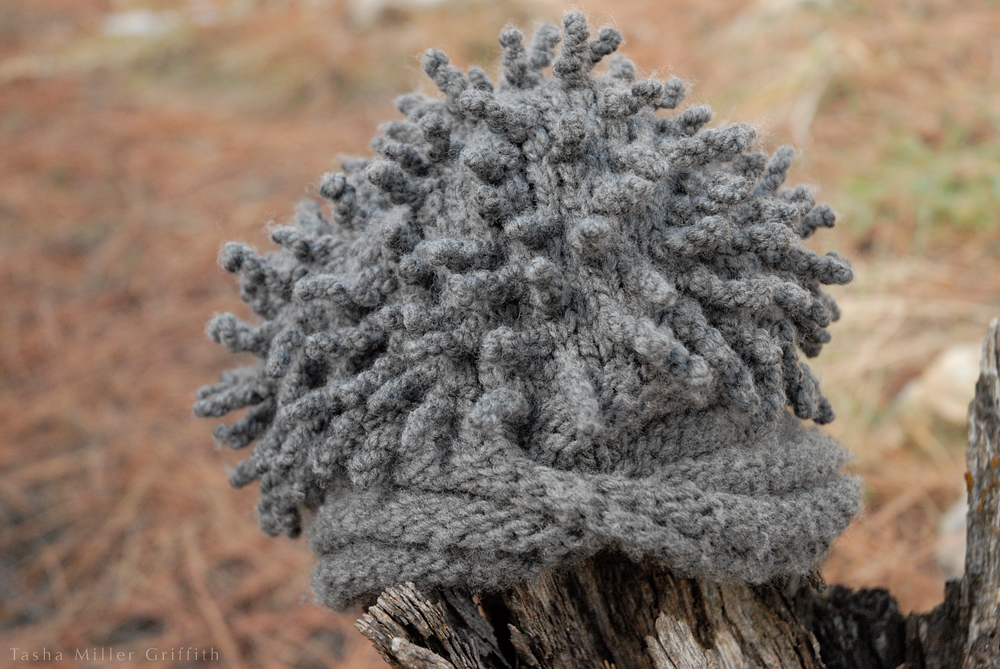
 

A Hedgehog Anemone Hat

Plus, another way to fluff up knitted tendrils.


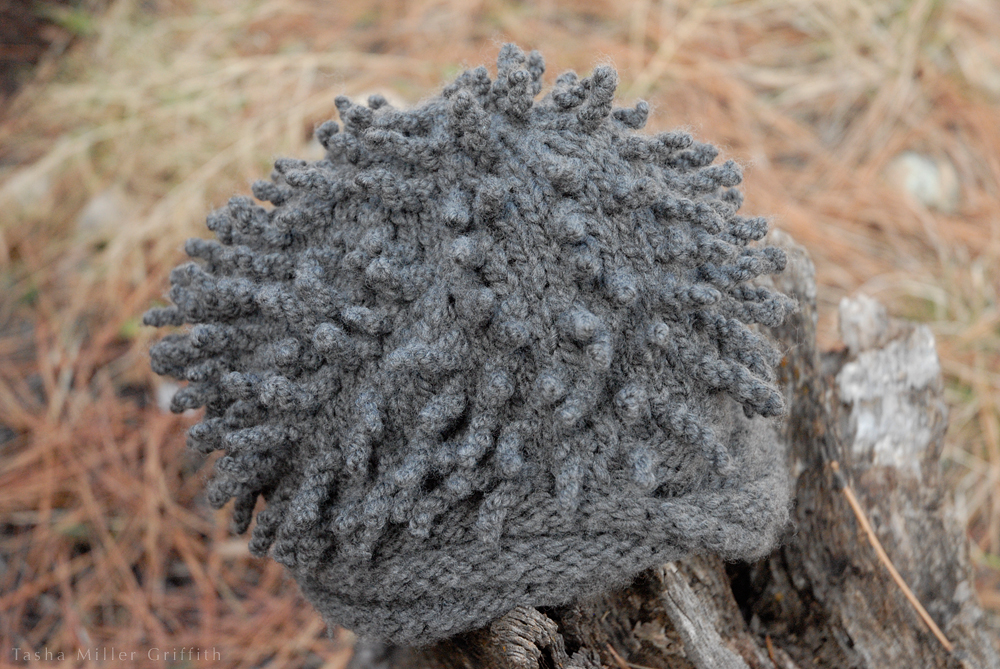
hedgehog hat outside 2


I know—what??  If you have no idea what I’m talking about, please bear with me for a minute.

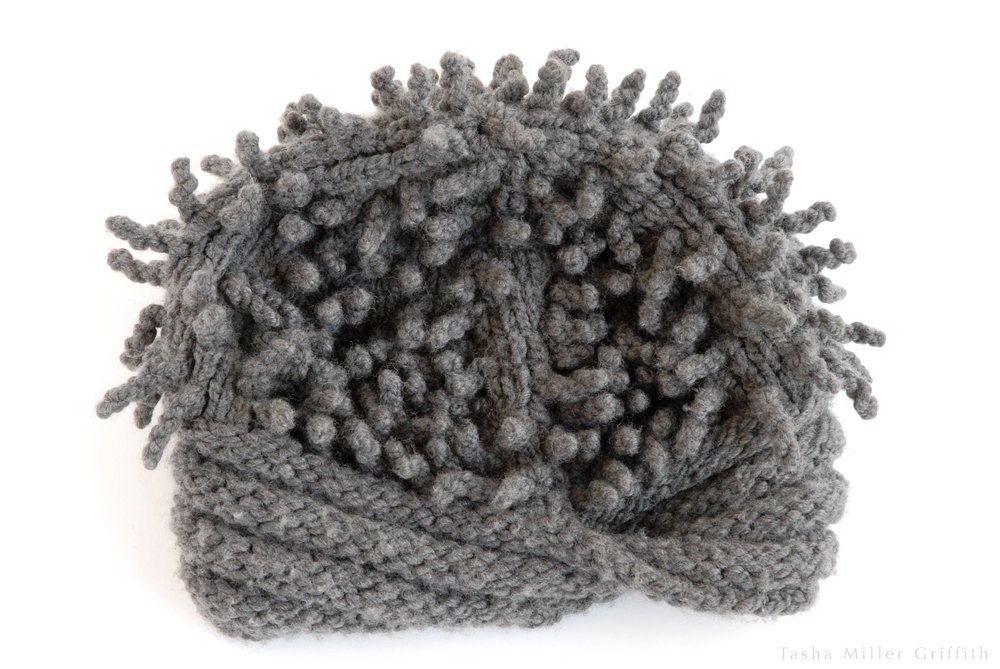
First, the hat.  This is one of Cat Bordhi’s designs, the Arctic Anemone Hat.  It just looked SO fun to knit, I really wanted to make one.  But I couldn’t see myself wearing it . . . I could see my mom wearing it, though.  She loves all kinds of sea creatures, hedgehogs, and plants with unusual spiny pods—so it definitely fits her aesthetic.  I had planned it as a surprise, but it ended up being so much better that I told her (when she was thinking about knitting one); I got to ask her what color she wanted, and get her to try it on as I went, and consult her about design details.  We decided to make the tendrils a little shorter, more like hedgehog quills, which I think went well with the grey color.


hedgehog hat outside 1


This was such a win-win.  The hat was every bit as fun to make as I thought it would be, from the moebius band (yes you can knit a moebius strip—from the inside out) to making the tendrils, it was a blast.  And, my mom loves it!  It looks so cute on her, too.  Actually, it looked really cute on every single one of my relatives who tried it on.  I knit this hat mainly on our Thanksgiving trip, so all my relations saw it in progress, and wanted to try it on when I finished.  However, Mom hates having her picture taken almost as much as she likes unusual creatures, so I decided to photograph the hat in the natural environment.

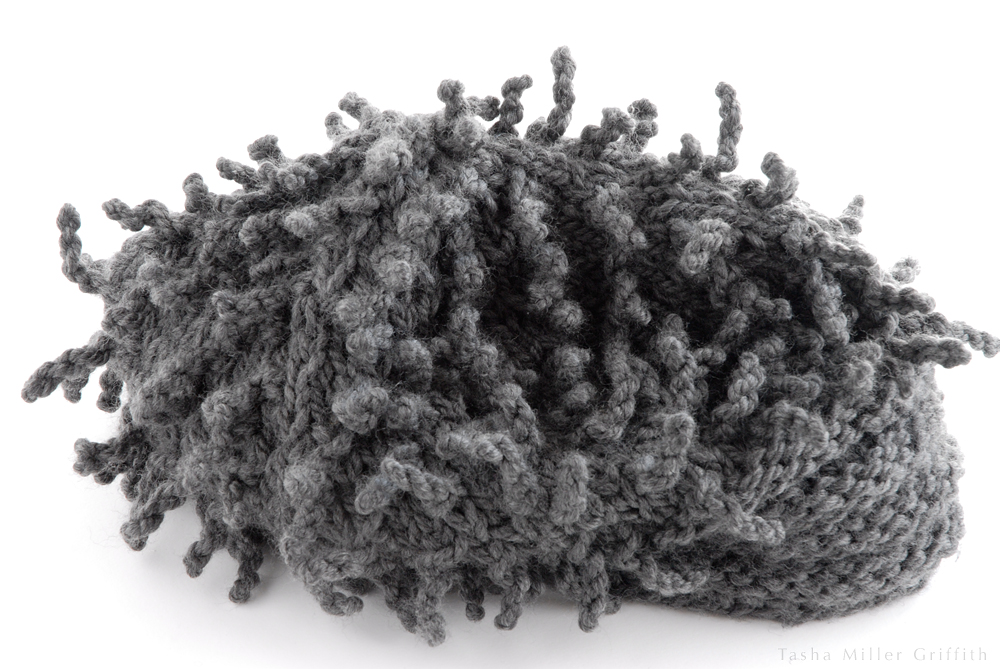
The only reason I got it back for long enough to photograph it at all, is that Cat’s directions suggest you use a superwash wool (one that’s been treated so that it won’t felt) and fluff up the tendrils by running it through the dryer.  I have a dryer, and mom doesn’t.  This definitely worked.

Before:

hedgehog hat before fluffing

After:

hedgehog hat after fluffing


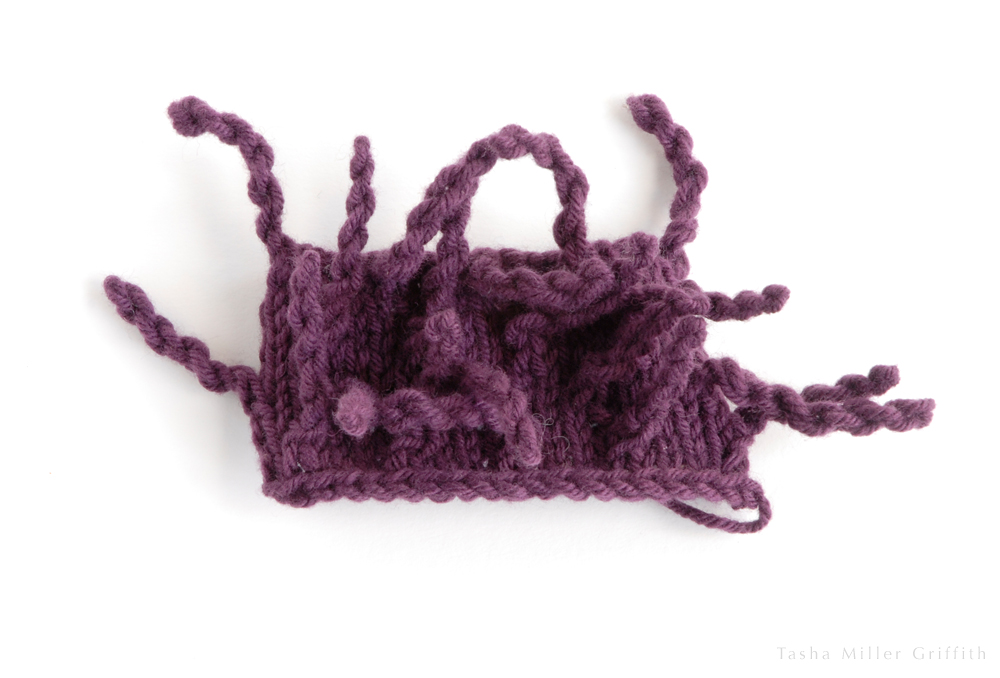
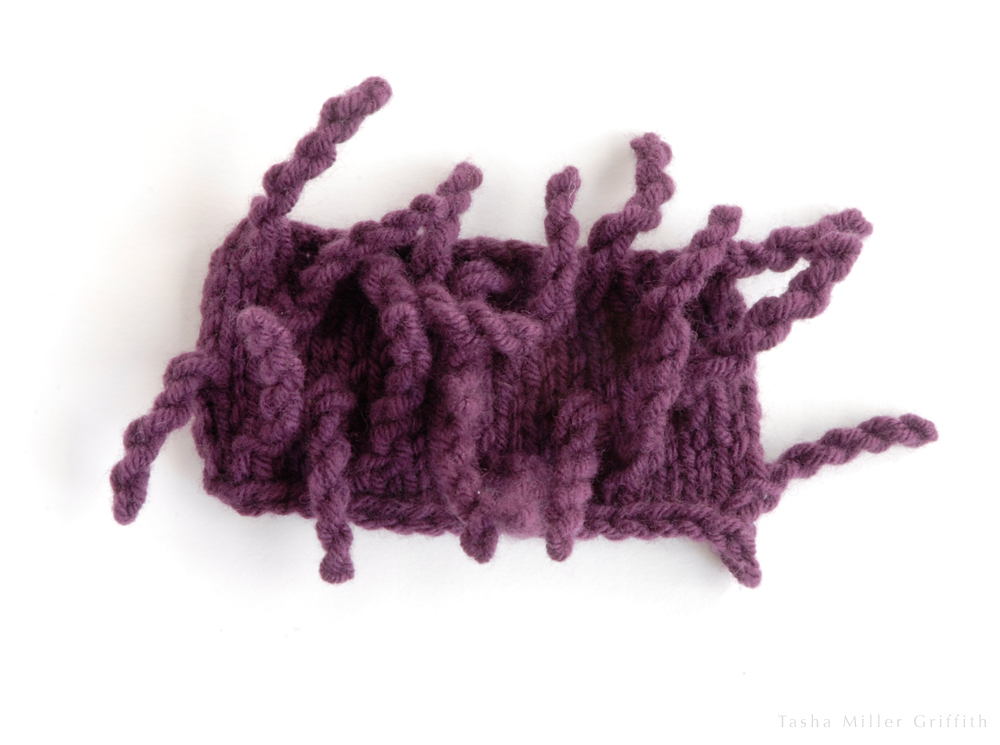
But after fluffing, I began to wonder if there was another way to do it.  I’m a fan of untreated wool, and I wondered if I could get some tendrils to fluff up by steaming them.  After all, what’s happening in the dryer is: dampness, heat, and agitation.  I tried it out on a sample, knit with organic, not-superwash wool yarn.  This worked too!

Before:

tendril sample before fluffing

After:

tendril sample after fluffing

It might not produce quite the fluffiness of the dryer method (keep in mind that the yarn I used was also not as thick), but it wonder if the tendrils would continue to fluff up a bit with washing and wear?  I got the best results by using my iron—not touching the tendrils, but holding it above them and putting on lots of steam for a few seconds.  Then I picked up the sample, and, holding it upside down, gently scrunched and shuffled the tendrils around.  I decided on upside-down because the tendrils tended to wilt downwards with all the steam.  It also seemed to help some that were reluctant to fluff up if I sprayed them with a little water from my plant/laundry mister, then steamed and scrunched.

At least with my sample, it would have required a nearly impossible amount of effort to felt anything using the steam, and gentle fluffing.  However, wool + water (usually much more than this) + heat + agitation does = felt, so be advised.  I would agitate the base of the hat as little as possible while it’s steamy, just concentrate on moving the tendrils around and scrunching them up.

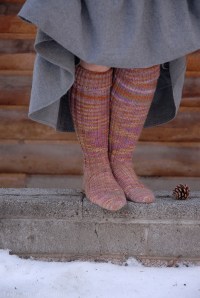
sweet tomato knee socks frontOne more note: in honor of knitting more lately, and knitting something that was so fun without even changing the pattern very much at all, I have finally decided to stop lurking Ravelry and using it only as the world’s absolute best pattern search (you can be shocked, I don’t blame you).  I’ve gone back and posted some of my favorite knitted projects from the past few years, whatever I could think of that I still had and/or had pictures of, and there are a few more of those still to add.  I even posted a few yarns from my stash that might find a better home.  If you’re on Ravelry too, come and say hi, I’m FrenchToastTasha.

Even if not, happy making!  I suggest making something that’s just plain fun to create, at least every once in a while.

Convertible Knitted and Felted Mittens

In which I remodel my mittens to make them better than ever, and show you how to calculate shrinkage when felting your knitting.


purple mittens finished 2


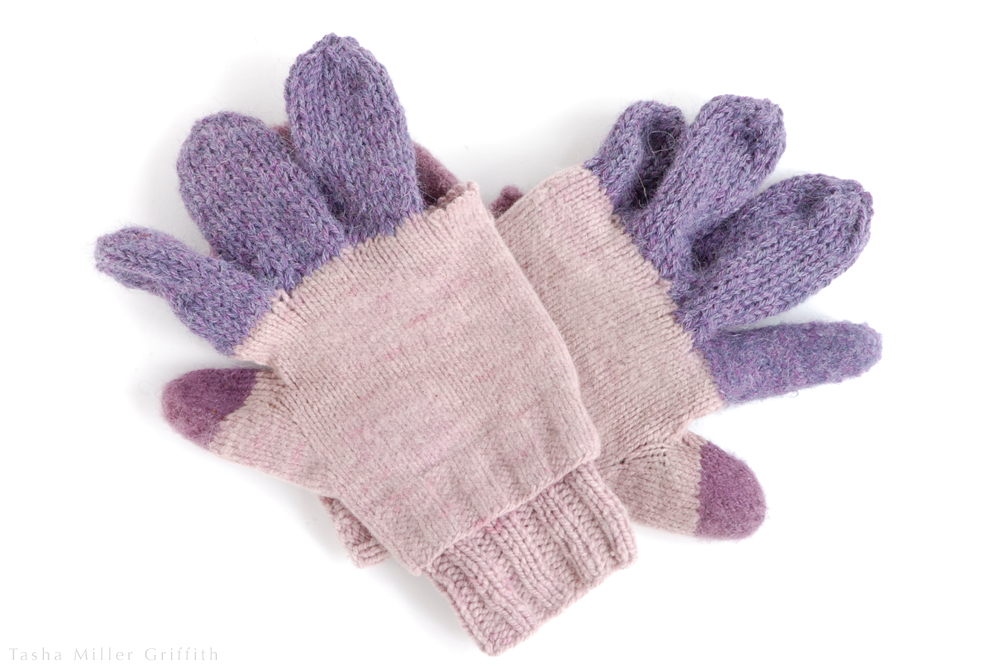
My friend Tom once commented that many of my clothes have stories behind them, and these mittens are no exception!  In fact, I’m going to tone it down here, story-wise, and stick to only the most interesting and relevant of the many angles I could go for.


A Very Short History of the Original Mittens

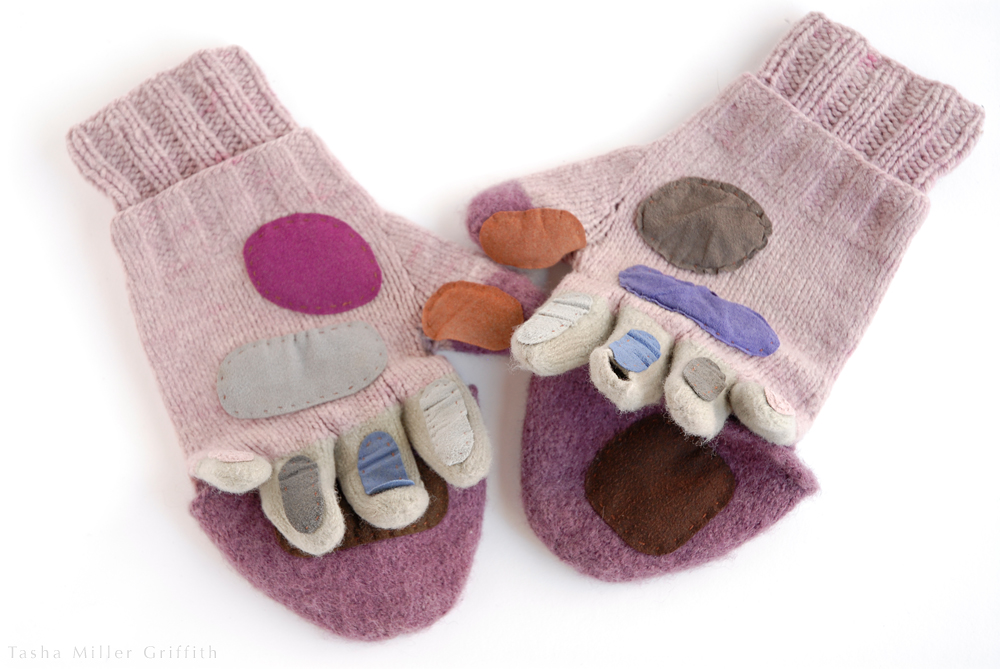
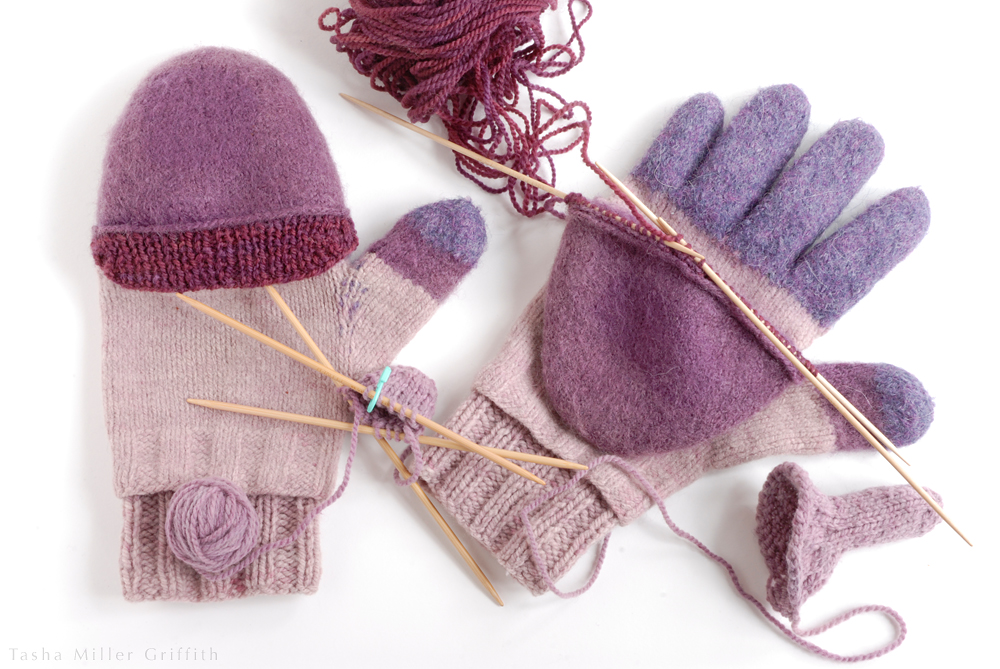
I started knitting these as my take-along project on our trip to Italy in February of 2010.  I knitted the main parts from yarns that we dyed the first time I ever did natural dyeing, with my grandmother and a bunch of dear family members in 2008.  (I’m telling you, I’m skipping  a lot of stories here).  My goal was glove fingers for finer dexterity, that could also be covered by a mitten flip-top for extra warmth.  Typically for me, I consulted a few patterns, but didn’t end up really using any of them.  I didn’t have enough purple for the fingers and the flap, and because I love purple and green together (one of my favorite color combos for the hats) I decided to get green yarn.  No one else was impressed with this decision, and I can now admit that one of my students at the time probably put it best when she said they looked like “dead fingers.”  So, moving on, when I discovered that they were too slippery to drive in, I sewed on a bunch of patches from faux suede samples in different colors.  Ignoring whether or not this made the green fingers look any better, and also the fact that all the fingers had come out too short after felting, I wore them all the time, all over the place, skiing, shoveling snow, etc., through last winter.  By the end of that season, one of the fingers had developed a rather large (and cold) hole in the end.


purple mittens before


A Plan for New and Improved Mittens

When I got them out this fall for the season, the more I thought about it, the more I wanted to do more than just fix the hole.  You see, if I was going to fix the hole, it made way more sense to knit on a little more finger, so that it would be actually the right length.  And, it would be ridiculous to do that for only one finger.  And, if I did it for the rest of the fingers, I would either have more green fingers or an even more ridiculous color mash-up than before.  I decided to start over on the fingers, and this time, do the math.

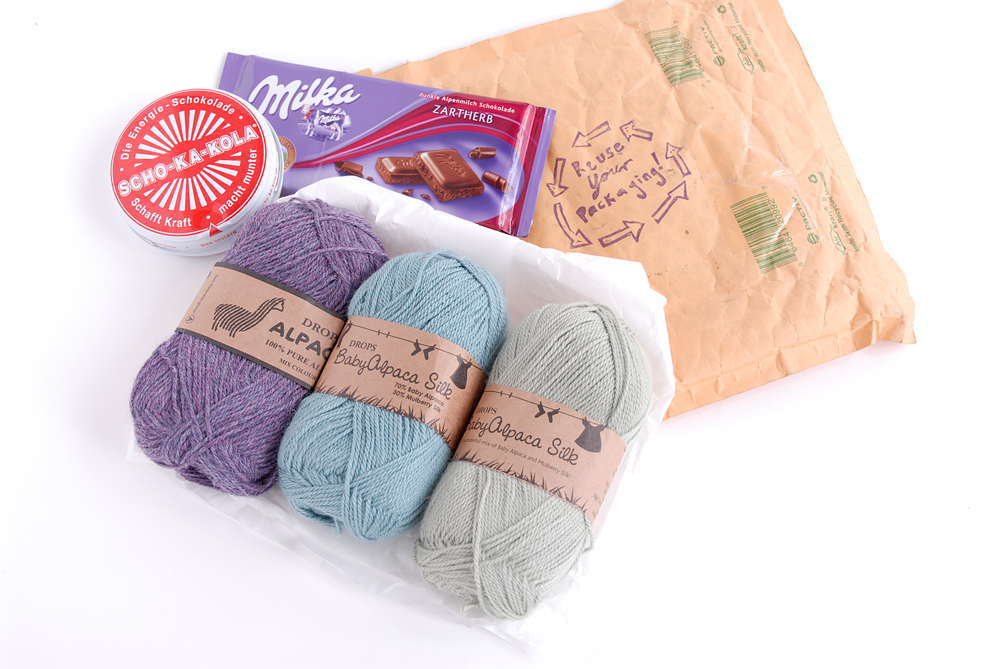
As fate would have it, last winter I sent my blog friend Alessa some American patterns, and she sent me some yarn and other lovely stuff from Germany (these mittens really are more full of stories than average, even for me).  Thanks Alessa!  One skein of the yarn (on the left below) was a lovely variegated purple in 100% alpaca.  Alpaca felts like a dream, and is just as soft felted as not.  I saw it in my yarn bin and knew it would be perfect for new fingers.


package from AlessaIs that not the most-awesome-looking tin of chocolate?


How to Calculate Shrinkage for Felting Knitting

Lots of times I tell my students that knitting can either be all math; full of charts, calculations, and exact numbers of stitches, or no math at all; flowing along and decreasing when it looks right to you.  In my mind, the happiest mix is somewhere in the middle.  When you’re felting, it really helps to have a least a little math, which comes from making a sample in your intended yarn and measuring how much it shrinks, especially if you need it to come out a certain size.  (I neglected to do this for the first fingers, and you saw how that went.)

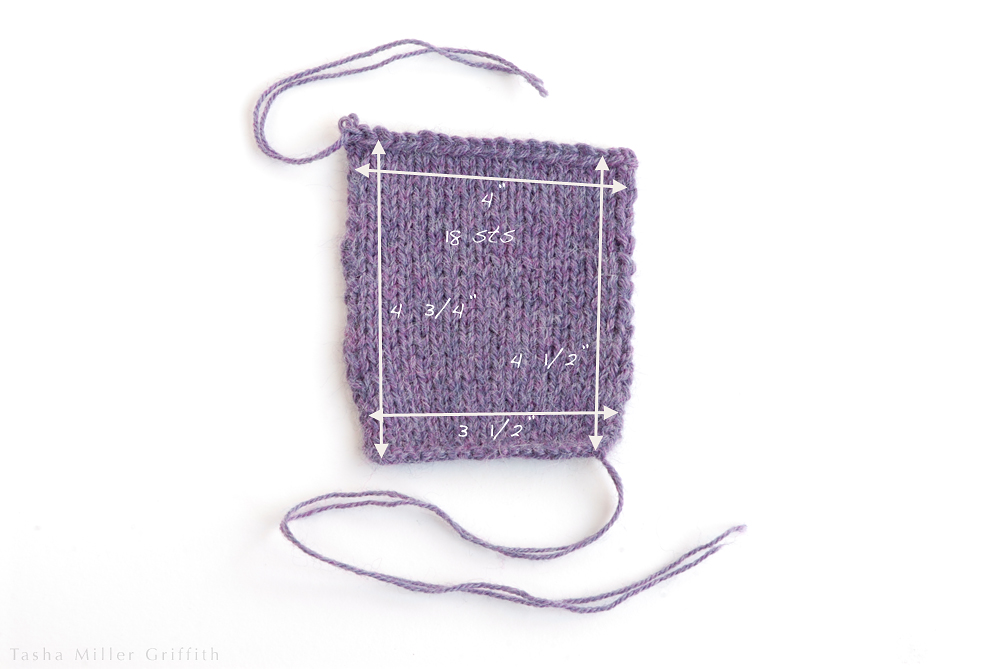
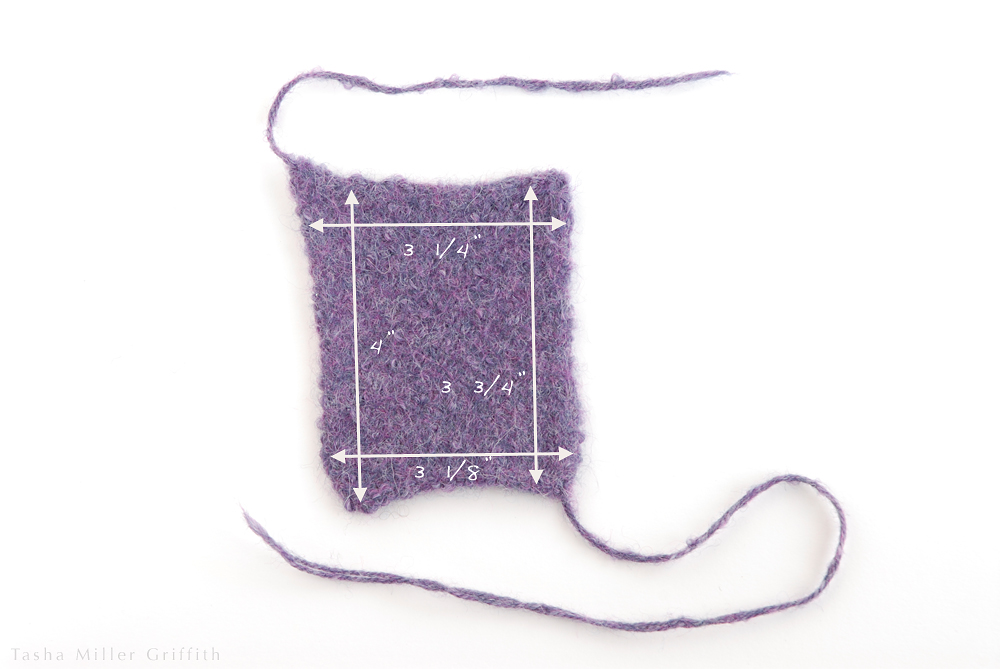
I started out with a tighter gauge, then decided to increase my needle size, because looser knitting will felt faster (you can see from the before and after that it also affects the percentage of shrinkage).  I’m using two strands of the yarn since it was fairly fine, and I wanted the fingers to be nice and thick and warm when finished.  You don’t have to take a photo, but do measure and draw around your sample.  Also make a note of how many stitches are in your sample, they will disappear into the felted texture and you won’t be able to tell later.  (This is about the smallest sample that will give you an accurate idea.)

Before felting:

purple mittens sample before

After felting:  (As usual, click on the pictures to enlarge if you wish.)

purple mittens sample after


Here’s the math part, it’s not too scary: divide the felted measurement by the unfelted measurement, to get the percent of the original measurement after shrinking.  F/U = %  I did this across my various measurements and got an average of 79% for the width, 84% for the height.  I wanted both, because I had noticed when felting the fingers the first time that they wanted to shrink more in height than in width, no matter how I stretched them out, which meant that I had not added enough extra knitting in that dimension.

Now that you have your percentage, apply it like this (there was algebra involved but I did it for you): the unfelted measurement (the one you want so that you know how much to knit before it shrinks) equals the felted measurement (how big you want it to end up) divided by your percentage of shrinkage (.79 or .84 in my example).  U = F/%  Clear as mud?  Try it, you’ll see what I mean.  You end up with a number a bit bigger than the felted/finished number you put in.  You can check it by putting it back in the first formula and see if you get the right percentage.

For my finished/felted measurements, I used the width of the previous fingers (by now chopped off), which I liked, and measured the height of my fingers sticking out of the mittens, adding a little extra for the thick knitted fabric to go over the top.  I calculated the unfelted measurements, then used the gauge from my sample to figure out how many stitches to use for each finger.  You can’t have a fraction of a stitch, so round up or down, whichever is closer or you want to err on the side of.  I knit until each finger was about the calculated unfelted height, erring on the side of a bit extra at the top, which turned out to be a good idea!

Just in case, I made one finger as test (the index finger on the right below) and felted it before knitting the others.  It came out great.

purple mittens unfelted fingersEven though the old fingers were felted on, I was able to snip the green stitches and pull them out, leaving the purple ones which I could pick up and knit from.  It helped that the palms never got totally felted.

Other Improvements

The thumbs were too short as well, plus worn mostly through in one spot from gripping.  And having only one layer of knitting (the part between the thumb and palm where the stitches tend to stretch open no less) meant that my thumbs were sometimes cold.  I fixed all that.  At this point, there was no stopping.  Since the thumbs were somewhat loose, I decided to knit inner layers for them.  I thought that I might need to slash the top of the mitten flap and extend it too, but after felting the fingers, it fit snugly over them, which would be warm, and I could add a bit of ribbing on the palm side for a little more length and to help hold the flap down.  Neither of these new additions would be felted, and both were small, so this was the no-math part.  I made adjustments visually, pulling something out if it didn’t seem right, and tried on the thumbs a lot to fit the shape to my hand.


purple mittens knitting extras  This may be hard to believe, but according to my notes, the wool I used for the new ribbing is the same as the original flap and thumb!  So it has definitely faded with sun and wear and washing.  Fortunately I like both colors.


A Minor Miracle of Purple Suede

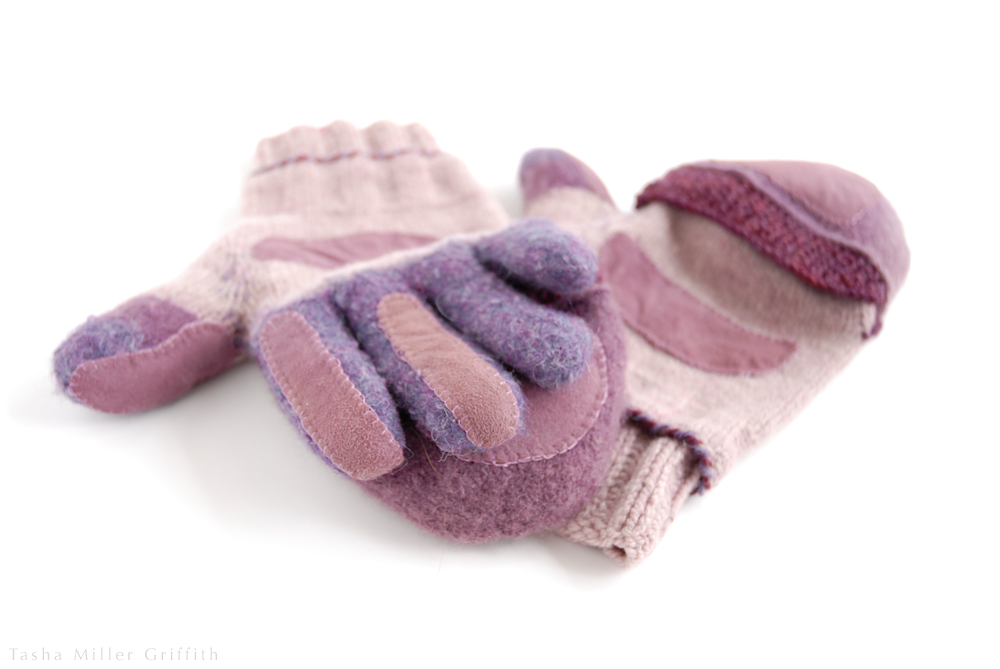
Finally, I needed something for grip on the fingers and palms.  (I’m telling this story whole, it’s a good one.)  I want to be able to drive and grab ski poles and my keys, etc., and I didn’t want to go back to the multicolored bits of Ultrasuede.  I briefly considered using some light green suede elbow patches I got along with a sweater for recycling . . . and was fortunately dissuaded by friends.  What I ideally wanted was something that would match the mittens.

Almost on a whim, I dropped into a rather old-school shop downtown, which sells saddles and leather and a few seemingly random bolts of blanket wool and skeins of rug yarn.  I remembered that the last time I was there, over a decade ago, they had a bin of leather and suede scraps, and I thought if they still did, I might be able to find something close.  I was the only one in the little shop, not too long before closing, and the woman working said that no, they didn’t have any scraps.  I had the mittens with me, I showed her what I wanted to do.  Suede and leather started at half a hide for $24, there were black and green and red . . . and at the end of the rack, four smaller, scrappier pieces, all in dusky, slightly mottled shades of purple.  Not just purple, four distinct purples that each were so exactly what I needed that they looked like they were dyed to coordinate with the mittens, and left on the end of the rack by magic.  “Oh,” she said, “You could use those!  They’re $9 each.  We sold all the red, all the black . . .”  Hardly believing my good fortune, I picked the color I liked best out of the thicker two (two were quite thin), paid for it, and practically skipped down the street towards my car.  A few times, when I’ve been intensely searching for a supply I cannot find, probably which doesn’t exist, I’ve dreamt that I went into a shop and found exactly that thing, only to wake up disappointed.  This is the only time, so far, it’s ever happened in my waking life.  I have a rather large piece of somewhat smelly purple suede left in my studio to prove it!


purple mittens finished 5

purple mittens finished 3


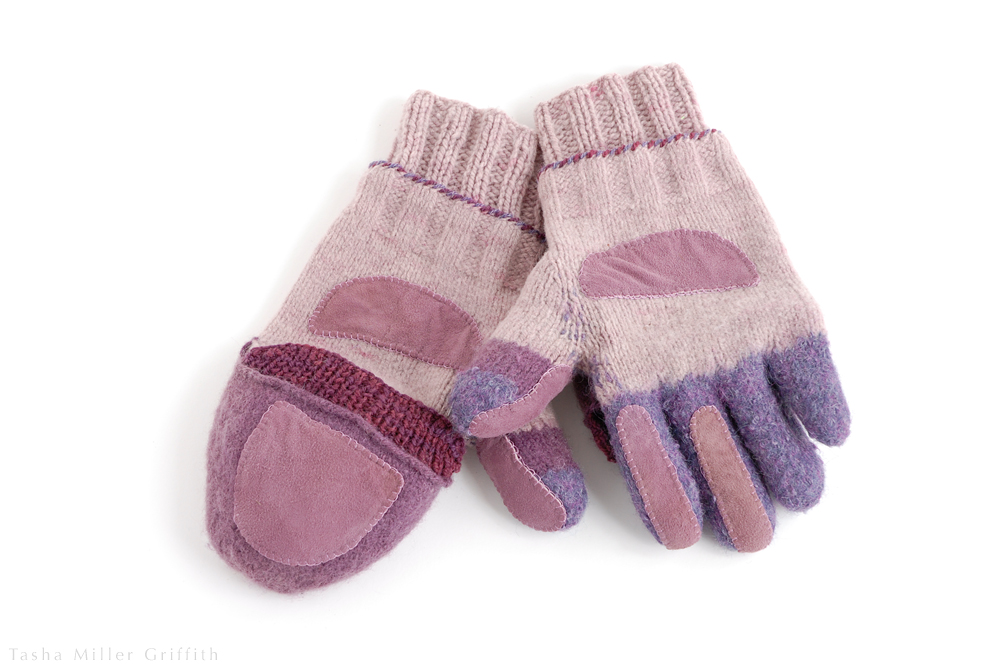
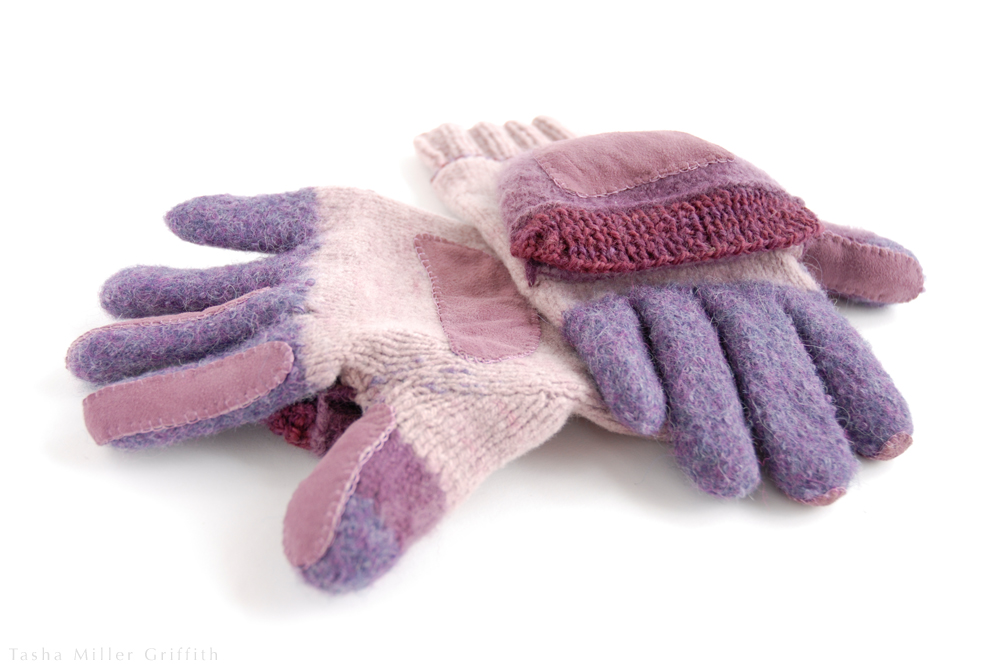
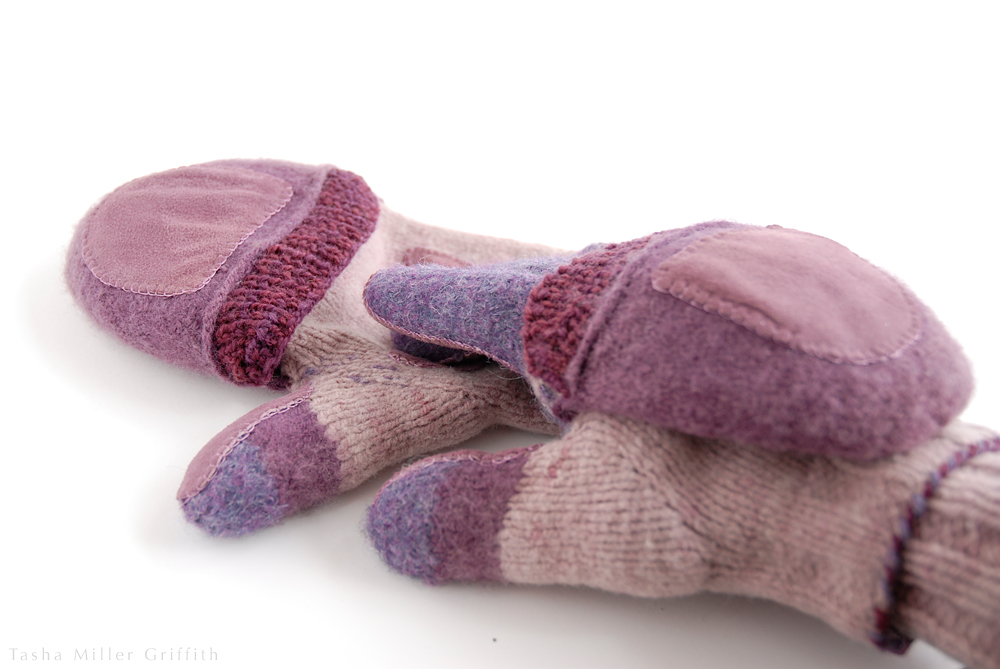
I love love love these mittens.  I finished sewing on the suede over our family Thanksgiving trip, and just in time too, when we got back our town had a major cold snap, not getting above freezing at any time for over a week, unlike our usual mountain cold nights but mild days.  I’ve worn these cross-country skiing, I wore them to art walk downtown at night (during the below-freezing week), shoveling snow, driving, and never one cold finger have I had!  Felted alpaca is like little down blankets for your fingers.  I can easily wriggle my fingers out of the mitten top for fine tasks without using the other hand.   Having placed the suede patches where the wear was on the old fingers, plus the part of my palm that I use when I grip things—surprise!—they are in the perfect spots.  I recommend the inside of the thumb especially.


purple mittens finished 4


If you want to make your own version, I’d start with a glove pattern you like.  Either refer to a flip-top mitten pattern, or make up the flap as you go (Basically:  I picked up sts across the back of the hand, cast on across the front and did a few rounds of short rows for a curved shape, joined everything into a round and knit, decreasing following the shape of the fingers underneath).

I realize that I haven’t talked about the actual felting, in fact that felting is probably the thing I know the most about that appears the least on this blog.  Maybe I’ll do something about that in 2014.

In the meantime, if you have any questions about making mittens or felting in general, feel free to let me know!

Happy Solstice, everyone!


purple mittens finished 1


How to Pick Up a Dropped Stitch in Knitting


dropped stitch drawing 1


I wanted to show you how to fix hole in a sweater (or other knitted article) and as I started putting words and pictures with how I do it, it became more and more obvious that knowing this first would be extremely helpful.  So, even if you don’t knit, keep reading . . .

A “dropped” stitch is one that falls off a knitting needle, or the thread above it breaks (like a run in stockings) so that it becomes disentangled from the stitch above it.

Knitting is just pulling loops through loops.  When one loop pops out of the loop below it, it releases into a long loose bar, and can easily cause a chain reaction.  But please do not panic, it’s almost as easy to pick those loops up again as it was for them to pop out in first place.


dropped stitches 1


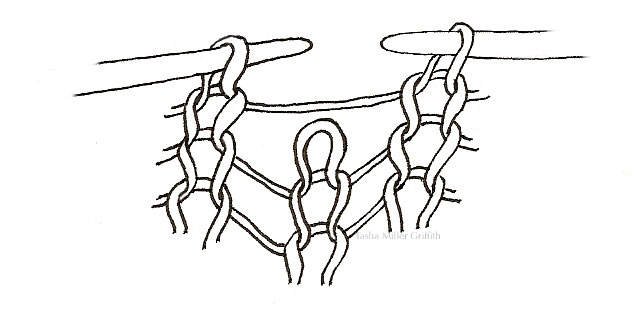
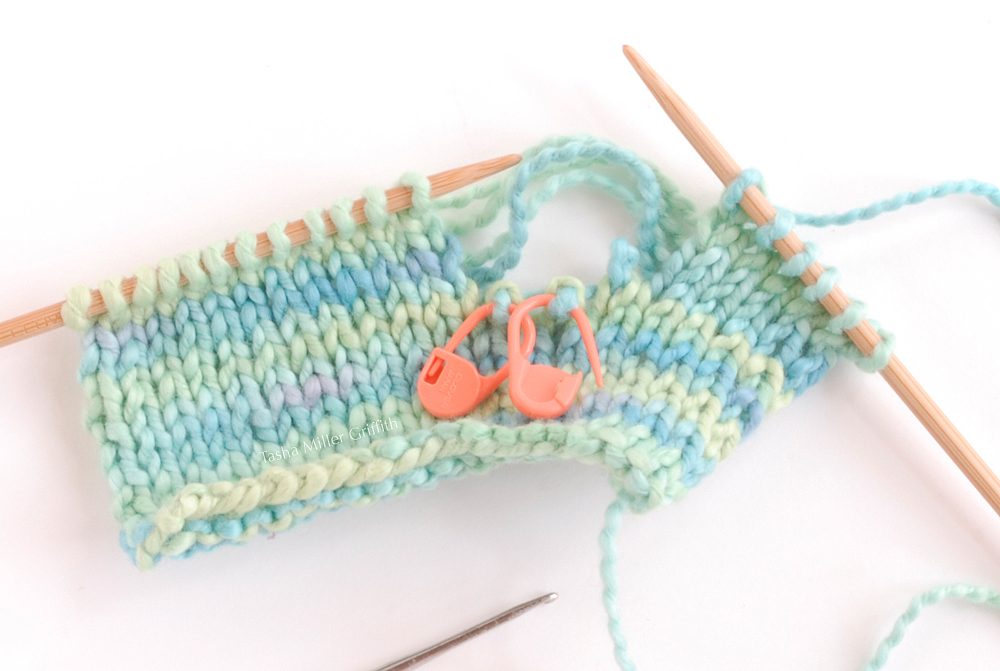
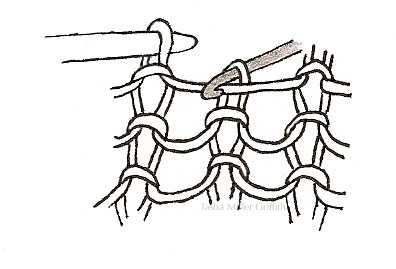
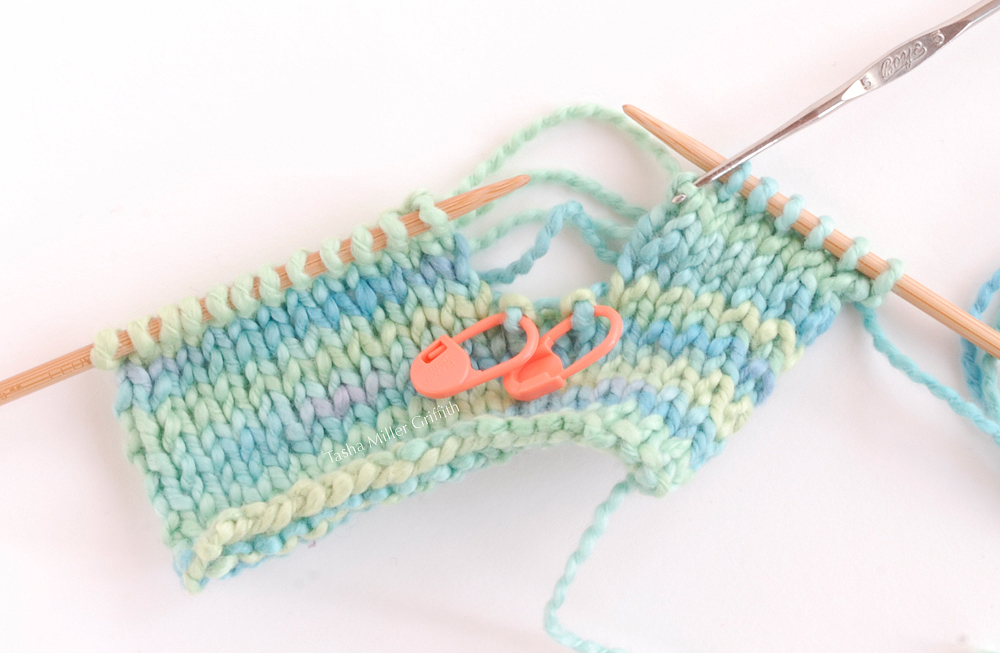
If more than one column of stitches is coming undone, first find the last/uppermost intact loop of each column and stick something (like a safety pin or a piece of yarn) though it, to keep that column from unraveling any further while you work on the others.


dropped stitch drawing 2


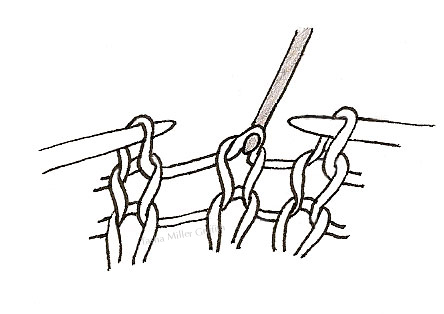
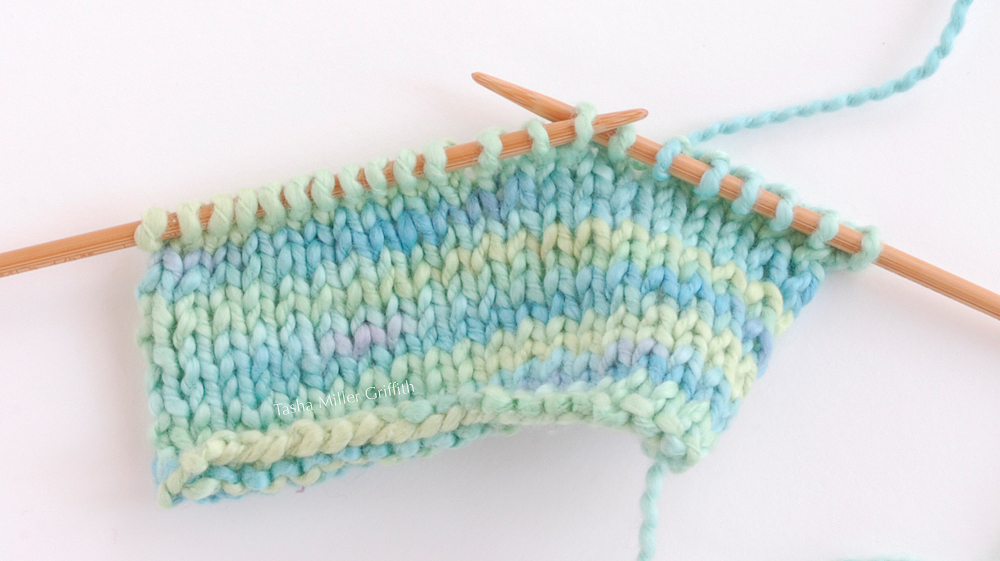
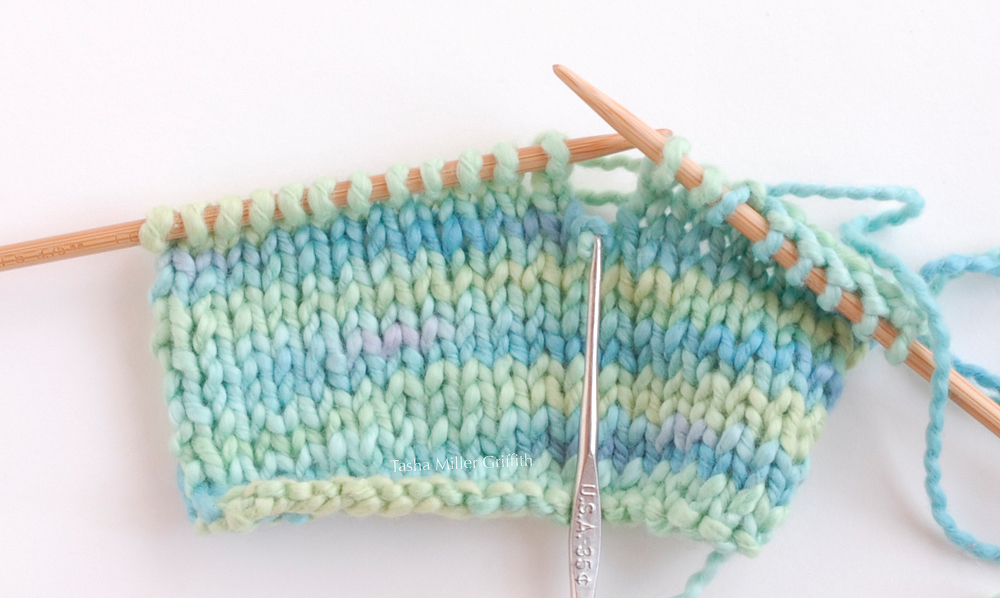
To pick up a stitch, get a crochet hook (mine is tiny – I found it in a heat vent in an apartment we rented in Madison, and it’s been in my knitting bag ever since – a little bigger one will probably be easier to work with).  Stick the hook through the last intact loop, grab the bar above that loop with the hook, and pull the bar through the loop.  It will form a new loop.  Ta da!  I think it’s easiest (and doesn’t cause twisted stitches) to have the hook facing down, grab each bar from above and pull it straight through.  This does mean you’ll need to take the hook out and stick it straight through the new loop to pick up another bar, if your stitch has dropped more than one row.


dropped stitch drawing 3


One refinement; knit stitches are loops pulled toward you, and purl stitches are loops pulled away from you.  So, to pick up a knit stitch, have the bar behind the old loop, and pull it toward you.  To pick up a purl, put the bar in front of the old loop, insert the hook from the back, and pull the bar away from you to make a new loop, as shown above.  That’s it!  Not only can you now pick up stitches, if you’re paying attention you’ll understand the fundamental structure of knitting, and the difference between knit and purl stitches.  Pretty cool, eh?


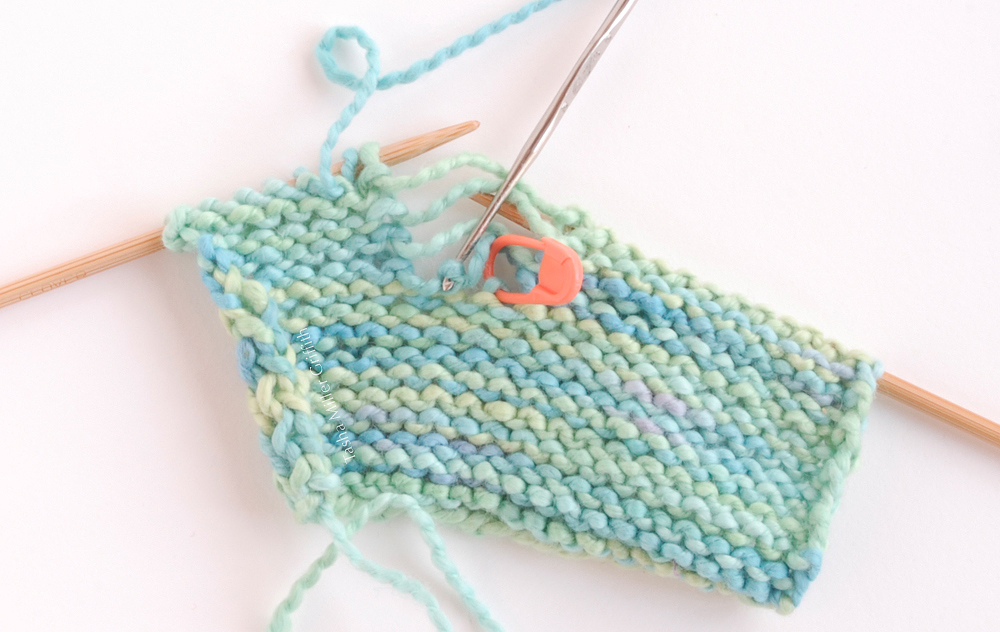
dropped stitches 3

dropped stitches 4


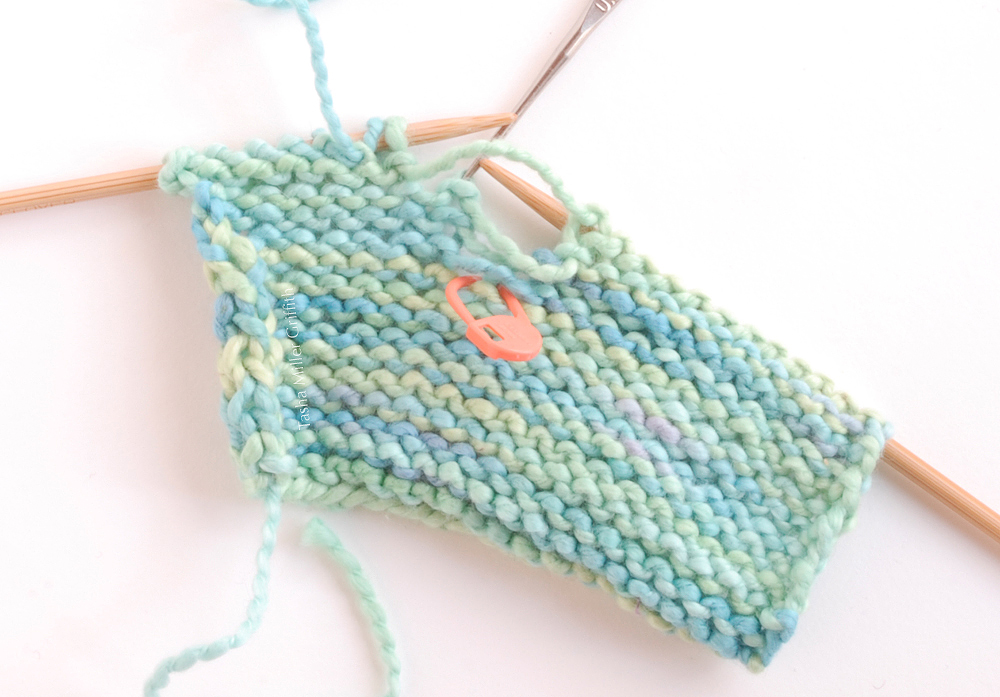
If you’re working with a bigger area of dropped stitches, pick up one column at a time by making a new loop from each bar, making sure to pick up the bars in their natural order.  Move them around with your finger and check which ones connect to the adjacent stitches where to make sure.  The two pictures above show picking up one column of purl stitches.  When you get to the top of a column, put the last loop back on whichever needle is convenient to continue working, you can rearrange them when you’re done.  Make sure that the loop is sitting on the needle the same way as the other ones which did not fall off – flip it the other way and check if you aren’t sure.


dropped stitches 2


Move to the next column if there is one, and pick up the bars in order again, until all the top loops are sitting on the needles again.  Look to see where the yarn you are working with is coming from, this is always the last stitch you knit.  You may need to pass stitches which haven’t been knit on this row yet back to the left needle to get them ready to work.  Remember to pass them with the needles tip to tip, which won’t twist the stitches.  And we’re done!


dropped stitches 6


Now that dropping stitches and picking them up is not so scary, we come to the second great thing about knowing this: you can do it on purpose to fix other mistakes.  Say you look back and realize that three or four rows previous to where you are now, you knit a stitch when you should have purled it in your pattern.  Instead of ripping out all the stitches you’ve done since then, you can just drop the stitch directly above the mistake, and let it ladder down as far as you need.  Then, you can pick up each stitch as a knit or a purl, whatever you need to make your pattern right – and your mistake is fixed!


dropped stitches 5


I was mostly done with the photos for this post, and wondering if they were clear enough, when I remembered that I already had drawings, scanned in and ready to go, from the handouts I make for in-person classes – a good thing!

If you have questions about this, or another topic you’d like to see featured here, just let me know.  Happy making!


Yarn as Jewelry


I bought this yarn at a tiny shop in Albuquerque’s Old Town years ago.  It’s hand spun, and there was such a tiny amount on the skein (which I didn’t realize at the time) not even enough for a whole hat!  I ended up using it in part of a hat for Bryan.

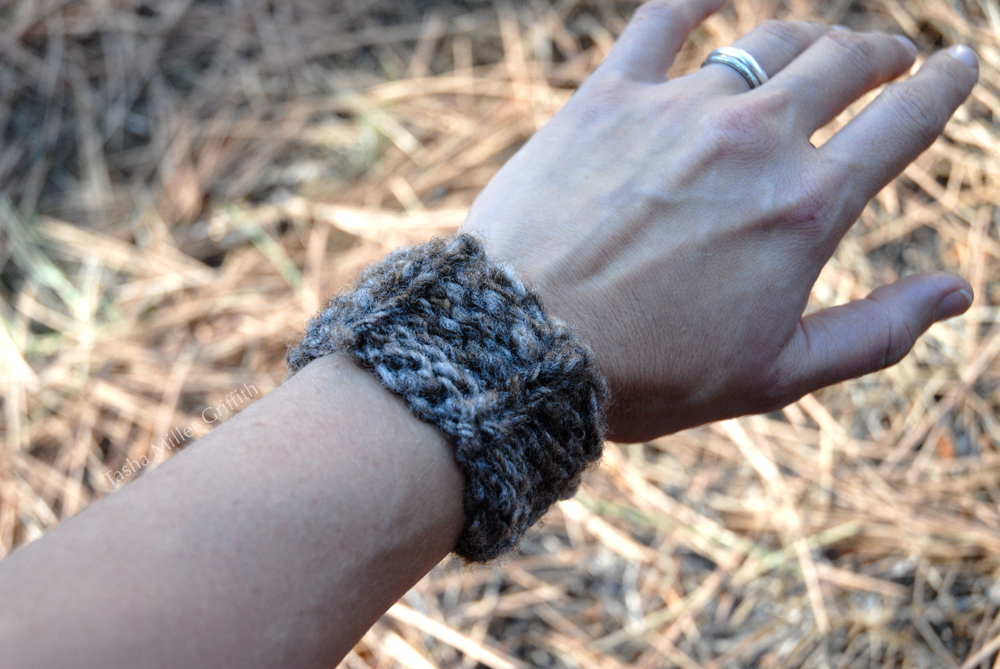
But, it’s totally gorgeous!  Just look at it, there are parts that are spun so tightly that it’s basically too much twist, but those parts also give it a bit of shine, and highlight the natural color variations.  I fell in love with it right away, and I was still in love with this little bit I had left.  At some point it occurred to me to wear it as jewelry.  To me this wool yarn is just as beautiful as anything else you might put around your wrist.  So . . .


If you’d like to make one too, it’s quite easy and quick, I made this one (including a small sample and pulling that out) while talking to friends and waiting for dinner!  Just be sure to use a very stretchy cast on and bind off, because the whole thing must stretch over your hand and still fit close around the wrist.  I like “Jeny’s Stretchy Slipknot Cast-On“, I’ve been using it for all kinds of things lately, as it looks good in addition to being super stretchy.  “Jeny’s Surprisingly Stretchy Bind Off” is a little bulkier, but perfect for something like this, or the top cuff of a sock, etc.

I wanted mine to fit close, so I used my wrist measurement minus 10%.  Multiply your desired size by how many stitches per inch you are getting in your yarn, and that’s it!  Mine is 20 stitches around at about 3 sts/inch.  The pattern is purl 3, knit 1, repeat until desired length, or until you run out of yarn like I did.

Bryan called this my “warrior sheep woman cuff”.  I’m, um, calling that a compliment!

What unusual things do you think are beautiful?  Would you like to display or wear them somehow?


Knitting Fall Projects

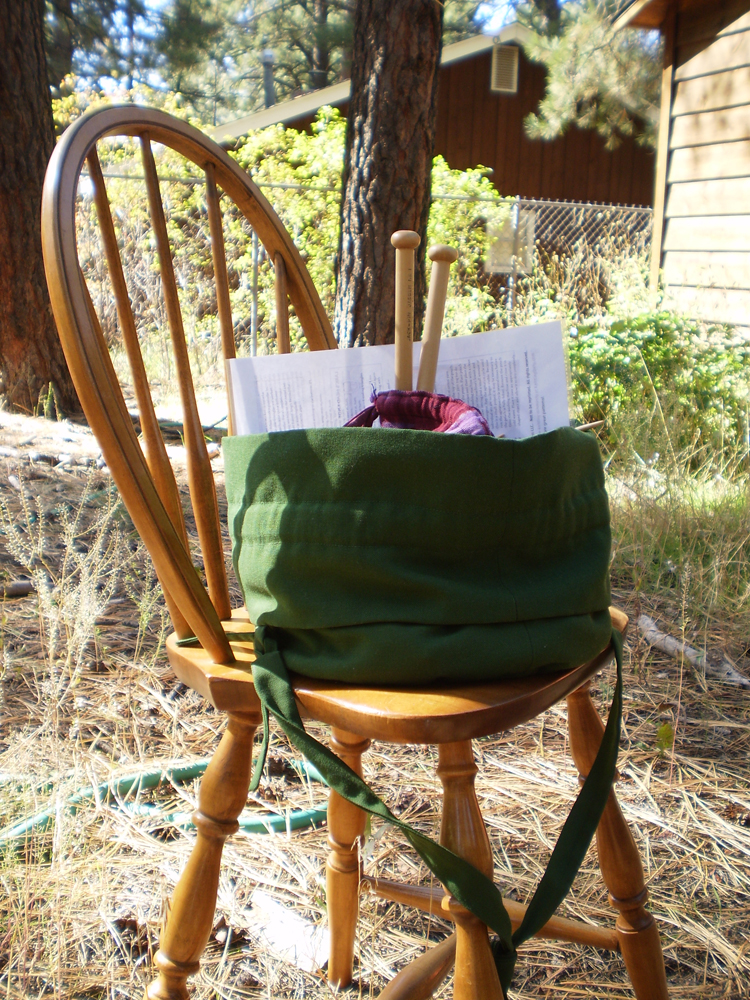
I started knitting a lot when I started traveling a lot with Bryan. Probably my favorite thing about knitting is still its versatility and portability – how one little bag of supplies can become a garment, and maybe more importantly, provide me with my “make something” fix anytime, anywhere.

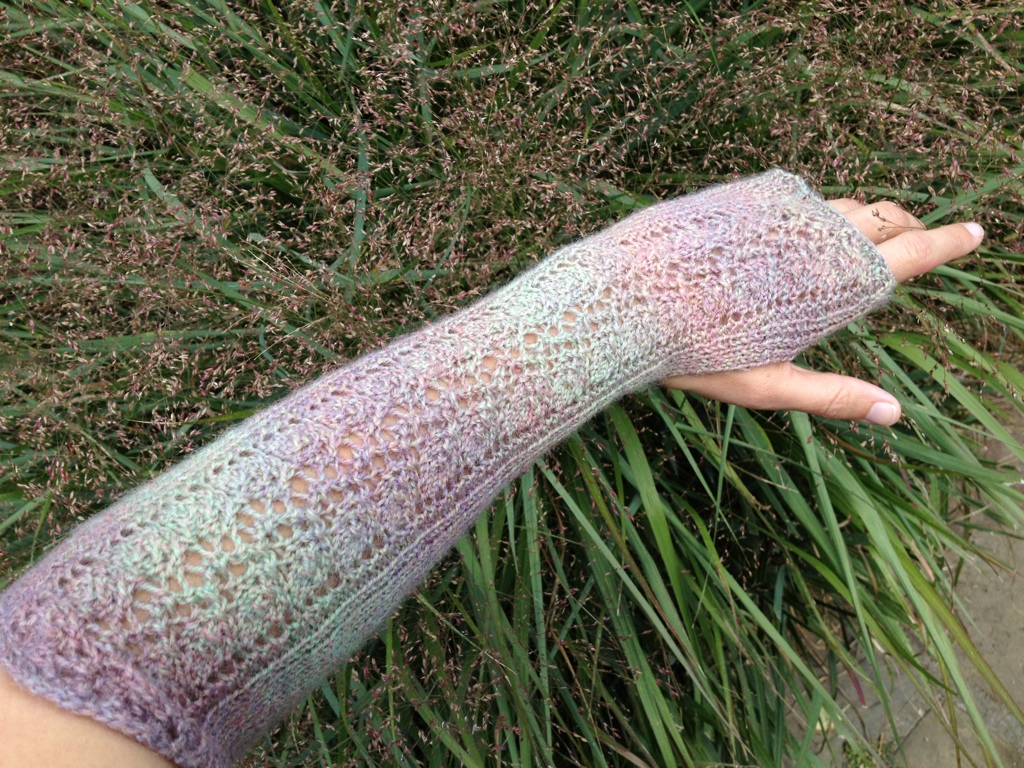
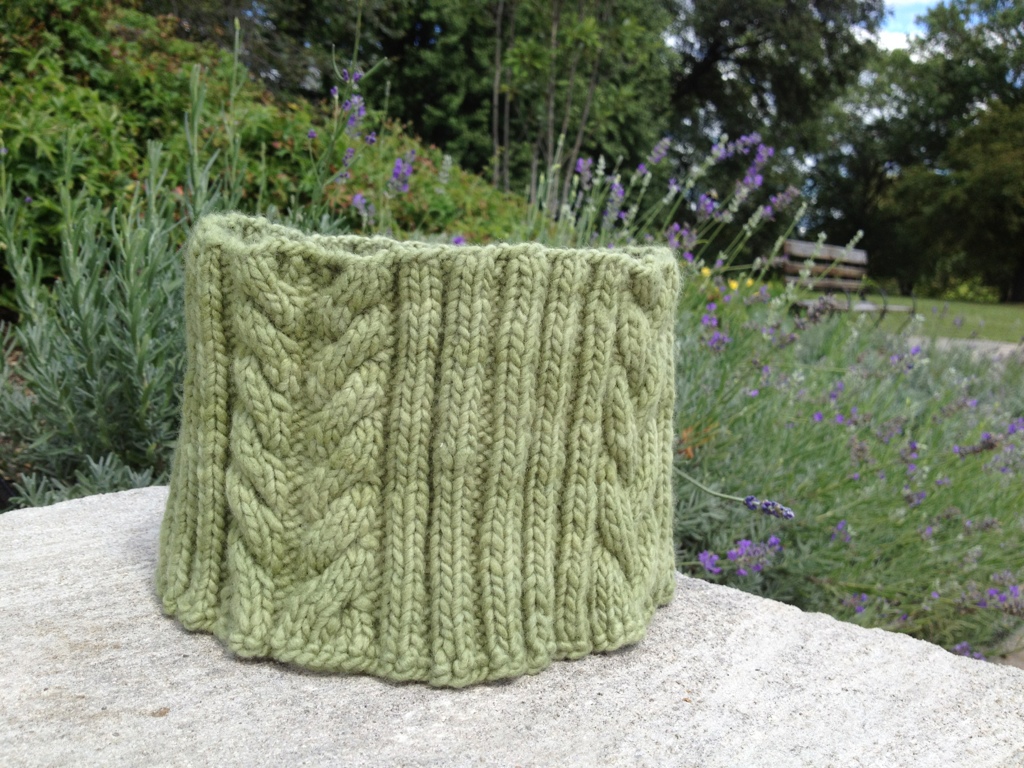
On this trip so far I’ve been working on samples for two new classes I’m teaching at my local yarn shop this fall; a cable cowl based on the way my friend Birgitta taught me to knit cables, and lace fingerless gloves from a Churchmouse pattern.

20120912-074231.jpg

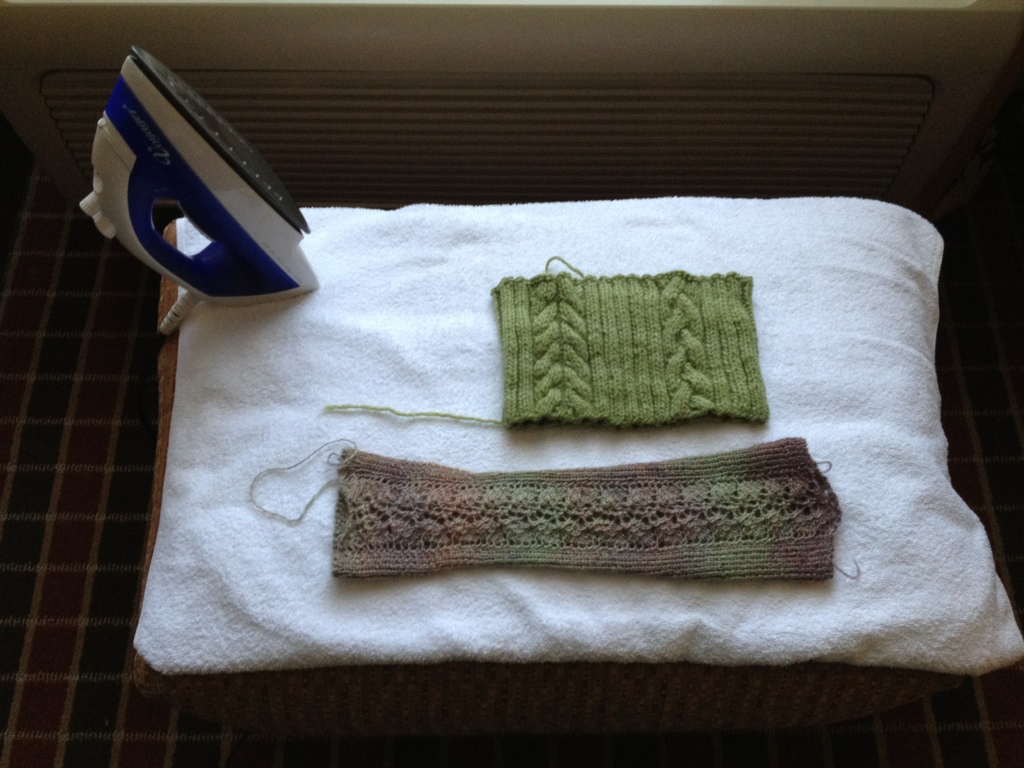
Morning light on my hotel room blocking. I neglected to bring pins, so steaming and stretching had to do for the lace. If I wet & pin it at home, I’m pretty sure I can get a little more openness in the leaf lace pattern.

20120912-074500.jpg

I’m definitely indulging my romantic side with these mitts. A student asked me, “But would you wear that?” “Yes,” I responded, “but I do agree that ‘would you wear it?’ is an important question to ask before you start knitting!” What I’ll wear them with is another question . . . This yarn is Jojoland Melody.

20120912-074841.jpg

The yarn for the cowl is Manos del Uruguay Maxima. I love Manos, and this one is dreamy soft with subtle color variations – a sure way to get my attention!

I’m also pretty excited about teaching this class, since Birgitta’s design is set up to make it easy to customize, meaning I can talk about how to play with size, gauge & placement as well as how to make cables!

20120912-075334.jpg

Very special thanks to Mellon Park in Pittsburgh for the backgrounds in this post, as well as being a really lovely spot!

About Gauge in Knitting

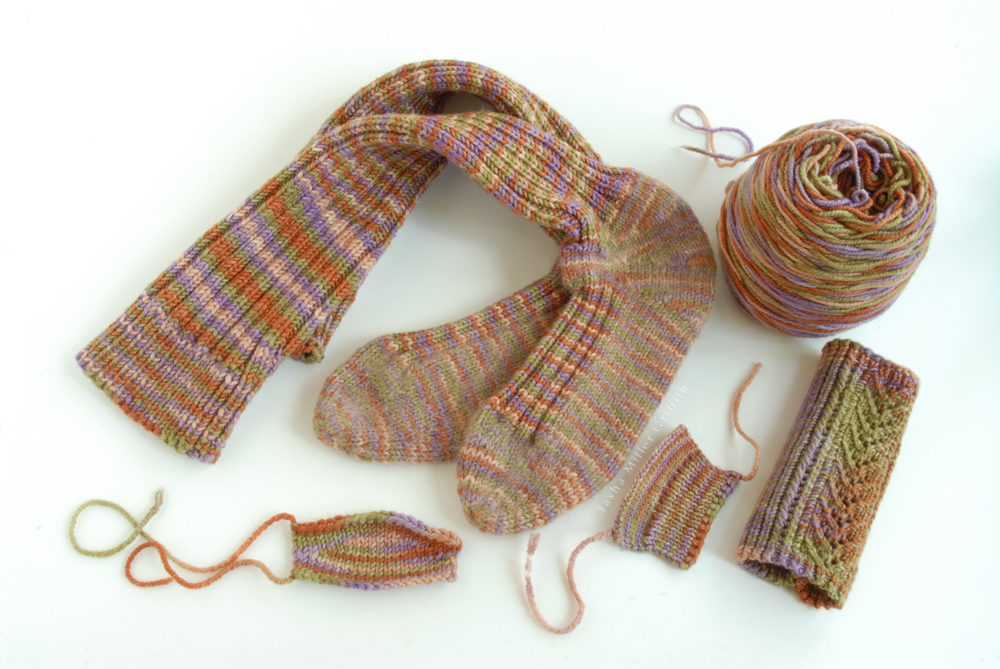
One of the things my knitting students have a lot of questions about is gauge, so I thought it would be a good topic for a post.  I am helped out on the visuals here by my aunt Kathy, who gave me a lot of this yarn (thanks Kathy!).  A LOT – I made all this stuff, gave 2 skeins to my friend Becca, and still have the ball you see left.  It’s been interesting for me, since I would normally not make several things from the exact same yarn.

Ok, so quickly, in knitting, gauge is: how many stitches per inch you are knitting.  It varies with the yarn and needles you are using, and with your individual tension, how you hold the yarn, so it will not be the same as the person sitting next to you, even if you are using the exact same materials.

A little math:

Imagine you are making a sweater.  If the pattern calls for 5 stitches to the inch, but you are knitting at 4.5 sts/in (knitters love abbreviations, have you noticed?) and you multiply that by the 200 stitches you need for your sweater.  What can seem like a small difference is suddenly 4″, the difference between it fits or it doesn’t.  It follows that the bigger and/or more fitted the project you are making is, the more important it is to know what your gauge is going to be before you start.  I nearly always make a sample square to test gauge before I start, a big one (maybe a foot square) for an important project, and a smaller one for something that’s easier to take out and start over.

How to measure your gauge:

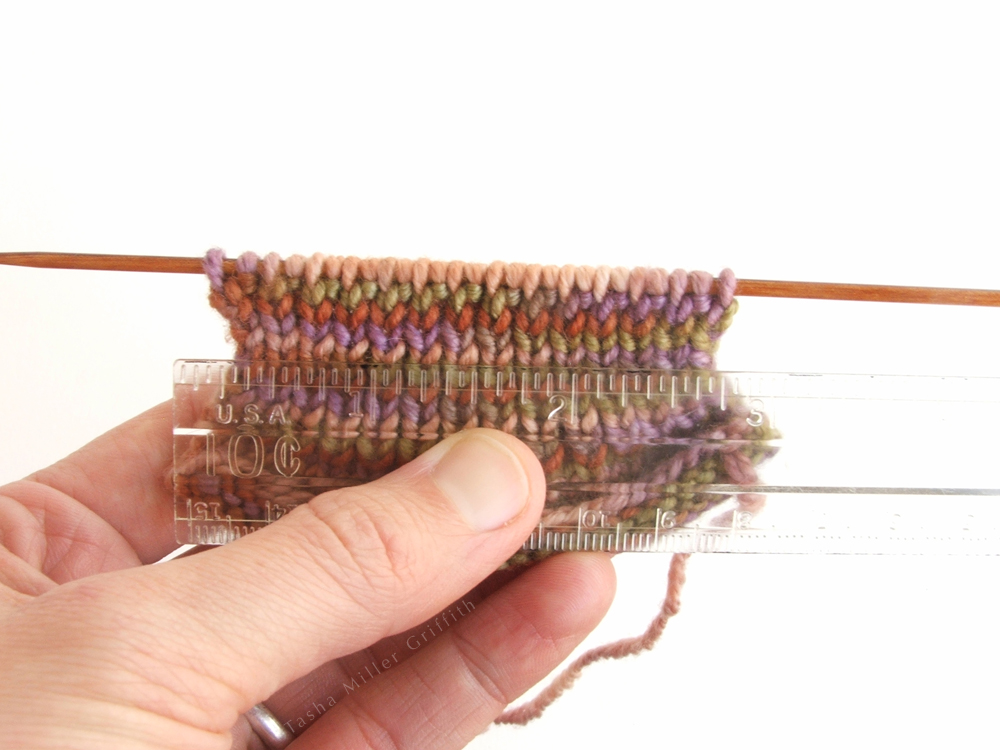
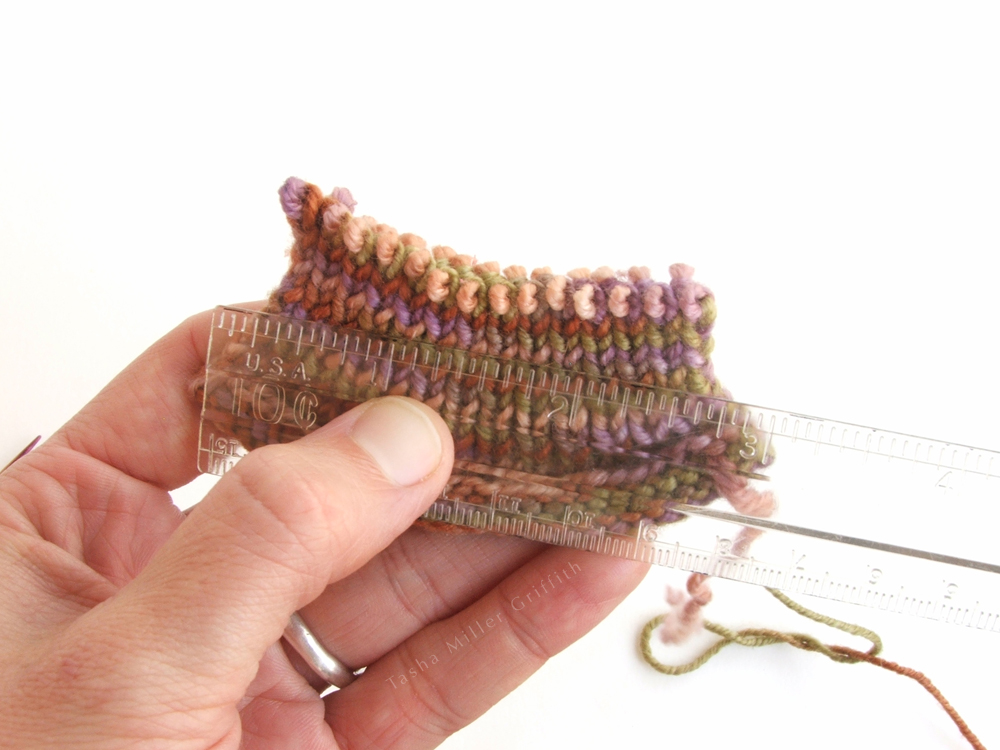
Each “V” or tiny mountain is one stitch.  Line your ruler up with the starting line between two stitches.  Count the stitches (it helps to have a spare needle or something else smaller than your finger to count with).  If you count over more stitches you’ll get a more accurate measurement, especially if you have halves or quarter stitches in each inch, so count over 2″ or 4″ or however many you can in your sample, and then divide to get your number of stitches per inch.  When measuring, take your sample off the needles, or slide it onto the center cable if you are using a circular needle, or bind it off if you want to keep it.  You can see here how the needle is holding the stitches apart, taking the sample off changes the measurement by 1/2 stitch per inch!

If your gauge is not the same as the gauge in your pattern, you have a couple of options.  One is to try to loosen or tighten your gauge, usually by using a bigger or smaller needle.  If you knit loosely, there’s a good chance this won’t work very well, but you can tighten your stitches by keeping them packed closely together on the needle as you knit each one.  Use a finger on your right hand to keep them from spreading out, and thus using more yarn for each stitch.  This fabulous tip is from Stephanie Pearl-McPhee, by way of Cat Bordhi in her amazing workshop earlier this year (Sweet Tomato Heel workshop, from whence these socks)!

Your other option is to do a little more math.  If you like how your sample looks and think it’s a good thickness and drape for your project, you can figure out the finished size of your project by diving the number of stitches suggested in your pattern by the suggested gauge.  That will give you the size in inches, which you can multiply by your personal gauge to get a new total number of stitches.  Be aware that if you choose this option, you may have to make more adjustments as you go, you might need more or fewer decreases, etc.  Knitting lends itself to experimentation (and taking out small sections, then trying them again) so go for it!

Which leads me to my last point – gauge is all in how you see it.  Yarns knit tighter will yield a thicker and stiffer fabric, which might be great for a cowl that stands up on your shoulders and keeps you warm.  The same yarn knit much looser might make a lacy, drapey scarf.  Or it might not, depending on other characteristics like the fiber and the way it was spun.  Try a little bit and see!

If you are interested, here is the breakdown of the things I made and their gauge.  All were knit by me, the yarn is Fiesta Boomerang (100% superwash Merino, I looked it up and they still make it, although not in this colorway).  The small curved sample and the feet of the socks (which I knit along with a mohair & silk yarn, another awesome tip from Cat’s workshop) are both 5.5 – 6 sts/inch, which for my taste is about ideal for this yarn.  The legs of the socks (pre-that tip about squishing the stitches together) are about 5 sts/inch, or would be if they weren’t ribbing.  The tight square sample was made in preparation for the lace mitt (the tube-looking thing), the tightest I could get this yarn was 8.5 sts/in.  It did make a very firm and stretchy ribbing!  By the way, the gauge suggested on the label was 4.5 sts/in – I don’t know where they get those, but they are often way off what I think is reasonable.  A better guide is the weight of the yarn, especially if you are looking to substitute for another yarn suggested in a pattern.

If you think of anything I haven’t covered, feel free to ask!

Join a Colorwork Class

There’s still room in my colorwork knitting class tomorrow!  We’ll learn fair isle and intarsia techniques, or two ways to use two or more colors as you knit.  If you’re near Flagstaff, come out and knit with us!

To sign up, call Purl in the Pines (our lovely local yarn shop) at 928 – 774 – 9334.

Cat Bordhi – her Enthusiasm is Inspiring!

Ok, so I admit this is not the greatest picture, but this is me with the amazing Cat Bordhi!  I was lucky enough to take a workshop with her just yesterday.

She’s so open and generous in person!  To her, knitting is an ever-expanding horizon of both fascinating possibility and endless beauty.  And the enthusiasm this creates shines through in everything she does.  I am inspired not only by the myriad super-clever tips and tricks she has, but by her attitude, it reminds me to find the passion in what I do and let it show.   Thank you so much Cat!

If you knit and you have not checked out Cat’s ideas, you are cheating yourself!

Also special thanks to Michele, the owner of my lovely local yarn shop for hosting!