A Hot Weather Sundress, and Making Spaghetti Straps


hot weather dress hollyhocks 1


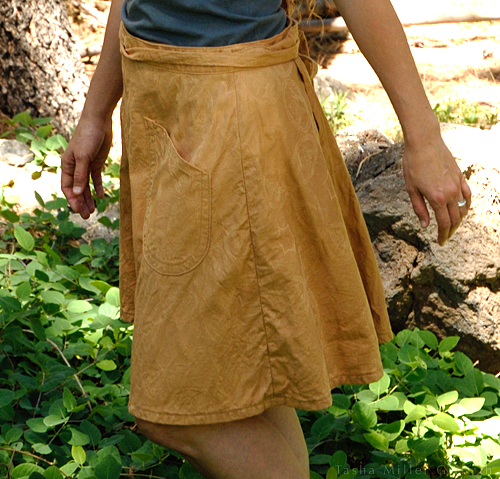
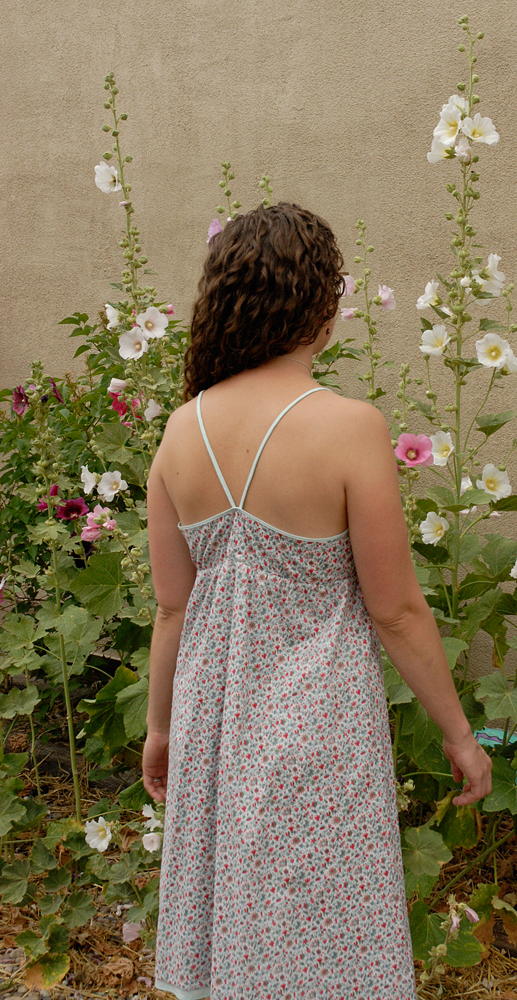
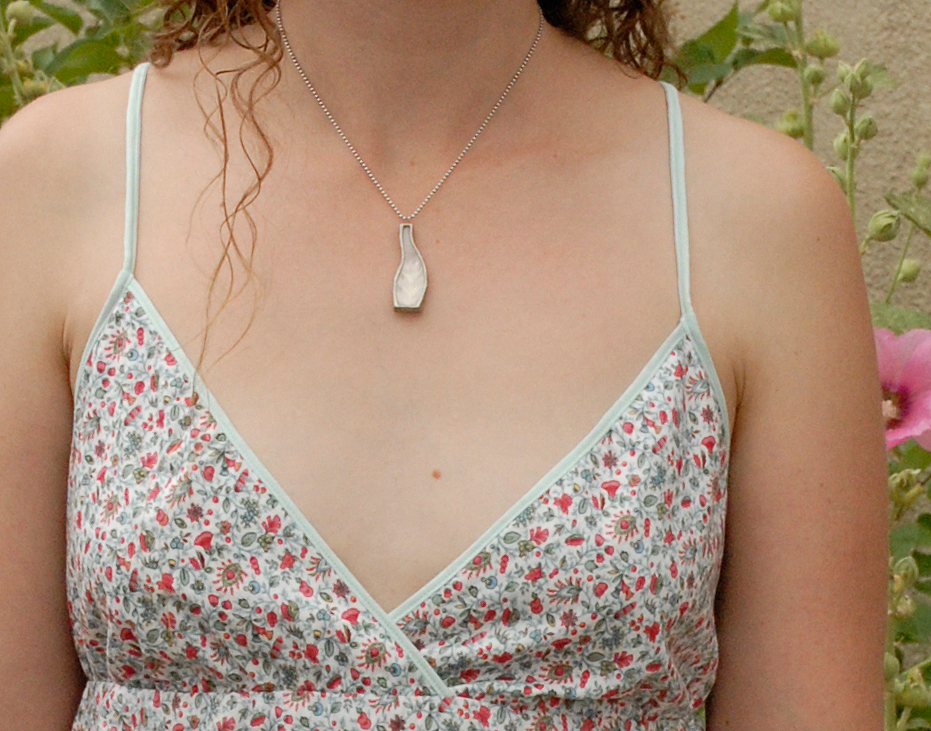
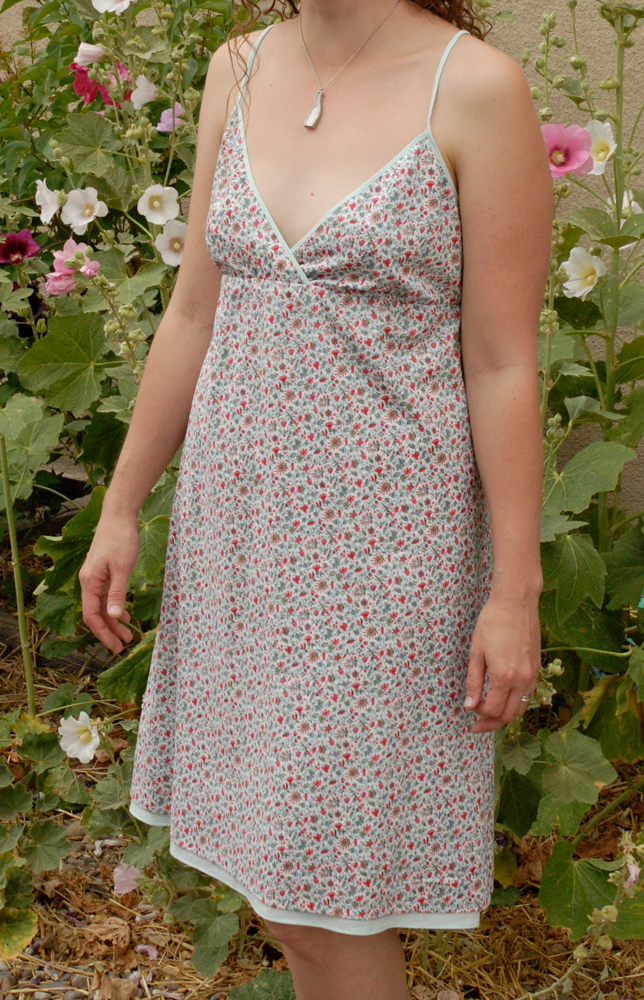
I’m catching up here.  You know how sometimes, if you prepare carefully for something, it doesn’t happen?  I made this dress for Me-Made-May, but didn’t end up wearing it until the middle of June, due to unseasonably cool and rainy weather all month long.  This year I wanted to up my pledge for May, so that I wore at least two items of me-made clothing at all times.  When it’s really hot out, I like to wear only two items of clothing period, one of which must be a sundress, which allows as much heat to escape from my skin as possible.  My airiest one in particular was 1. wearing out and 2. not me-made, so I clearly needed to replace it before May.  It had a couple of features which I wanted to replicate in my self-stitched version: just about the lowest neckline I am comfortable wearing in public, layers of very light fabric, and gathering at the empire waist.
 

hot weather dress hollyhocks 2


I used my self-drafted sundress pattern again, altering it this time for a cross-over gathered front.  Each time I make a new version of this dress, I change the back in an attempt to make it not pull up at the center back, and both times so far it has not worked.  Any ideas?  I’m pretty happy with how the front came out though.  One thing I’ve learned: the key to keeping the bodice from immediately gaping open when I bend forward is to ease the top edges into a slightly shorter binding, so that I take some of the fullness around the bust out again. It’s especially important since I replaced the darts on this version with gathers.
 

hot weather dress fabrics


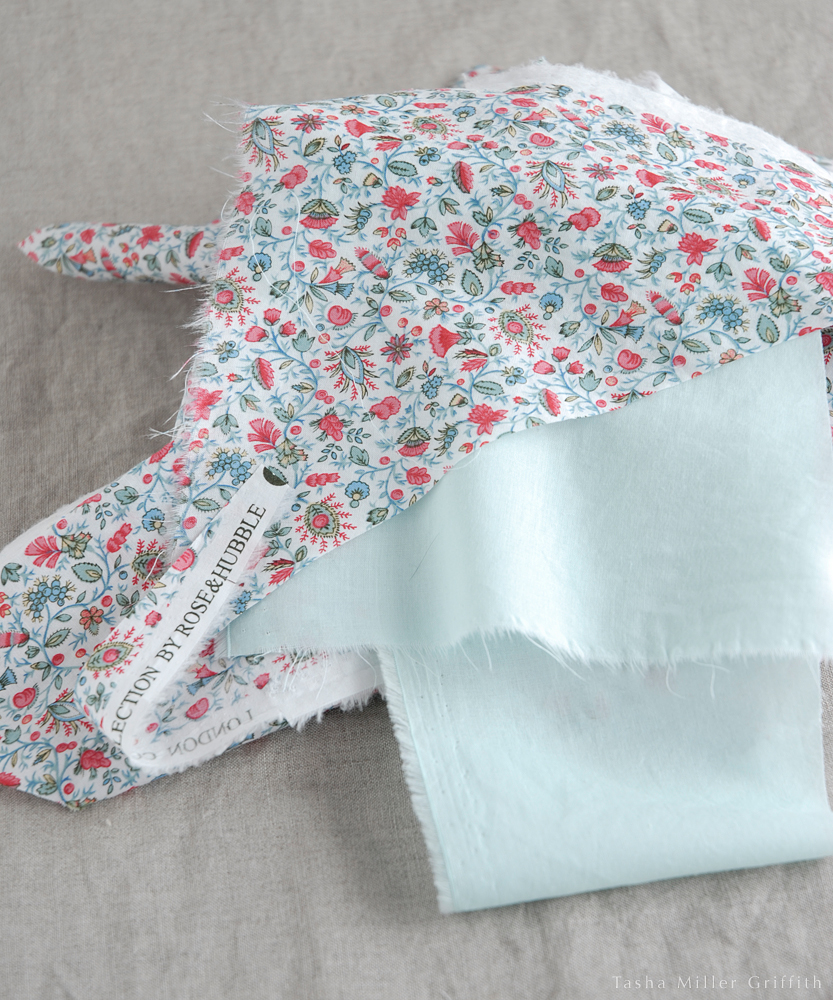
This fabric is a cotton batiste, I’m sorry to say I have no recollection of where it came from, I just remember it being in my stash for a long, long time.  My first idea was to use plain white for the lining layer.  As I was cutting out the main fabric pieces, I dropped a piece in my fabric scrap pile, and it happened to land on top of a piece of felt in this light minty green color.  I suddenly remembered that I had another piece of lightweight cotton in a really similar color, which might look great as the inner layer.  It turned out there was just enough of that fabric for the lining and bindings, and I really like how the green adds a little hint of color under the main fabric, and how it looks peaking out at the hem, a detail I added to show off the second color.  Even though I decided not to join any of the official fabric stash-busting challenges going on this year (despite this cool anime dinosaur logo) I have been making a conscious effort to use the fabric I already have, and making some good progress, in part inspired by all the other sewers who are doing the same.
 

hot weather dress spaghetti straps

Click on this picture (or any of the others) to enlarge for easy reading.


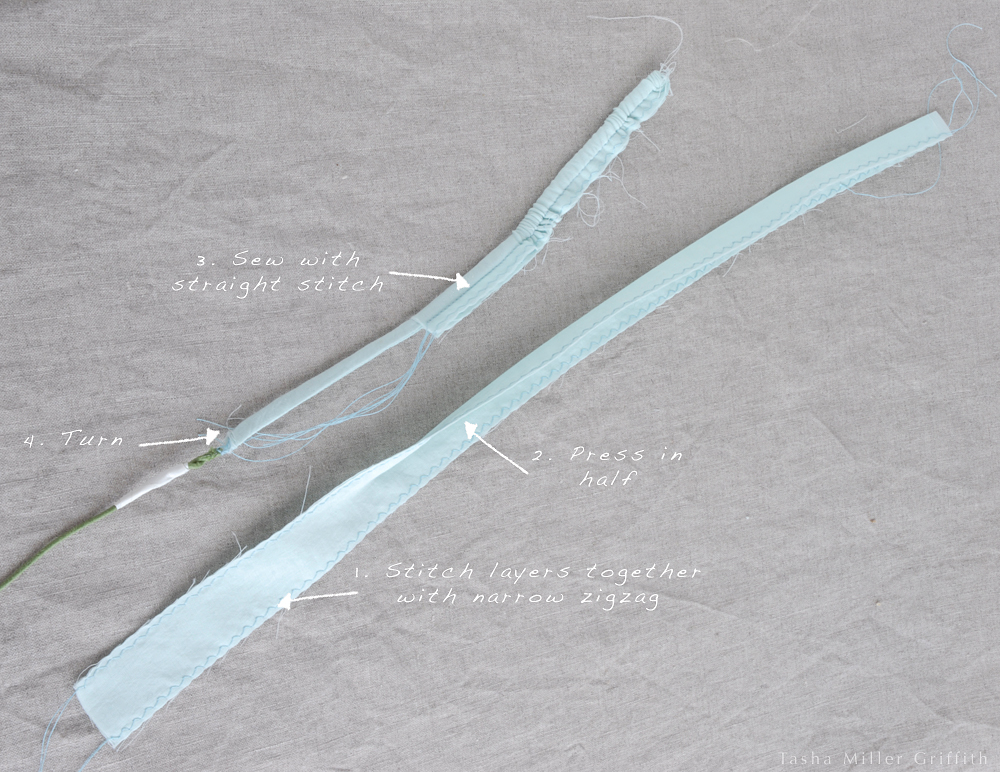
With all the sundresses and tanks I’ve been making the last year or so, I’ve gotten a lot of practice making thin “spaghetti” straps, and come up with a method that I like.  If the fabric is lightweight, like this one, I’ll use two fabric layers for each strap.  Since the dress will hang from the straps for most of its life, I want them to be fairly sturdy.  I cut each one 1 1/4″ wide, and a couple inches longer than I think I’ll need.  I get the best results when I zigzag the two strap layers together first, with a narrow zigzag right on the edges.  It keeps the layers from shifting as I sew, and from unraveling as I turn the strap right side out.  Then I press the strap in half, to get a clean even fold.  I stitch the strap seam with a short straight stitch, 1/4″ from the edges.  Then turn it right side out.  I use a long wire, as explained here.  The straps come out about 1/4″ wide, and somewhat thick and rounded.  If you do the math, the extra 1/4″ in the width becomes the “turn of cloth”, the extra fabric needed to go around the seam allowances which fill the middle of the strap.
 

hot weather dress hollyhocks 4


I decided to use light blue thread for topstitching the bindings and hems on both layers.  I topstitched over the straps as well, to go with the look of the bindings.  At one point, I started to wonder if I was going overboard using up things from my stash and adding more colors.  But if I took a step back, I realized that if I saw this dress in a store window, I would want it immediately.  So that was a good imaginary test!  Since I’ve been wearing it, I’ve noticed that all the colors in the print go with lots of other things in my wardrobe too.
 

hot weather dress hollyhocks 3


Special thanks to my aunt Barbara for taking the pictures of wearing the dress, and for letting me use the beautiful hollyhocks in her garden as a backdrop!  That was the first time it was warm enough to wear the dress, as you can probably tell from my lack of tan here. . .   What about you?  Are you making anything for your current weather, or the coming season?
 

Tart Cherry Sorbet à la Jeni’s


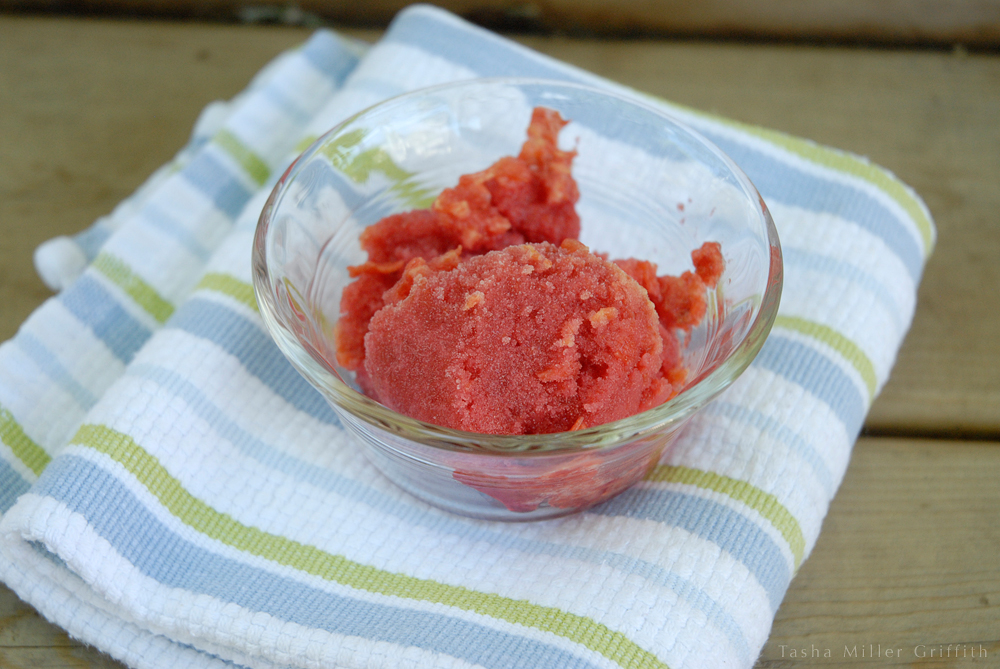
cherry sorbet tile


So last summer, if you happened to be watching this blog, you might have noticed a feature in the sidebar on all the amazing ice cream we found, or this post, which mentions Jeni’s Splendid Ice Cream.  People, this ice cream, it’s fantastic.  It’s fair to say I’ve never had better in the American style, where the milk and cream flavors predominate.  We got to go there again this summer, and as we sat in the shop, (me alternately closing my eyes, making noises of food bliss, and trying to eat faster so that Bryan wouldn’t get it all) I happened to glance over and saw this book sitting on the shelf above the freezer.  The cover said Jeni’s Splendid Ice Creams at Home.  Expletives may possibly have left my lips, followed by, “is that what I think it is?!?”  We live a long way from Ohio, people, and it’s been a while since I’ve been this excited by a book at first sight.

It turns out this book, it’s about as splendid as can be.  Not just a couple of recipes from the shop—I’m pretty sure every recipe she had at publication is in there.  It’s open source dessert: complete with sauces, candies for mixing in, toppings, sundae recipes, and the exact techniques you need to get the texture and flavor of her ice cream yourself.  Which are, have I mentioned, amazing?

It’s cherry season where we are now (in Michigan) and when we voted on which cherry dessert to make, sorbet was the winner.  I had left the book at home, but between memory and experimentation I was able to replicate a sorbet recipe.  When we got our hands on another copy, it turned out the amount of sugar that we decided was perfect, it was what Jeni already specified.  A note about the corn syrup: this is not something I would normally buy.  But if you read the book or visit the shops, it will be clear to you as it is to me that Jeni is as passionate about quality fresh ingredients, local and organic sourcing, and above all flavor and texture, as anyone could possibly be.  She is also passionate about the science of ice cream and getting the exact result she is after, and therefore I bought corn syrup.  More experimentation on my part will come later.  As a foodie friend of ours said (after eating the sweet corn and black raspberry flavor that we made), “Whatever that book says, you should do it.”  For minimum stress levels, make this the day before you want to serve it, so that you’re sure everything will have time to chill and freeze.


cherry sorbet towel


Tart Cherry Sorbet à la Jeni’s

1 quart fresh tart cherries, pitted.  If you don’t have a cherry pitter, I find the easiest way is to hold the cherry in the fingertips of both hands, and use your two thumbs to split it open and pull out the pit.  It’s ok that the cherries come out in two uneven halves, because the next step is to purée them in a food processor until fairly smooth.  It’s ok if the purée is a little bit chunky and/or still has some bits of cherry skin visible.

Combine the fruit with 3/4 cup sugar (I used natural cane sugar) and 1/3 cup light corn syrup in a medium saucepan, and bring to a simmer, stirring to dissolve the sugar.  Immediately remove from the heat, pour into a bowl, and put in the refrigerator to chill for at least two hours.

Stir in 1 tablespoon kirsch (unsweetened eau de vie distilled from cherries).  Jeni’s original recipe uses lambic or sour beer, and it’s effervescent and delicious.  Amaretto instead of kirsch would also be really, really good.

Pour the cold sorbet mixture into your ice cream freezer and spin until it’s just the consistency of very softly whipped cream, or barely pourable.  This book advises that whipping it too long while it’s freezing will result in too much air being mixed in.  Bryan and I had a big debate about what “barely pourable” means, but despite that and with two experimental batches under my belt, I actually suspect that there’s a bit of leeway here.  I also suspect that if you don’t have a ice cream maker, you could just stick the mixture in a tub in your freezer and as long as you remembered to get it out and stir it fairly frequently for a while, it would come out pretty great.  Anyway, if you are using an ice cream maker, once you think it’s frozen enough, pour it into a container and put it in the freezer until firm, at least 4 hours.  This book advises pressing a sheet of wax or parchment paper onto the surface.

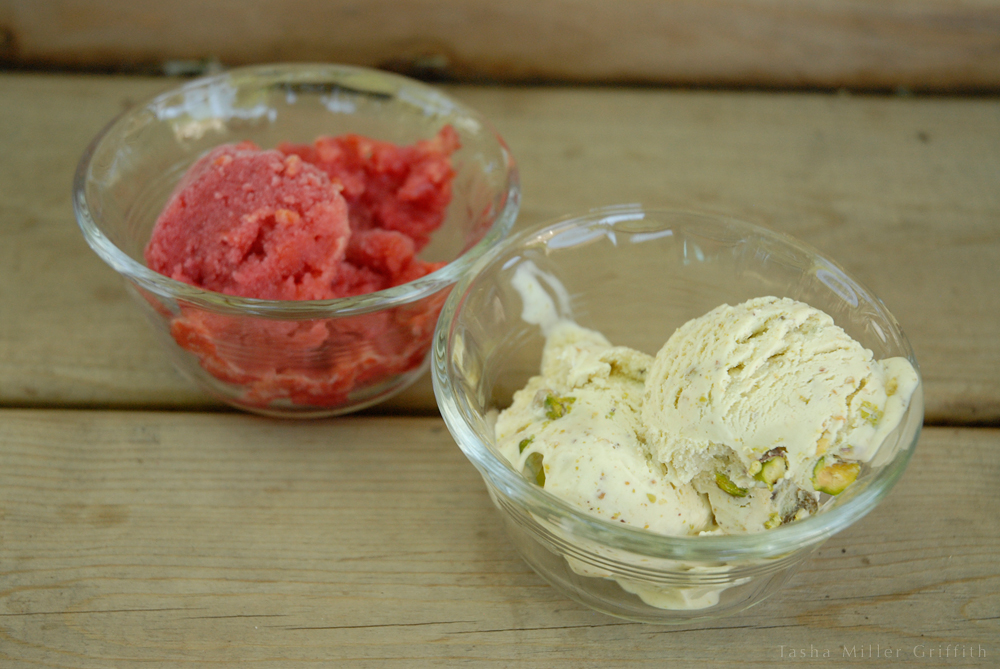
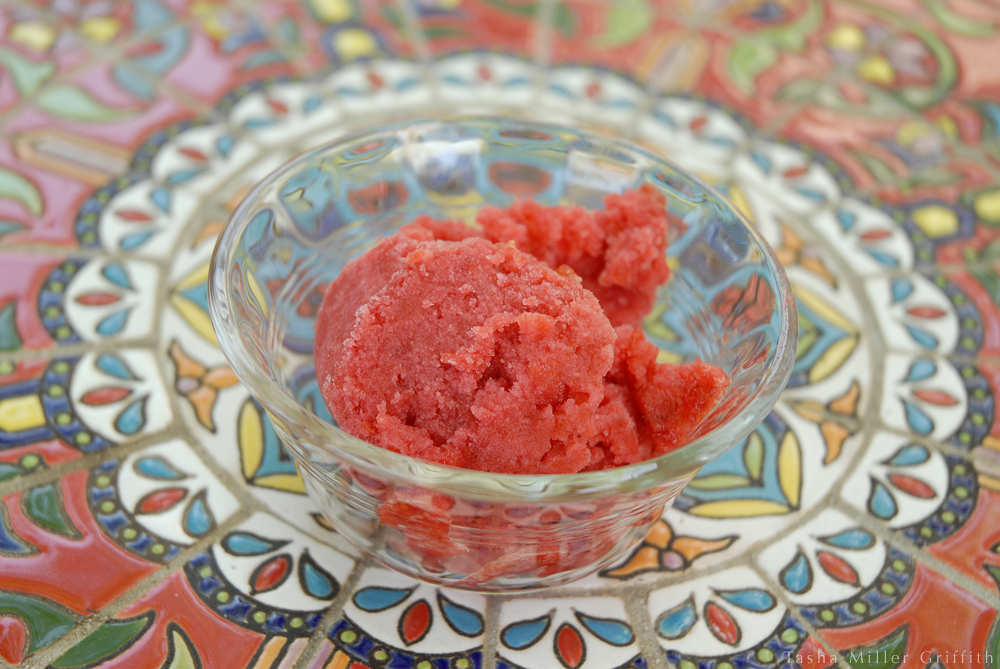
This was as good as it looks, maybe better, with amazingly intense cherry flavor.  Possibly even better eaten side by side with a creamy flavor, like the roasted pistachio.  I’m out of superlatives.  Go eat this!


cherry sorbet with pistachio


An Interview with Me on ‘So, Zo…’!


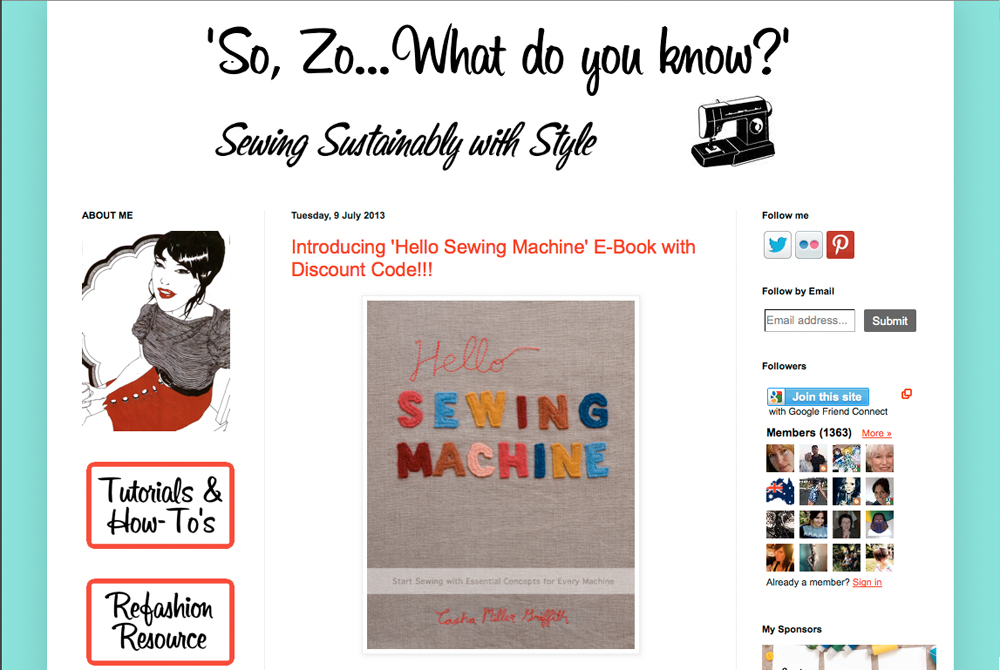
HSM on SoZo


I’ve been talking to Zoe of the lovely blog ‘So, Zo…’ about the debut of Hello Sewing Machine.  Not only did she agree to feature it, she wanted to interview me!  So if you’re curious about what inspired me to make this e-book in the first place, and of course my thoughts about saving the world, check out this post to read all about it!  Plus, there’s a discount code for you as well . . . hop on over!


Northern Arizona Corn Bread


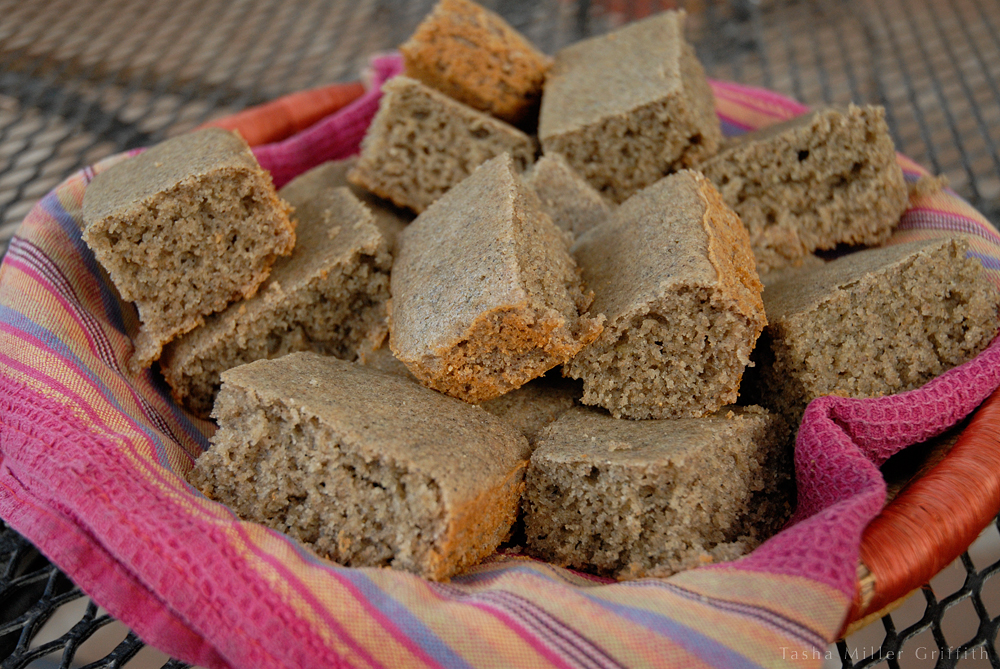
NAZ cornbread


One of the few recent food happenings I have actually gotten a photo of is this cornbread.  It’s my adaptation of a recipe that my Mom has made since I was little.  It came from one of my elementary school teachers, Ms. Bené.  We made it during our creative retreat this year, actually twice, it was a hit!  It’s a sweeter-style cornbread, what in the US we call “Northern” style.  I’ve given it a Southwestern twist as well.  It’s great with blue cornmeal, if you can find it, and pretty awesome with some chiles inside as well.


Northern Arizona Cornbread

In a large bowl, mix well:

1/2 cup (1 stick) melted butter

2/3 cup sugar

2 eggs


Stir in:

1 cup buttermilk, and 1/2 teaspoon baking soda

-or- plain milk and no soda

The buttermilk gives a nice flavor, but it’s not necessary.  Either way, you can add a dash more milk for a very moist cornbread.


Pile on top of the liquids in the bowl:

1 cup blue cornmeal (or yellow if you can’t find blue.)

1 cup whole wheat flour (you can use white or a mix if you prefer)

1/2 teaspoon salt

2 teaspoons baking powder (at sea level, at 7000′ I use 1  1/4 tsp)

Stir just until blended.


Optional: remove the stems, centers, and seeds from 3 roasted green chiles.  Cut into thin strips, and stir in just before baking.  This adds a delicious bit of spiciness, but leave out if you are serving the cornbread along with other hot foods, which it goes really well with! Chile time is coming again soon!


Scrape into a heavy baking pan.  Any size 9 x 9″ or bigger will work, the cornbread will just be a little thicker or thinner.  Bake at 350˚ F for about 20 minutes, until a toothpick inserted in the center comes out clean.  It should be a little bit brown around the edges and golden on top, although with the blue corn it can be harder to see.   Enjoy!

A Peak into Our Creative Retreat of 2013


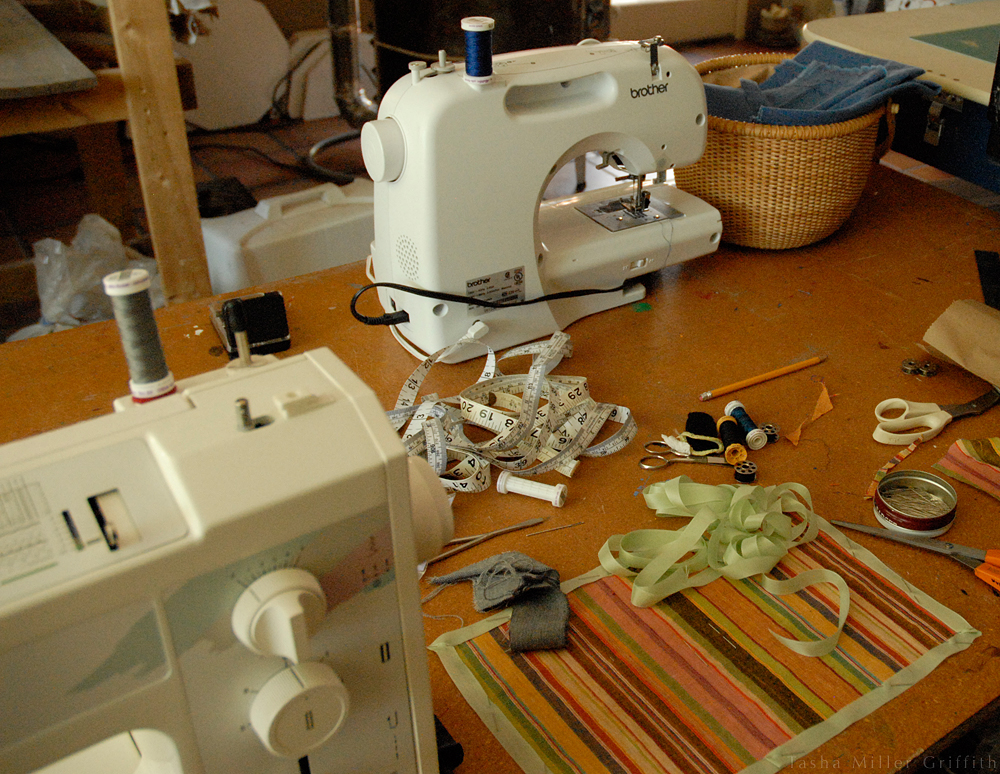
table with sewing machines


As most of you probably already know, every year a group of my family (and friends who are like family) get together for a week of creating and sharing.  Different people teach different skills and projects.  Pretty much anything that could fall under the category “fine craft” is fair game, and there’s usually something more “art” thrown in as well.  My grandmother started this idea, and at this point it’s a huge group effort.  My job is to make up the schedule, using the topics everyone votes on as favorites, communicate with the participants before the workshop week, and to try and keep things running smoothly throughout the week.  (Participants, if you are reading this, I’ll get that survey for next years’ classes done, um, soon . . . )

Every year, I leave wishing that I could live in that atmosphere of communal creative energy forever . . . and then I go home and sleep like I have rarely slept before!


miette sideThis year, there was actually quite a lot of sewing.  I kind of shoehorned in some garment/project sewing time, I was really excited about sharing sewing with some real-life students again after spending months working on Hello Sewing Machine.  One of my students went to town making drawstring bags, and three made Miette skirts!  I was SO impressed with how hard they worked and how beautifully the finished projects came out.  This is my skirt, which I made as a (definitely wearable) test, to try the pattern and see how the alterations I was thinking of would come out.


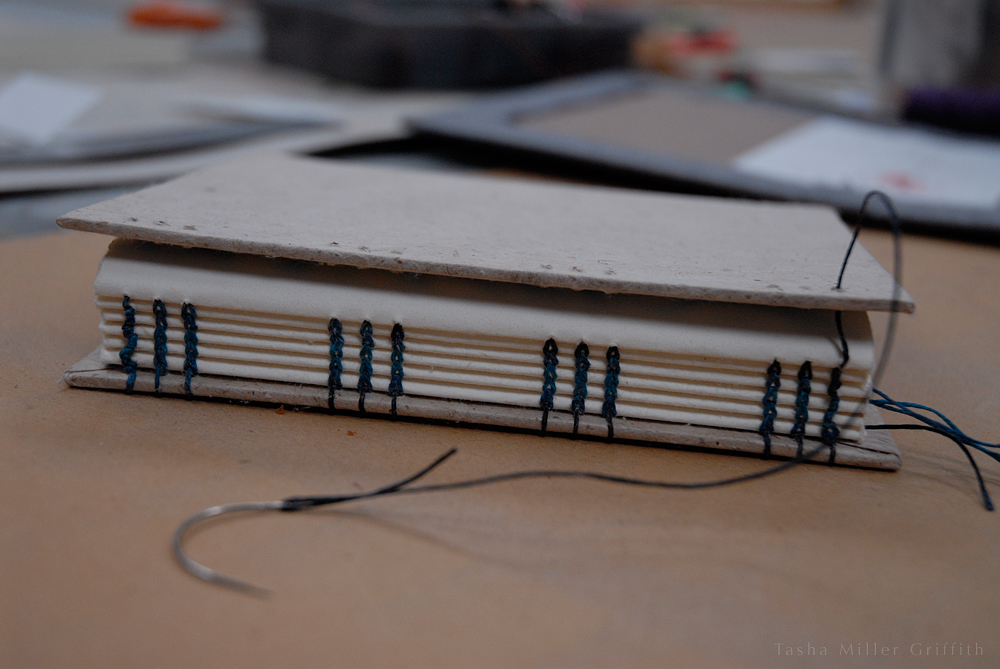
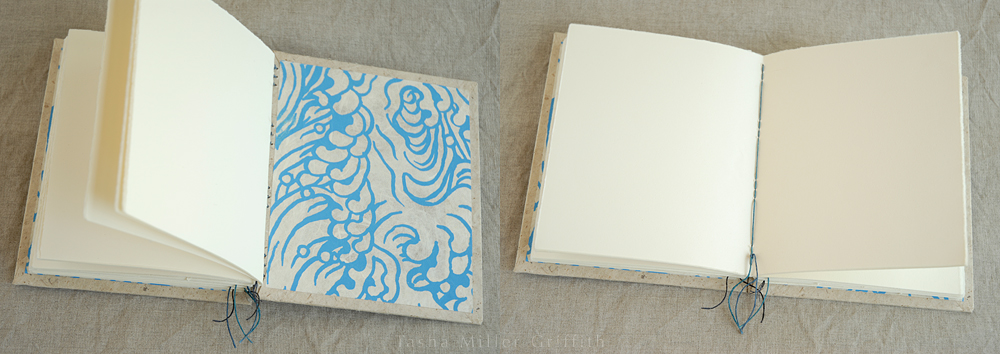
We also sewed books!  My aunt, who has been making variations of these book binding techniques for quite a while, walked us through the whole process—from cutting board and tearing paper to sewing the whole thing together.  It was horizon-opening for me to take needle and thread to paper—actually, I’m trying to keep that on the back burner of my brain, otherwise I could easily be swamped by more ideas for new things to make than I can handle.


sewing wave book


If you are interested in trying bookmaking for yourself, our teacher’s favorite resource is the book Books Without Paste or Glue by Keith A Smith.  Quite coincidentally, I came home to find there’s also an article in the latest Threads magazine (September 2013) with a rundown of very similar process to the one we used.


wave book two views


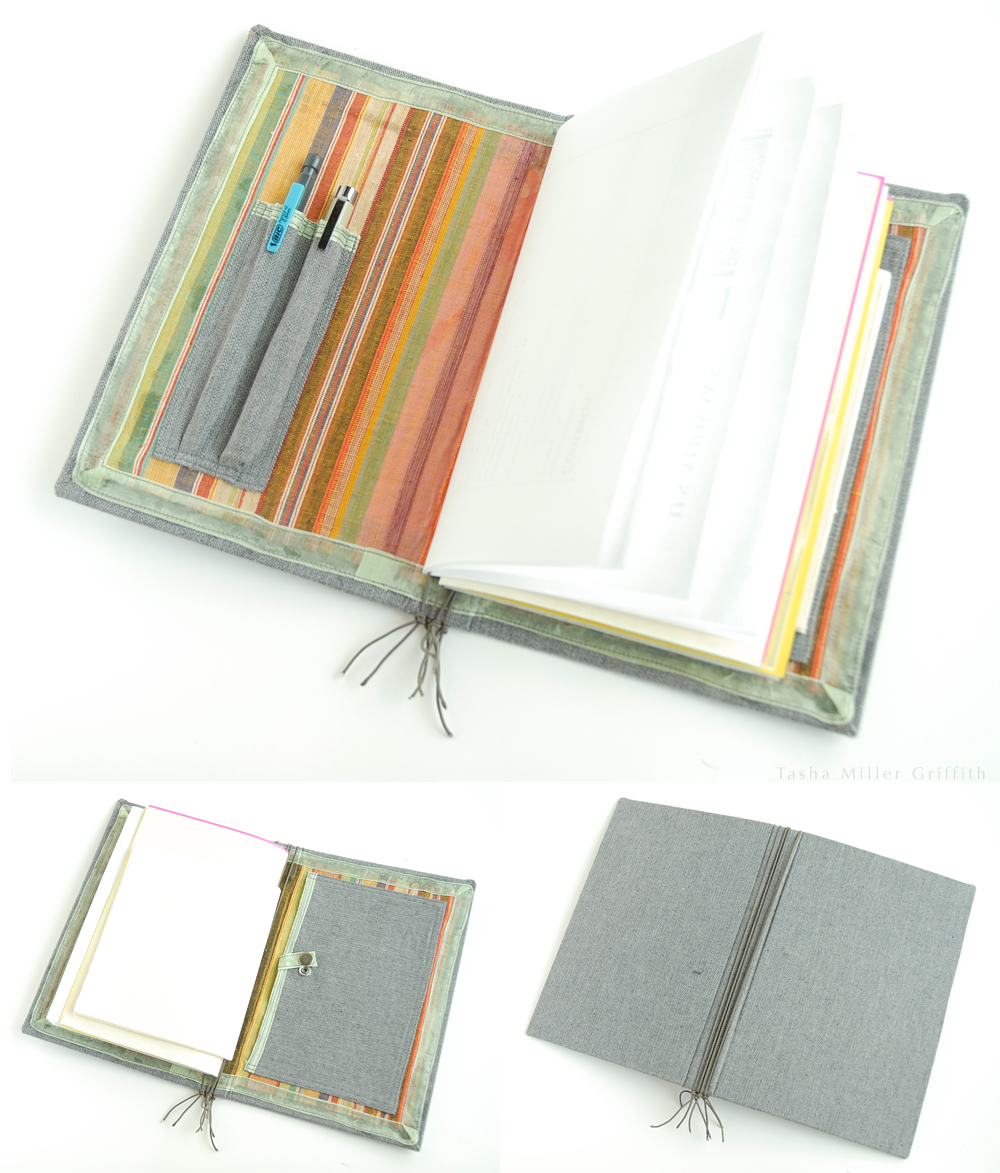
Probably my favorite thing I made all week (ok, tied with a mosaic sea turtle that I helped to make) is this travel book.  I’m soo excited about having this!  I’ve been thinking about it ever since my aunt showed me the ones she made in a workshop with Gail Rieke (check out her site to see some crazy-cool collage and amazing variations on journals).  I totally love it when “real artists” make practical things as well.


travel book


Sewing meets books, fabric meets glue, my ideas/techniques/background/expertise meet yours—that’s what really makes the magic of this week.  If you have the chance to get together with other creative types, even for just an afternoon some time, I totally encourage you to go for it!


Making Drawstring Bags—Another Option for the Top


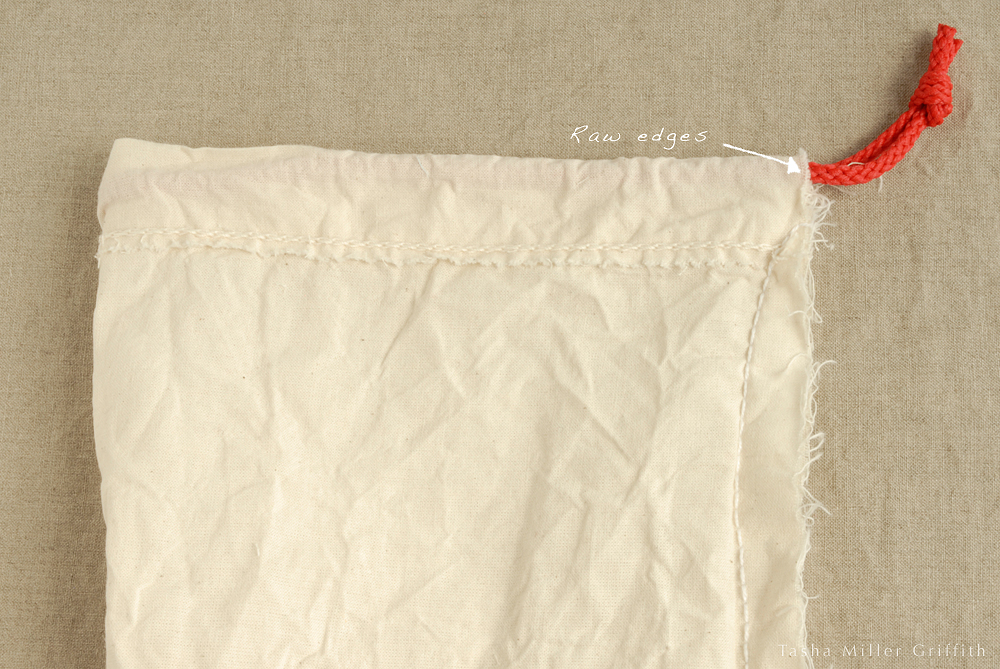
Hello!  There’s been just a little more radio silence around here lately than normal, but hey, that’s what retreats are for, right?  Today let’s jump back in with some thoughts about drawstring casings on bags.  In the second part of Hello Sewing Machine, I guide you though making a drawstring bag and leaving a “buttonhole”—a gap in the side seam for the drawstring to pull through.  That’s probably my favorite way to finish the casing, and one that helps you think about how a piece of fabric becomes a finished project, which is why I chose it for my beginner e-book.  There are lots of other options though, basically any method that encloses the raw edges and leaves a place for the drawstring will work.  One of my proofreaders asked about making a little hem on the sides of the bag instead, and I wanted to present that option here.  In my example, I’m altering a commercially made bag which doesn’t have much in the way of seam finishing, and is not going to stand the test of time.  You can also easily use this technique on DIY bags.  Click on any of the pictures to enlarge for a closer look.


drawstring bag 1


On this bag, there’s nothing to keep the raw edges from unraveling.  I’m especially concerned about the area where the drawstring emerges from the bag, because it’s likely to get a lot of wear and tear, which will cause the fabric to unravel faster.

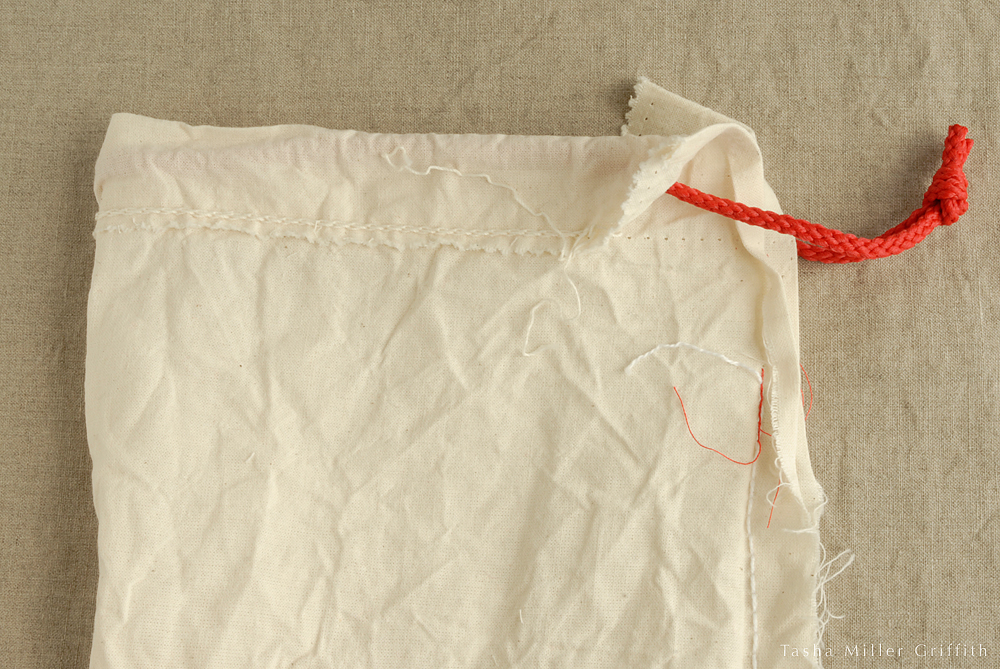
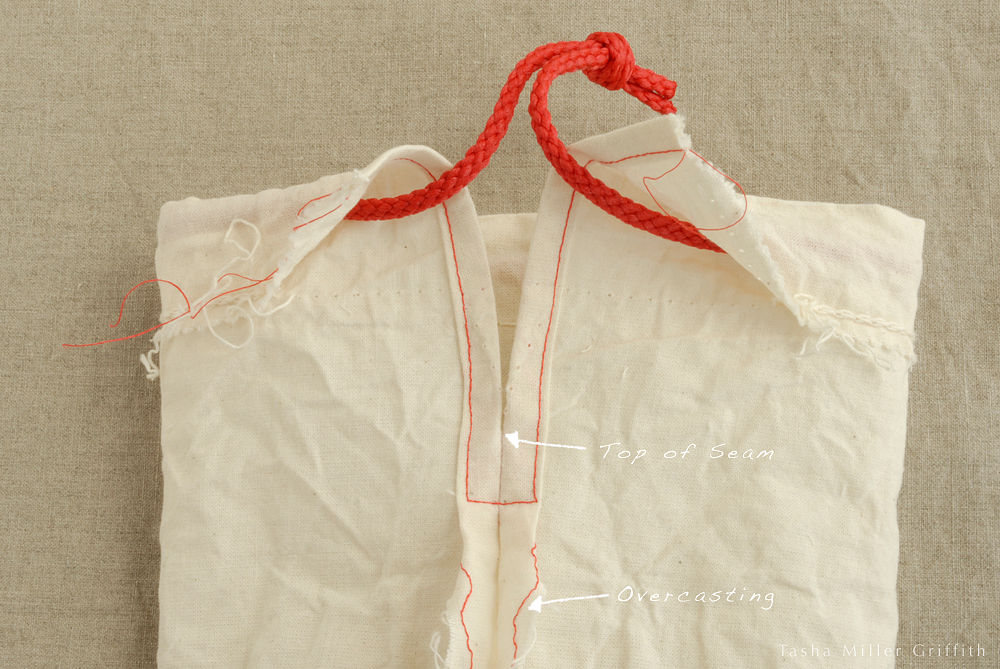
My first step was to take apart the seam stitching, down to where I wanted the seam to stop for the new finish.  I stitched up to that point and back down (with red thread) to hold all the stitching in place.  Then I took apart enough of the seam holding the casing down to let me make a narrow hem on the edges.


drawstring bag 3


If you are making your own bag, just stop sewing the side seam a little ways from the top, and back tack over the seam end.  To figure out where to stop, think about the parts of the casing you need to leave room for at the top of the bag.


drawstring bag 2


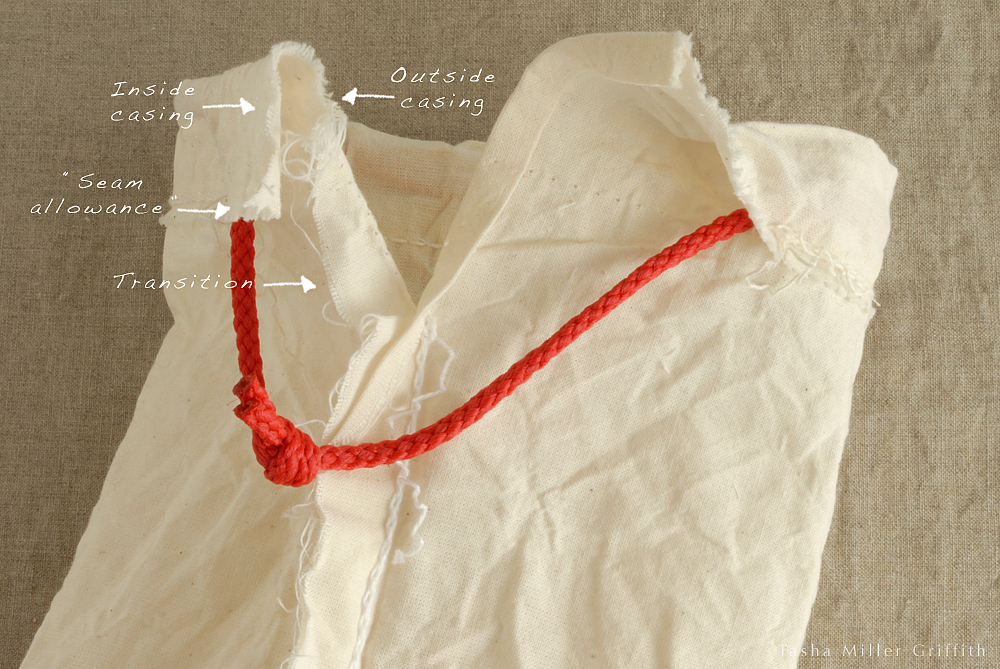
At the very top is a little extra fabric, usually turned under (or stitched over) so that it won’t unravel.  It serves the same purpose as a seam allowance.  Then you have the inside and outside of the casing (keep in mind we are looking at the bag from the inside), and you will also need a little more room (about 1-2″ or 3-5 cm) for the transition between the hemmed edges and the seam.   Once you figure out where the end of your seam will be, go ahead and overcast the seam edges, continuing a little bit past the point where your seam stops.  Then on each edge above the seam, fold over and press down 1/4″ (or .5 cm) with your iron, towards the inside of the casing.  Fold over the edge again in same direction, using your first fold as a guide, and press in place again.  Then stitch down your hemmed edges, sewing close to the edge with a straight stitch.   Sew across the seam as well, below the top where you stopped stitching, so that all the stress from opening the bag is not on just one point.


drawstring bag 4


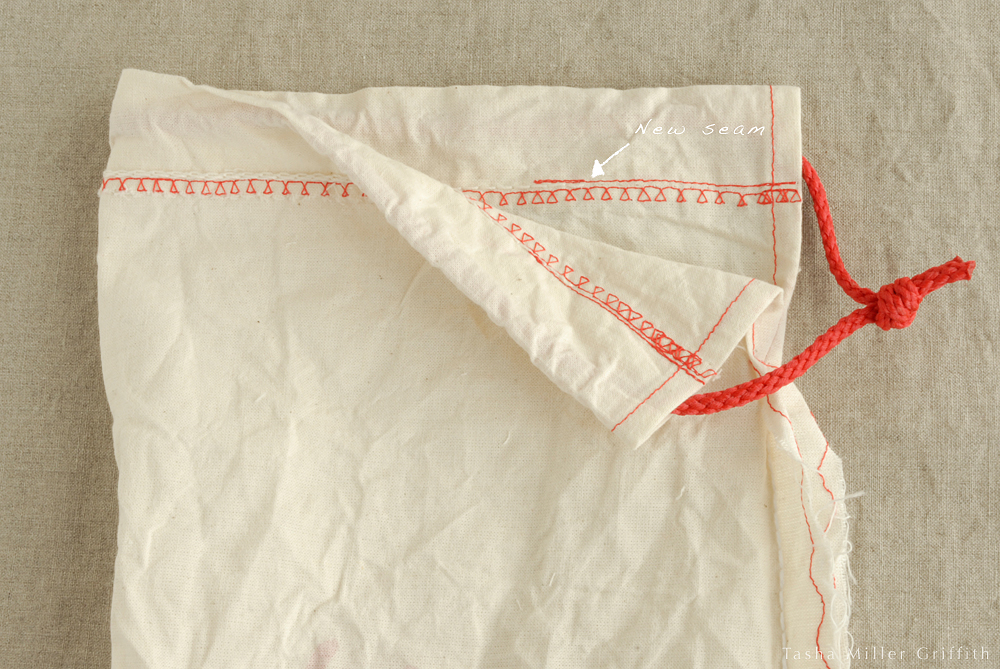
Next, sew your drawstring casing in place.  Normally I would press a small fold at the top edge towards the inside, and then fold and press down the width of the casing.  Since the casing here is already sewn in place around the rest of the bag,  I opted to replace the original stitching, overlapping it with the red thread.  Make a small back tack at each edge, since those ends won’t be held down by any other stitching later.  Then I used a mock-serger stitch to go over the small raw edge below the casing, since I don’t want it to unravel and lead to my casing pulling loose.


drawstring bag 6


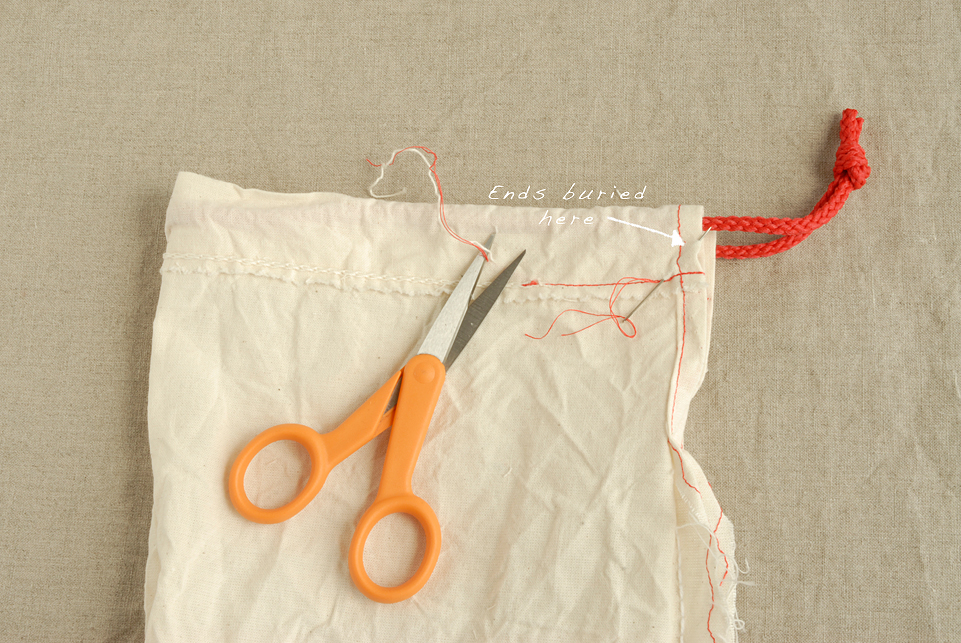
A quick note about ends: I like to bury them inside the casing or hem, or wherever there’s a double layer of fabric, so that enough thread remains to keep the stitching from pulling out, but it’s hidden.  I thread the ends on a hand-sewing needle, pull them between the fabric layers for one long stitch, and snip them off where they come out.


drawstring bag 5


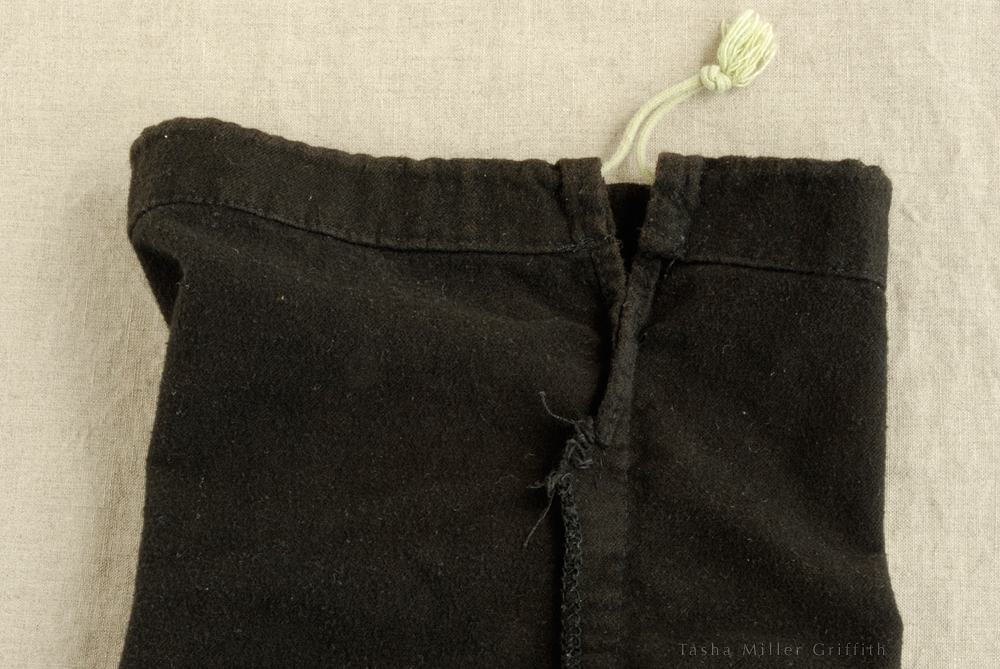
Here’s an another example of a commercially-made drawstring bag using the same concept.  I think they hemmed the sides of the drawstring first, and then caught them in the side seam, and finished the seam allowances with a serger.  As I said, you have a lot of options!


drawstring bag 13


There’s lots more thorough and friendly beginner-oriented directions for sewing seams, overcasting, using your iron to make a casing, and everything else you need to know to plan and sew a drawstring bag in my e-book, Hello Sewing Machine!

If you have other beginning questions, feel free to let me know, I’m always curious about what’s on your mind.   You can also read my answers to others’ questions in this post on Sew,Mama,Sew!


Spring in the Great Smokies—Gratuitous Pictures


great smokies spring 2013 1


Just pictures today.  This always feels a little self-indulgent to me, but as I mentioned last post, after working hard on Hello Sewing Machine, and hitting the road with Bryan’s work, I am ready for a break!  Lucky for me, one of my all-time favorite breaks in my routine is just around the corner.  Our yearly week-long creative retreat/gathering of friends and family starts tomorrow, and I am so looking forward to it.  I’ll share some pictures and projects from that as well, once I have them!

Another kind of break I cherish is spending time in the wilderness.  These pictures are from this April.  Spring at home is a quiet season, easy to overlook until you turn around and it’s summer already.  Not so in the Great Smoky Mountains National Park.  It’s like reverse fall, flowers and tress busting out all over with blooms in different colors, sizes and scents.  The week we were there it was already crowded with flower identifiers and photographers, and everyone seemed to be in a great mood, buoyed up by the coming of spring.  I hope you can take time for a little break today too.


great smokies spring 2013 2


great smokies spring 2013 5


great smokies spring 2013 3


great smokies spring 2013 4


great smokies spring 2013 6


A Simple and Delicious Way to Cook Artichokes


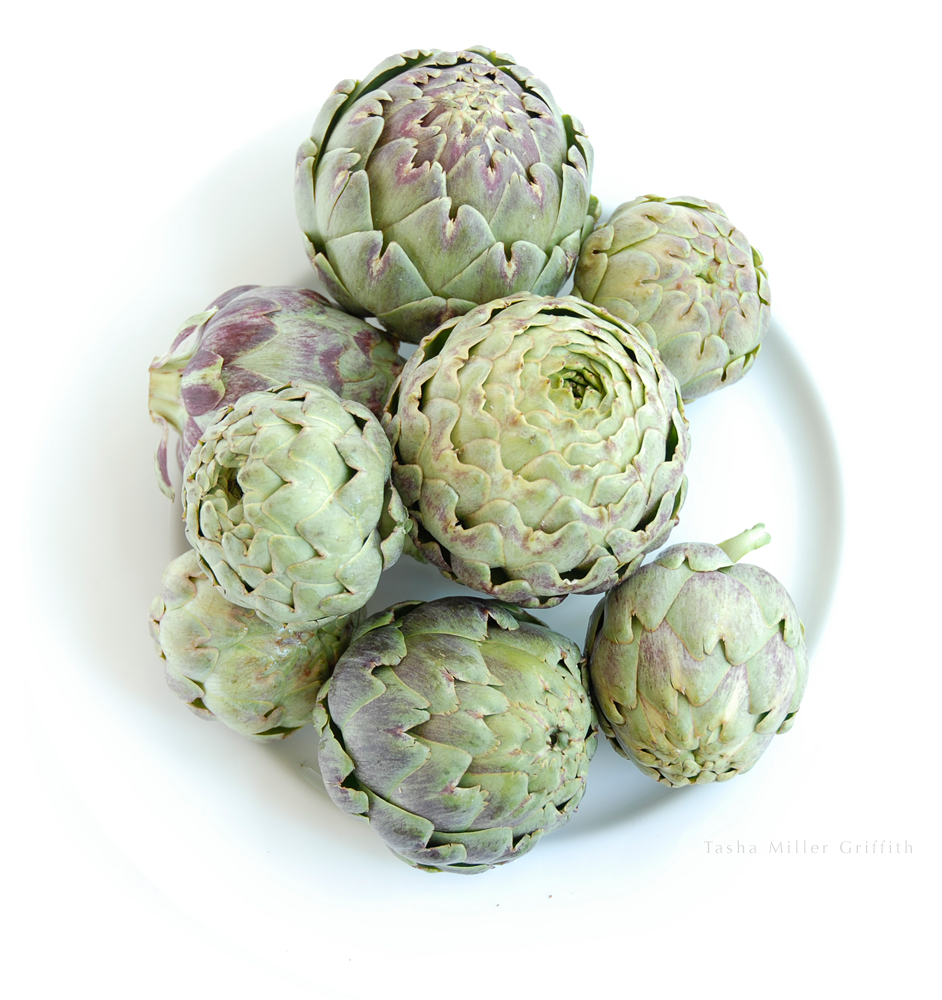
artichokes on plate


Phew—who’s ready for a break and some easy cooking?  I know I am.  As I mentioned in this post about broiled asparagus, spring came along just in time for me this year.  I’ve been busting my booty over my recently launched beginning sewing e-book for the last couple of months, so anything that tasted delicious and and fresh without a whole lot of time and effort in the kitchen was a major bonus.  We’ve eaten a lot of artichokes this spring.

I love artichokes.  That time of spring when they appear at our CSA farm store, tiny and fresh and beautiful in their variations, would get me excited whether or not I needed some easy food options.  So we’ve eaten a lot of them, practically one every day for a while there.  I also wasn’t running to the store unless absolutely necessary, so I did some experimenting with what I added and how I cooked them.  Considering how cool this spring has been in many parts of the country, I’m hoping their are still some artichokes available near you!


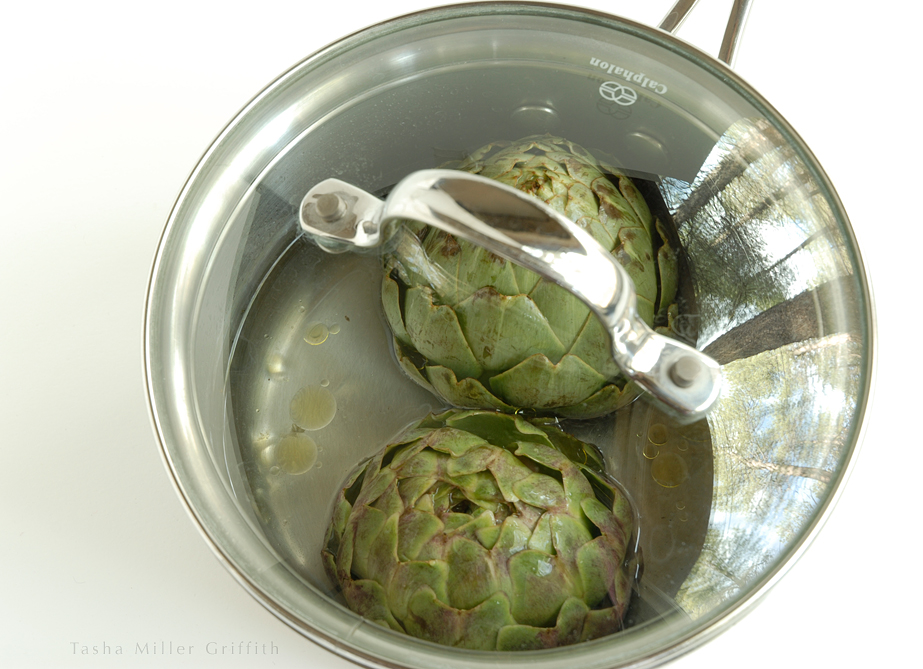
artichokes with lid


Simply Delicious Artichokes

  • Rinse the your artichokes and trim the stems flush with the bottoms.  I don’t trim any of the leaves.  Especially when they are small and fresh, I like to leave on each possible delicious morsel.  My mom cooks the stems along with the rest, but I find they are often somewhat bitter.
  • Put the artichokes in a pot in a single layer.  Use a pressure cooker if you have one (more about that below).  Either put the artichokes stem side down in the pan and add about 1/2″ of water around them, or put them in a steamer basket with either the top or the stem up and add water below.  I haven’t found any difference in how they come out with any of those methods.
  • Optional: add a drizzle of olive oil on top.  It doesn’t change the flavor very much, but it does the usual jobs of added oil: making sure that the artichokes don’t dry out and adding a little smoothness to the taste.
  • Optional: add a drizzle of lemon juice.  This doesn’t change the flavor much either, but without it the water left in the pot turns an amazing dark green color which could stain your cookware.  However, I cooked a bunch without any lemon and they came out fine.
  • Put the lid on the pot and cook until the leaves are tender.  Pull one out from somewhere in the middle, and pull the base of the leaf off with your teeth to see if it’s tender.  It’s hard to overcook them.  I knew they were taking a while to cook on my stove, but I didn’t realize how long until I started keeping track for this post.  It was anywhere from 45 minutes to an hour and a half!  So then I did what should have been obvious, at least at high altitude, got out the pressure cooker.  15 minutes later (12 minutes at high pressure plus warm-up and cool-down) I had cooked artichokes!


Ok, you knew I was going to say this, right?  But it’s no joke, artichokes are totally delicious with crème frâiche!  And possibly even more delicious with just a bit of good quality balsamic vinegar on top, so that each leaf you dip gets some of each.  If you’ve never eaten one before, there are illustrated directions here, among other places.  I may have to try a clove garlic in the water next time I make them.  But I bet the flavor of the artichokes themselves will still be my favorite part.  (By the way, they contain a chemical that can change your perception of other flavors, so beware of eating them with your best wine.)  Enjoy!


Giveaway and Sewing Tips from Me on Sew,Mama,Sew! Today


smsseamguide


I’ve been waiting to see what questions everyone would ask on Sew,Mama,Sew! this week.  I admit that I was a little nervous, kind of like when I first started teaching sewing years ago.  What if someone asked a question that I totally didn’t know the answer to?  Actually, I did get one—but it was a very specific one about piping around corners on a pillow, and since I’ve never done that, I think I can be excused.  In general though, all the questions were great!  And really relevant for beginners.

If you’re wondering about the tension on your sewing machine, or how to clean and oil it, I talked about that.  If you have trouble sewing around curves, or with slippery fabric and knits, I’ve got some tips to help you out.  If you’re not clear about when to finish fabric edges and how, I covered that.  And at the end, there are a few resources to help with fitting and selecting interfacing.  Most of the answers were excerpted or adapted from Hello Sewing Machine, where of course you’ll find a lot more answers to basic sewing questions.

Phew!  Thanks to everyone who wrote in with questions, it was great to see what readers were curious about.  You can read the answers over on Sew,Mama,Sew! today.

Plus, I’m offering both a chance to win a free copy of my new e-book, and a coupon code for a discount if you order one on Etsy, so go check it out!

decoration spool 1


Hemming Jeans Part II, with Catch Stitch Tutorial


In my last post, we went over how to shorten your jeans, or other pants, keeping the original hem intact.  We left off with the jeans the length you want them, and a little fold of fabric on the inside.  That fold may have cut and overcast edges, or not, depending on how much you needed to shorten the legs.

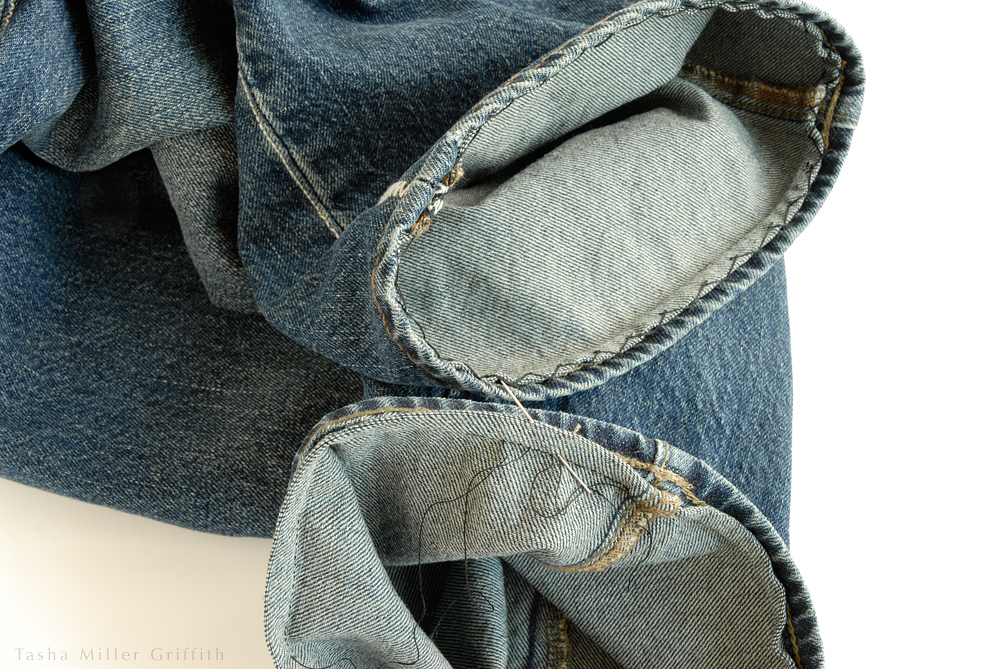
First, let’s neaten up the thread ends left from sewing the hem by hiding them, and then trimming.  Get out your hand-sewing needle and thimble.  (Any time that the fabric I’m sewing is thick or tough, I use a thimble to protect the finger I’m pushing the needle with.)  Thread your leftover tails onto the needle, and take a stitch between the layers of the fold.  If the ends are short, you may need to put the needle into the fabric, and then thread the tails onto it.  Pull the needle through, and clip the tails where they emerge.  This keeps your stitches from pulling out later, and also keeps the thread tails from showing.


Jeans hem ends


This next thing I’m going to tell you to do is not exactly industry standard.  It’s better!  If you’ve ever had your jeans hemmed at the store where you bought them, they probably sewed them in a similar way to what I showed you in the last post.  At the store, for some reason, they usually turn the fold of extra fabric up and stitch it in place.  I think that looks weird, and like the jeans have obviously been hemmed after the fact, since the bulky fold of fabric is not where you would expect it to be for the hem.  It looks much more natural if you fold the extra fabric down, where the original hem is.  Try folding it both ways and see what I mean.

So, if we turn the fabric fold down, how to keep it there?  You could stitch beside the original hem stitches by machine, either with thread that blends into the jeans fabric, or a contrasting thread you like.  However, that’s a lot of layers of denim to sew through, and it’s likely to be difficult for your machine, and cause some skipped stitches and broken thread.  There are some times when using a hand stitch really is quicker and easier, and I think this is one of them.

Then hand-sewing stitch I like for this is called a catch stitch.  It’s designed to do just what we want here, to keep two layers of fabric in place against each other.


Jeans hem catchstitch 1


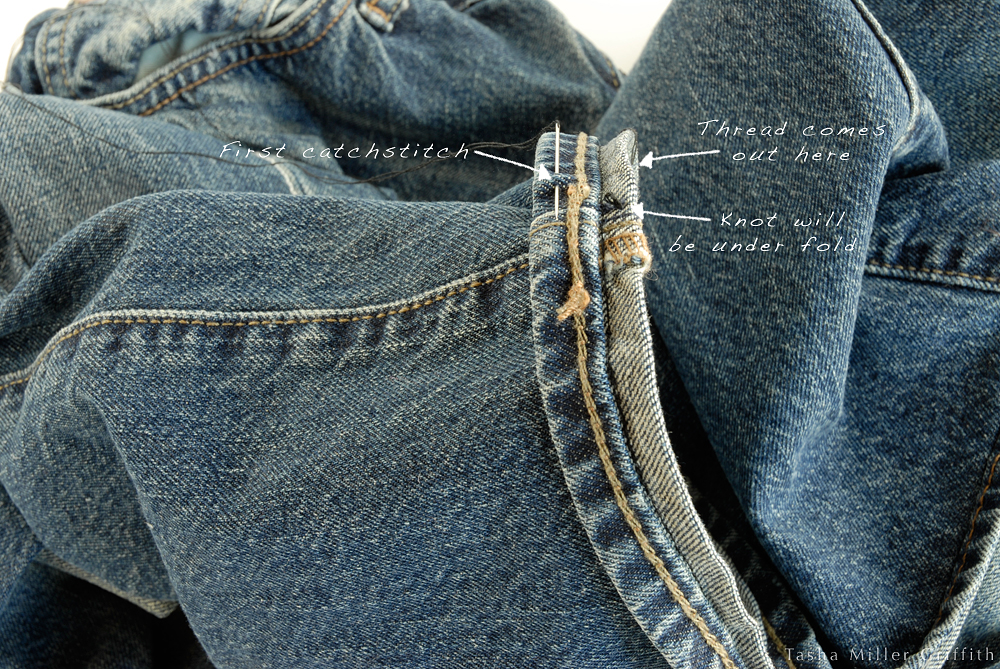
I used a doubled thread, to make the stitches a little more resistant to abrasion.  Get a piece of thread no longer than twice the length of your arm.  Thread it onto a sturdy hand sewing needle (choose one with a little more metal around the eye if you can, it will be less likely to break in the thick fabric) and knot the two thread ends together.

You want the knot to be on the inside of the fold, so stick the needle in there, and bring it out a little way away, on the outside edge of the fold.

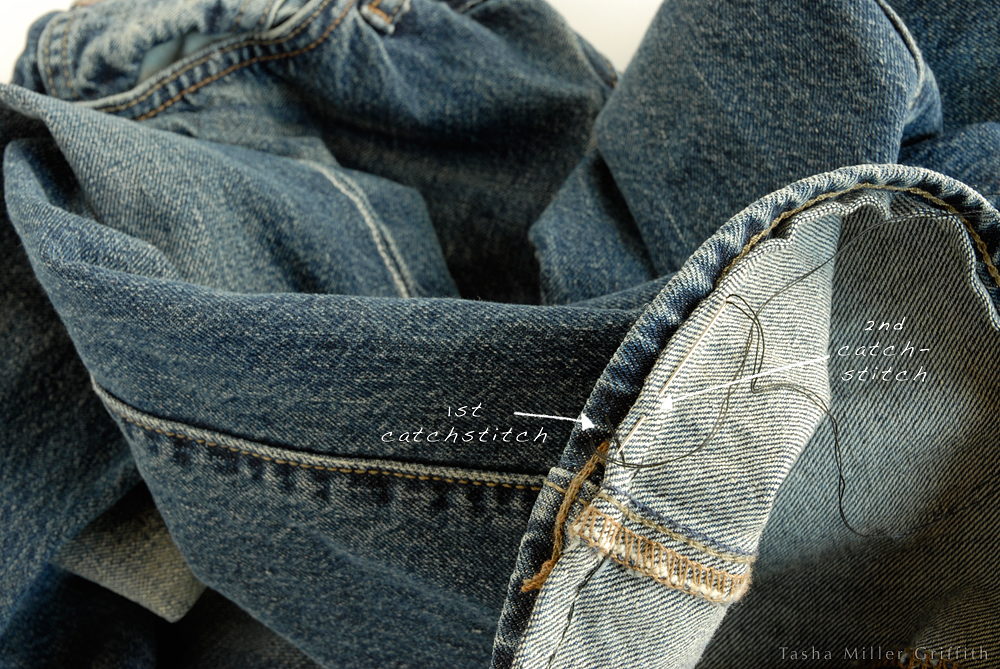
Catch stitch crosses back on itself as you sew it.  To do that, you’ll make each new stitch further along in the direction you are sewing (away from you or to your right in the pictures) but bring the needle in and out going the opposite way (towards you or to your left in the pictures).  Hopefully this will make sense as you read through the next few steps.

Make the first small stitch in the original hem.  Go through only the first layer of denim, to make it easier, and so that the stitches won’t show on the outside.


Jeans hem catchstitch 2


Make the second stitch in the fold, again taking a small stitch through just one layer.


Jeans hem catchstitch 3


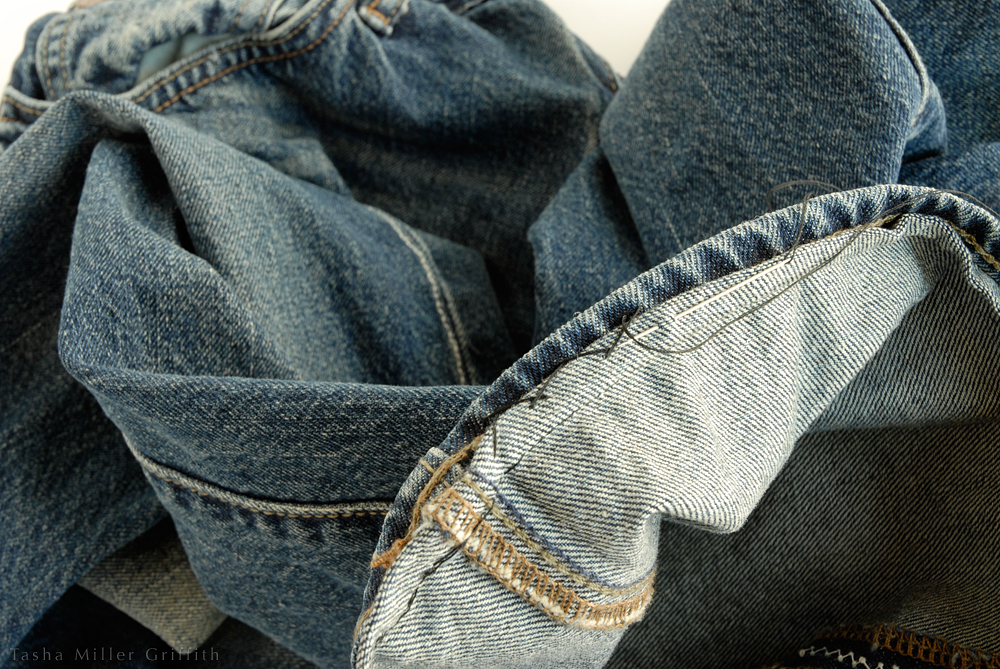
Continue alternating taking a stitch in the fabric fold and one in the original hem.  Make each stitch towards you/to the left, then move a little bit away from you/to the right, and to the opposite side to take the next stitch.

When you get to the seams, you may want to make the stitches smaller and/or closer together, since those areas are thicker and more likely to flip up.

What if you run out of thread?  No problem.


Jeans hem backstitch


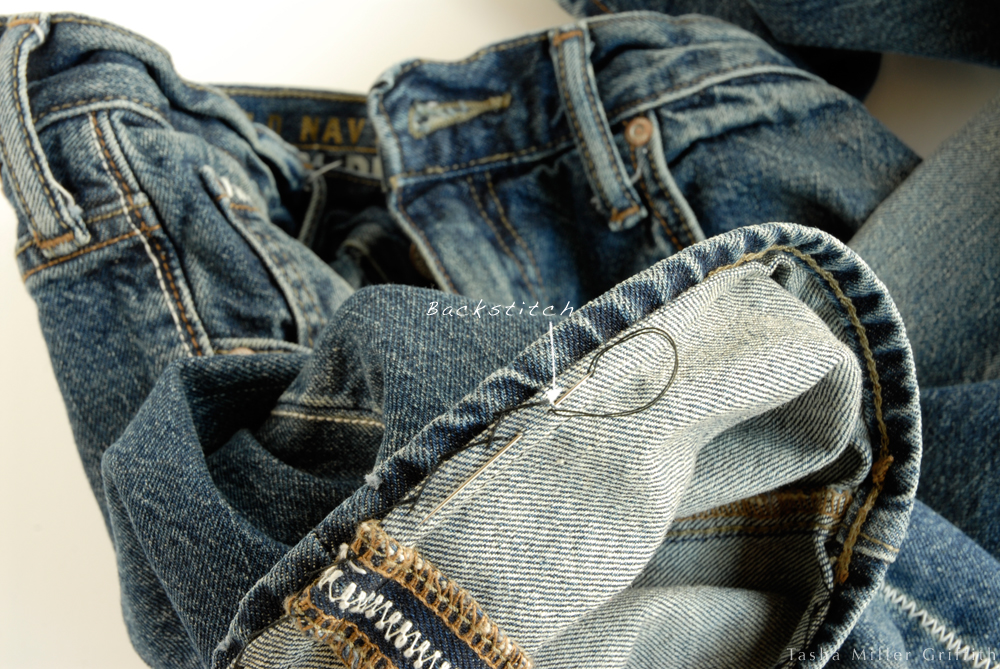
When you get near the end of the thread, secure it by taking two small backstitches a little way apart.  It’s fine to only go through one layer of fabric, and the stitches can be tiny, as long as they loop back on themselves.

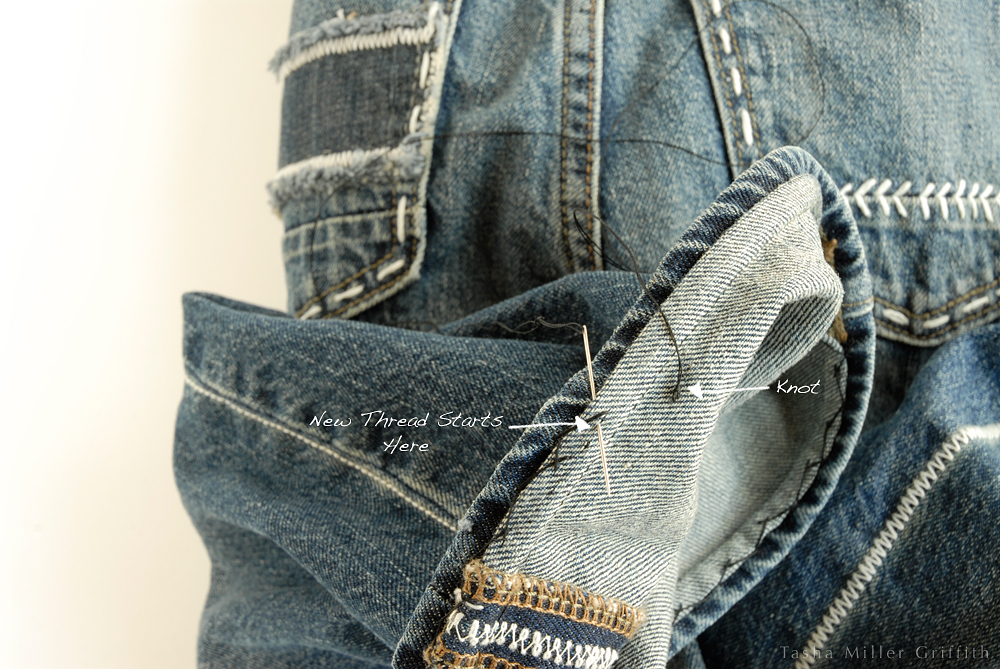
Bring the needle out a little way from the second backstitch, and snip off the thread where it emerges.  Get a new length of thread, and tie a knot in it.  Stick the needle inside the fold (to hide the knot again), and bring it out where you left off stitching.  Keep stitching around the hem until you reach the place where you started.


Jeans hem new thread


That’s about it!  Backstitch again when you get to the end, to secure the thread.  Bury the ends and clip them off.

Enjoy your new hemmed pants!