Travel tip – Smooth Wrinkles with Water


We are traveling today (I’m actually typing this in the Phoenix airport while waiting to fly home for about a week!) so I thought a tip you can use while traveling would be appropriate.

Have you ever noticed that a little water can make the most stubborn wrinkles relax?  When I’m at home, I usually spray on some water, and then use the iron to dry and flatten the wrinkled area.  When we’re on the road, I may or may not have an iron, or for that matter, a spray bottle.  But I can use a wet washcloth to dab on some water, or even smear it on with my fingers, then use my fingers to smooth and flatten the wrinkled part, and let it dry.  The water relaxes the fibers and gives the fabric some extra weight, making it easier to shape.

You can also use the same principle for clothes that are air-drying.  Smooth and shape the fabric while it’s wet, and you can often skip the ironing.

Happy travels!

Another Way to Rip Seams


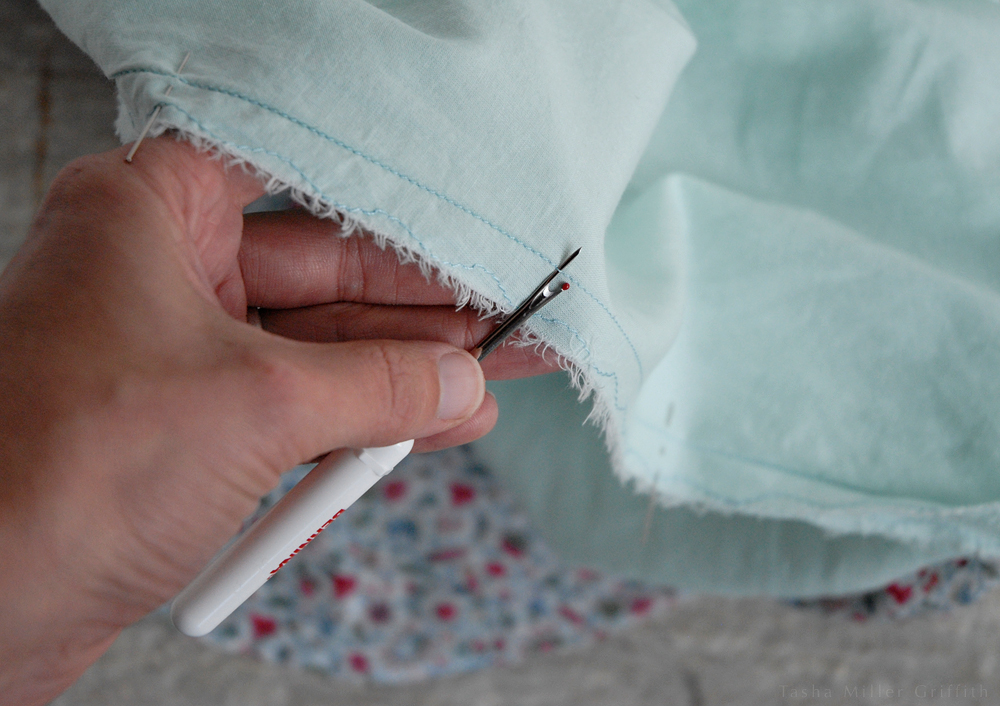
pocket seam ripping 1


If you’re going to make anything, it’s fairly certain that you’ll have to un-make and re-make part of it at some point.  It’s not bad, it’s just part of the process.  In sewing, this involves seam ripping.  It’s an essential skill for makers, and especially those who are interested in refashioning, repairing, upcycling, etc.

Although some folks rip stitches fast and furious with razor blades, I have always stuck to my trusty seam ripper.  Recently I’ve been using it in a slightly different way on straight and zig-zag seams, with really good results.
seam ripping 2014 0


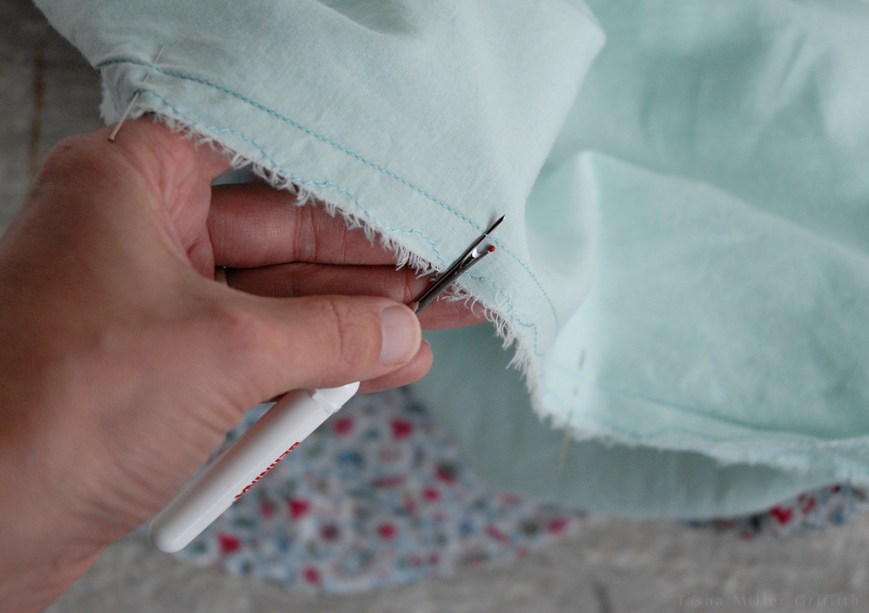
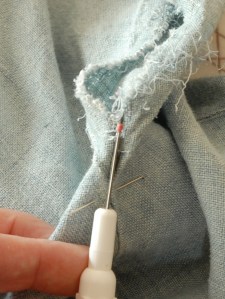
The photo at left shows classic seam-ripper technique.  Slide the seam ripper into the seam, use the pointed part to pick up a stitch or two, and slide them into the blade in the middle of the ripper to cut.  Once you have a couple of stitches cut, pull the seam open and you will be able to see and cut more without harming the fabric.
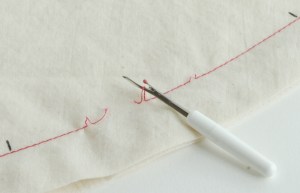


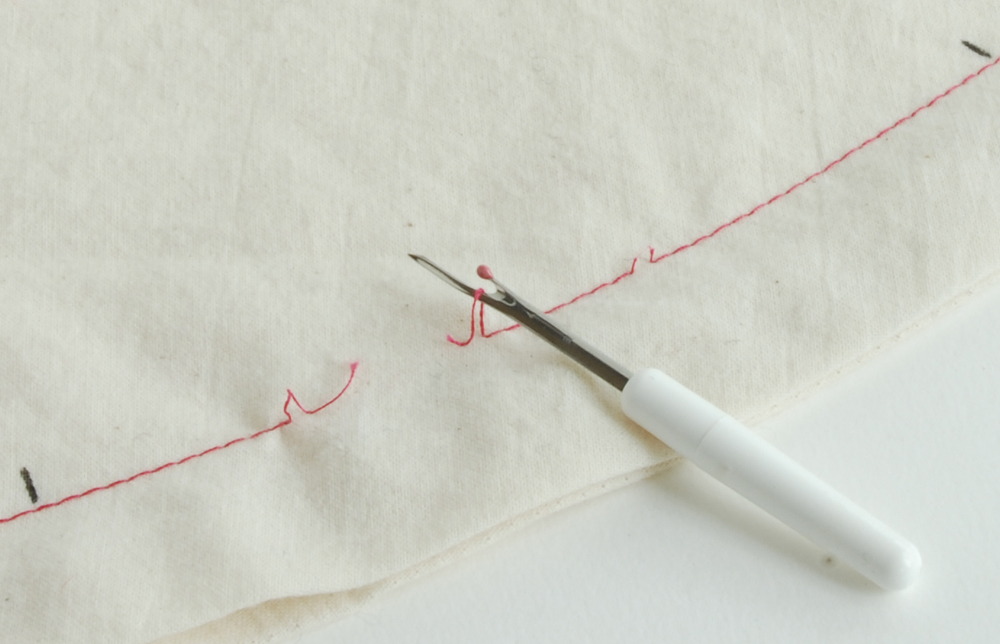
seam ripping 2014 1For this technique though, everything stays flat, which is especially nice if you have a delicate fabric or it’s hard to see the stitches in the seam.  Use the ripper to cut a stitch, and then another one 1 -2 inches away, creating a small thread section with cut ends.  Then use the long prong of the ripper to pull a few stitches up and out of the back thread without cutting them.  You may need to do this one by one if the stitches are small.  The object is to get a little tail that’s long enough to hang onto with your fingers.


Once you get a tail, grab it with one hand, hold the fabric with the other, and pull the the thread section out in one go!  Pulling close to the plane of the fabric, instead of straight up, will make it easier.
 

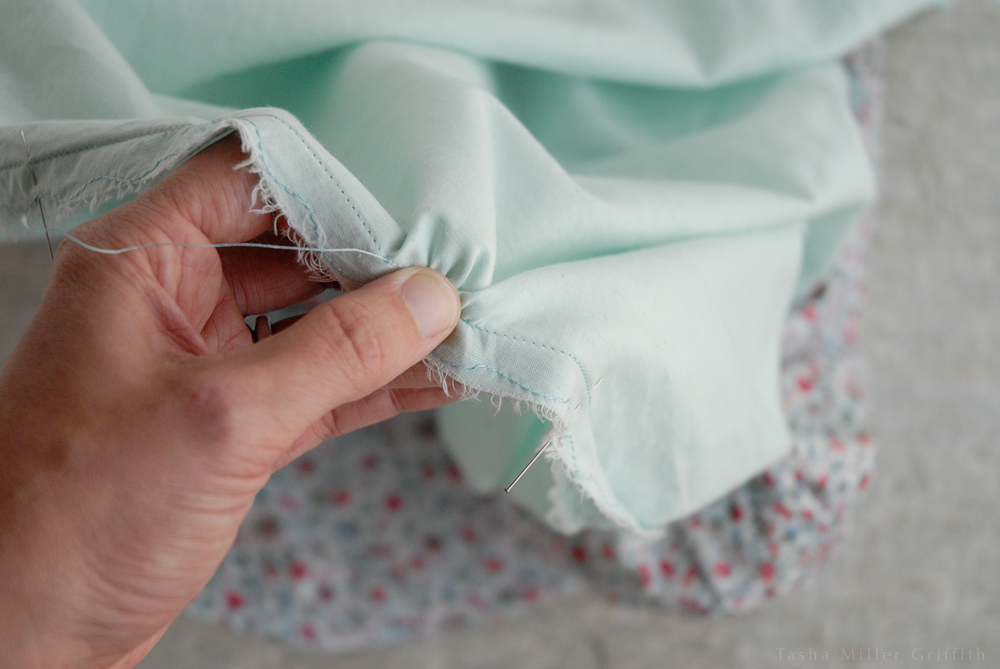
pocket seam ripping 3


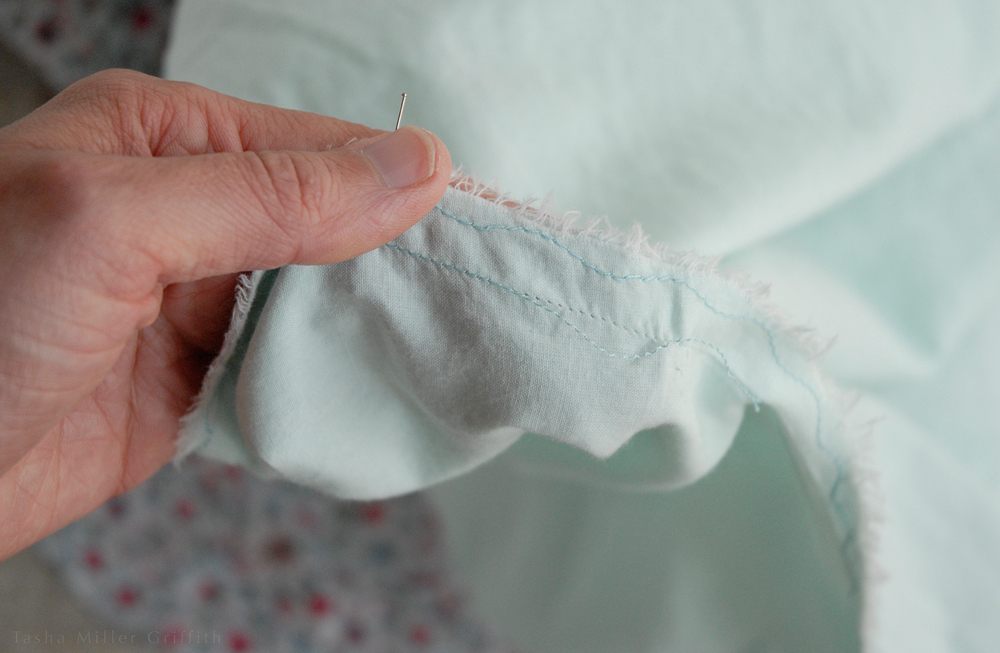
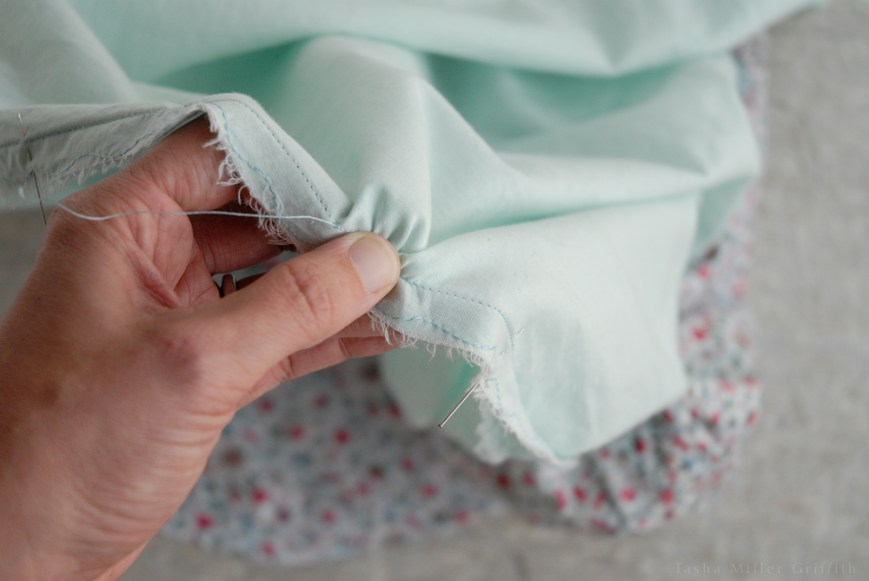
If you flip the fabric to the back you’ll see that the stitches on the other side, which were held in place by the ones you just pulled out, are now free.  All you have to do is cut a stitch a little way down the seam and you can use the free thread to pull out another section.  Every time you pull out a section, flip the fabric over and you’ll find a tail ready to pull out the next section.  I find this quite fast, and it also creates fewer tiny thread ends that you’ll have to clean up.
 

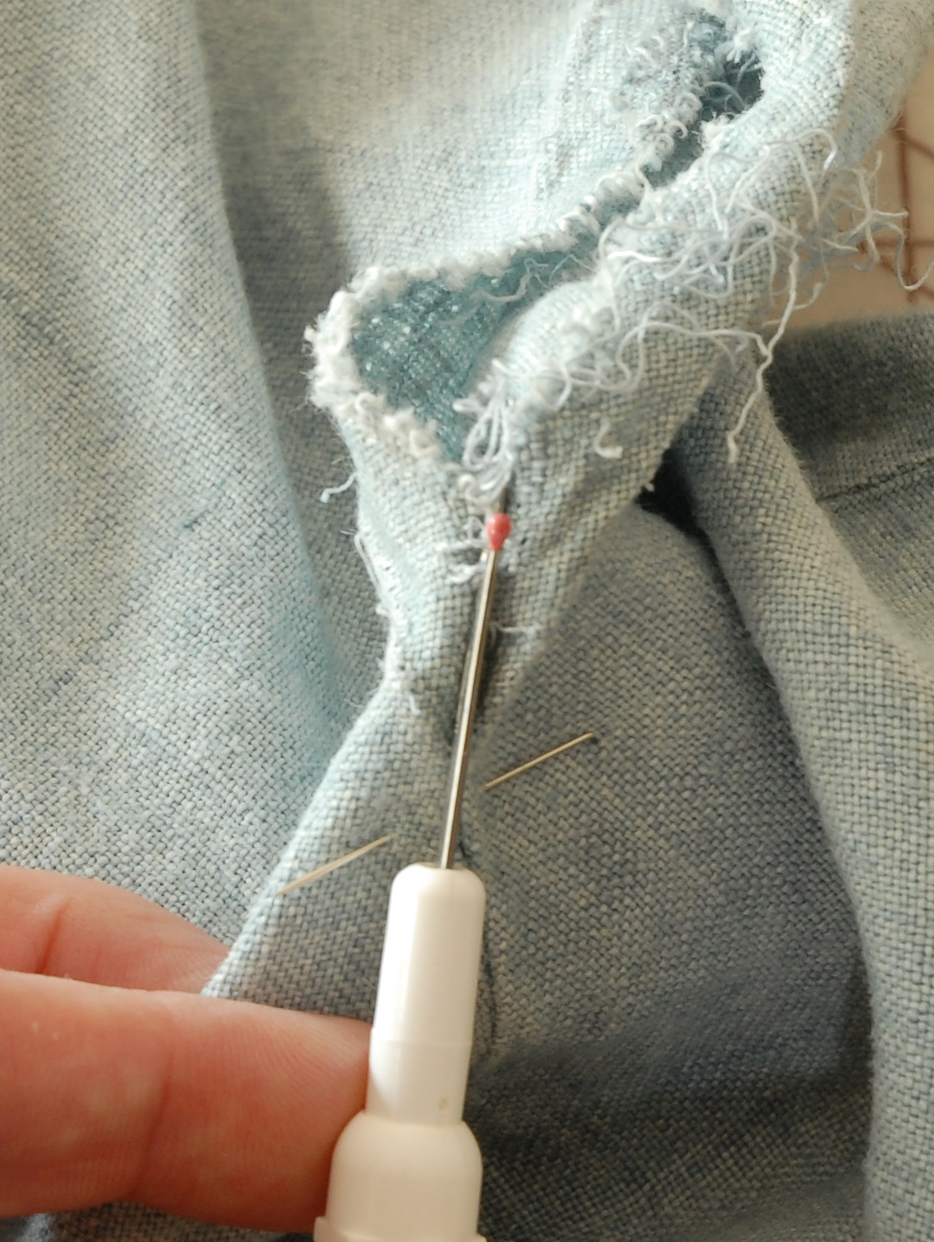
pocket seam ripping 4


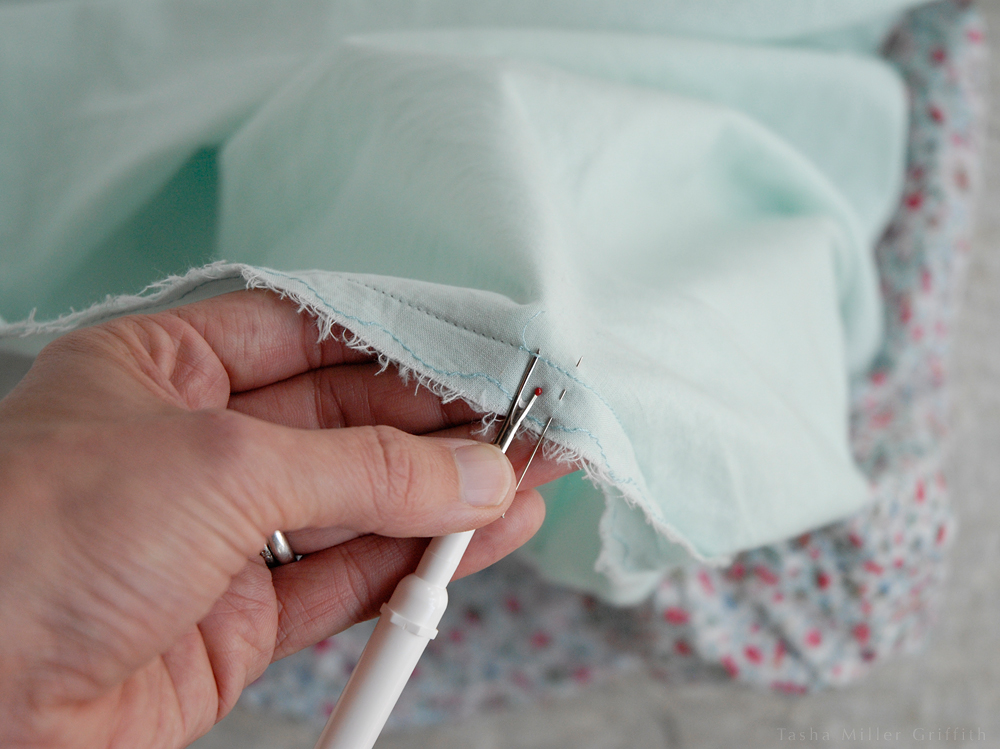
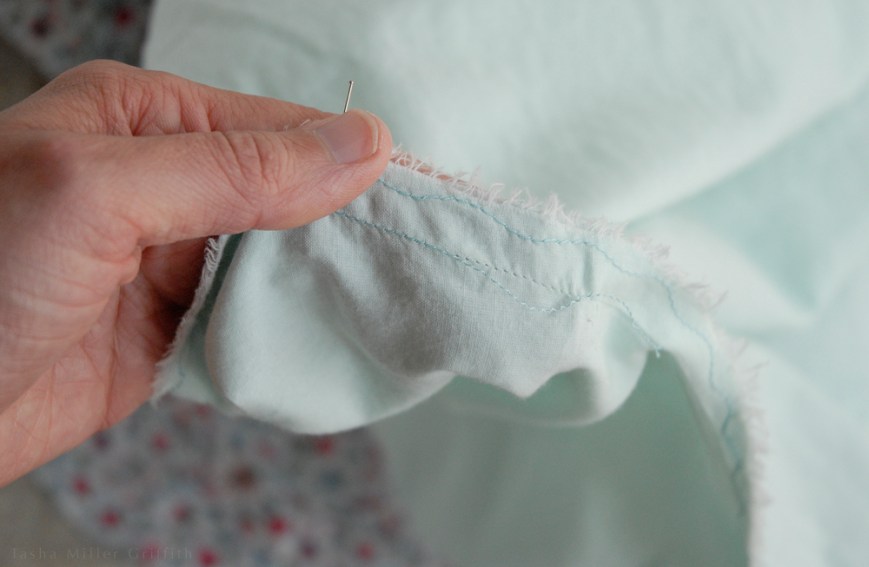
If you are ripping out a specific part of a seam, such as between the pins here, you may want to have a longer thread to work with when you get to your stopping point, so you can tie a knot to hold it in place.  In this case, pull up the last inch or two of stitches without cutting either side.  It may help to turn the seam ripper so the stitches don’t slide into the cutting part.  Once a stitch is loosened, you can also use your fingers, the whole handle of the seam ripper, or another tool to pull the stitches up without cutting them.
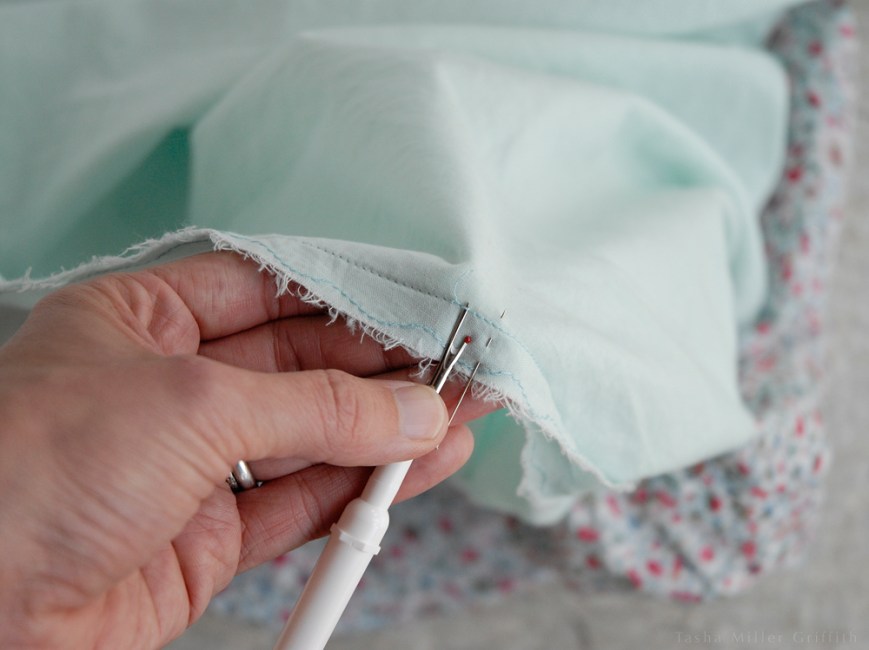
 

pocket seam ripping 5


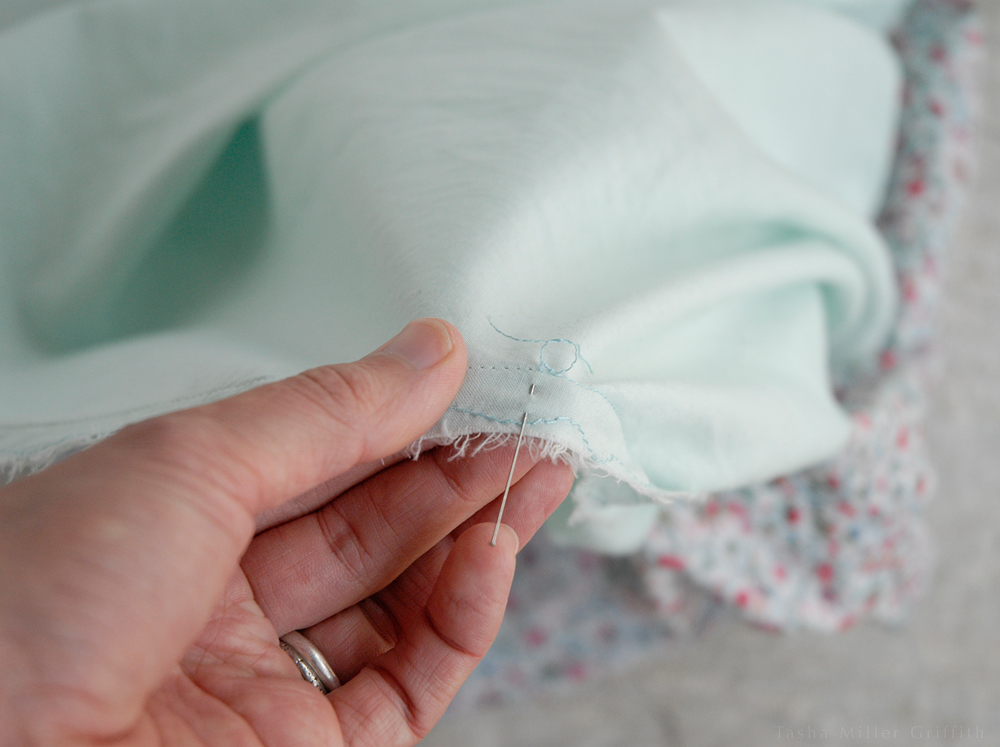
When you get to the new end of the seam, pull on the thread to get the last stitch from the back side to pop through onto your side.  Slide the point of the seam ripper into this new stitch and pull it up so that both ends are on the same side.

Tie a knot or use backstitch, and bury the ends if they’ll show.
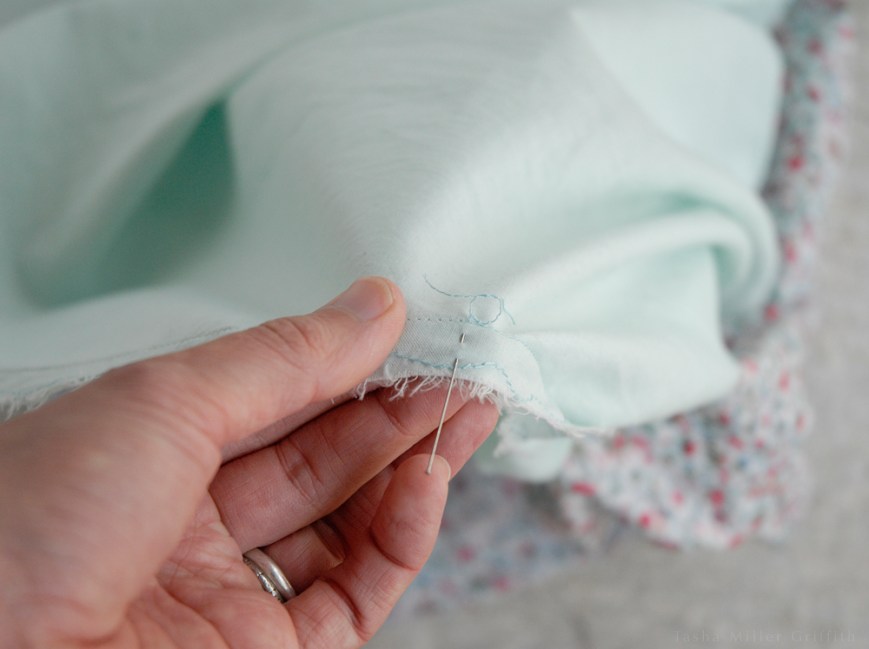
 

pocket seam ripping 6


Again, this last part is only necessary if the end of the old seam won’t be crossed by or stitched over with a new seam, and so you need to secure the end.

This way of seam ripping works great on zig-zag seams, too, although it won’t work with seams where the thread crosses back over itself.  Sometimes I’ll get lucky and pull the right thread on serged seams, but I don’t have a sure-fire formula for those yet.  Maybe you do?

I’m sure that others use this technique, I just discovered it recently and I’ve been using it all the time …

 

Recipe Sketch – Carrot and Raisin Salad


Carrot & raisin salad 2


For this recipe, I wanted to give a nod to the fact that we don’t really follow recipes.  At least I don’t.  At least not usually.  You know what I mean?  I read one and think, “That’s a good idea!” and I may even refer back to it while I’m cooking, but I’m not using any of the exact quantities specified, I am leaving things out, and I am putting in things that aren’t called for.

Of course, there are also the nights when I just want to settle down and cook something from exact notes, especially my own exact notes, about what to put in and how much.

But, I think being more experimental, at least some of the time, is a great way to learn about cooking, about flavors, and about what you like.  And some recipes, like this one, seem made for a non-measuring preparation every time, even after I have figured out just how I like them.

So, at least some of the time, I’m going to post in the form of a recipe “sketch” that acknowledges the fact that many of us are going to make our own version anyway, as well we should.


Carrot & raisin salad 1


Recipe Sketch – Carrot and Raisin Salad

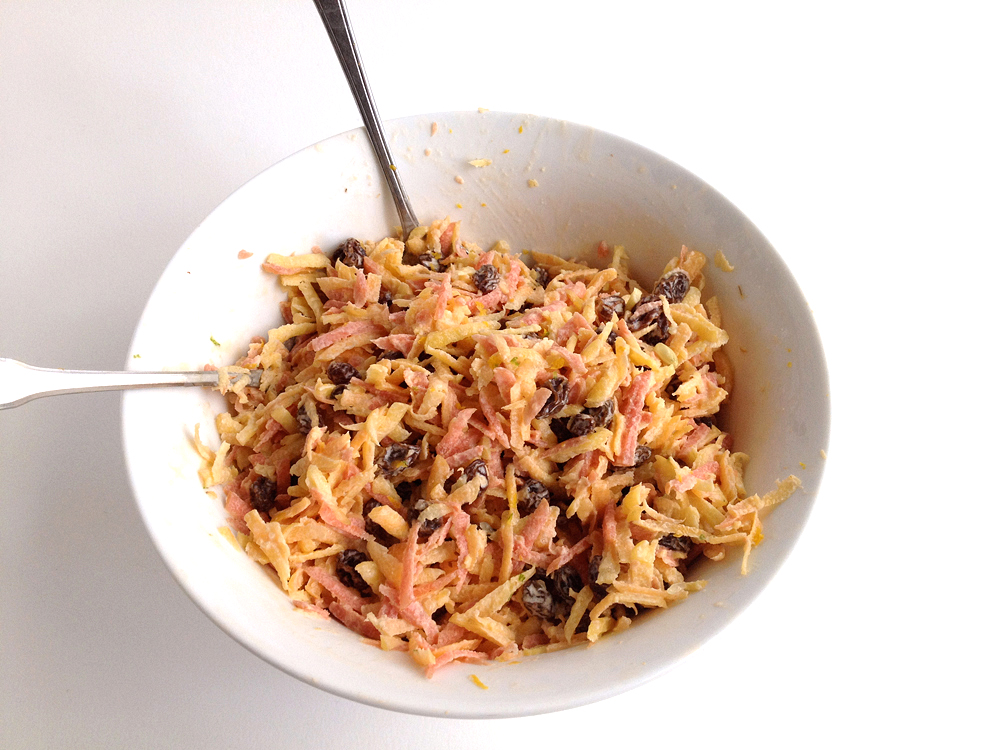
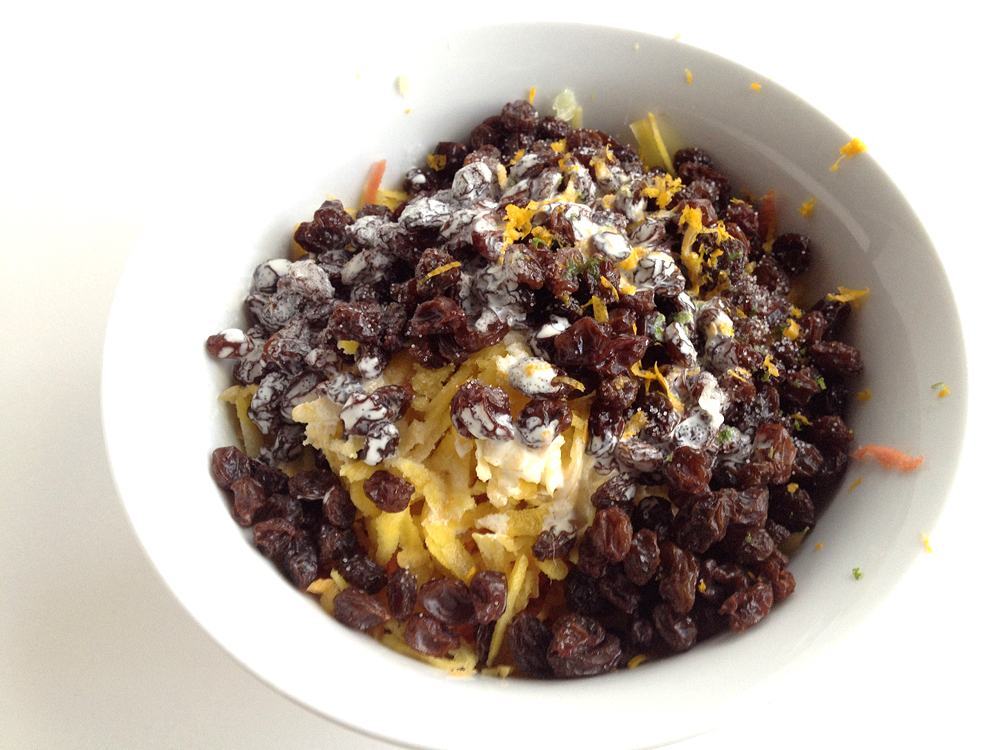
Grate some carrots, on the biggest holes in your grater.  These make up most of the volume of the salad, so grate as many as you need for about as much salad as you want.

Add some raisins.  Pour some in and mix to see if you think it’s enough.

Grate in citrus zest.  I like lime the best, but Meyer lemon is also lovely.  Squeeze on a little juice of the same citrus.

Salt.  It seems weird, but a small (not tiny) amount of salt is totally what makes this come together.

That and heavy whipping cream.  Actually, mixing the cream with crème fraîche is even better.  I like to add just enough to make a little liquidy dressing for the carrots and raisins.

Mix, taste and adjust.

I love these flavors!  A little salty, a little sweet, a lot of fresh.  Also, a fantastic way to use up carrots from your fridge right before you leave town.  And a good use of multicolored carrots.  Sometimes I think I buy heirloom vegetables just for the colors.

So what about you?  Do you “follow” recipes?


On the Road Again

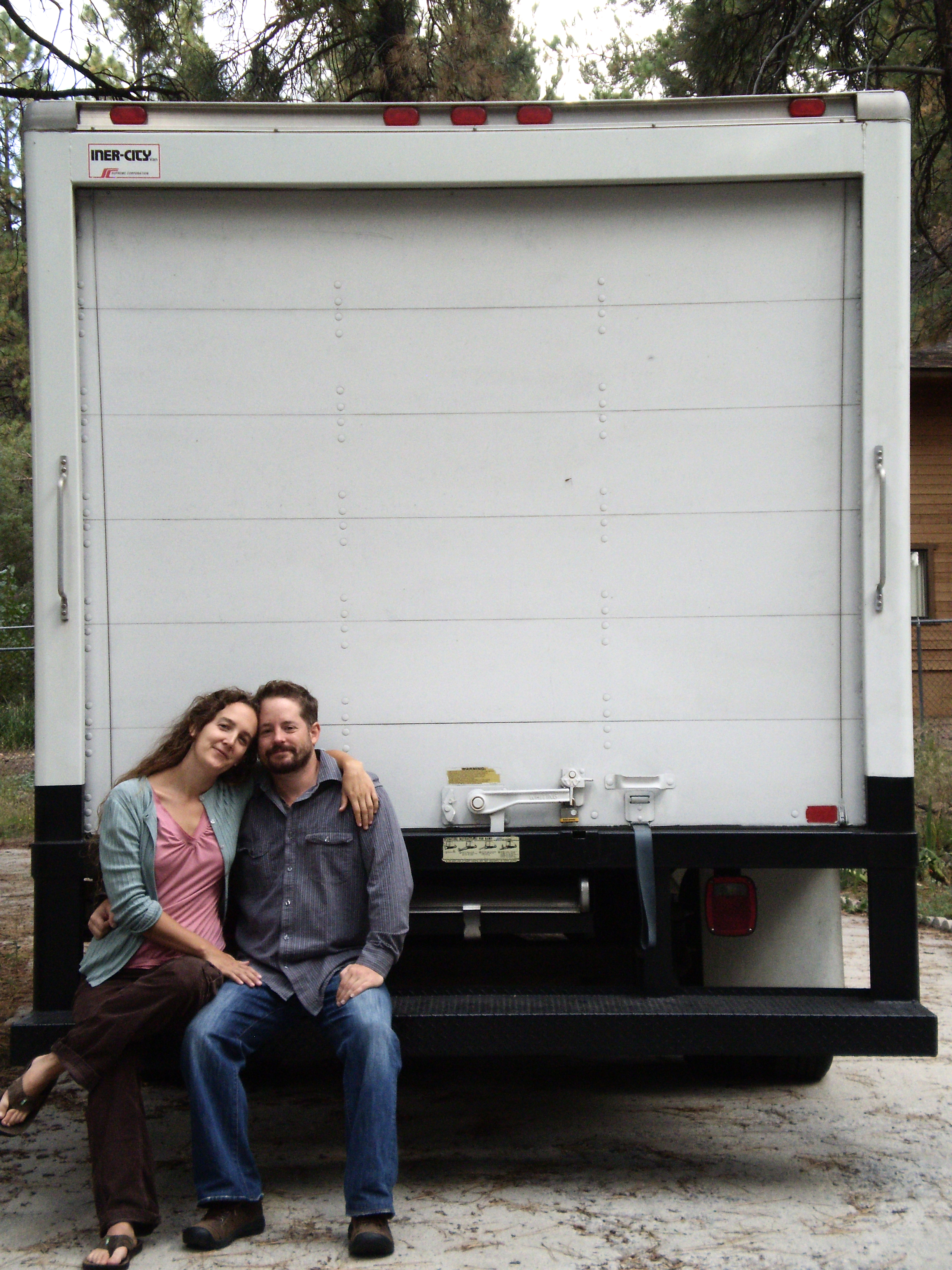
Today we hit the road for Texas, on the first part of our summer art show tour.  For those of you who don’t yet know, my husband Bryan makes a living selling his fine art photographs at juried art shows and gallery exhibits around the country.  In this very truck (stuffed mostly with photo, framing, and display supplies, with personal effects in the nooks and crannies) we make our way across America every summer.

It’s a crazy thing, full of much more hard work and being dirty, and much less glamor than people usually imagine when they’re in our booth.  But it does have its upsides: visiting friends around the country, spending time outside, seeing new places, and the freedoms of being self-employed.  (Freedom provided that you show up to set up your stuff at exactly the right place and time!)

My goal is for this blog to keep going no matter where we are.  While I won’t promise that an occasional urban adventure story or photo from the road will not creep in, I do have photos from my studio on my trusty laptop and I want to continue to bring you projects and tips for a handmade life, even a mobile one!

If you’re curious, I can also add a “Where am I?” widget to the sidebar, so you guys can see where I’m posting from as the summer goes on.

Happy trails to all!

Me-Made-May 2012!

What is that, you ask?  It’s a fabulous idea from Zoe of the blog ‘So, Zo…’ wherein participants make a pledge to wear one or more self-made garments every day for the month of May, and/or to interpret the challenge in their own way.


What I really love about it is the idea of spending a month thinking about what we make and wear and why.  Does what you wear suit your personality and what you want to say about yourself to the world?  Why do you choose to make things?  Do you wear/use the things you make?

My pledge for May is to wear at least one thing I made everyday, and document my experience here in a way that’s also relevant to those of you who don’t sew, and addresses some of the interesting questions above.

If you do sew, I encourage you to head on over to Zoe’s blog and check it out!

If not, what about coming up with your own Me-Made-May challenge?  Maybe pledge to cook one new recipe or make one up yourself each week, or finish your woodworking project, or even the mending!  I think anything we make has the tendency to push us towards, as Zoe puts it “a more self-sufficient, sustainable and authentic life.”  I love that phrase – I couldn’t have described my own goals better!

The last part of my personal pledge for MMM’12 is to make more friends in the blog world and reach out to the other creative types out here, so I’d love it if you let me know your ideas, and pass on the spirit of Me-Made-May!

My First Real Self-Drafted Pattern—Sundress!


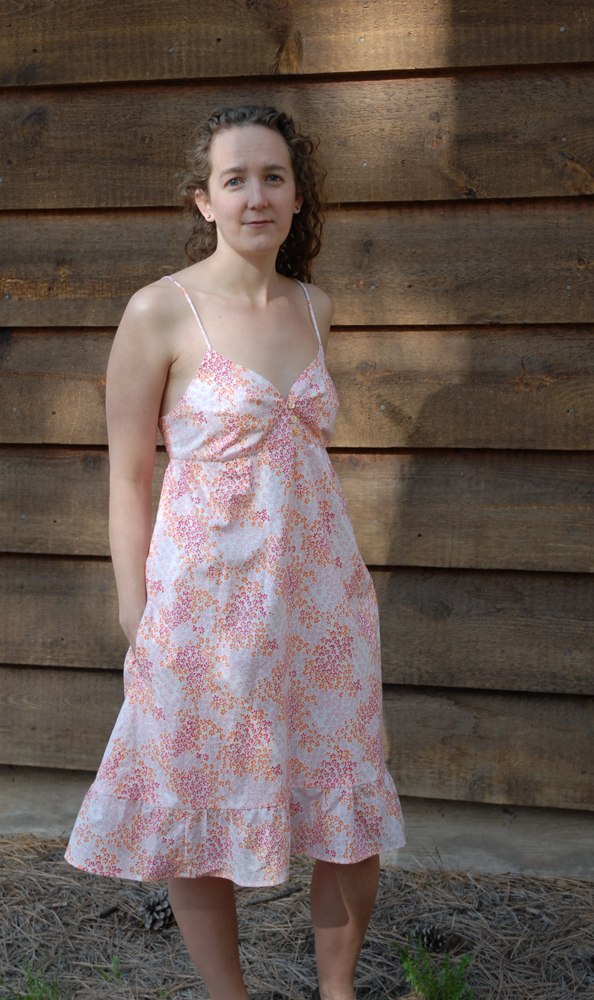
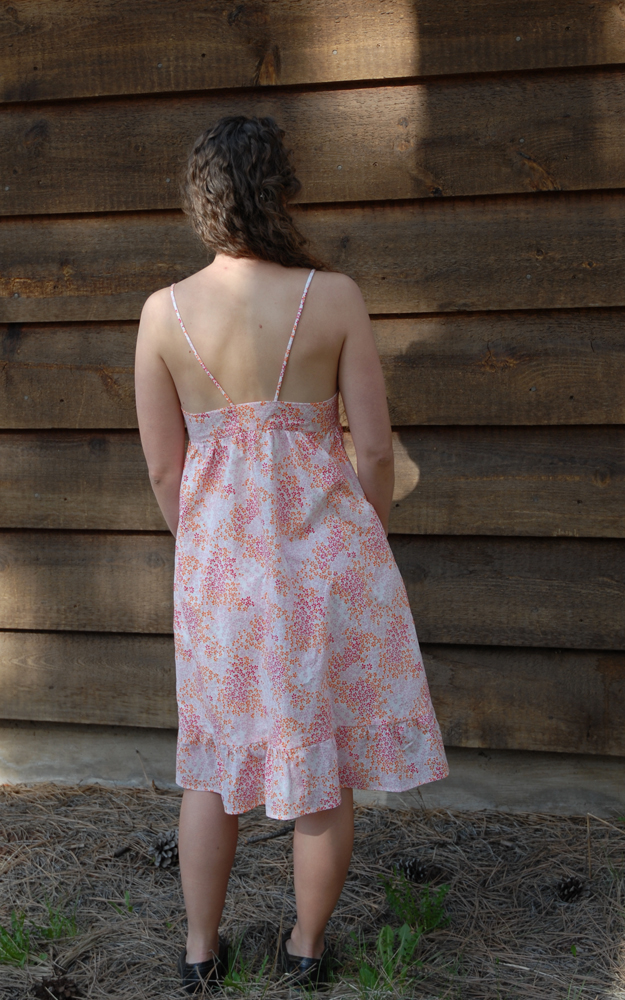
My sundress is finished!  I’m really excited because a) it’s done in time for summer, and b) this is the first pattern I have really made from scratch, not by copying a garment or altering an existing pattern.  I draped the top part with the help of my dress form, and measured and flat drafted the pieces for the skirt and ruffle.

The fabric is a very lightweight soft cotton which I am about 98% sure came from Gayfeather Fabrics in Madison, WI – a great place to stop if you are nearby.  It’s lined with a similar plain white cotton which I still have a fair amount of from the former Buttons n’ Bolts in Tucson – I miss that place.


Although I am thrilled with how it came out, there are still a couple of alterations I’d like to make.  I had made enough versions of the top out of muslin that I thought it was safe to try one in “real” fabric.  At least for me there are some things I never can tell unless I’m really wearing something around, not just trying it on for a few minutes in front of a mirror in a partially finished state. I think it would be more flattering if the join between the top and the skirt was about 1/2″ higher, which means I’ll extend the top up at the neckline as well, otherwise I think there will be too little top part.  One of the darts needs to be more curved, although the wrinkle it’s making now is kind of cute.  For the next version there won’t be a ruffle at the bottom, because I’m making it out of fabric I batiked last summer, and I made a border for the print!  For that version I think I will have the skirt a little less gathered at the top, flaring out to about the same width.

My plan was to put the dress on my form for photos, (especially since the high was 47 F the day I finished).  But I neglected the fact that while I like minimal closures and shimmying my clothes over my head, my duct tape form has immovable shoulders, there was no way I could shimmy the dress onto it!  So thanks to my dad, who stopped by this morning, for taking these snapshots.  Luckily, it was much warmer today as well, although unfortunately not warm enough to wear this all day.

Hope this gives you some ideas for summer projects!

Sewing Machine Painter’s Tape Stitch Guide

Just a quick tip today.  Last night I was sewing pillowcases for my wonderful massage therapist, Cindy Clark of Hand Dance Massage.  I know, this is good trade to have, right?

Some of the hems were deep, I needed a seam guide outside the ones engraved on my stitch plate.  Painter’s tape/blue tape is perfect for this – it’s easy to apply and reposition, it has a sharp edge which I  can see clearly against the machine, and it peels right off when I am done.  Other types of tape work too but they may be more prone to leave sticky gunk behind (duct tape = no).

You can either use the edge of the tape as a guide or draw a line (or more than one) on the tape.  Either way be as precise as you can with your measuring.  Measure from the center of the foot, where the needle enters the plate when it’s centered.  Once you know how far out the other lines on your stitch plate are, it may be easier to measure from one of them or from the edge of the plate.  Try to get your tape even, and at the right distance, so you can use the whole length of it to guide your fabric.

Remember that if hemming, you need to sew slightly inside your hem to catch it.  For example, I pressed up 2″ for a hem, so my guide here is at 1 and 7/8″.  By watching the guide, you can sew the hem from the top or the bottom, whichever works better for your project.

Zoom in on the picture to see more clearly what I’m talking about.

What do you use painter’s tape for?  What are you trading for?

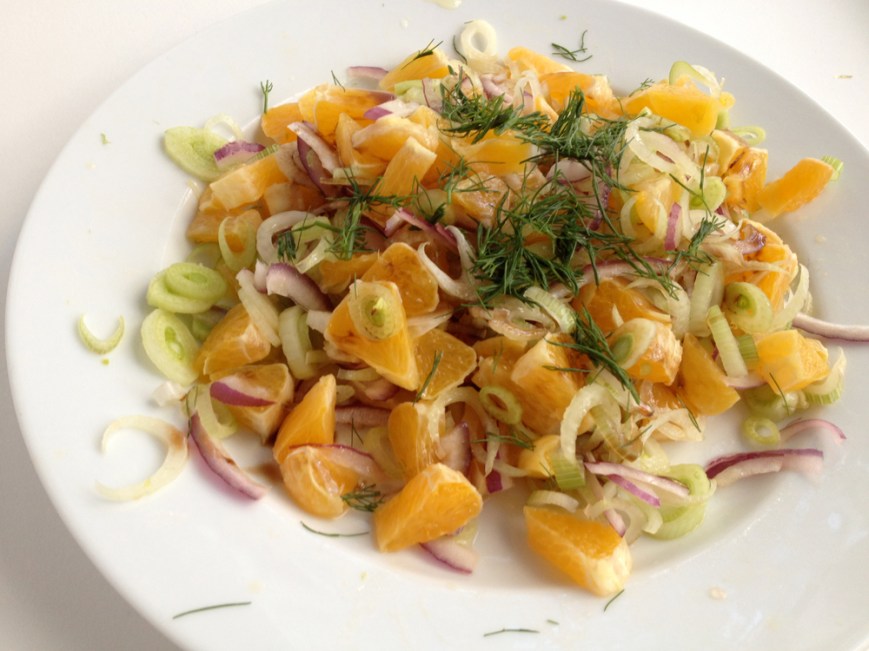
Fennel and Orange Salad

Ease into spring – bright flavors with late winter ingredients.  The idea for this salad came from a dinner of delicious tapas made for us by a friend of friends in Phoenix – thanks Charlene!

Fennel and Citrus Salad

Combine on a plate:

6 baby fennel bulbs or 2-3 large ones, thinly sliced

Small sections of mandarin, or chopped sections of orange, from about 2 oranges or 3 mandarins 

A little thinly sliced red onion

Pour over the top:

Juice of 1/2 orange or mandarin

A drizzle of extra virgin olive oil

A drizzle of balsamic vinegar (high quality balsamic is really good here)

Top with a few fennel fronds for garnish

That’s it!  Simple and oh so good.

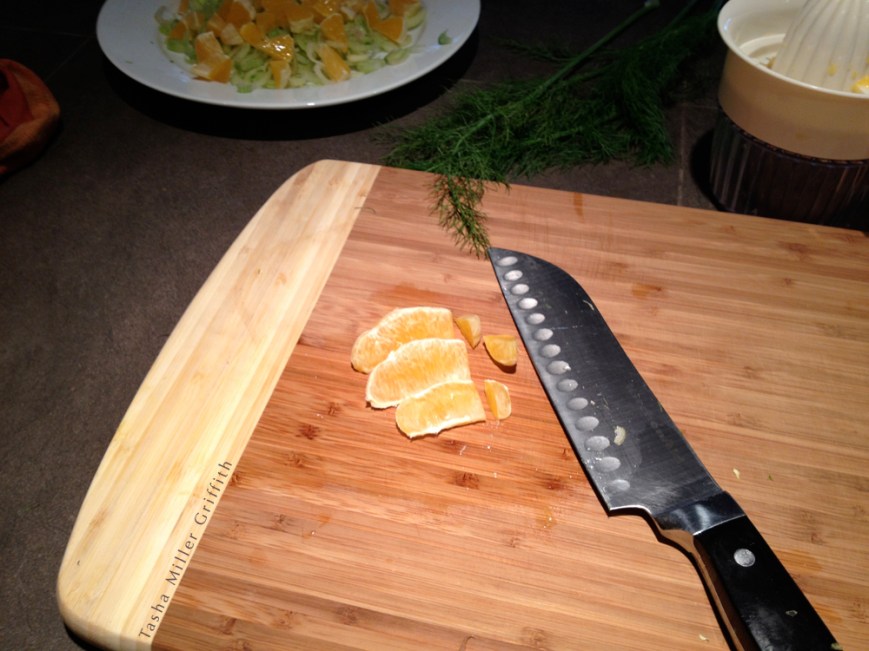
And a tip on chopping orange sections: I have been doing this a lot the past month or so, and my best method so far is to separate the sections first, then line up three or four and chop them into pieces.  You’ll see most of the seeds and you can pull them out.  I only pull the membranes off the sections if I need the dish to be really impressive for some reason.

PS: one of my cousins was asking me the other day about quinoa recipes, and I found this one on The Year in Food – such a lovely blog.  Apparently we’re not the only ones to figure out that fennel and citrus is a good combo for late winter/early spring!

Felt Flowers and Cookies (good combo)


Yesterday I held a wet-felt flower workshop.  Now that basically all the snow from our giant storm is melted, the weather is starting to truly feel like spring, perfect time to make some flowers!

I made these almond butter cookies for my students (/when some more people were around to help me eat them all).  They were amazing – almost like a macaron with just a little crispy shell of crust and a lovely soft interior.  And they happen to be flourless!  The only change I made to the recipe was to substitute 2 tsp of Amaretto for the vanilla (and decrease baking soda because I’m baking at 7000 feet).  This recipe was recommended to me by my friend Janice.  Not only does she make beautiful jewelry, she has great taste in food!

Don’t live near Flagstaff?  Want to make some flowers?  You may be in luck – I’m turning this workshop into a PDF tutorial!  If you would like to be a guinea pig and help me test it out, you’ll get the tutorial for free, and I may even send you some wool.  If you are interested, leave a comment or contact me.  No felting experience required!


Wire Turns Fabric Tubes!

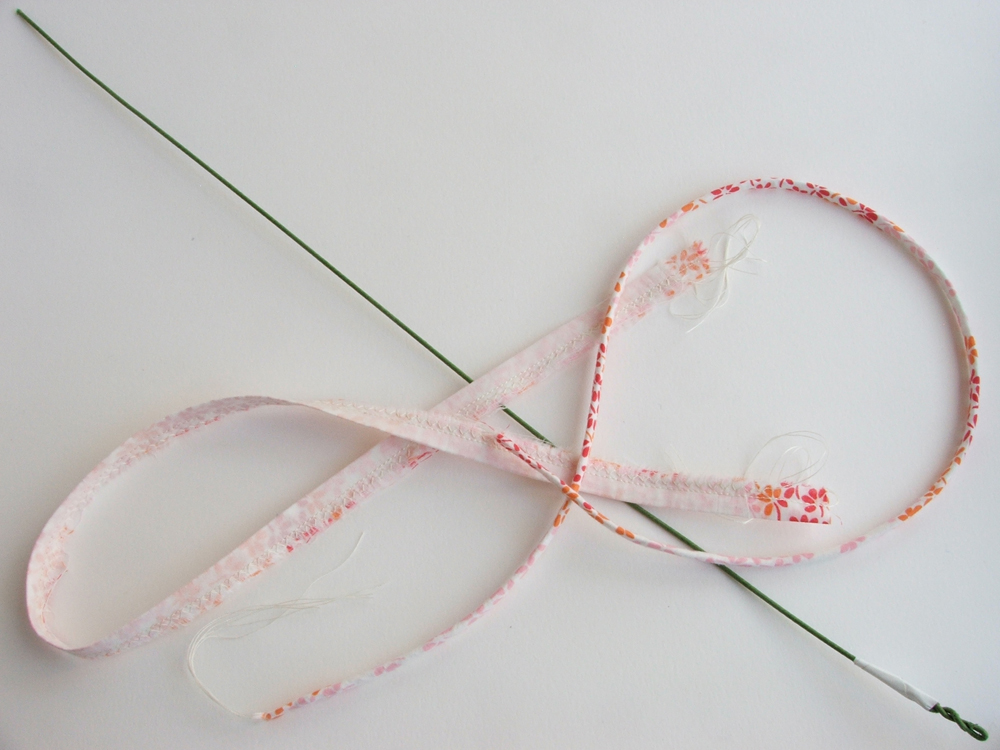
The other day I was making fabric straps, and the time came to turn them right side out.  I never bought one of those proprietary tube-turning things, and I don’t do this very often, so usually I just tie the seam ends to a blunt needle and slide it through the tube bit by bit.  It’s kind of a pain but it usually works.  However, on this day my studio was somehow completely devoid of blunt needles.  I don’t know where they went, but I suspect karma is involved, since I always tell even my knitting students to buy sharp ones for burying ends.  I tried it with a sharp one, but that was clearly the wrong idea, of course the needle point kept piercing the inside of the tube.

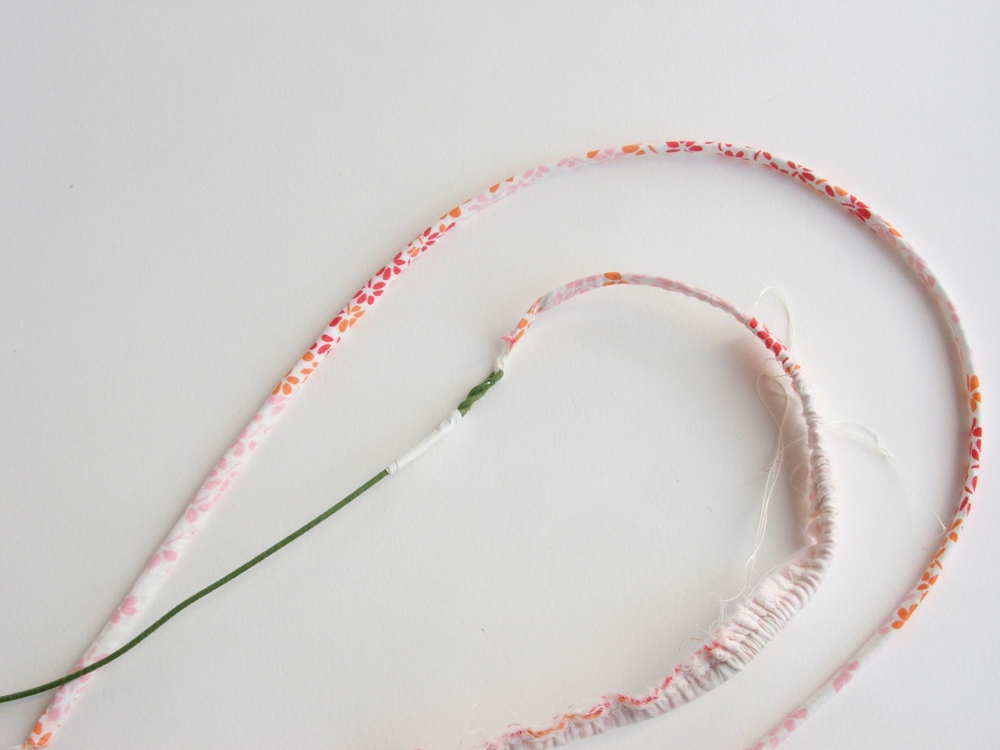
After stewing it around in my brain for a while, I remembered that I had some millinery wire left over from another project.  I twisted one end into a loop, tied the thread ends to it, and pulled it through – viola!  Then I tried it with beading wire, which is much thinner and more flexible, but also worked just fine.

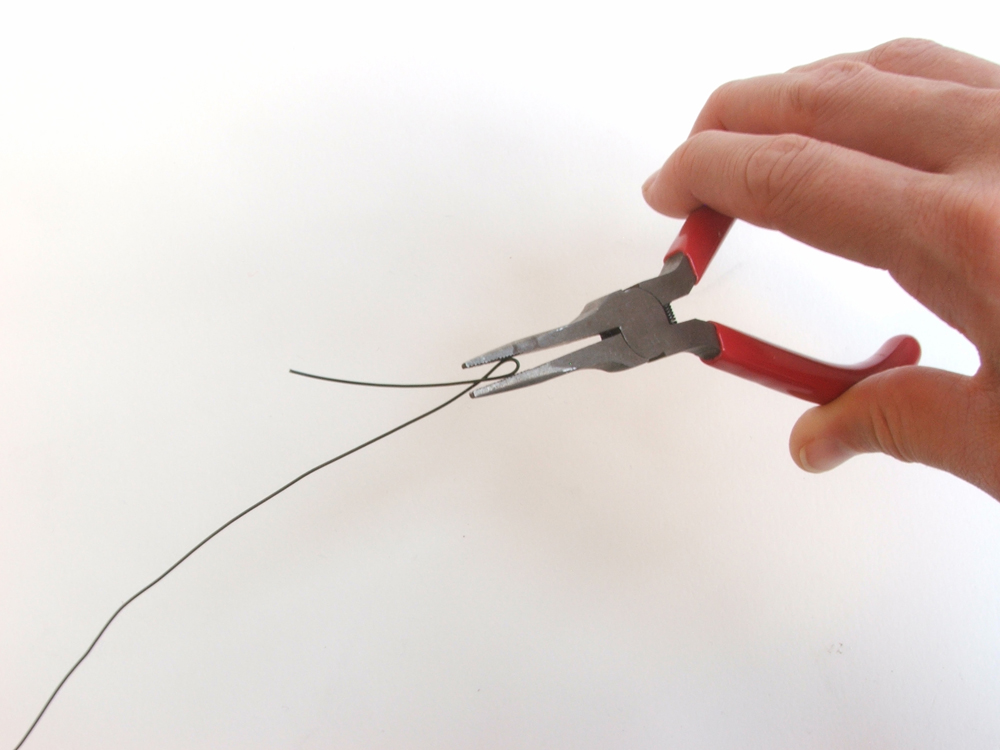
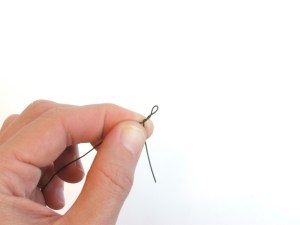
This is why we invented pliers, so you can make a loop smaller than your finger.  You may need to squash the loop flatter with the pliers to get it to be narrow enough to go through your tube.

Twist the wire around itself – it’s more secure if you twist both the end and the main wire around each other, not just one around the other.

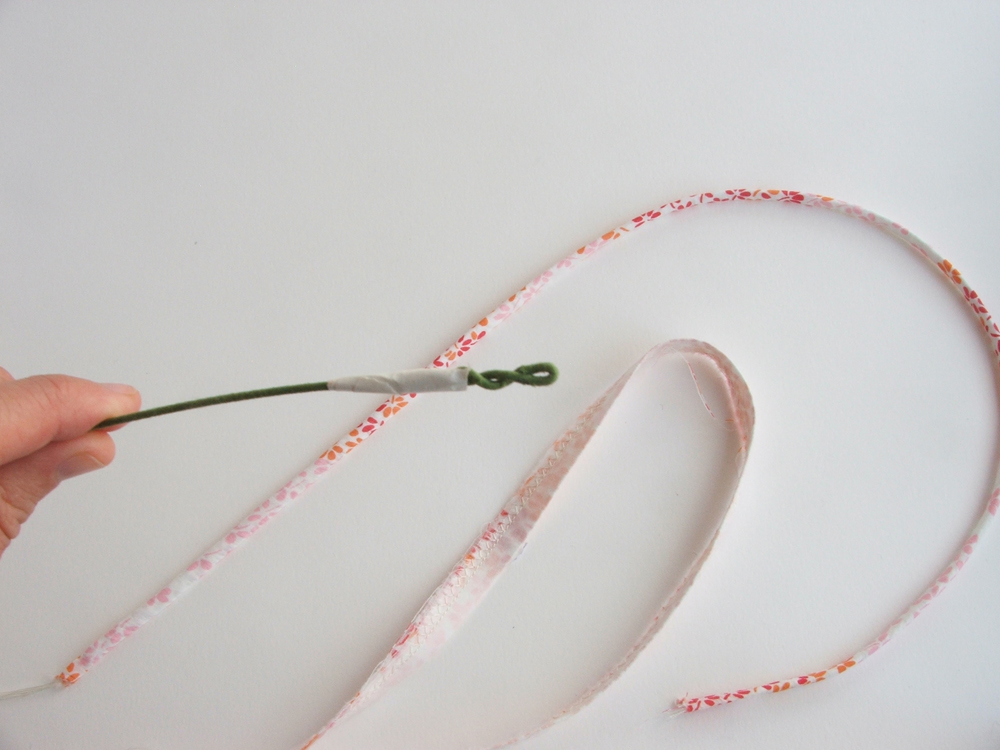
Cover the pokey wire end with some tape to keep it from catching on the fabric  – I used artist’s tape, electrical tape or painter’s tape should also work, duct tape is too gooey.

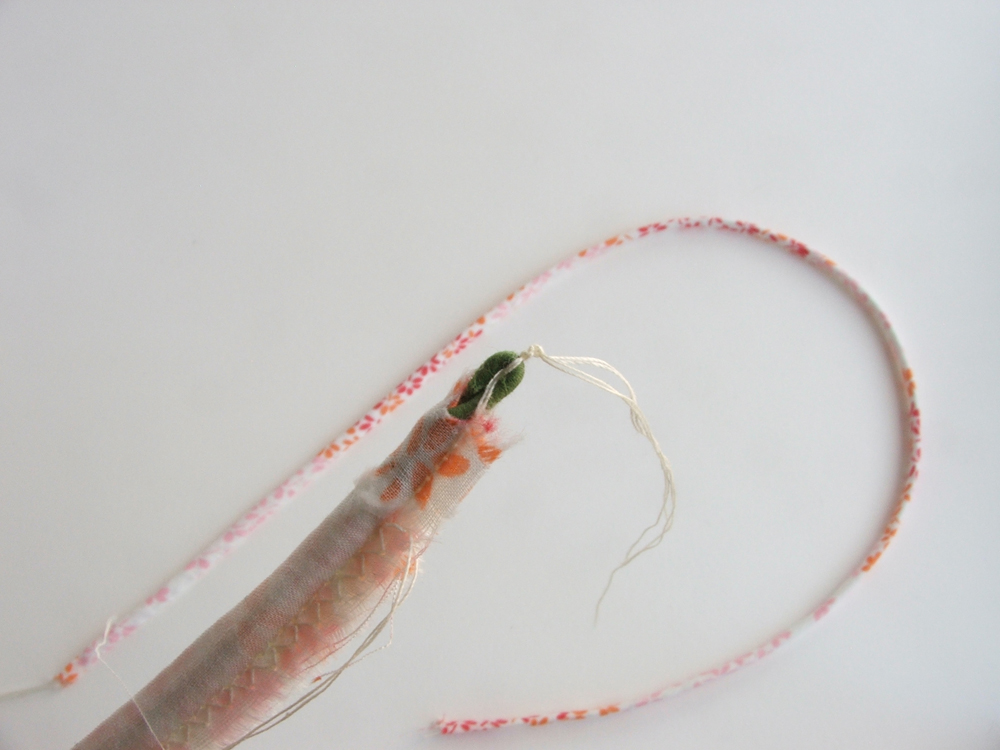
Ok!  Slide your new wire tube turner inside your tube.  Take the ends left from sewing the seam and tie them securely around the wire loop.  If your knot is not secure it may pull out part way through the turning process – terrible!  I pushed two thread ends through the loop one way, and two through the other way, and tied them in several square knots on top of the loop.

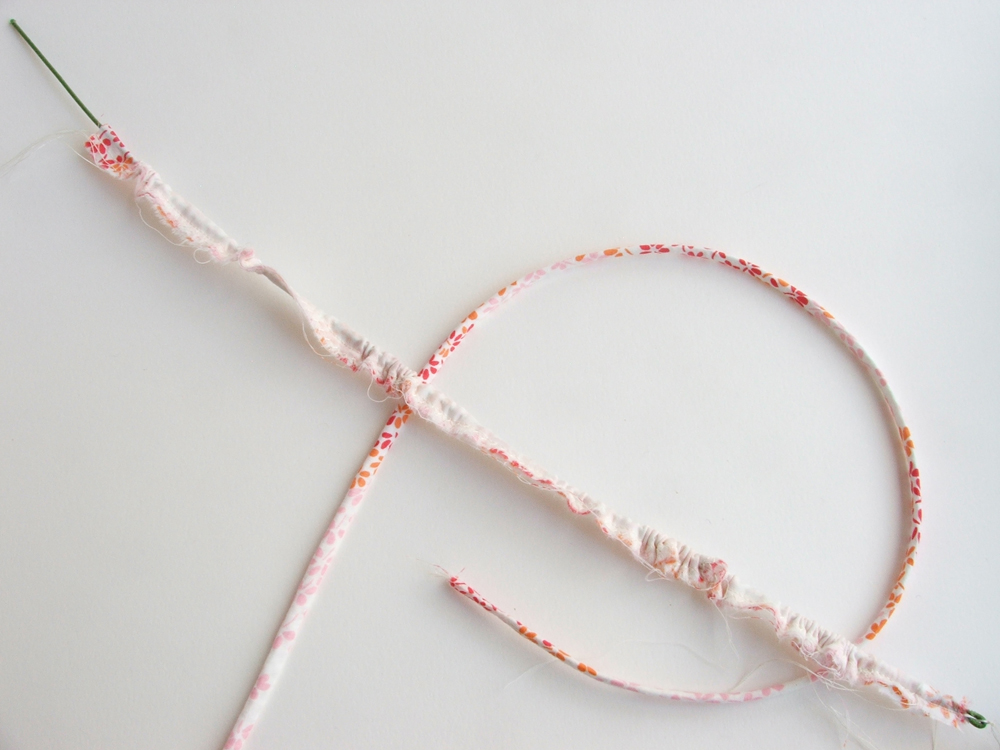
Pull the wire into the fabric tube, and the tube should start to turn inside itself.  Sometimes it’s a bit hard to get it started, you can try using your finger nails to pull the scrunched up fabric over the end.

General tube turning tips:  Don’t get so much fabric bunched up right where the tube is turning that it gets packed in and won’t turn.  If you get stuck, back the bunched up fabric away from the end and try moving a smaller amount through the turn.  Pull on the wire threader and the turning point, stretching a bit can help.  Once you get going, pull on the fabric end inside the tube instead of the wire, so there’s no danger of the thread breaking.

It’s much easier if you have a slippery fabric!  Mine at the moment is two layers of cotton, not slippery at ALL, but it still worked without too much fuss.  I wanted my straps to be as thin as possible, the limit with this fabric was a 1/4″ seam.  With a slipperier fabric smaller could work, keep in mind though that you have to have enough seam allowance so that your finished tube won’t unravel, and that seam allowance has to fit inside the finished tube!  I zigzaged over my SA since I absolutely do not want to take my dress apart later due to straps coming apart.

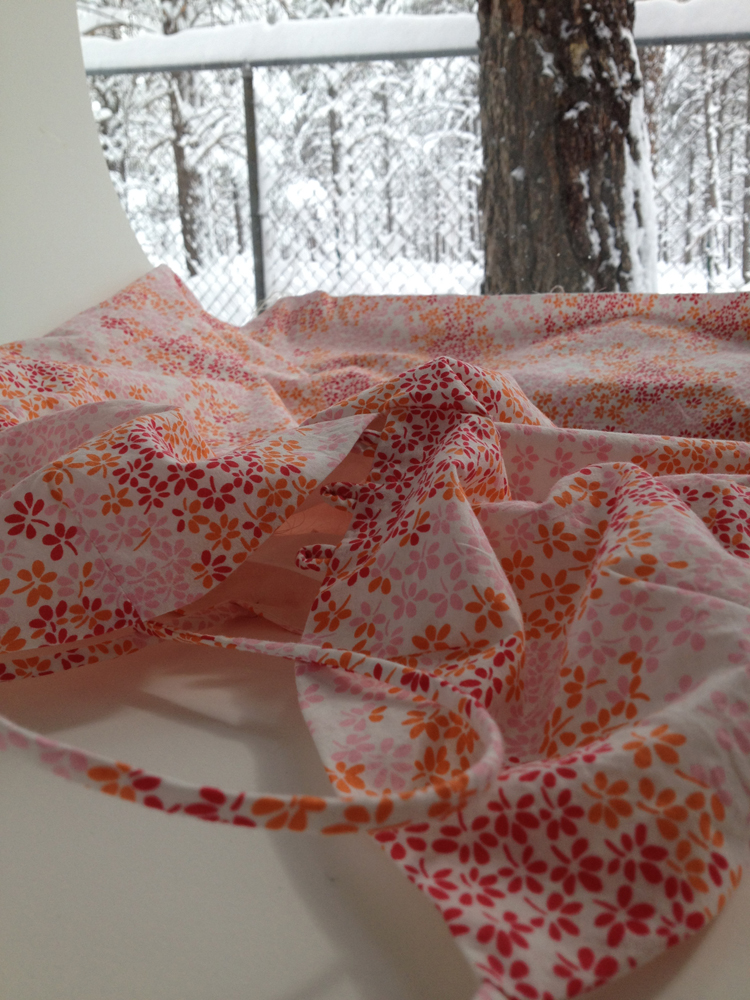
What am I making with these tubes anyway? A sundress!  I took this picture on Sunday during our giant spring snowstorm, which is now melting like crazy.  Whatever the weather says, it’s time for spring/summer sewing!  I used the fabric tubes for the straps, and also button loops at the top.  I’m glad to have my new wire turner, I can make some more straps for tops and dresses for the upcoming season.

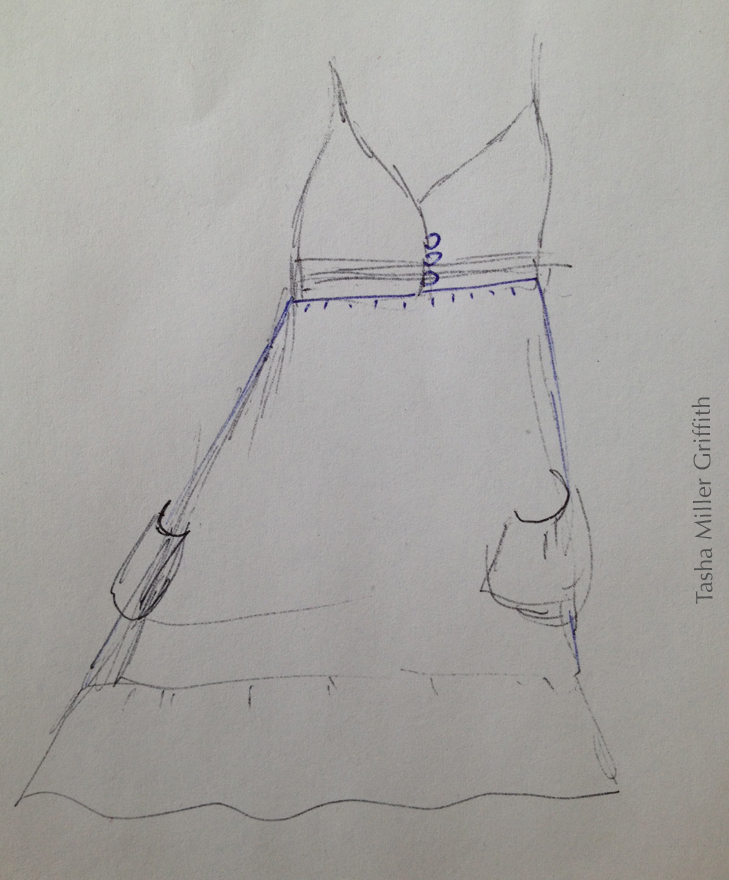
Here is my sketch of the finished sundress.  I haven’t decided whether to do the big patch pockets or not.

What do you think?  What are you making now?