How to Chop an Onion


I have been thinking a lot lately about how it seems like the people who can already cook, or sew, or whatever it is we want to be able to do (mine right now is drawing), it seems like they have been able to do it forever and it’s just easy for them.  Of course this is not true, they practiced right through the learning process, just like we will if we want a new skill.

As you know, I have been sharing some tips for beginning sewers (more to come!) and I’d like to do the same from time to time for those who are learning to cook.  It is awfully helpful if those on the “knowing” side of a particular skill share things with those on the “learning” side.

This is probably the most actual-chopping-time saving trick I know.

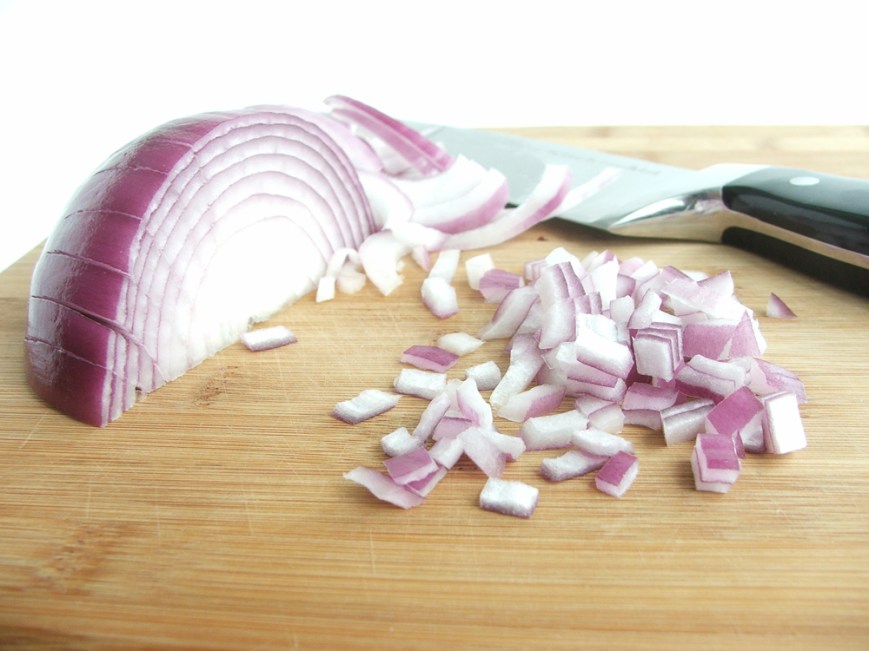
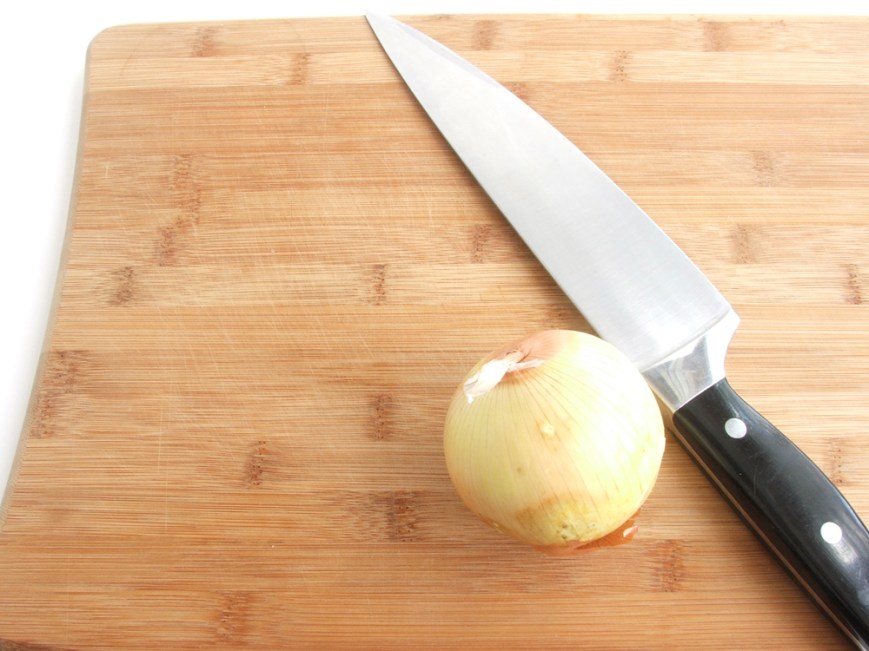
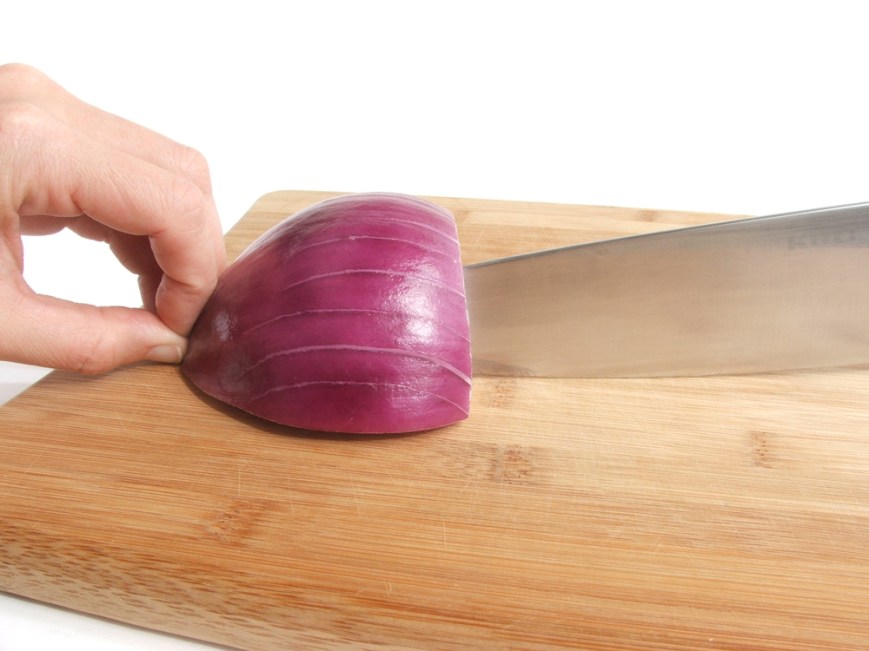
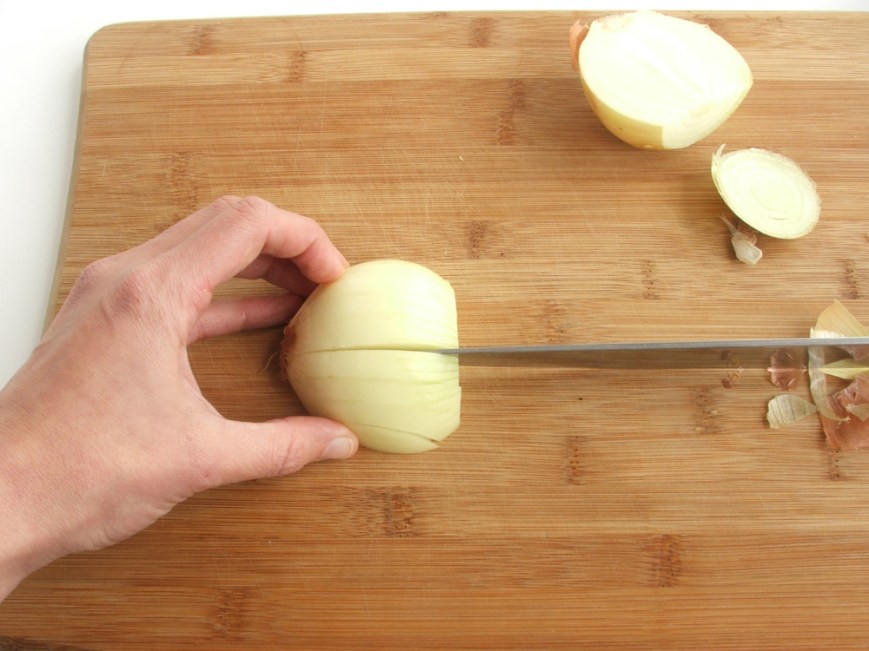
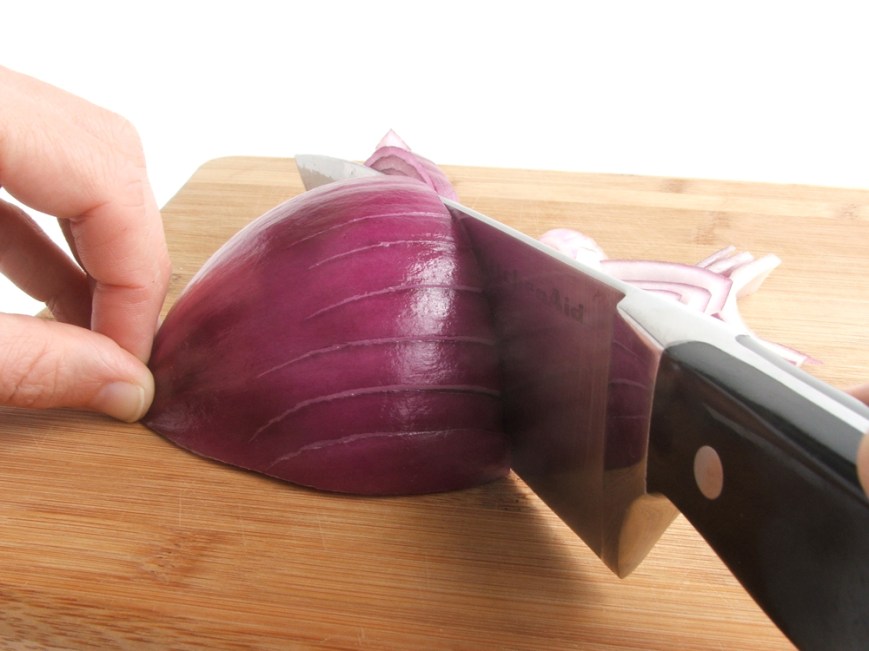
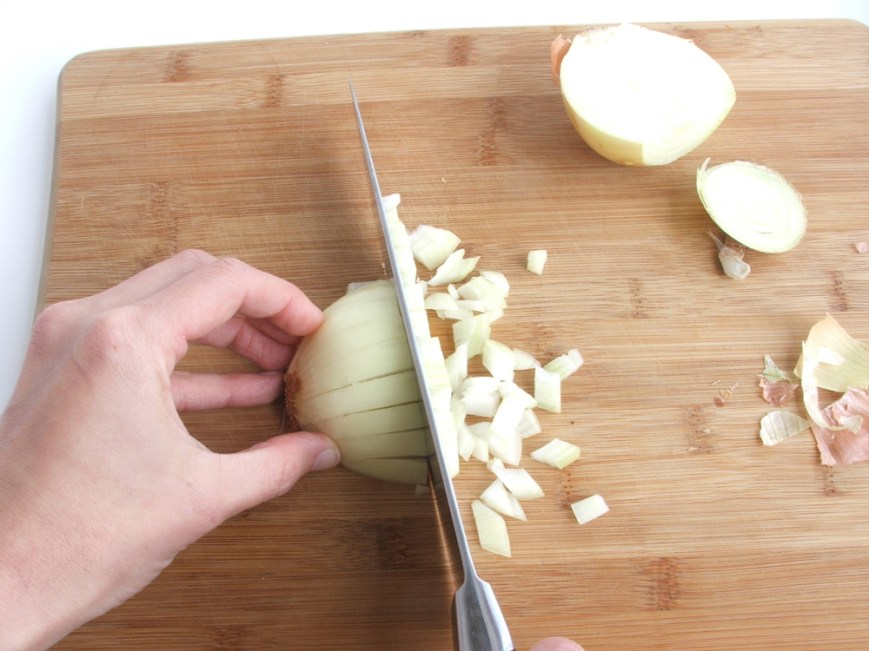
Cut your onion in half and chop off the tip.  Peel off the skin.  Now make long slices with the knife perpendicular to the rings (all the way back to the root if you are chopping the whole thing), but don’t chop them free of the onion, leave them attached at the root.  Make these slices as close together as you’d like your finished onion pieces to be wide.  They can be finer than the ones here, or larger.


Now, chop through all your slices parallel to the rings, and diced onion will magically appear!  Or, large chunks, whatever you need.


What’s your favorite kitchen tip?  If you are learning to cook, what questions do you have?  Let me know!

10 Tips for Drying Laundry Outdoors


The last post was all about how I felt about hanging the laundry out to dry, and not so much about how to do it if you never have before.  This blog is supposed to have lots of information, so here are some tips:

  1. You can string up a rope just about anywhere and use it to hang up clothes.  Two trees, a tree and a porch rail, a hook on the side of the house . . . I had a small clothesline on an upper story balcony once.  In Italy, everyone still hangs their laundry on a line just below the window (and, their downstairs neighbors return the socks they accidentally drop)!
  2. My trees are about 20 feet apart, a rope looped around them so I can hang clothes on both sides holds a large load of laundry.
  3. You don’t need special “clothesline”, any rope or cord thin enough to get a clothespin over will work.
  4. A really handy knot to use to tie your clothesline is the taut line hitch, you can cinch it up after it (inevitably) sags after you tie it the first time.  There are clear and concise directions at netknots.com.  If those don’t work for you there are a lot more to be found by searching for “taut line hitch” – if you are a sailor or otherwise knot-preoccupied, look out – good thing I have this post to write so I won’t get too distracted by learning new knots.  Hopefully.
  5. If your clothesline has been out of use for a while (maybe it was abandoned by a previous resident?), run a damp rag along it before you hang anything up, to keep from getting any dirt on it onto your clothes.
  6. You can take your clothesline down during the time of year you’re not using it, it will last longer, and won’t rub bark off your trees in the same place all the time.
  7. I highly recommend keeping your clothespins inside and bringing them out with the laundry each time.  You can store them in a bag, or a jar or whatever.  It keeps them from rotting and/or being new homes for tiny spiders who build their webs in the “tunnels” made by the spring.
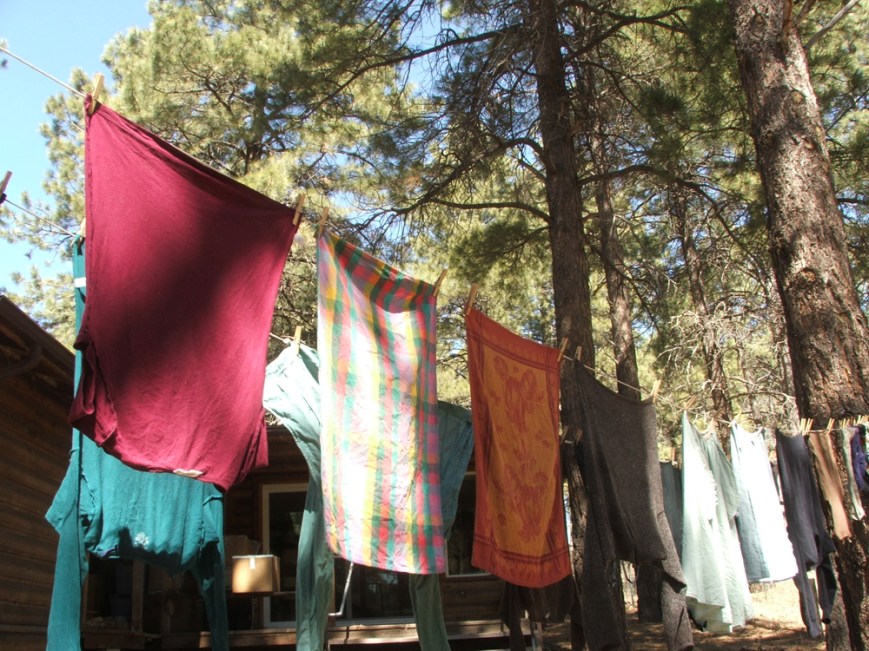
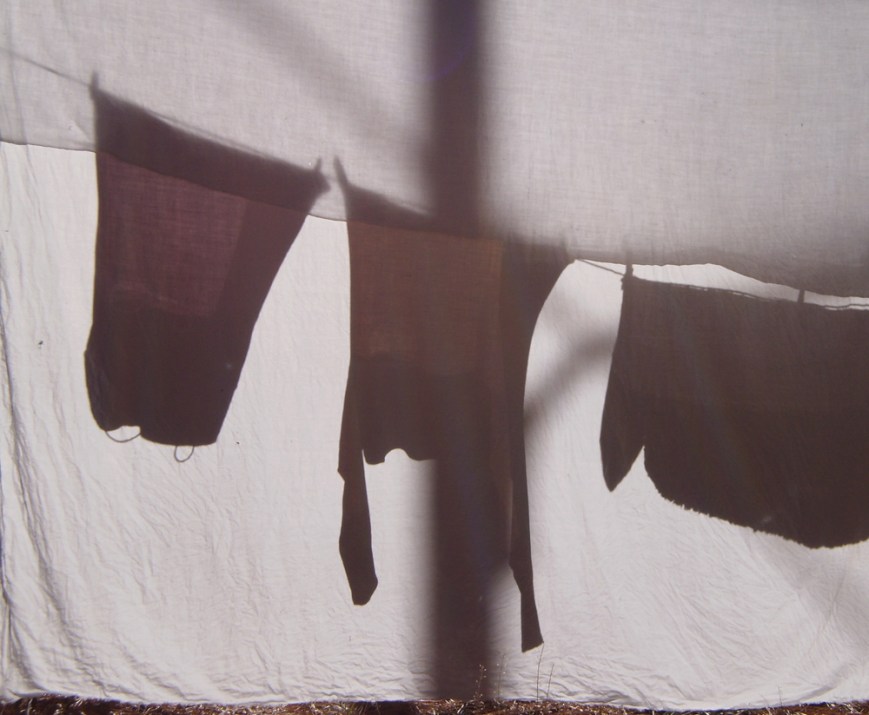
  8. Hang shirts and tanks from the bottom (see pic), that way the clothespins won’t leave a visible mark or make a crease in the top.
  9. If your laundry is in the sun, hang things you don’t want to fade inside-out, and/or with the back facing the sun.  Hang things you want to bleach in as much sun as possible (more about that in another post soon).
  10. If you, or possibly other members of your household, prefer laundry as soft as it comes from the dryer, you can always throw clothes in for just a couple of minutes when they come off the line.  You still get your mid-day laundry hanging meditation, and save money and gas for the dryer!

Do you have more tips?  Please share them!


I love hanging the laundry outside. . .

I do realize that this may mean I’m a nerd.  But it’s so true.

I love everything about it – it’s a quiet moment outside in a day in which I might not have time for a hike or just watching the clouds.  There I am, I can look up at the sky, I hear the birds, neighborhood noises, feel the breezes . . . I even love the way the clothes look hanging there.

In past summers when we have rented a place in Madison WI, I always found a way to string up some sort of clothes line in the back yard.  Although the smells and plants are different there, I enjoyed them just as much.

In Flagstaff, the good outside laundry days are increasing now (when it’s not snowing – typical mountain springtime).

Who cares if I’m saving money and gas for the dryer (well, Ok, I do care about those things too) – drying the laundry outside gives me a mini outdoor meditation in the middle of my day.  I have to do the laundry anyway, why not do it in a way that I love?

Still a little time for: Winter Squash, Mexican Style

Spring is coming.  In fact, I am down in the valley this weekend where spring is already here!  Still somehow, I am not quite ready to let go of winter foods yet.  Although I would not touch a butternut squash in July, I think I could eat it happily almost every day for the months of winter!

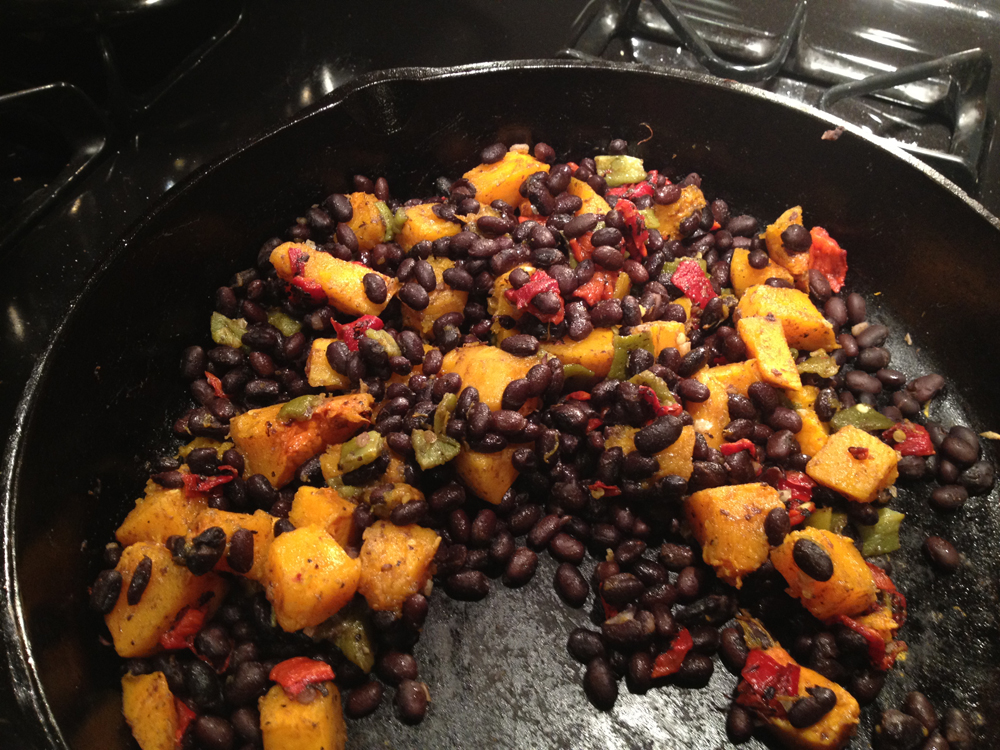
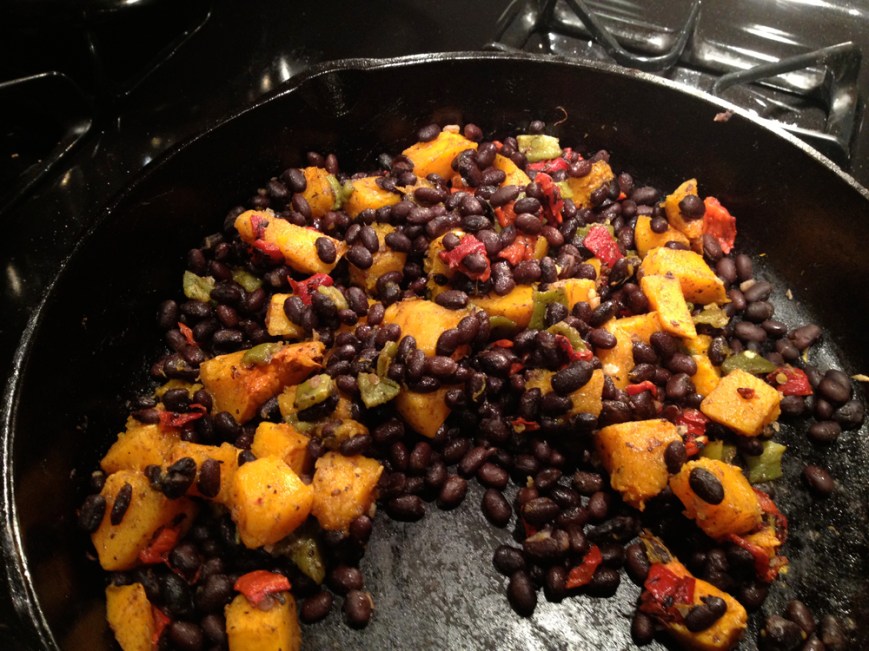
If you are getting tired of winter veggies but the asparagus is not yet streaming into your area, here is a another flavor combo for you.  I use this in all kinds of tacos and enchiladas.  The day of this photo we had it in tacos with fresh corn tortillas, a mild slightly tangy cheese, and orange chipotle salsa.

Winter Squash Filling for Tacos or Enchiladas

2 to 4 cups cooked winter squash  – butternut is my favorite.  Whichever you choose, cut in half (or into more pieces if very large) and scoop out the seeds.  Rub the cut surfaces with a little olive oil.  Place the pieces cut side down on a rimmed baking sheet and roast in a 375° oven until you can easily bury a the tines of a fork in it – this may take 30 minutes to an hour depending on the size and thickness of the squash pieces.  Let rest until cool enough to handle.  It is now ready to peel and slice quite easily!  For this recipe, cut the squash into fairly large chunks.

½ to 1 cup dried black beans, cooked.  I do mine in the pressure cooker – fast even at 7000 ft!

1 to 2 cloves garlic, minced.

2 to 3 thawed frozen roasted green chiles, chopped.  In the West (as you already know if you live here) around September/October time the most amazing smell fills the farmers’ market – roasting green chiles.  I could go on about this for quite some time, but will limit myself to saying that I stock up big time and live on the ones in my freezer for the rest of the year.  If you didn’t save enough, your grocery store may have fresh Anaheim or Poblano peppers which you can roast under the broiler, or speared on a fork above the flame of a gas range (or even with a crème brulee torch – in any case watch carefully and watch your fingers!)  Once the peppers are roasted, cut out the stem and pull out the seeds, then chop.

Put a little olive oil in a large heavy skillet over medium heat.  When it is hot add the garlic, let it sizzle for a minute or two, then add all the other ingredients.  They are mostly cooked already, they just need to warm up and get the flavors to blend, so stir until everything is hot, then turn off the heat and let sit together until you are ready to serve (or fill enchiladas).

I have included a fair amount of variation in the ingredient amounts, feel free to change them based on the amount you want to end up with and whether you like the emphasis more on the squash or the beans, etc.

If you eat this with corn tortillas, you will have all “three sisters” of ancient Southwest cuisine (corn, beans and squash).  Don’t you think chile should be the fourth sister?

Enjoy the last of your winter and those hearty comforting winter foods!

Of Course You Can


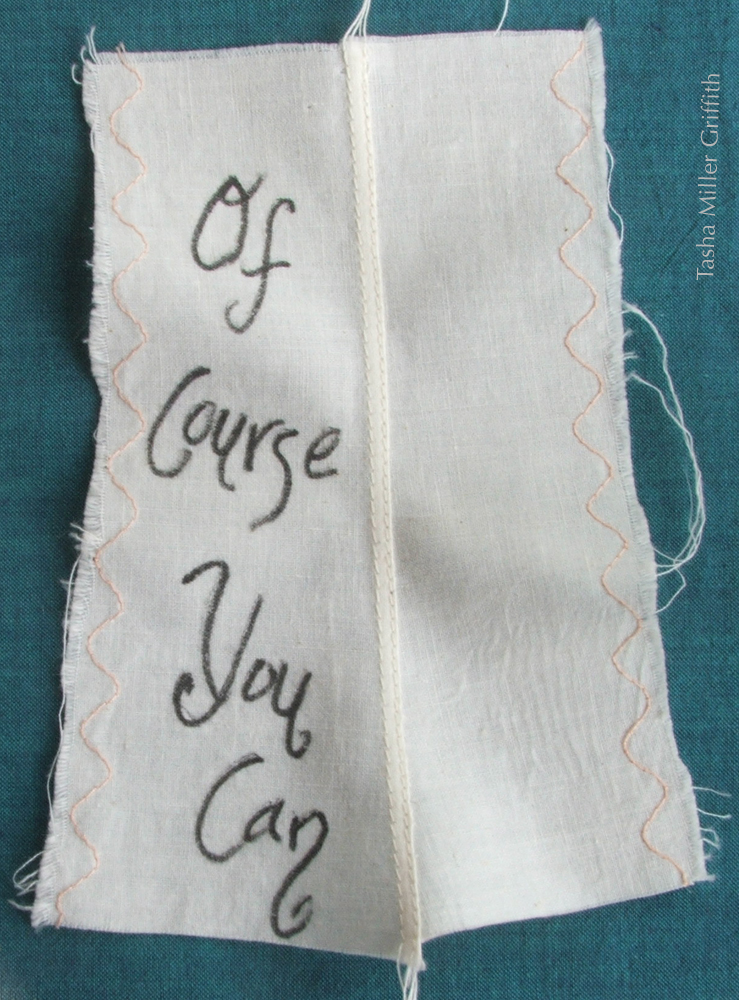
I have had this slightly homely little reminder hanging in my studio for years now.

At the time, I was reading a sewing book, I won’t say by whom since I actually respect and like this person’s work.  But in this case, the author had me all riled up by suggesting that in order to make a small, curved, flat-felled seam, you really must get this special foot for your sewing machine.

While I believe in tools, I also believe in skill.  I get insulted when people tell me I can’t, that there’s only one way to do something, especially if that way means you must buy this exact thing, etc.

The middle of this piece of fabric is my tiny, curved, special-foot-free, lovely seam.  Forgive the wonky handwriting.  I keep it around to remind me that what we are capable of is not defined by the gadgets we buy, or by anyone else’s ideas of what is possible or likely.

What words or things do you keep around to remind you of something important?

All About Backstitch


Backstitch Drawing 1


Revised and updated with new photos and text (and drawings I found in my sewing class materials), this tutorial is now better than ever! Feel free to grab a fabric scrap and some thread and follow along.

If I had to name the single most useful hand sewing stitch I know, it would probably be the backstitch. I love it for repairs, for sewing in zippers, and for anywhere I need the control and flexibility of hand stitching with a hard-wearing stitch.

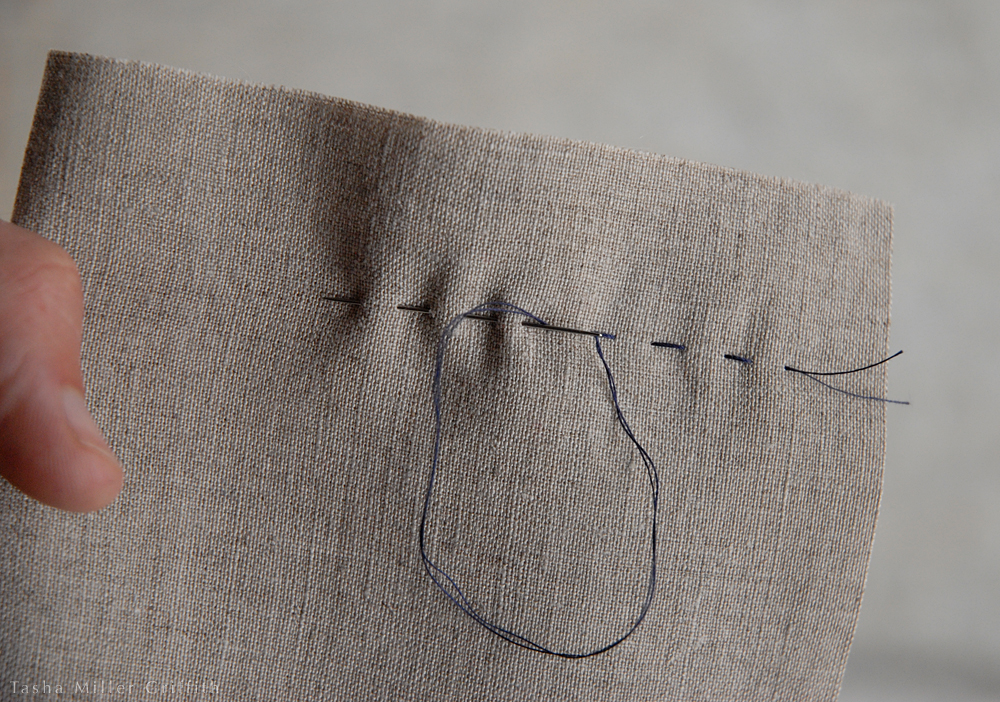
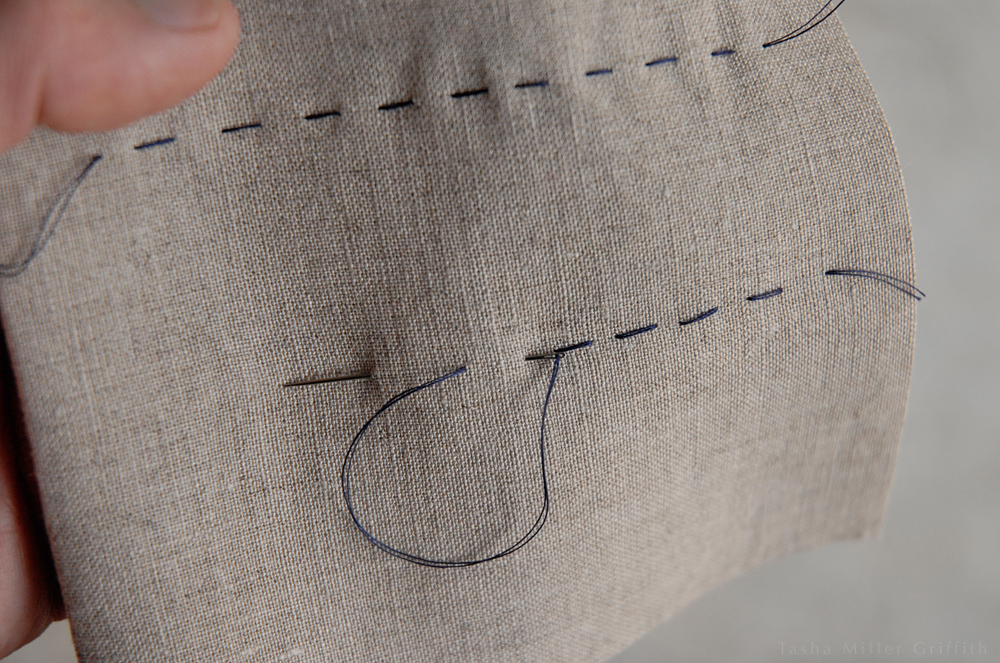
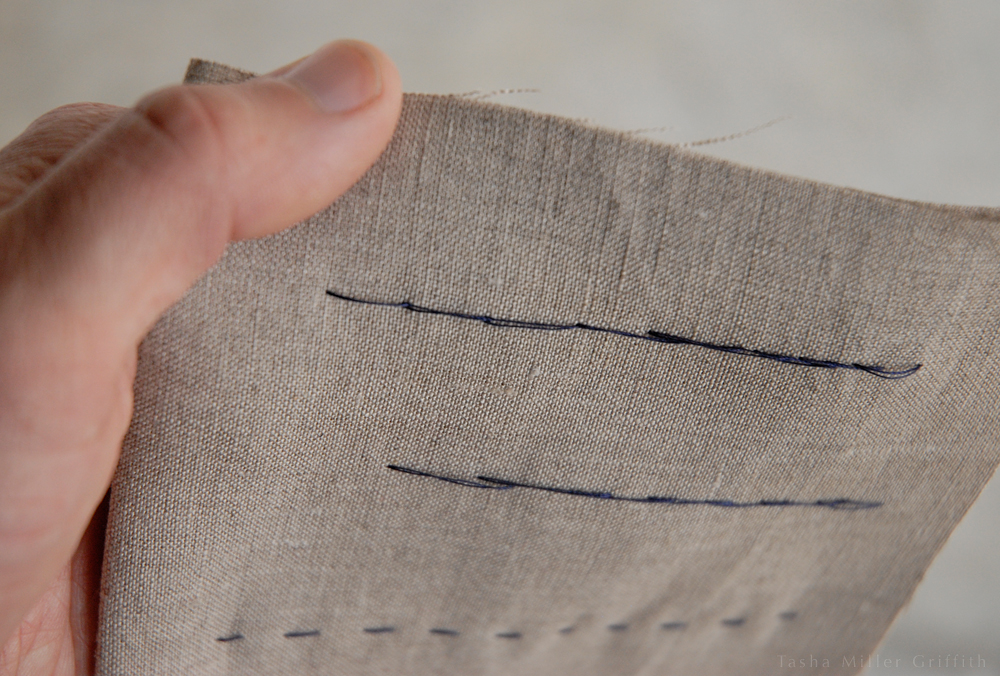
When you think of hand sewing, you probably think of running stitches, like the ones below. The needle dips into the fabric and comes up going in the same direction. You can make several running stitches on the needle before pulling the thread through, and the thread slides easily through several running stitches at once.


new backstitch 1


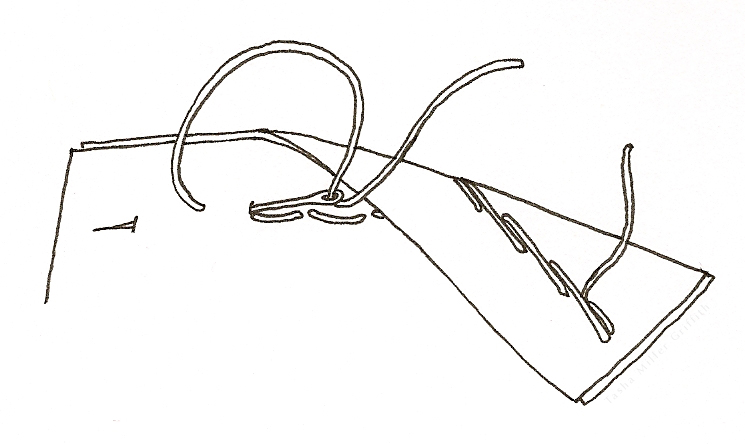
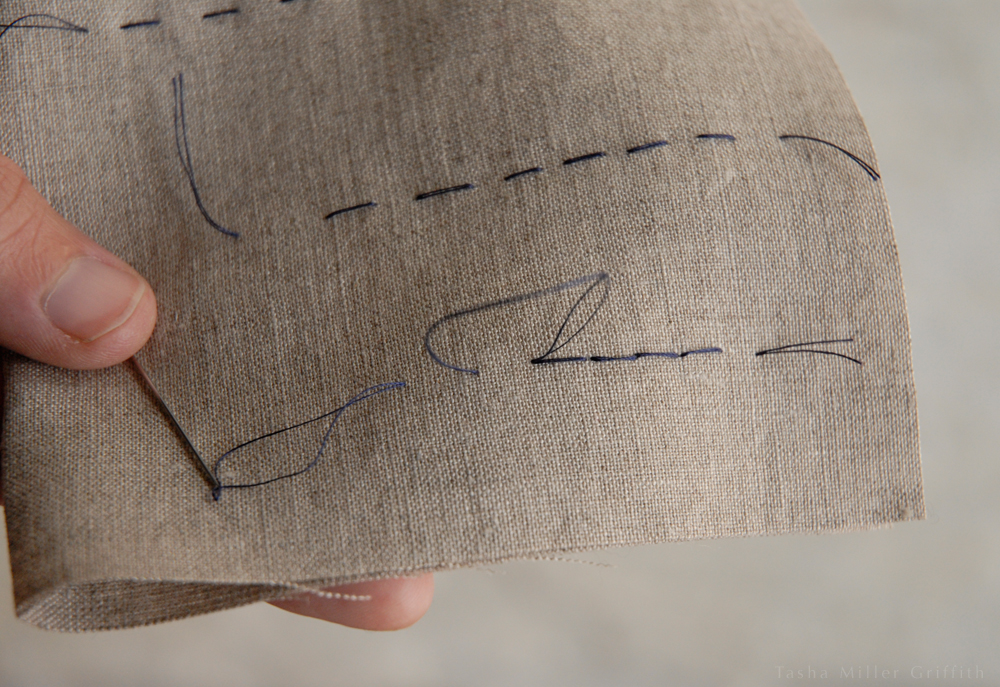
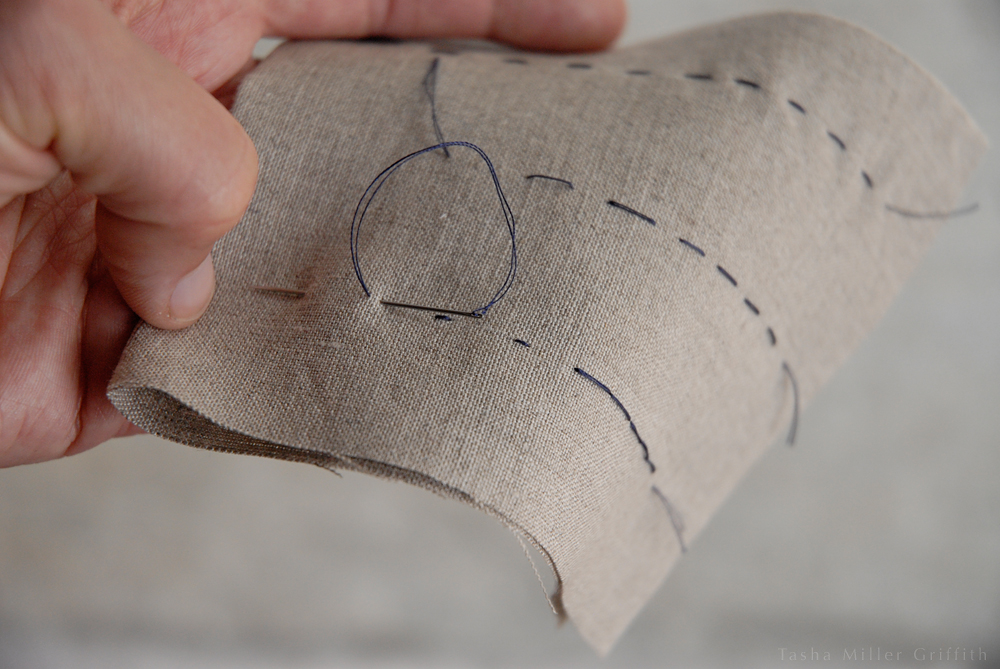
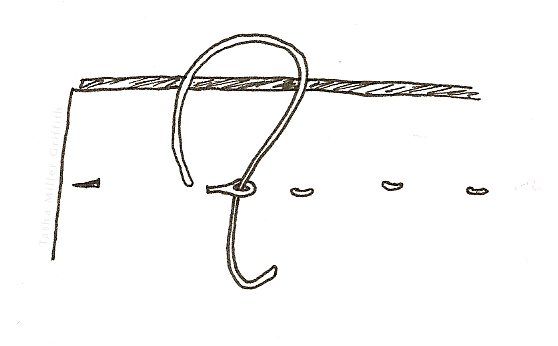
In a backstitch, the thread loops around itself, which makes the stitch much harder to pull out. To make one, take the needle backwards from the direction you’re stitching in, stab into the fabric, and bring the needle out at the further end of the next stitch. Then go backwards again and take the next stitch.


new backstitch 2


You can see the overlapping loops on the wrong side (backside) of the stitching. By contrast, the running stitches look the same on both sides.


new backstitch 3


If you make backstitches touching each other, from the right side (public side) it looks almost exactly like machine stitching, which makes this a great stitch for repairs and touch-ups.


new backstitch 4


You can also leave more space between small backstitches. This is sometimes called a prickstitch. It’s the stitch I use to sew zippers into just about everything, including my trousers! I love sewing zippers by hand, it gives me great control and precision, and more flexibility about when I attach them. Susan Khalje wrote an article for Threads magazine about hand-picked zippers that’s worth looking up if you’re interested, that’s what got me started doing them this way.


new backstitch 5


Because each one is almost a knot in itself, backstitches are really sturdy. The zippers I’ve sewn with them have lasted at least as long as the pants!


Pickstitch Drawing 1


Backstitches are also useful for securing your thread anywhere you don’t want to have a knot. I often use one or two to secure the beginning or end of a seam, and when I’m burying yarn ends in knitting. In the days when most garments were sewn by hand, it was common to use running stitches with a backstitch thrown in every few stitches for extra strength. (I know that from reading The Mary Frances Sewing Book, which is amazing).

Happy stitching!


new backstitch 6


Simplest Granola


I often have this urge to distill things down to their essential elements, it helps me figure out just what is going on, and then I can change whatever I would like.

This granola recipe started that way.  It’s a perfect platform for whatever spices, extra nuts, dried fruit, coconut (add these last two after baking) etc. you would like to add to make it your own.  You could also substitute honey or another sweetener, and/or the oil of your choice, and/or different grains. Personally, I like the simple toasted-oats-and-molasses flavor of this one so much that I keep making it, just as it is.


Simplest Granola

Melt over low heat in a large skillet:

2 Tablespoons butter

1 heaping Tablespoon molasses

When warm and melted add:

6 cups oats (I like thick cut)

Stir immediately and keep stirring until the oats are uniformly barely coated.  It seems like there is not enough molasses and butter, but, just keep stirring.

Add:

1 cup chopped nuts (walnuts, pecans, hazelnuts etc.)

Mix.

Scoop onto a rimmed baking sheet and bake at 350°, stirring every five minutes to keep the edges from getting too brown.  Do this three or four times until lightly toasted all over.  Let cool.


What’s in your favorite granola?


Join a Colorwork Class

There’s still room in my colorwork knitting class tomorrow!  We’ll learn fair isle and intarsia techniques, or two ways to use two or more colors as you knit.  If you’re near Flagstaff, come out and knit with us!

To sign up, call Purl in the Pines (our lovely local yarn shop) at 928 – 774 – 9334.

Breaking Bread with Friends


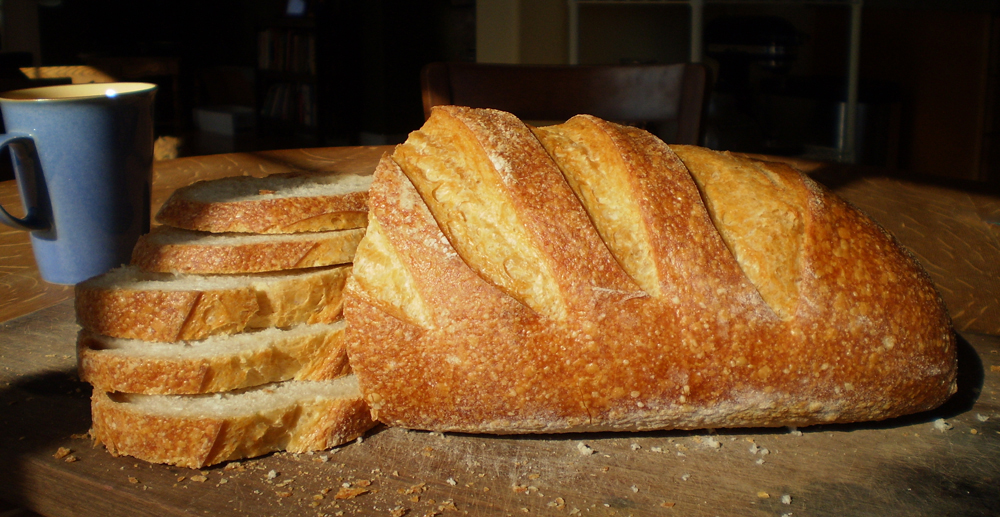
So, on our trip this past week I was thinking a lot about how much means to have food with friends.  It’s got to be the oldest form of human social interaction.  When I see friends that I have been missing for a while (and it helps if the food is really good) it reminds me, this is still important. When I sit down with people I care about to eat something carefully prepared, a special kind of magic happens.

The beautiful bread above is from the amazing Sparrow Bakery/Bread LaVoy in Bend, OR.  Truly awesome bread and pastries, I highly recommend it!

What kind of magic are you making with your friends and loved ones?

Quick and Easy Ski Straps

We are hanging out and skiing with some wonderful friends this week in Oregon, so it seemed like a good time to add this project!

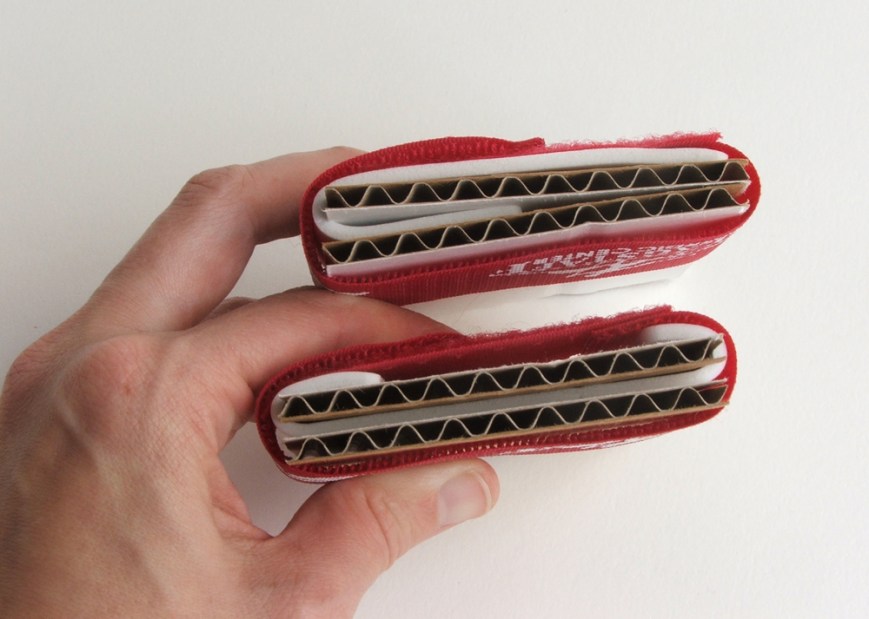
We got these ski straps for Christmas, but for some reason the foam part only extended partway between the skis, so they could still rub on the other side (imagine the cardboard here is the skis).  The top strap is how they started.


This is how I get into trouble, of course this could be better, and so I have to make it better.  The bottom strap is after I altered them.


It would be super easy to make your own for cross country or downhill skis, all you would need is something thick and squishy for between the skis, like felt, fleece, foam or batting covered with fabric.  Plus wide velcro.  Make the squishy part a little wider than the skis, plus enough to overlap and sew to the velcro, and enough velcro to reach around skis and stick to itself (fuzzy side out, hook side in).  Sew it together with a sturdy X pattern, and you’re done!

These would make a great little present for skiers you know.  Here’s hoping for some more snow in Flagstaff this winter, we love to xc ski right near our house when there’s enough.

Note: to sew an “X” for extra strength: sew in a rectangle first.  When you get back to where you started, sew diagonally across to the other corner, then along one side a second time.  Sew diagonally to the other corner, and back along the opposite side.  Overlap a few stitches where you started.